Commercial Whaling Opposition - Iceland
After 14 years, Iceland decided to resume whaling activities40 years after the whaling ban, whales still need protection
40 years after the whaling ban, whales still need protection
June 22, 2026
This article is part one of a three-part series marking the 40th anniversary of the commercial whaling moratorium.
Read part two: Commercial whaling remains cruel and unnecessary
Read part three: How modern science changed the way we study whales
Somewhere in the Southern Ocean, a blue whale born in 1986 is making her annual migration. Let’s call her Mira.
This year, Mira turns 40 years old, the same age as the international moratorium on commercial whaling. She belongs to a generation of blue whales that has had a chance to recover because countries around the world took an extraordinary step to protect them.
When member states of the International Whaling Commission (IWC) voted in 1982 to suspend commercial whaling, they did so against the backdrop of centuries of exploitation that had pushed many whale populations to the brink. The ban officially came into force in 1986, offering some of the world’s largest animals a chance to recover.
Had Mira been born a few years earlier, her story might have ended very differently.
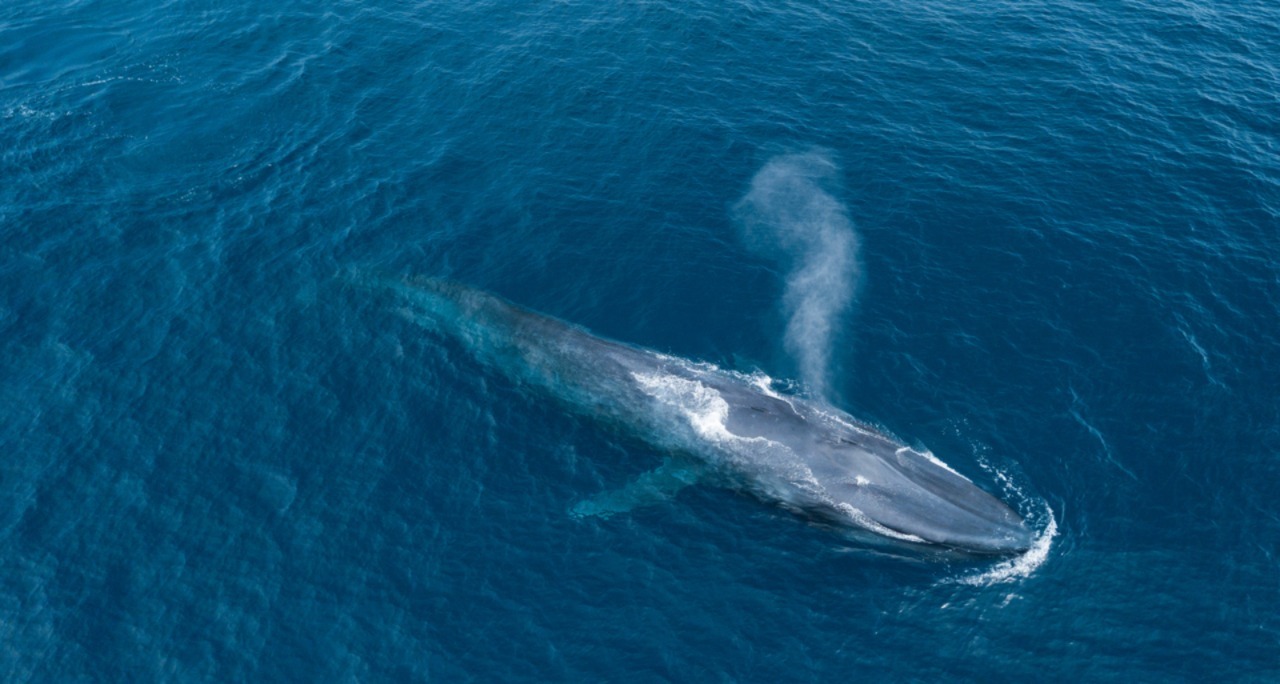
Blue whale exhaling in the waters off Sri Lanka, 2017. Photo: Christian Loader / © IFAW
Before the moratorium, Antarctic blue whales were driven close to extinction by commercial whaling. Of an estimated 250,000 animals that once inhabited the Southern Ocean, only a few hundred remained. Today, the IWC estimates there are more than 2,000 Antarctic blue whales. While that number represents an encouraging recovery, it is still only a fraction of the population that existed before industrial whaling.
Despite these successes, the commercial whaling moratorium still needs to be defended today. Iceland, Norway, and Japan continue to allow commercial whaling. Since the moratorium came into force, the three countries have collectively killed over 40,000 whales. Today, species such as minke, fin, sei, and Bryde’s whales continue to be hunted commercially by these countries.
But even for blue whales like Mira, the ocean is still far from safe.
“Whales around the world remain under massive pressure from human-caused threats,” explains Andreas Dinkelmeyer, campaign manager at IFAW. “They are threatened not only by harpoons, but also by vessel strikes, entanglement in fishing gear, ocean noise, plastic pollution, overfishing, and the climate crisis.”
A turning point, not a final solution
The adoption of the commercial whaling moratorium remains one of the most significant conservation decisions of the 20th century.
After roughly three centuries of industrial whaling, the international community recognised that many whale populations could not withstand continued exploitation. The moratorium marked a fundamental shift in how whales were viewed, not simply as a resource to be harvested, but as species deserving protection.
Today, the overwhelming majority of countries support whale conservation. Yet the moratorium has never been universally accepted. A loophole known as “scientific whaling” was quickly used to continue hunting for commercial profit. IWC rules also allowed member states to formally object to decisions. Some countries did just that, while others found different ways to continue whaling:
- Norway filed an objection and still hunts whales commercially today.
- Iceland left the IWC and rejoined in 2002 with a reservation that allowed it to continue commercial whaling, a move that remains legally controversial.
- Japan withdrew its original objection but continued whaling for many years under the guise of scientific whaling. After leaving the IWC in 2019, the country openly resumed commercial whaling.
The 1986 decision was therefore not the end of commercial whaling. It marked the beginning of a political fight for whale protection that continues to this day.
A decades-long fight to defend the moratorium
IFAW was among the organisations that helped secure the moratorium and has spent decades working to uphold it.
One of the most important early milestones came through the Convention on International Trade in Endangered Species of Wild Fauna and Flora (CITES). In 1983, shortly after the moratorium was adopted, governments agreed to prohibit most international trade in whale products. Without that decision, global markets could have continued driving demand for commercial whaling.
Over the years, whaling nations Japan and Norway repeatedly sought to weaken protections for whale species through international negotiations. IFAW fought hard to oppose those efforts and ensure proposals to reopen trade did not succeed.
Another major breakthrough came in the Southern Ocean. More than two million whales were killed in Antarctic waters within a single century. In 1992, France proposed the creation of the Southern Ocean Whale Sanctuary to protect one of the world’s most important whale habitats. For two years, IFAW supported the initiative through scientific and legal expertise, including contributions within the IWC Scientific Committee. Working alongside other conservation organisations, IFAW helped build support for the proposal, which was ultimately adopted in 1994 with 26 votes in favour. Japan was the only country to vote against it.
Even after the sanctuary was established, challenges remained. Japan continued conducting so-called scientific whaling in Antarctic waters for many years, while other efforts emerged to weaken or replace the moratorium itself.
A later proposal, driven largely by the United States, sought to replace the moratorium with arbitrarily defined catch quotas. That proposal ultimately failed due to strong evidence from scientists supported by IFAW, which demonstrated that the proposed catch limits would not have been sustainable under the IWC’s own rules. In the end, the proposal was rejected, and the moratorium remained in place.
The history of the moratorium is a reminder that conservation victories are rarely permanent. Protecting whales requires continued vigilance against political pressure, economic interests, and legal loopholes.
At the same time, the IWC has itself evolved. Over the past four decades, its focus has increasingly expanded beyond managing whaling to addressing the conservation challenges whales face in today's oceans. One important building block in this development towards whale protection was the establishment of the Conservation Committee at IWC.
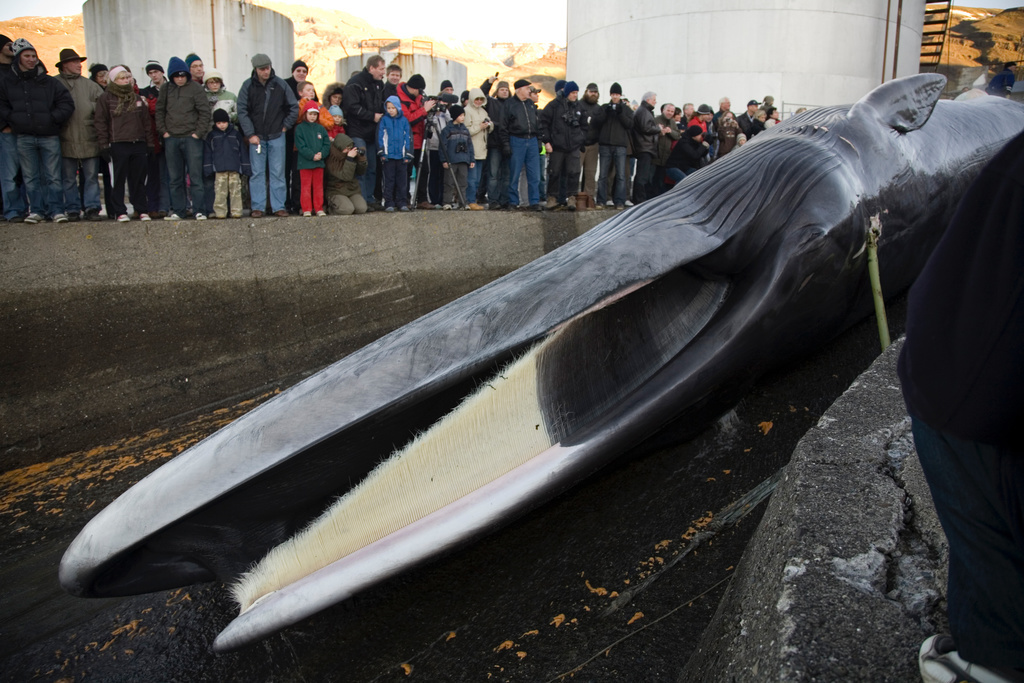
An endangered fin whale is hauled to shore with a harpoon still embedded in its side in Hvalfjordur, Iceland (2006). © IFAW
New threats in a changing ocean
For whales like Mira, the threats today are more numerous and complex than they were 40 years ago. Alongside commercial whaling, whales now face underwater noise pollution, the risk of vessel strikes, entanglement in fishing gear, and the impacts of the climate crisis.
Ocean noise has become a particularly significant challenge. In parts of the Atlantic, underwater noise generated by commercial shipping has doubled every decade over the past 40 years. For blue whales, whose survival depends on long-distance communication, the consequences can be profound. Research suggests their communication range has been reduced by as much as 90%, making it more difficult for whales to navigate, hunt, find mates, rest, and remain connected with one another. Addressing these threats requires practical solutions.
One example is Blue Speeds, an IFAW initiative that promotes slower ship speeds. A global reduction in ship speeds of just 10%could reduce underwater noise from commercial vessels by around 40%, cut the risk of whale collisions by roughly half, and lower greenhouse gas emissions from shipping by about 13%.
Vessel strikes remain another major concern. Off the coast of Sri Lanka, for example, major international shipping lanes pass through critical habitat for northern Indian Ocean blue whales. IFAW works with governments, industry partners, and conservation organisations to encourage vessels to use routes that reduce risks to whales.
“Ship strikes are often fatal for whales, and the blue whale population off Sri Lanka is found in a ship strike hot spot,” says Dinkelmeyer. “Collisions are both a conservation and an animal welfare issue. Even one whale struck by a ship is one too many.”
Today, roughly 30%of all shipping traffic south of Sri Lanka uses a more whale-friendly route, thanks in part to work by IFAW, shipping companies, and organisations such as the World Shipping Council.
What the next forty years could look like
Forty years after the moratorium came into force, there is much to celebrate. Commercial whaling was dramatically reduced, international trade in whale products was largely shut down, sanctuaries were established, and research of live whales became standard practice. Whale populations that once appeared destined for extinction began to recover. The IWC also expanded its focus to address modern threats such as ship strikes, entanglement, and ocean noise.
For whales like Mira, these achievements matter. They have helped create the conditions that allow blue whales to migrate across oceans, find feeding grounds, and raise the next generation.
But recovery remains incomplete. Most great whale populations have not returned to their historic numbers, and new threats continue to emerge as oceans become increasingly crowded and affected by climate change.
The lesson of the past four decades is not simply that whale conservation works. It is that progress depends on continued commitment. Protecting whales today means defending the moratorium, supporting marine sanctuaries, maintaining restrictions on international trade in whale products, promoting sustainable alternatives such as whale watching, and reducing the many human-caused threats whales face at sea.
The decision made forty years ago gave whales a second chance. Ensuring they continue to thrive will require the same determination in the decades ahead.
In the words of Dinkelmeyer: “The ocean must once again become a safe haven for whales. For Mira and for the generations of whales that come after her.”
Related content
Our work can’t get done without you. Please give what you can to help animals thrive.