Disaster Response
Indonesia emergencies highlight urgent need for disaster preparedness training
Indonesia emergencies highlight urgent need for disaster preparedness training
25 August 2026
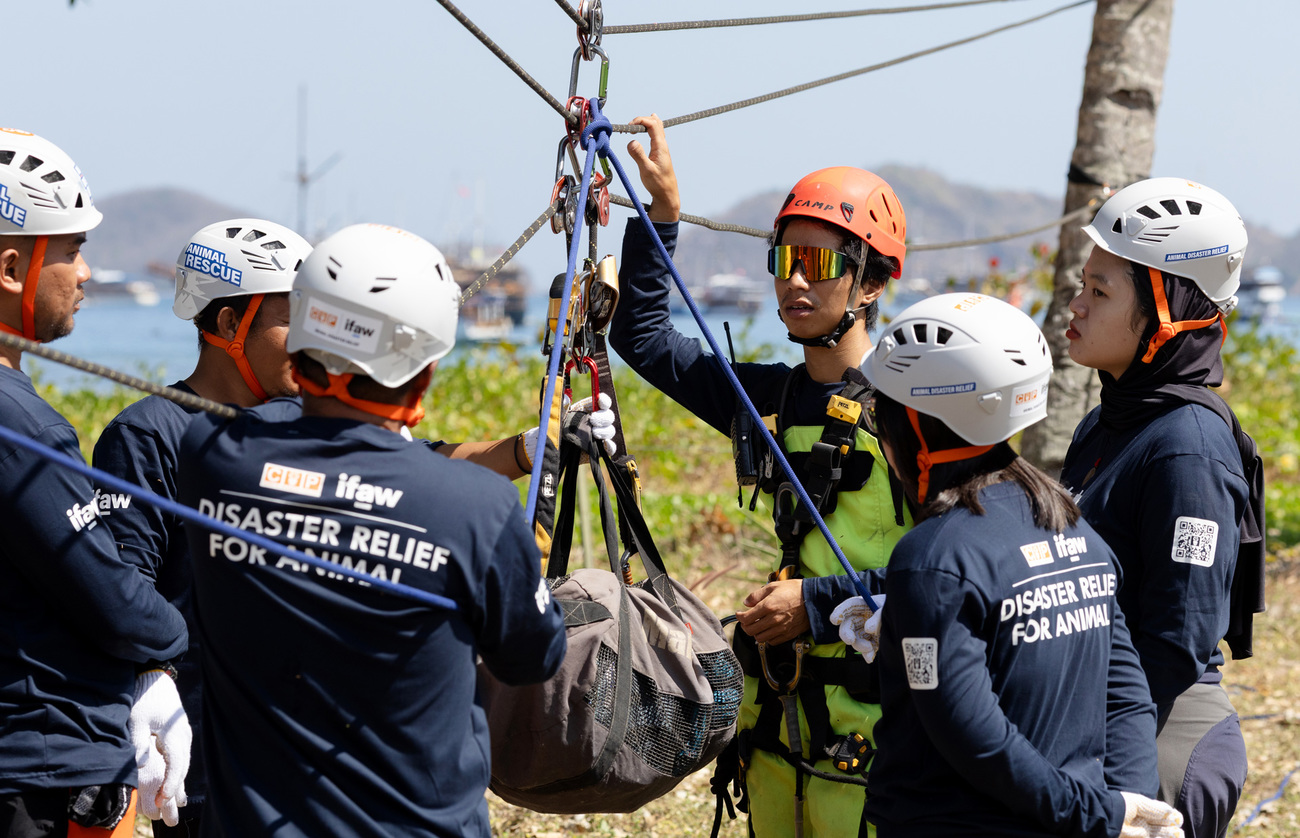
IFAW team delivering disaster preparedness training with Centre for Orangutan Protection (COP) and Bali Animal Welfare Association (BAWA). Photo: © IFAW
(INDONESIA, 25 August 2026) — Critical training to protect animals and communities during disasters proved its worth this August as a series of emergencies swept across Indonesia, putting preparedness into action.
As Indonesia grapples with devastating earthquakes in the east and intensifying wildfires in the north, animal rescue and disaster response organisations came together to strengthen their ability to protect both animals and communities facing increasingly frequent disasters.
IFAW is on-site with the Centre for Orangutan Protection (COP) and Bali Animal Welfare Association (BAWA) to deliver the training over two weeks. The objective is to equip frontline responders with the practical skills to protect animals and support communities before, during, and after disasters.
“As we gathered with partners in Indonesia to strengthen disaster response skills, some of those same responders were called to unfolding emergencies. It is a powerful reminder that climate change is outpacing our preparedness efforts in many parts of the world,” said IFAW disaster resilience manager Jennifer Gardner.
“Disasters are becoming more frequent and intense, placing enormous pressure on communities, wildlife, and responders. We cannot afford to be reactive. We need to build local expertise, strengthen networks, and invest in preparedness before the next crisis occurs. Preparedness is what turns knowledge into action when every minute matters,” Gardner added.
The training includes hands-on simulation exercises, giving participants practical experience in rope rescues, water rescues, and animal evacuations.
“In Indonesia, we know disasters can happen with little warning, and local responders are often among the first people able to help,” said Daniek Hendarto, executive director COP. “Training together before an emergency means we understand one another’s roles, practise the skills we may need in difficult conditions, and build the trust that becomes essential during a real response. This week, we have seen just how quickly preparedness can become action.”
At the same time, wildfires burning across Kalimantan are threatening communities, carbon-rich peatlands, and habitat for critically endangered Bornean orangutans and other wildlife. IFAW is also providing emergency to three local conservation partners supporting community-led firefighting efforts in the region.
The focus extends to Bali this week, where IFAW and BAWA will bring responders together for a second disaster preparedness training.
“When communities face disasters, animals are part of those communities, and their needs must be considered in preparedness and response,” said Ade Andreawan, program manager at BAWA. “Building practical skills and stronger connections between responders before an emergency gives us a better chance of reaching animals quickly, working safely, and supporting the people who care for them when circumstances are at their most difficult.”
ENDS
Notes to editors:
- IFAW and COP have worked together for over a decade to build animal-inclusive disaster response capacity. In 2023, communities supported by the organisations reached an important milestone when Indonesian experts led disaster preparedness classes in Yogyakarta, demonstrating the growth of locally led expertise and the ability to share those skills with other responders.
- BAWA and IFAW have also worked together for over a decade to build resilience in Bali. Following the 2017 eruption of Mount Agung, the organisations provided emergency assistance for animals left behind as communities evacuated, and BAWA has continued to build systems to support animals affected by disasters.
- Indonesia’s location and geography leave communities vulnerable to a wide range of hazards, including earthquakes, tsunamis, volcanic eruptions, floods, landslides, and wildfires. Animals can be injured, displaced, separated from their owners, or left without food, water, shelter, and habitat during these emergencies. Successful response for animals requires collaboration between government agencies, community leaders, veterinarians, animal welfare organisations, and other emergency personnel under difficult and rapidly changing conditions.
Media contact:
IFAW Oceania
Dominica Mack
dmack@ifaw.org
+61 460 432 901
Related content
Every problem has a solution, every solution needs support.
The problems we face are urgent, complicated and resistant to change. Real solutions demand creativity, hard work and involvement from people like you.