Dr. Erika Flores
Project Manager & Veterinary Advisor - Latin America & Caribbean
Preparing Mexico’s animal rescuers for the next disaster
Imagine trying to rescue a frightened horse from a deep hole in the ground. The animal may weigh hundreds of kilograms, be injured or distressed, and have no way to climb out on its own. Getting close enough to help is difficult. Bringing that animal safely to the surface is another challenge entirely.
These are the kinds of situations we were preparing for earlier this month in Mérida, Mexico, where 38 firefighters, veterinarians, and other participants from Yucatan and Quintana Roo came together for three days of technical animal rescue training.
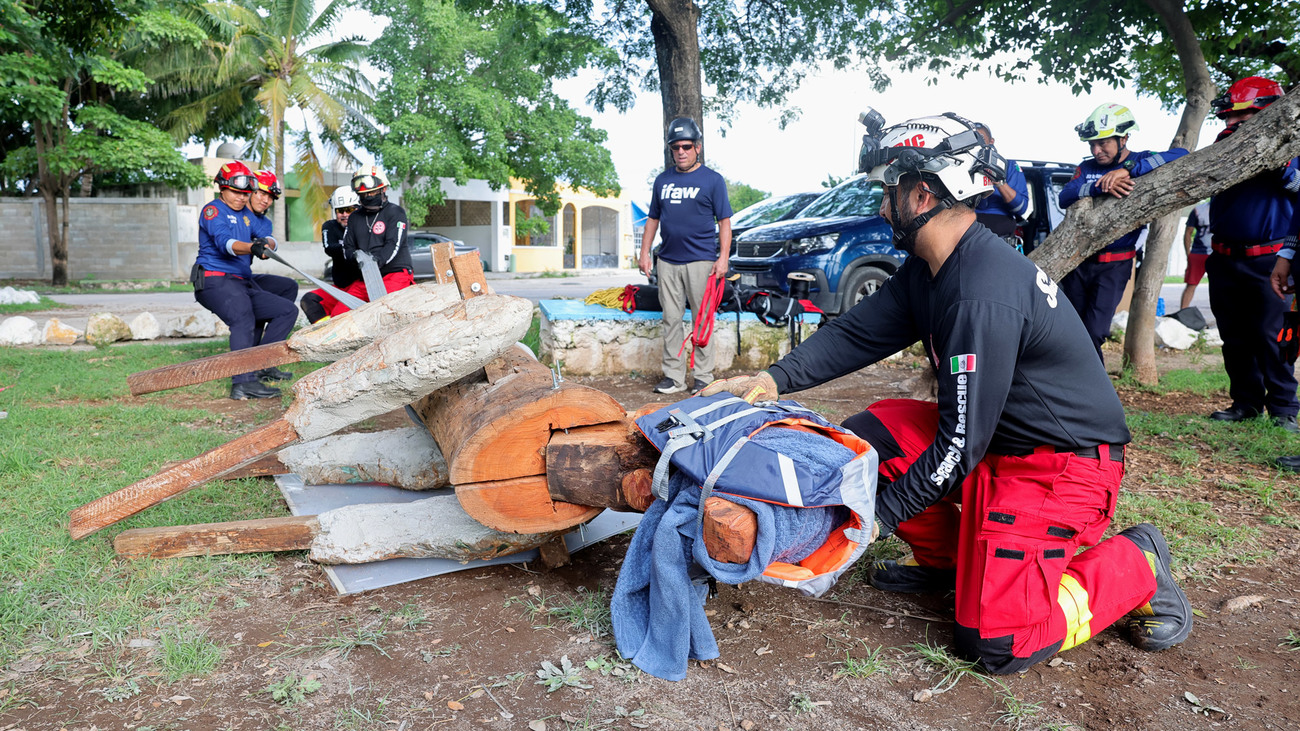
Thirty of those participants were firefighters and other first responders who already have experience responding to animal emergencies. Our goal was to build on that experience, strengthening their technical rescue skills and helping different professions work together more effectively.
What made this training particularly meaningful was that we weren't starting from scratch. IFAW's partnership with local first responders in Mexico stretches back nearly a decade. This was another opportunity to strengthen the capabilities of people already protecting animals in their communities.
The Yucatan Peninsula is known for its cenotes, natural sinkholes that can create particularly difficult rescue environments. When a large animal becomes trapped in a deep or inaccessible location, rescuers face a combination of challenges involving the animal's weight, its behaviour, the surrounding terrain, and the safety of everyone involved.
During the course, participants explored large animal behaviour and handling, as well as horizontal and vertical rope rescue techniques. They learned how the weight and movement of a large animal affects rescue planning and why every step must be carefully coordinated.
Practical exercises simulated animals trapped in crevices, caught over fences, or unable to rise in their stalls. A horse mannequin built by local artisans from concrete and wood weighed several hundred pounds, providing a realistic challenge for the participants. Using specialised harness and rope systems, participants practiced moving large animals horizontally and lifting them vertically over an edge. These exercises required careful planning, technical precision, and constant communication among team members.
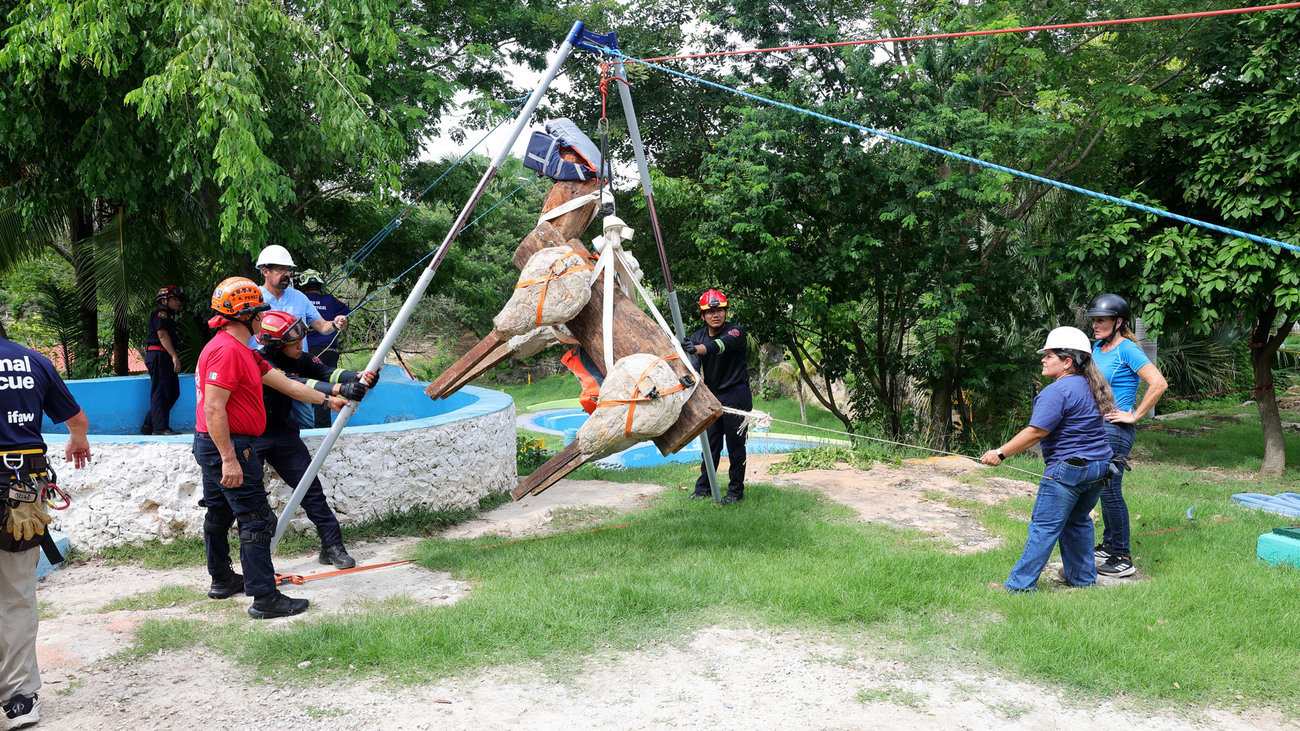
One of the most important lessons in technical rescue is that determination alone isn't enough. You need the right equipment, a clear plan, an understanding of the animal's needs, and a team that can adapt when circumstances change. Those skills must be practiced before an animal's life, or a responder's safety, depends on them.
Something I particularly appreciated about this training was the opportunity to bring firefighters and veterinarians together. They approach emergencies with different but complementary expertise.
Firefighters understand technical rescue systems, hazardous environments, and scene safety. Veterinarians understand how animals may respond to fear, pain, or restraint, and how handling and sedation decisions can affect their welfare. Successful large animal rescues require both perspectives.
The training also helped strengthen collaboration among Yucatan's state fire and rescue services, the state university, and the municipal animal welfare agency.
“This was a unique and enriching experience, and above all, it highlighted the importance of solving problems through an interdisciplinary approach involving technical personnel, civil protection teams, firefighters, and veterinarians. The course fostered collaboration among different professionals and demonstrated how working together can lead to more effective and successful outcomes," shared a responder who took part in the workshop.
For me, that collaboration is just as important as any individual rescue technique. When an emergency happens, it makes an enormous difference if the people responding already understand one another's roles and have practiced making decisions together.
IFAW has worked with local responders in Mexico for nearly a decade, helping strengthen the skills and relationships needed to protect animals during emergencies. That history matters; becoming an effective animal rescuer doesn't happen in a single training course. It takes practice, experience, and a willingness to keep learning.
Many participants in Merida already had practical rescue experience. In fact, just last year, we provided many of these firefighters with training in domestic and wild animal handling techniques, including CPR for companion animals.
What I particularly admire about these first responders is that their commitment to saving lives extends to animals. Whether helping an animal trapped in a well or a burning building or evacuating a family with their dogs and cats during a flood, they go above and beyond to save both humans and animals. I've seen that commitment in the Yucatan firefighters we've worked alongside.
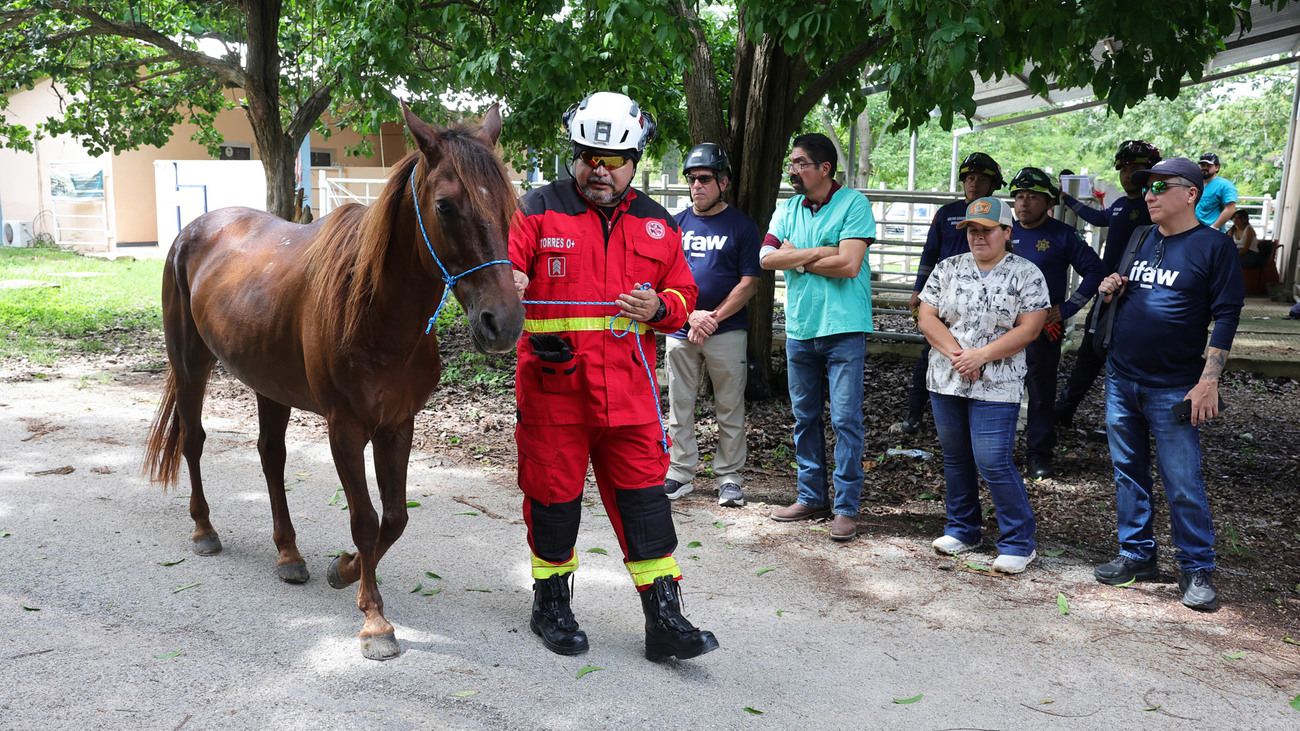
This work is also part of a wider commitment through IFAW's Academy of Rescue & Conservation (ARC), which facilitates training and knowledge sharing across our global rescue and conservation programs. ARC helps connect practical expertise and lessons from the field so that responders can continue learning from one another, across countries and communities.
For me, one of the most valuable aspects of this approach is that knowledge doesn't flow in only one direction. Experienced local responders bring their own understanding of the animals, environments, and emergencies they encounter. Their experience can help inform how we strengthen rescue training elsewhere.
Our international disaster response team, with colleagues from Mexico, Australia, and the US, worked alongside experienced technical rescue trainers and specialists in equine emergency response to deliver the course. Just as importantly, local responders brought their own knowledge of the animals, environments, and emergencies they encounter.
But the real measure of this work happens after we leave. The skills remain with local responders, who know their communities, understand the environments where they work, and will be there when an animal needs help.
While in Merida, we visited the Municipal Animal Welfare Center, which IFAW has previously supported with the provision of crates and supplies for emergency shelters that accommodate families and their pets.
The centre also provides animal care, low-cost veterinary services, and community education. Seeing its work was another reminder that disaster preparedness extends beyond technical rescue. When people are forced to evacuate their homes, concern for their animals can complicate an already frightening situation. Planning for pets and other animals in advance can help families make safer decisions and ensure that animals are not overlooked during an emergency.
Although rope rescue and emergency shelter planning may seem like very different activities, both are part of ensuring animals are considered before emergencies happen.
These 38 participants now have additional knowledge and practical experience to bring back to their teams. The training also created opportunities for firefighters, veterinarians, and animal welfare professionals to strengthen relationships that can make future disaster responses more coordinated and effective.
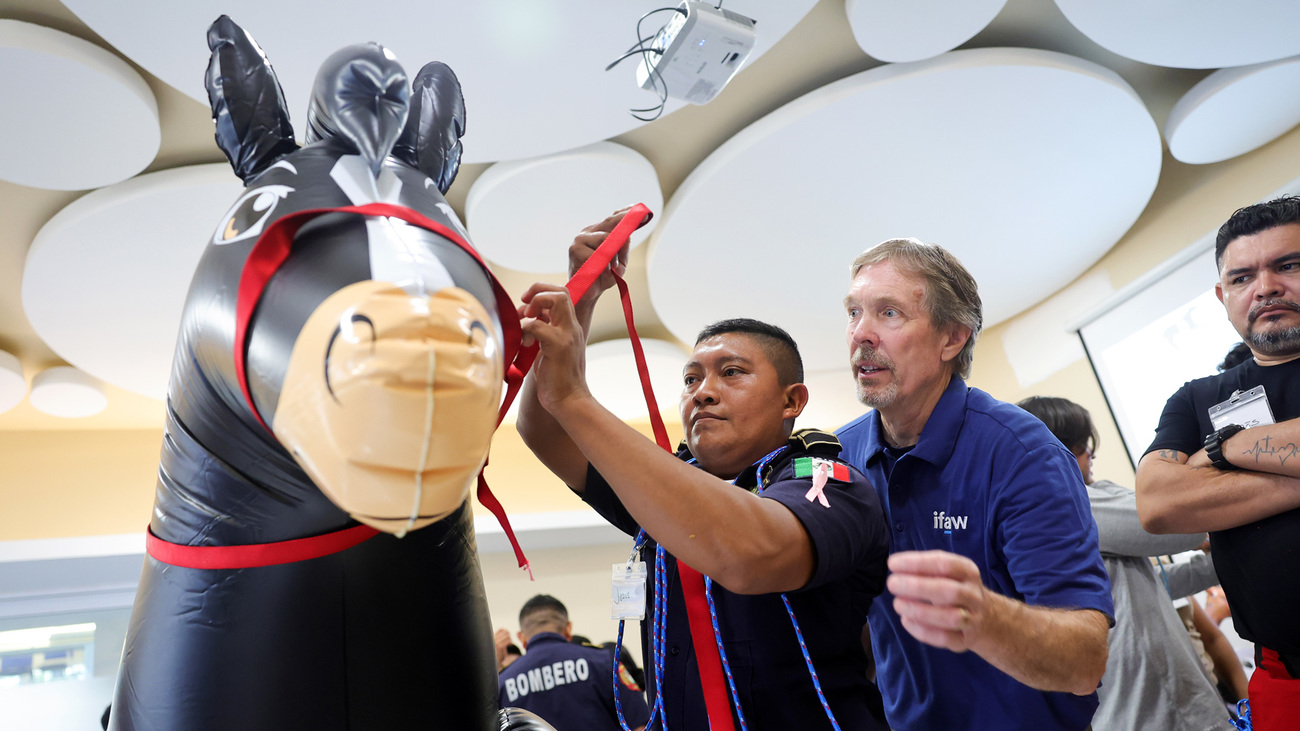
This is what I value about our work through ARC. Every training is an opportunity not only to share knowledge, but to learn from the people who will put these skills into practice every day. Over time, those relationships and experiences help strengthen the wider network of people working to protect animals.
We cannot know when or where the next animal will become trapped or when the next disaster will strike. But we can make sure that when it happens, skilled local responders are better prepared to help. For the animals who will one day depend on them, that preparation can make all the difference.
Dr. Erika Flores
Project Manager & Veterinary Advisor - Latin America & Caribbean
Our work can’t get done without you. Please give what you can to help animals thrive.
Unfortunately, the browser you use is outdated and does not allow you to display the site correctly. Please install any of the modern browsers, for example:
Google Chrome Firefox Safari