Disaster Response
Pangolins and other wildlife reveal the wider toll of Indonesia’s fires
Pangolins and other wildlife reveal the wider toll of Indonesia’s fires
18 September 2026
Weeks into Indonesia’s wildfire emergency, teams moving through burned and fire-affected landscapes are seeing more clearly how many different species are being affected.
New field reporting from IFAW-supported Conservation Action Network Indonesia (CAN) shows teams rescuing not only Bornean orangutans, but also Sunda pangolins and long-tailed macaques. Among 17 wild animals recorded in CAN’s latest rescue figures are eight Sunda pangolins, six orangutans, and three long-tailed macaques.
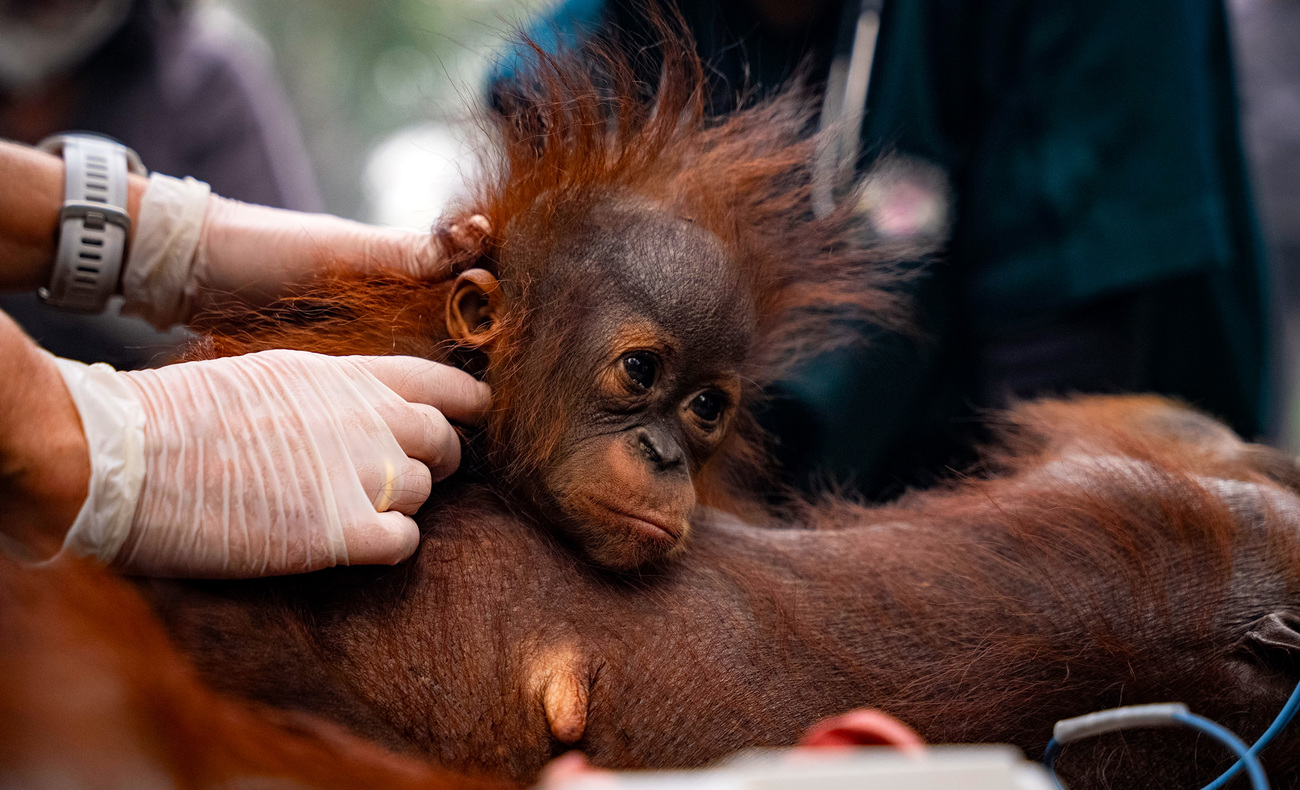
Bornean orangutans affected by the 2026 wildfires in West Kalimantan are evacuated by YIARI and government wildlife authorities for health assessments and appropriate veterinary care. Photo: © YIARI
The impact across species is also becoming clearer elsewhere in West Kalimantan. IFAW-supported partner YIARI reports that, working alongside the Ministry of Forestry through the West Kalimantan Natural Resources Conservation Agency, 19 orangutans and 12 other wild animals affected by the fires have now been evacuated in Ketapang and Kayong Utara. These include seven pangolins, two proboscis monkeys, a dusky leaf monkey, a Bornean slow loris, and a Malayan civet.
The rescues offer another glimpse into the scale of a crisis that reaches far beyond any one species. Drought and fire can remove the food, water, shelter, and connected habitat animals need to survive, while forcing those able to escape into remaining forest, plantations, gardens, and areas closer to people.
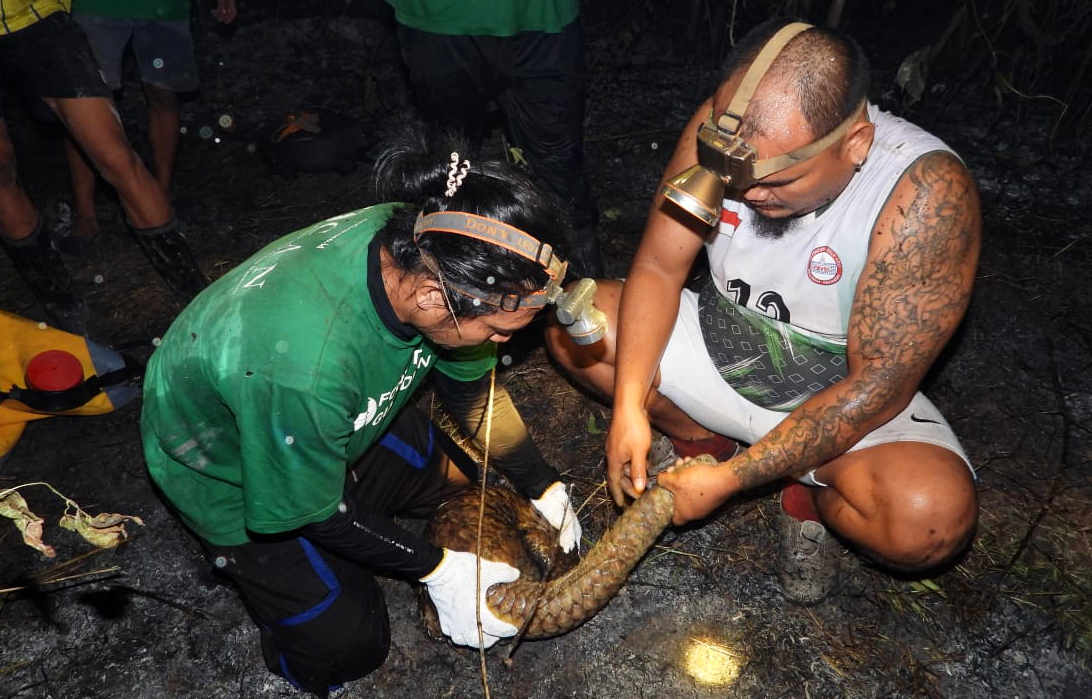
CAN teams rescue and care for a pangolin affected by the 2026 wildfires and prolonged drought across Kalimantan. Photo: © CAN
Pangolins caught in the fire crisis
For Sunda pangolins, the findings are particularly concerning. CAN reports rescuing eight individuals during its response. Teams have also encountered pangolins that did not survive in burned or fire-affected areas.
Pangolins can be especially difficult to detect in the wild. Primarily nocturnal and solitary, they spend much of their time on the ground or sheltering in burrows and other protected spaces. When fire moves through their habitat, escape may not always be possible.
For those found alive, rescue is only the beginning. CAN assesses rescued wildlife to determine what each individual needs, which may include veterinary treatment, rehabilitation, monitoring, or relocation to suitable habitat. An animal is only ready to return when both its condition and the safety of the receiving habitat have been assessed.
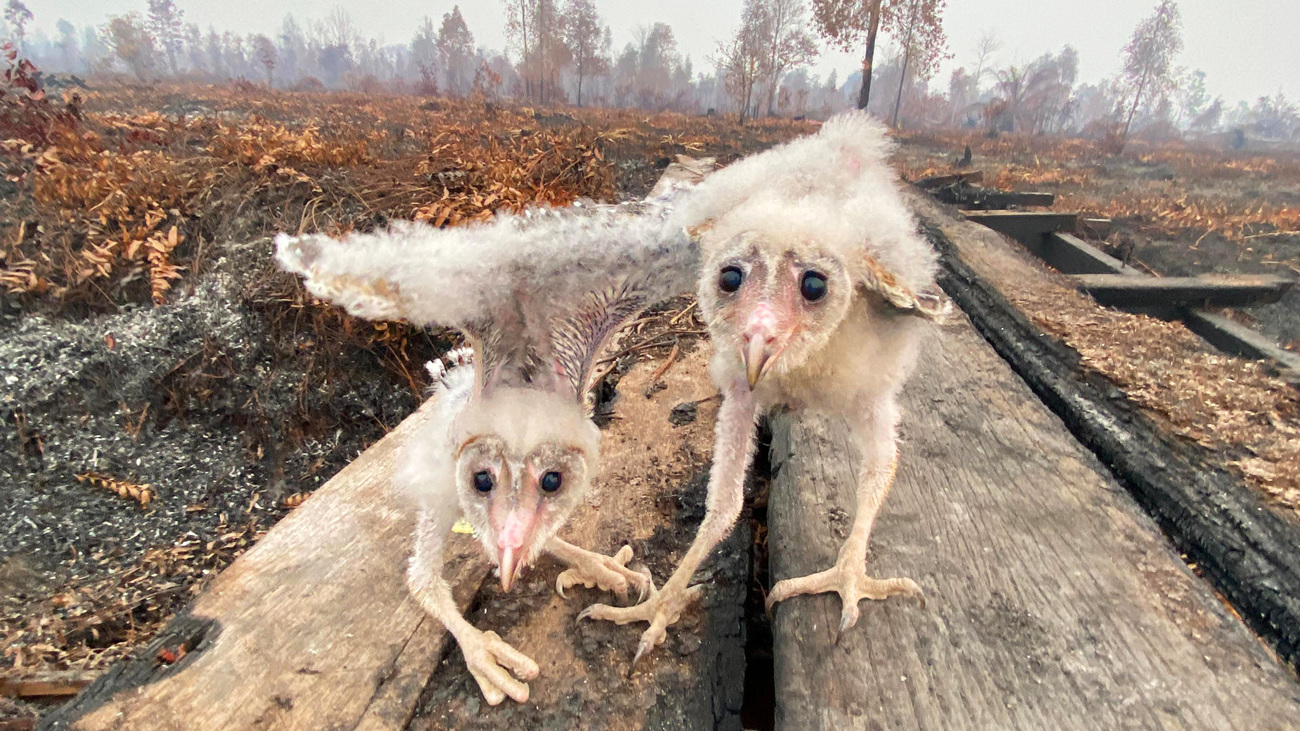
Two young birds rescued from fire-affected habitat in Kalimantan, Indonesia, are among the wildlife CAN teams are helping as the 2026 wildfire emergency continues. Photo: © CAN
What teams are finding on the ground
CAN and partner teams have now carried out suppression activities at 211 fire points across Kalimantan, including 51 in protected forest or important orangutan habitat. The response has brought together 43 professional firefighters and 173 community volunteers.
As those teams move through affected areas, they are also documenting wildlife they encounter. Alongside pangolins, orangutans, and macaques, animals found in burned or fire-affected areas have included snakes, monitor lizards, birds, deer, and mouse deer.
Not all can be saved. CAN teams have documented 137 dead wild animals during field operations, including 87 snakes, 23 monitor lizards, 14 Sunda pangolins, eight birds, three long-tailed macaques, one deer, and one mouse deer. These figures represent only animals encountered by field teams, not an estimate of wildlife deaths across Kalimantan.
That distinction matters. Wildlife affected by fire can be difficult to find, and the consequences continue after flames have passed. Burned vegetation can leave surviving animals without adequate food or shelter, while drought further reduces water and other resources.
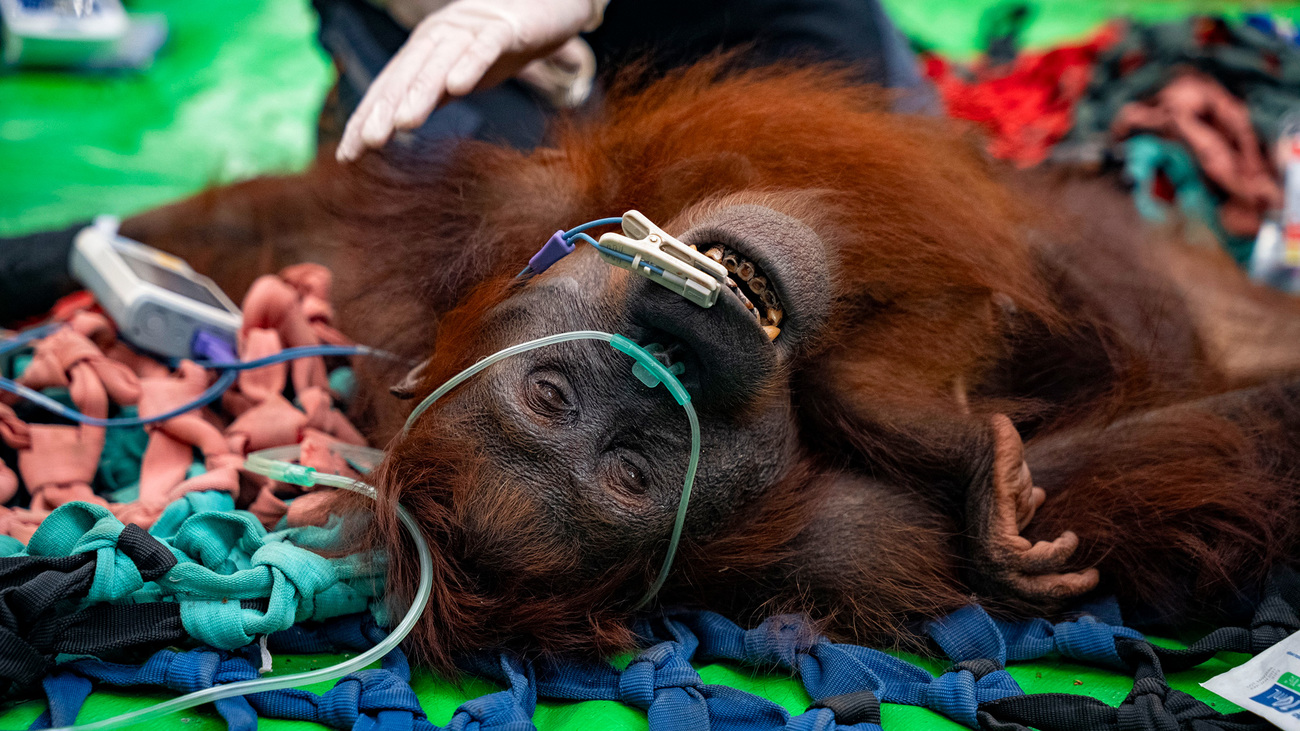
Bornean orangutans affected by the 2026 wildfires in West Kalimantan are evacuated by YIARI and government wildlife authorities for health assessments and appropriate veterinary care. Photo: © YIARI
Rescue continues after the flames
One orangutan rescue reported by CAN illustrates those longer-lasting effects. A mother and infant found in fragmented forest in East Kalimantan were in poor nutritional condition after drought reduced access to food and water and fires appeared nearby. They were brought to the Long Sam Wildlife Rehabilitation Centre for care and have since shown improvement.
Their story reinforces why wildfire response does not end when a fire is suppressed. Animals that survive may still face hunger, dehydration, injury, displacement, and the loss of habitat they need to recover.
IFAW’s support is helping CAN continue wildlife rescue and veterinary care alongside fire suppression and monitoring. Teams need fuel and transport to reach remote sites, pumps and hoses to move water, protective and medical equipment for responders, and veterinary supplies to treat animals affected by the emergency.
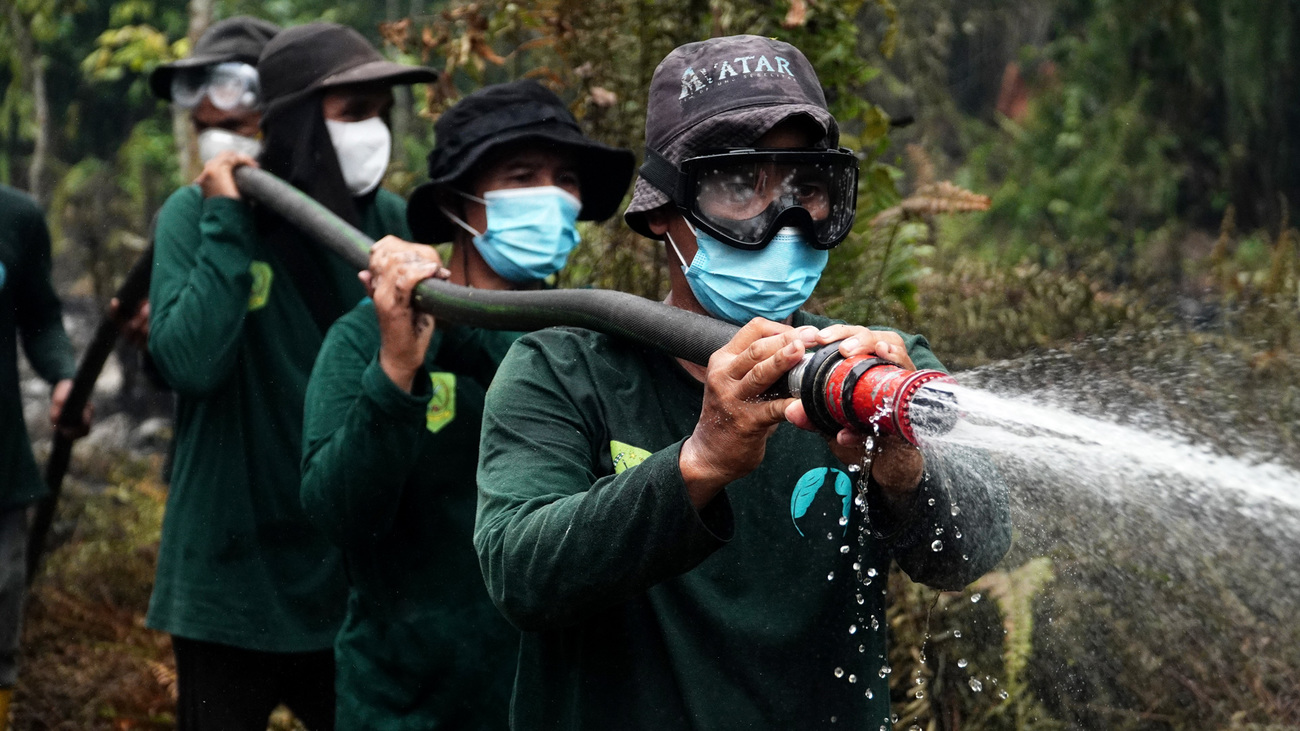
CAN teams rescue and care for wildlife affected by the 2026 wildfires and prolonged drought across Kalimantan, while working with local communities to suppress fires and protect critical habitat. Photo: © CAN
Wildlife and communities face the same changing landscape
The fires and prolonged drought are also affecting the communities living alongside wildlife. CAN has delivered clean water to 10 drought-affected villages and provided food and essential supplies to 173 families whose gardens burned or harvests failed. Five families whose homes burned have received temporary shelter, while CAN is also supporting firefighting teams with medical equipment, medicines, transport, and logistics.
Community members themselves are central to the wildfire response. They help locate new fires, identify access routes and water sources, and sustain suppression efforts over successive days. Their knowledge of these landscapes is helping protect forests that both people and wildlife depend on.
In West Kalimantan, YIARI teams are similarly continuing round-the-clock fire patrols alongside partners, monitoring fire development and potential hotspots so they can respond quickly as conditions change. IFAW is supporting YIARI’s broader fire monitoring and suppression response.
As fire suppression continues, the full impact on wildlife will take time to understand. What responders are already finding makes one thing clear. Protecting these forests is about far more than any single species. From pangolins moving across the forest floor to orangutans in the canopy, each animal is part of an ecosystem under extraordinary pressure, and each rescue is an opportunity to help that ecosystem retain one more of its wild inhabitants.
Fires put more Bornean orangutan habitat at risk as response continues
16 September 2026
As wildfires continue across Indonesian Borneo, the scale of the threat to Bornean orangutans is becoming clearer. A recent analysis found that around 60% of the area affected by fires in Kalimantan between June and August was within Bornean orangutan habitat, underscoring the pressure facing a species already threatened by extensive habitat loss.
IFAW continues to support three locally led responses in Indonesia through the Gunung Palung Orangutan Conservation Program (GPOCP), Yayasan Inisiasi Alam Rehabilitasi Indonesia (YIARI), and Conservation Action Network Indonesia (CAN). Together, these partners are fighting fires before more habitat is lost, protecting community-managed forests, and rescuing and rehabilitating individual orangutans already displaced by the emergency.
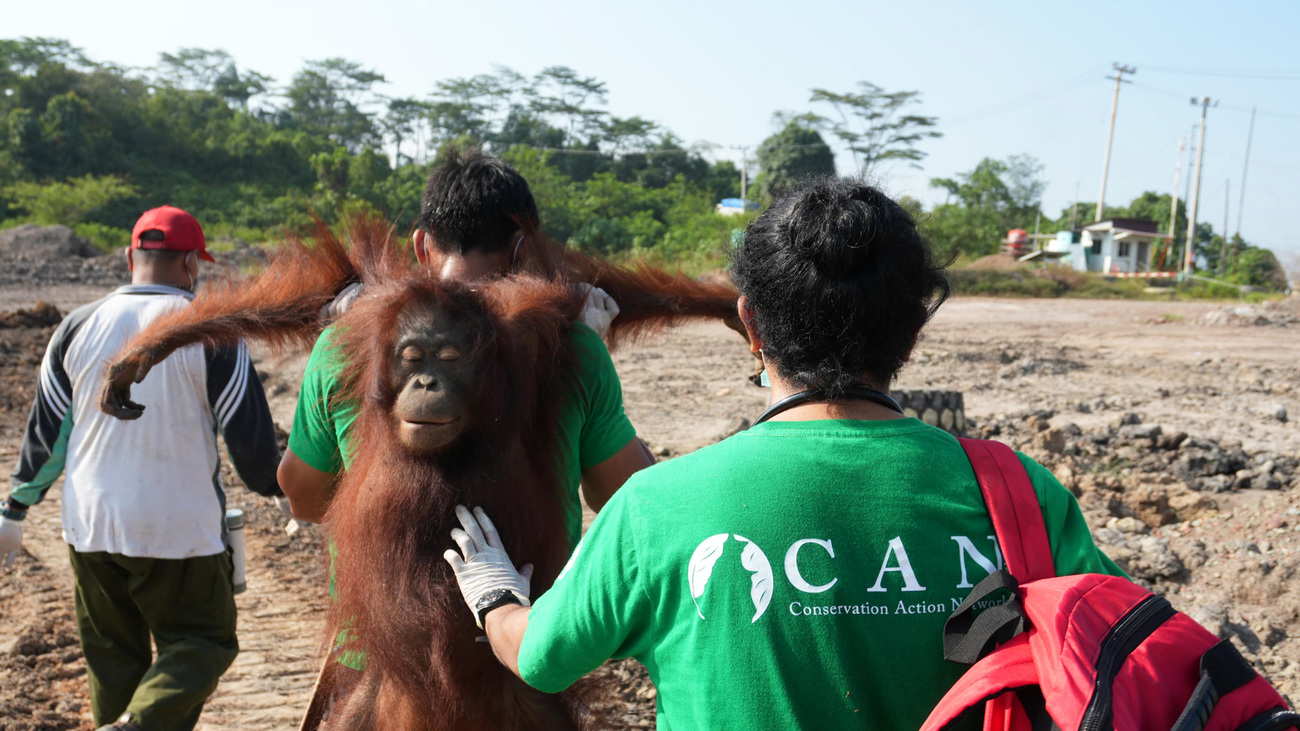
With support from IFAW, Conservation Action Network Indonesia (CAN) teams rescue and relocate orangutans affected by wildfires in Indonesian Borneo. Photo: © CAN
A critical orangutan refuge under pressure
New information from GPOCP shows how dangerous conditions remain across West Kalimantan.
In Pemangkat Village, fire destroyed more than 20 hectares of protected orangutan habitat in just 10 days. Flames reached a community patrol camp, burning the peat beneath it, while teams worked to stop the fire from advancing towards neighbouring Village Forests.
Other fires have threatened forests and villages across the wider landscape.
These forests are especially important because orangutans are already being pushed into remaining areas of suitable habitat. In Sungai Paduan, part of an important orangutan corridor within the Mendawak landscape, GPOCP monitoring has shown orangutan numbers more than doubling in just three years as surrounding habitat has been cleared. For some animals, the forests now threatened by fire have already become a refuge after losing habitat elsewhere.
Communities on the front line
Local communities are central to protecting these forests, but the work is becoming increasingly dangerous.
One member of a Village Forest management team was injured after falling through burned peat during firefighting operations and required hospital treatment. At another point, worsening winds and fire conditions forced community firefighters and conservation staff to shelter in place until it was safe to move. Some families living closest to the fires have also moved young children and older relatives away from spreading flames and hazardous smoke.
Peat fires are particularly difficult to control. Once fire reaches dry peat below the surface, it can continue burning underground and re-emerge, making sustained monitoring and access to water essential. GPOCP teams, Village Forest management groups, community firefighters, and national park rangers are working together to detect and suppress fires before they spread further.
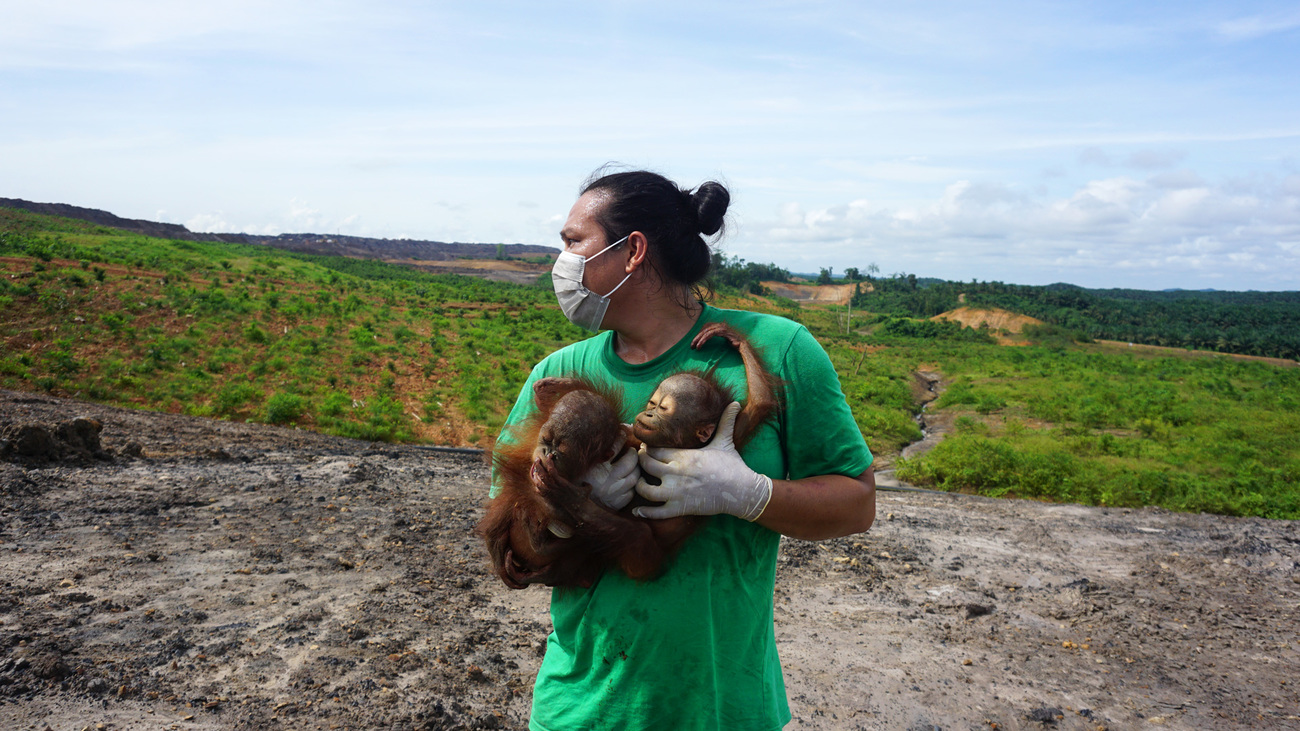
Conservation Action Network Indonesia (CAN) responds to an orangutan affected by the 2026 wildfire emergency in Indonesian Borneo. Photo: © CAN
Strengthening the response to protect forests and wildlife
IFAW’s continuing emergency support is helping locally led teams respond at different stages of the crisis.
With GPOCP, support is helping frontline teams access the water, hoses, firefighting equipment, protective gear, and operational resources needed to defend threatened forests. YIARI and community partners are working to protect the more than 7,000-hectare Pematang Gadung Village Forest, home to an estimated 200 Bornean orangutans. CAN teams are combining fire suppression with wildlife rescue and rehabilitation, having already rescued 13 orangutans from dangerous situations linked to the ongoing crisis.
This combination matters. Keeping a fire from entering intact habitat can prevent animals from becoming displaced in the first place. When orangutans are already in danger, trained rescue teams can intervene, move animals to safer habitat where appropriate, and provide rehabilitation for those needing additional care.
The work also protects communities that depend on these forests for livelihoods, water, and other resources. By putting resources into the hands of local organisations and community responders, IFAW is helping strengthen the people already working to protect these landscapes.
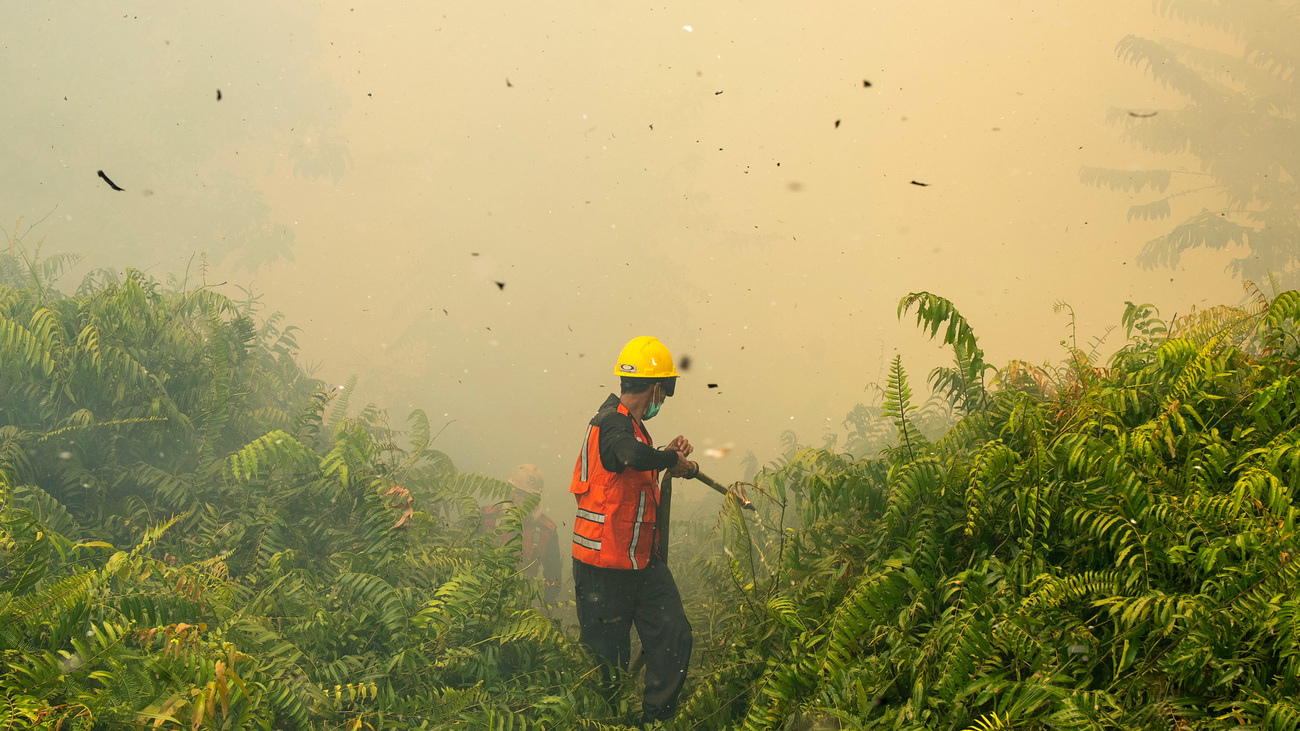
IFAW is supporting partners Yayasan Inisiasi Alam Rehabilitasi Indonesia (YIARI) working alongside community firefighting teams to defend the more than 7,000-hectare Pematang Gadung Village Forest, where an estimated 200 Bornean orangutans still find refuge. Photo: © YIARI / Indonesian Ministry of Forestry / BKSDA
Protecting critical habitat as the fires continue
The effects of this fire season extend beyond the immediate flames. Fire can reduce food sources and nesting trees, fragment habitat, and leave orangutans with fewer safe routes through the forest.
For an orangutan that has already been displaced once, protecting the forest where it has found refuge can help prevent another crisis. For communities, stopping a fire can protect homes, livelihoods, water sources, and forests they have worked for years to conserve.
As fire conditions continue, IFAW and our partners are working to prevent further habitat loss while helping individual animals already affected by the emergency. Keeping these forests standing gives orangutans more space to remain safely in the wild and communities more resilience in the face of an increasingly difficult fire season.
IFAW expands wildfire response as orangutans are displaced in Borneo
2 September 2026
As fires continue to threaten forests and communities across Indonesian Borneo, IFAW is expanding its emergency response with a third grant to support wildlife rescue, rehabilitation, and fire suppression.
Prolonged drought and El Niño conditions have intensified fire risk, leaving degraded forests particularly vulnerable. As fires spread and habitat becomes unsafe, wildlife can be forced into unfamiliar areas and closer to people, increasing risks for both animals and communities.
Since July, Conservation Action Network Indonesia (CAN) has rescued 13 orangutans from dangerous situations linked to the ongoing crisis. Ten were successfully relocated to safer forest habitat, while three required additional care and were transferred to the Long Sam Wildlife Rehabilitation Centre for medical treatment.
IFAW is providing emergency funding to help CAN continue monitoring and suppressing fires while rescuing and caring for wildlife injured or displaced by the emergency.
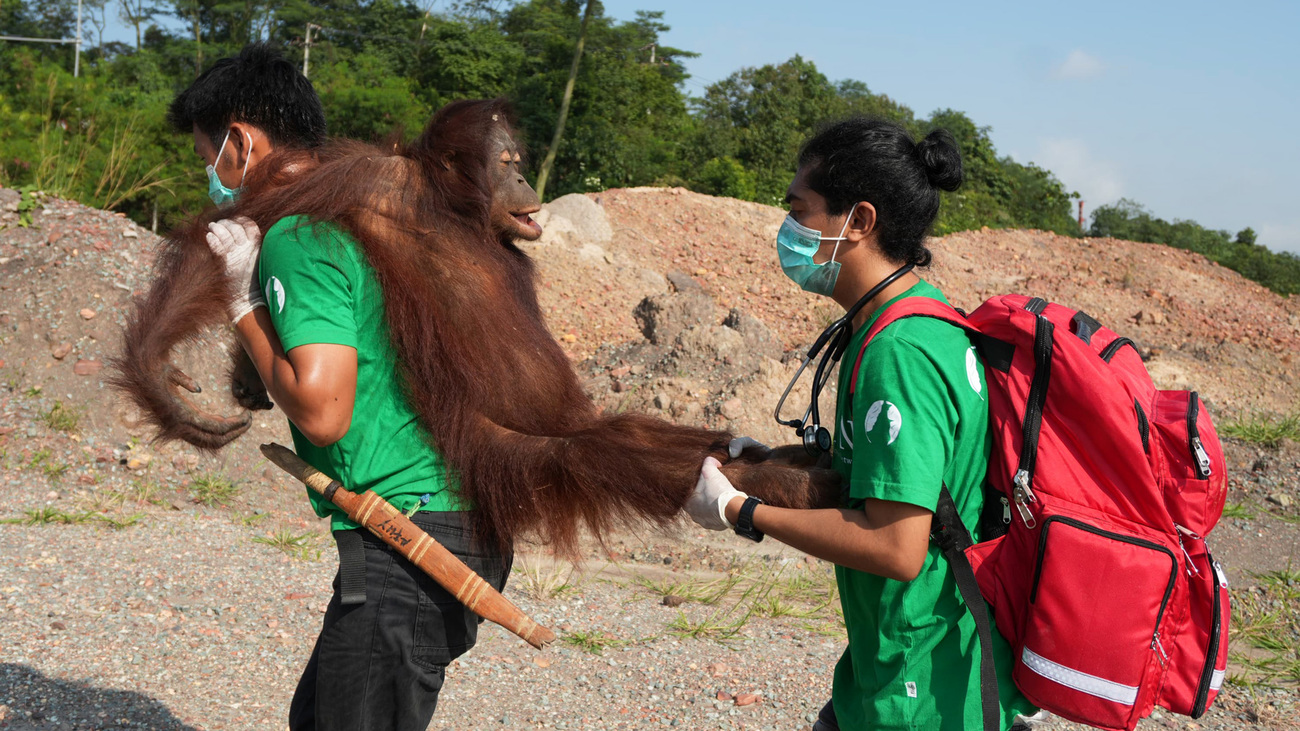
Conservation Action Network team members carry a rescued orangutan to safety during the 2026 wildfire emergency in Indonesian Borneo. Photo: © Conservation Action Network (CAN)
Protecting wildlife and communities
CAN’s response extends beyond individual animal rescues. Its teams are working alongside social forestry groups to extinguish fires in community-managed areas, helping protect forests as well as the livelihoods and vital water sources local communities depend on.
This locally-led response is particularly important as fire transforms the landscape. Orangutans displaced from damaged or fragmented forests may move closer to farms, villages, and other human activity in search of safety and resources, potentially increasing human-wildlife conflict.
For animals already in danger, rescue can provide an immediate lifeline. The 10 orangutans moved to safer forests demonstrate what rapid intervention can achieve, while the three receiving medical care illustrate why rehabilitation capacity is also an essential part of wildlife disaster response.
IFAW support grows as fires continue
This latest grant means IFAW is now supporting three locally led wildfire response efforts in Indonesia.
Earlier emergency grants to Yayasan Inisiasi Alam Rehabilitasi Indonesia (YIARI) and the Gunung Palung Orangutan Conservation Program (GPOCP) are helping community firefighting teams protect critical orangutan habitat in West Kalimantan, providing resources including firefighting equipment, protective gear, fuel and transport, personnel support, and access to urgently needed water.
The additional support to CAN strengthens another critical part of the response, helping teams both fight fires and respond when wildlife is already injured or displaced. Together, these efforts span the different stages of a wildfire emergency, from detecting and suppressing fires before more habitat is lost to rescuing and rehabilitating individual animals affected by them.
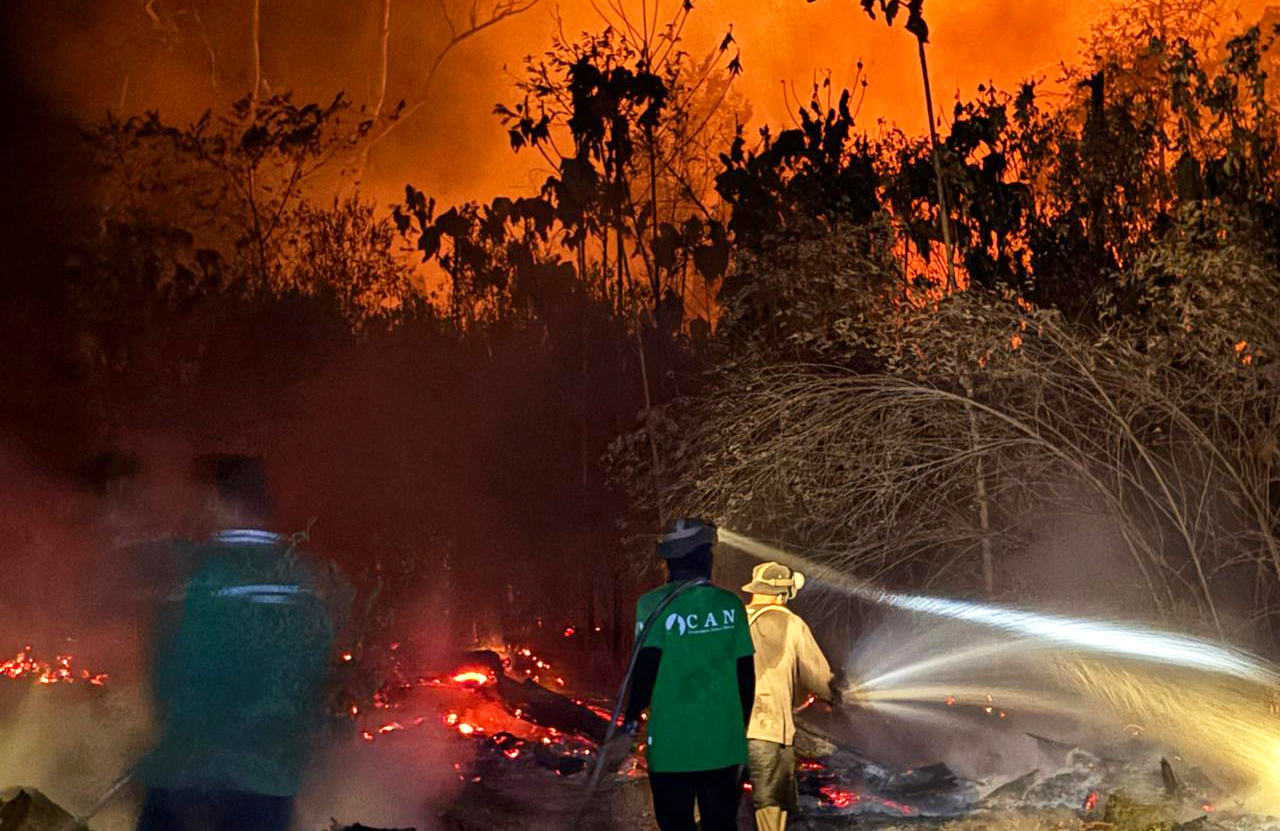
Conservation Action Network team members work to suppress forest fires in Indonesian Borneo, helping protect wildlife habitat and nearby communities. Photo: © Conservation Action Network (CAN)
Protecting habitat for the future
While rescue is essential during an emergency, CAN is also working to address the conditions that leave wildlife vulnerable by restoring fragmented habitat and securing ecological corridors.
Healthy, connected forests give orangutans and other wildlife more space to move safely, find food and shelter, and avoid conflict with people. For communities, protecting forests can also mean protecting livelihoods and vital water sources.
As the wildfire emergency continues, our local partners are working to protect animals and their habitat at multiple points in the response, from fire monitoring and suppression to the rescue and rehabilitation of individual animals.
Each fire contained and each animal brought to safety contributes to a larger effort to protect Borneo’s wildlife, forests, and the communities working alongside them.
IFAW sends emergency support as long-time partners respond to multiple disasters
19 August 2026
Fires are burning through forests and carbon-rich peatlands in West Kalimantan, Indonesian Borneo, threatening communities and critical habitat for critically endangered Bornean orangutans and other wildlife. Community firefighters are working in dangerous conditions to contain the flames, with some teams struggling to access enough water to hold the fire line.
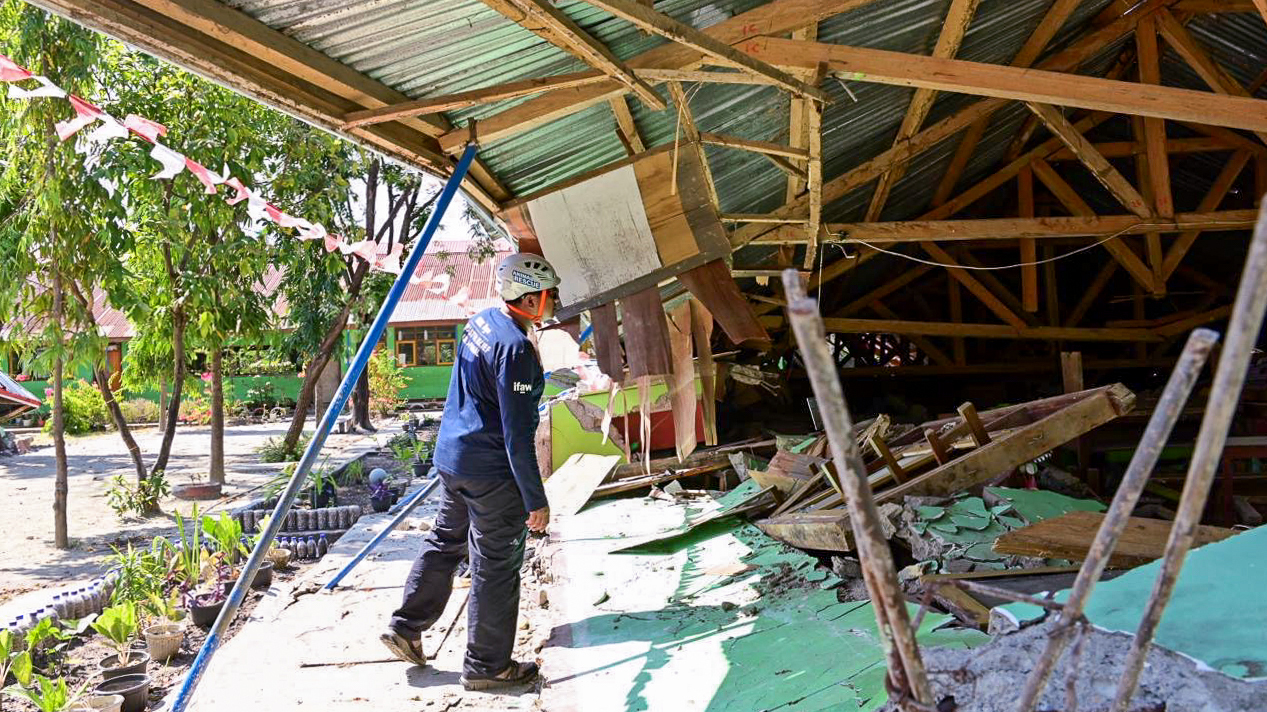
The Center for Orangutan Protection (COP) team conducting assessments after earthquake in Flores, Indonesia. Photo: © Center for Orangutan Protection
At the same time, a powerful 7.7-magnitude earthquake has struck eastern Indonesia, causing widespread destruction, loss of life, and displacement. The earthquake struck while IFAW was already in Indonesia conducting disaster preparedness training with our long-time partner, the Centre for Orangutan Protection (COP). Several COP team members taking part in the training, both as trainers and participants, stepped away to support the earthquake response as the emergency unfolded.
The timing underscores why preparedness and building local response capacity matter. When disasters strike, local organisations and trained responders are often among those able to act quickly for animals and communities.
Meanwhile, the wildfire situation in West Kalimantan remains urgent. In Sungai Paduan, three of four Village Forests have been burning and fire has reached the boundary of the fourth. Flames have come within approximately 300 metres of a patrol camp, while elsewhere in the landscape fires are moving increasingly close to homes. These remaining forests have become an important refuge for orangutans displaced by previous habitat loss, with monitoring showing that their numbers in Sungai Paduan have more than doubled in just three years.
IFAW sends emergency support to West Kalimantan
IFAW is sending two emergency grants to help local partners and community firefighting teams respond immediately and protect critical wildlife habitat in West Kalimantan. One grant to Yayasan Inisiasi Alam Rehabilitasi Indonesia (YIARI) will strengthen fire detection and suppression in Pematang Gadung Village Forest, more than 7,000 hectares of community-managed peatland that supports an estimated 200 Bornean orangutans. A second grant to the Gunung Palung Orangutan Conservation Program (GPOCP) will support teams fighting fires across its conservation landscape, including the urgently threatened Village Forests of Sungai Paduan.
Across both responses, IFAW funding will help put essential resources into the hands of community firefighters, including pumps and hoses, protective equipment, fuel and transport, personnel support, communications, and other field supplies. In Sungai Paduan, where the lack of accessible water is severely constraining firefighting efforts, funding will also help establish reliable water points so teams can continue holding the fire line.
A vital refuge for orangutans under threat
Some of the most severe fires are affecting the Sungai Paduan Village Forest area, part of an important orangutan corridor within the Mendawak landscape north of Gunung Palung National Park.
These forests have become increasingly important for orangutans as surrounding habitat has been cleared. Monitoring by GPOCP shows the number of orangutans in Sungai Paduan has more than doubled in just three years, as animals displaced by habitat loss have moved into the remaining Village Forests.
For some of these orangutans, the forests now threatened by fire have become a refuge after their previous habitat was lost.
Protecting wildlife in Pematang Gadung
Further south in West Kalimantan, another community-led response is underway in Pematang Gadung Village Forest.
More than 7,000 hectares of community-managed coastal peatland provide habitat for an estimated 200 Bornean orangutans. The forest also supports threatened wildlife including proboscis monkeys, silvered langurs, Bornean agile gibbons, Sunda clouded leopards, and numerous bird and freshwater species.
It is a landscape where local communities have worked for years to protect and restore. Since 2016, restoration initiatives have replanted more than 300 hectares with over 150,000 trees, while joint protection efforts have helped keep approximately 7,000 hectares of high-conservation-value forest intact.
Peat fires pose a particular threat to this progress. In degraded or drying peat, fire can spread below ground and re-emerge even after it appears to have been extinguished. Early detection and rapid suppression are therefore critical, as is returning to affected areas to monitor for re-ignition.
IFAW is supporting Yayasan Inisiasi Alam Rehabilitasi Indonesia, known as YIARI, and its community partners to strengthen firefighting capacity in Pematang Gadung through these most critical months of the dry season.
Communities protecting their forests
Among those working to protect Pematang Gadung are the women of The Power of Mama, a community-led firefighting and forest protection initiative supported by YIARI.
The group works alongside other local responders to monitor fire-prone areas, identify threats, and help extinguish fires before they spread. Their experience demonstrates the impact locally led preparedness can have. In 2025 alone, members of The Power of Mama extinguished six large fires and helped prevent more than 150 additional fire incidents from spreading.
IFAW’s emergency support will help community firefighting teams remain equipped, mobile, and ready to respond throughout the current fire season. Funding will support essential firefighting equipment, pumps and hoses, personal protective equipment, repairs, transport, fuel, communications, and field supplies.
The importance of these resources is especially apparent in Sungai Paduan, where access to water has become one of the most significant challenges facing firefighters. Some fires are burning in areas without nearby rivers or canals, and community members have been attempting to dig down to find water while teams work to contain the fires.
IFAW is supporting GPOCP to help address these urgent needs. Funding will help establish more reliable water points by drilling down to the water table, provide additional hoses and firefighting equipment, support personnel in the field, and provide protective equipment for responders. Longer hoses can allow water points to be established in safer locations while still enabling firefighters to reach fires hundreds of metres away.
Preparedness matters when disaster strikes
The events unfolding simultaneously across Indonesia demonstrate that disaster response can take many forms. While IFAW’s emergency funding is currently directed towards the wildfire response in West Kalimantan, our disaster preparedness work with COP is helping strengthen the skills and capacity of local responders who can mobilise when emergencies occur.
Seeing members of the training step away to assist with the earthquake response as it unfolded was an immediate reminder that preparedness is not an abstract exercise. Local responders live and work in the communities at risk, and their ability to act quickly can make a critical difference when disaster strikes.
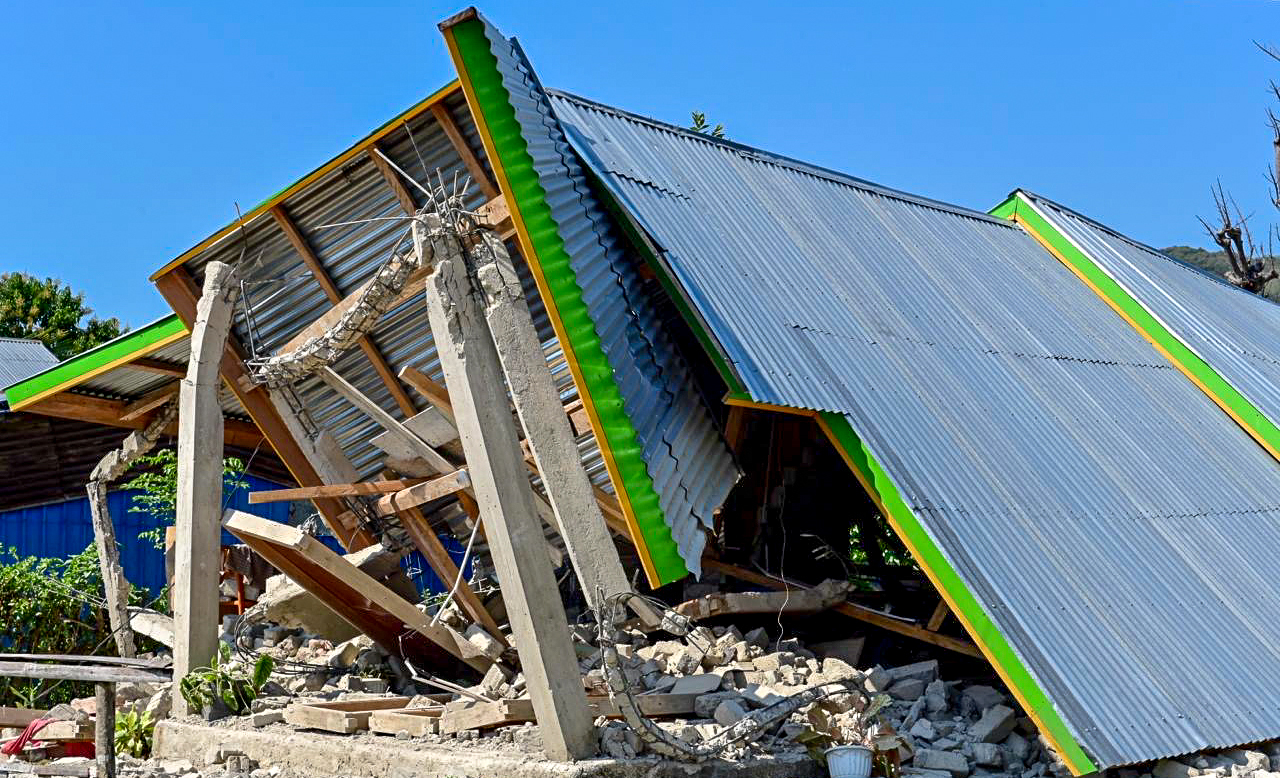
Infrastructure damaged by a powerful 7.7-magnitude earthquake in Flores, eastern Indonesia. Photo: © Center for Orangutan Protection
Protecting animals before they need rescue
Disaster response for wildlife is often associated with rescuing and treating animals after they have been injured. In West Kalimantan, there is an opportunity to intervene earlier by helping communities prevent fires from destroying the habitat wildlife depends on.
For an orangutan living in one of these forests, protecting habitat means preserving the trees that provide food, shelter, routes through the forest, and places to raise their young. The same forests sustain many other species and support the communities that have taken an active role in managing and protecting them.
They are also important for the climate. Pematang Gadung and adjacent forests are estimated to hold approximately 40 million tonnes of stored carbon. Protecting carbon-rich peatlands from fire can therefore benefit wildlife and communities while helping prevent significant stores of carbon from being released into the atmosphere.
The people working to protect these forests are central to that effort. Community firefighters bring local knowledge and experience that allow them to identify threats and respond quickly, while conservation organisations provide the coordination, expertise, and long-term relationships needed to support their work.
Through emergency support to YIARI and GPOCP, IFAW is helping strengthen this locally led response across two threatened landscapes in West Kalimantan. By helping community firefighters access the equipment, water, protective gear, and operational support they need, we can help protect individual animals, important wildlife populations, and the forests that both people and wildlife depend on.
Related content
Every problem has a solution, every solution needs support.
The problems we face are urgent, complicated and resistant to change. Real solutions demand creativity, hard work and involvement from people like you.