Disaster Response
Greece's wildfire emergency puts wildlife and communities at risk
Greece's wildfire emergency puts wildlife and communities at risk
14 August 2026
As responders continue working across areas affected by extreme heat and wildfires in Greece, another critical phase of the emergency is unfolding as teams care for the wild animals that survive.
IFAW is providing additional emergency support to our partner ANIMA – Hellenic Wildlife Care Association, a member of the Greece Wildlife Rescue Network, as its teams respond to an overwhelming number of wild animals in need of rescue, treatment, and rehabilitation.
From May through the end of July, ANIMA cared for approximately 4,600 wild animals, alongside around 1,500 domestic and other non-wild animals brought to its First Aid Station by members of the public. Historically, between 50% and 60% of ANIMA’s annual wildlife admissions occur from May through August, making summer an exceptionally demanding period even without a major emergency.
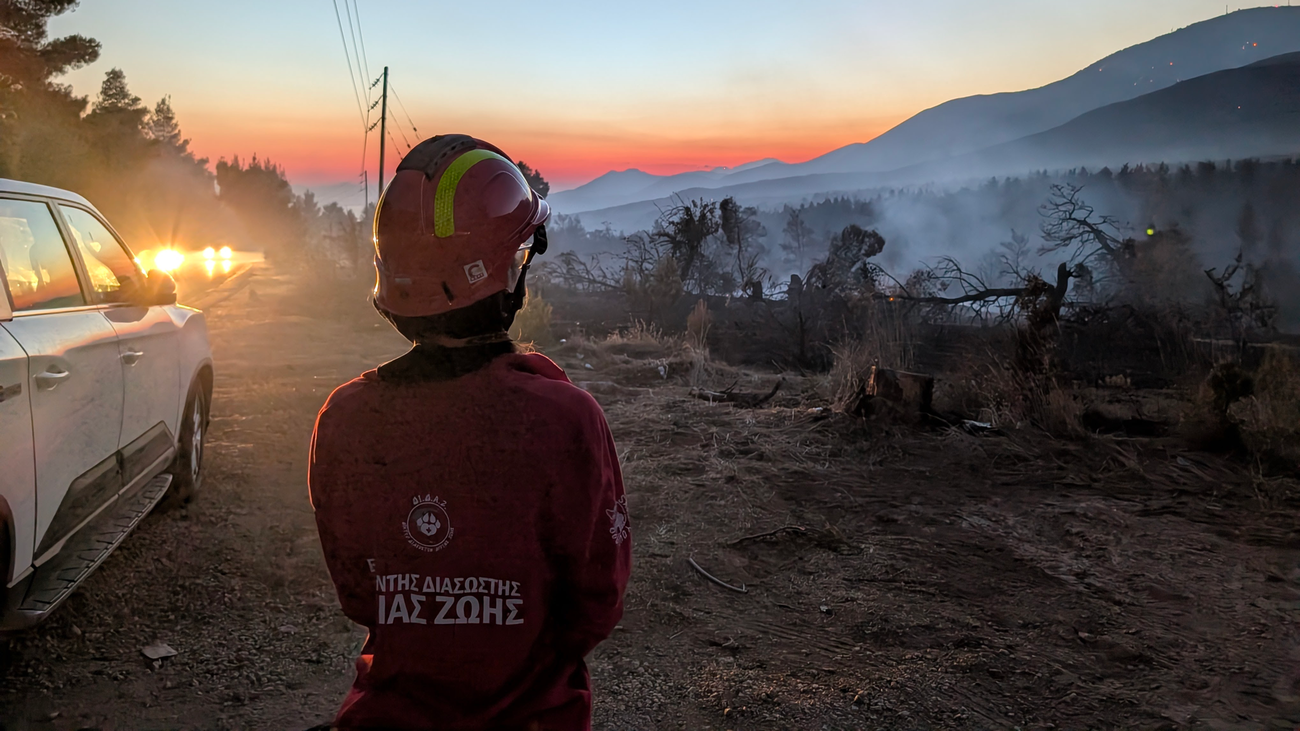
IFAW partner Save Your Hood rescues animals from wildfires in Greece. Photo: © Save Your Hood
This year, extreme heatwaves followed by wildfires have placed even greater pressure on wildlife and the people working to protect them.
Among the animals arriving at ANIMA are hundreds of nestlings and fledglings, including young Common and Lesser Kestrels that can collapse from heat stress during periods of extreme temperatures. Teams are also caring for young storks from destroyed nests or following collisions with power lines, fox cubs injured in road accidents or suffering from skin diseases, sick or injured hedgehogs, orphaned roe deer, owls, bats, and other wildlife.
In Crete, prolonged hot and dry conditions are taking a particular toll on young Griffon Vultures. Severely dehydrated birds can collapse from exhaustion and require intensive fluid therapy and supportive care. More than 30 may arrive at ANIMA between July and September. Once stabilised, they can remain in rehabilitation for approximately six months before they are ready to return to the wild.
The emergency does not end when the fire is out
Wildfires are bringing another influx of animals into care. Many of the fire-affected animals reaching ANIMA are tortoises rescued by members of the Greece Wildlife Rescue Network, other volunteer teams, and members of the public. Their injuries can require two to three months of treatment and rehabilitation, sometimes longer.
For these individual animals, surviving the initial emergency is only the beginning.
ANIMA’s trained responders rescue and triage wildlife in the field, transport animals for specialist treatment, and provide the daily care they need throughout rehabilitation. Wherever possible, that journey ends with an animal returning to the wild.
IFAW’s latest emergency grant helps make that work possible. Our support is helping cover the practical costs of responding to this crisis, including fuel and travel for responders, animal enclosures, veterinary and daily care supplies, food for animals undergoing rehabilitation, and the management of response operations.
These needs continue long after immediate rescue. Fire-affected tortoises can remain in care for months. Dehydrated Griffon Vultures may require approximately six months of rehabilitation. Each needs appropriate food, treatment, safe accommodation, and skilled care every day until it can be safely released.
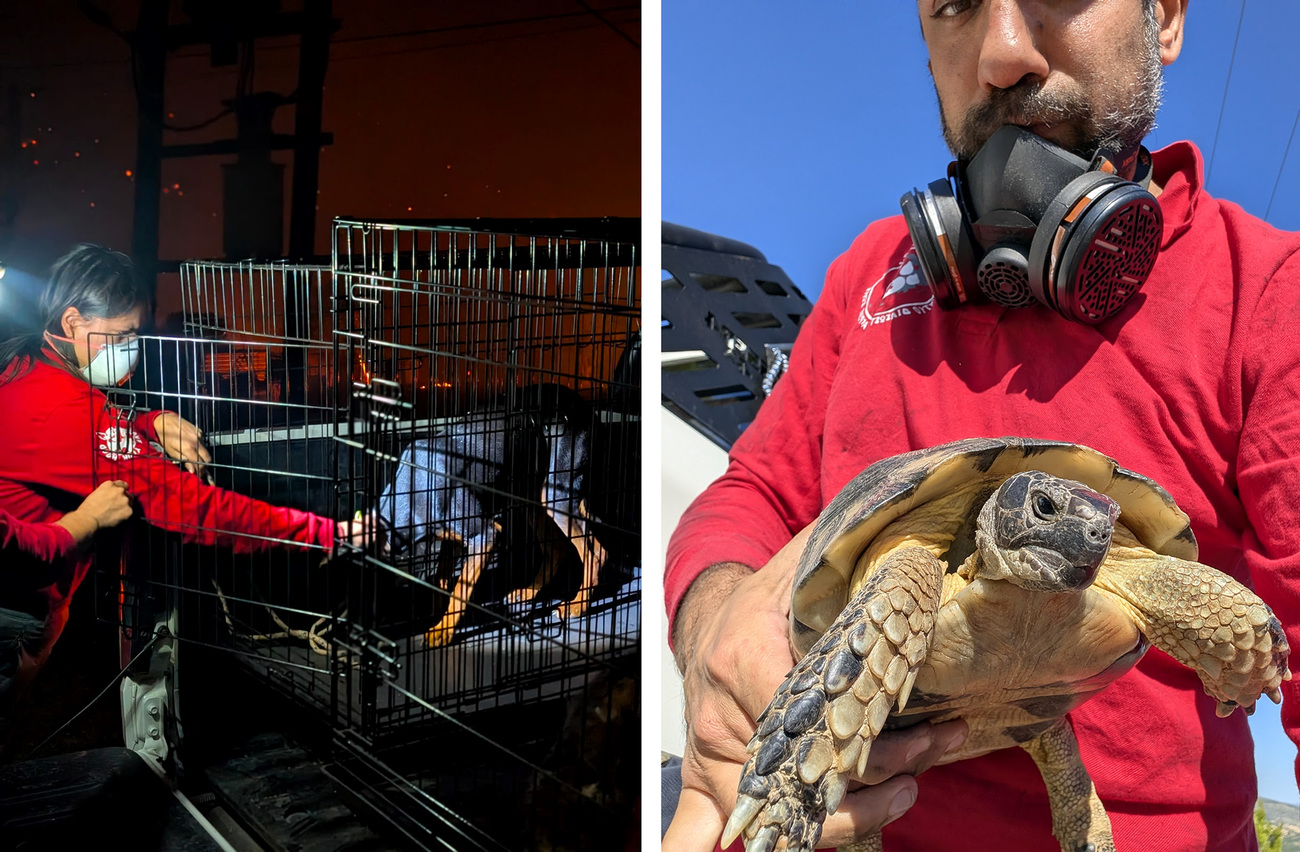
IFAW partner Save Your Hood rescuing animals from wildfires in Greece. Photo: © Save Your Hood
Prepared before disaster strikes
This response also demonstrates why investing in local wildlife rescue capacity before disaster strikes matters.
Before the 2026 fire season began, members of the Greece Wildlife Rescue Network, together with veterinarians from EDKE – Voluntary Action of Greek Veterinarians, received training from ANIMA’s scientific team in providing first aid to wildlife affected by wildfires. The network grew from collaboration following Greece’s devastating 2023 fires, when IFAW worked alongside local organisations including ANIMA and Save Your Hood to rescue and rehabilitate affected wildlife.
Today, that investment in local expertise, training, equipment, and coordination means trained responders can mobilise when animals are in danger. In the field, responders search for and rescue animals affected by fires. At ANIMA, specialist teams can continue their treatment and rehabilitation for as long as recovery takes.
It is a continuum of care that can stretch from the first hours of an emergency to an animal’s release months later.
And every individual animal matters. A tortoise recovering from fire injuries, a young vulture receiving fluids after collapsing from heat and exhaustion, or a kestrel being rehabilitated after heat stress is not simply one admission among thousands. Each is an individual life and, when returned to the wild, part of the population and ecosystem it helps sustain.
Behind each recovery are people, too, including wildlife carers, veterinarians, trained responders, volunteers, and members of the public who recognise an animal in trouble and take action.
As Greece continues to face extreme summer conditions, IFAW is standing alongside our local partners, helping them respond to animals in immediate need while strengthening the networks and expertise that will protect wildlife through future emergencies.
IFAW is providing emergency support to our local partner
6 August 2026
As wildfires continue to burn across Greece, emergency responders are working around the clock to protect people, community animals, and wildlife caught in the path of the flames. High temperatures, strong winds, and dry conditions have fuelled fast-moving fires across multiple regions, forcing evacuations and threatening important wildlife habitat.
IFAW is providing emergency support to our local partner, Save Your Hood, helping responders remain in the field as they rescue animals, reach affected communities, and respond to the evolving crisis.
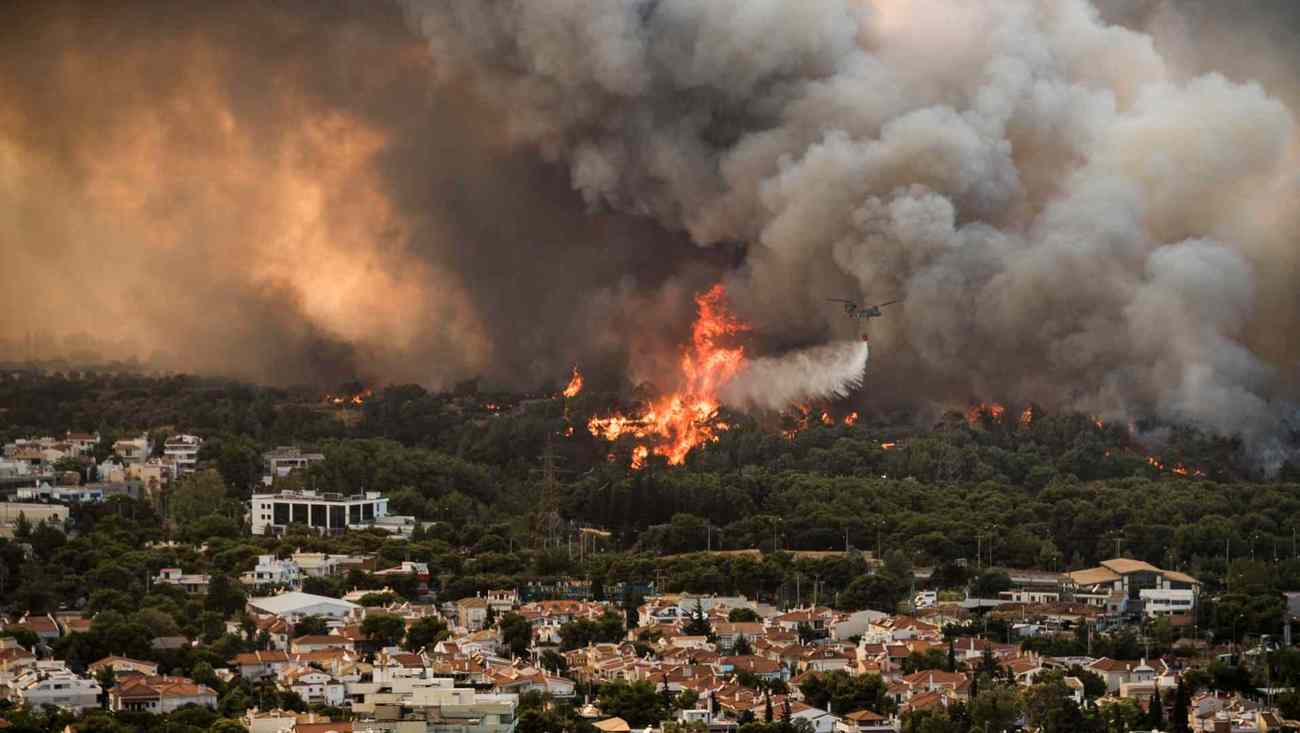
Firefighting helicopter filled with water flying above the north suburbs of Athens, joining the battle against wildfires in Greece. © Lydia Veropoulou - stock.adobe.com
This is not the first time IFAW has responded to devastating wildfires in Greece. Following last year's fires, we worked alongside trusted local partners to support the rescue and care of affected animals. That experience reinforced the importance of investing not only in emergency response, but also in preparedness before the next crisis strikes.
Earlier this year, IFAW launched a disaster resilience project with Save Your Hood to strengthen local capacity before the next emergency. Together, we supported the purchase of a replacement rescue vehicle to safely transport responders, equipment, and animals, while also helping provide training and personal protective equipment for frontline teams.
Only a few months later, that investment is already making a difference.
For the past six days, Save Your Hood responders have been working in some of Greece's hardest-hit areas, including Voiotia, Crete, Achaia, Paros, and Neratzies. Teams are prioritising locations where wildlife is most likely to be found, searching for animals that have survived the fires but may be injured, dehydrated, or displaced.
To help sustain these life-saving efforts, IFAW has activated emergency funding to support responder travel, accommodation, meals, vehicle operations, animal rescue equipment, personal protective equipment, and the care of rescued animals.
As wildfires have spread across southern Europe this summer, affecting France, Spain, Portugal, and Greece, the need for experienced local responders has never been greater. The growing frequency and intensity of these disasters is another reminder that protecting animals means investing not only in emergency response, but also in preparedness before disaster strikes.
Every day responders spend in the field gives more animals a chance to survive. As Save Your Hood's work continues, IFAW will continue standing alongside our partner to ensure they have the resources they need to respond safely and effectively.
We will continue updating this page as the response evolves, sharing stories from the field and the impact your support is making for animals affected by Greece's wildfires.
Related content
Every problem has a solution, every solution needs support.
The problems we face are urgent, complicated and resistant to change. Real solutions demand creativity, hard work and involvement from people like you.