Marine Conservation
Major marine wildlife seizure exposes the ornamental fish trade
Major marine wildlife seizure exposes the ornamental fish trade
22 June 2026
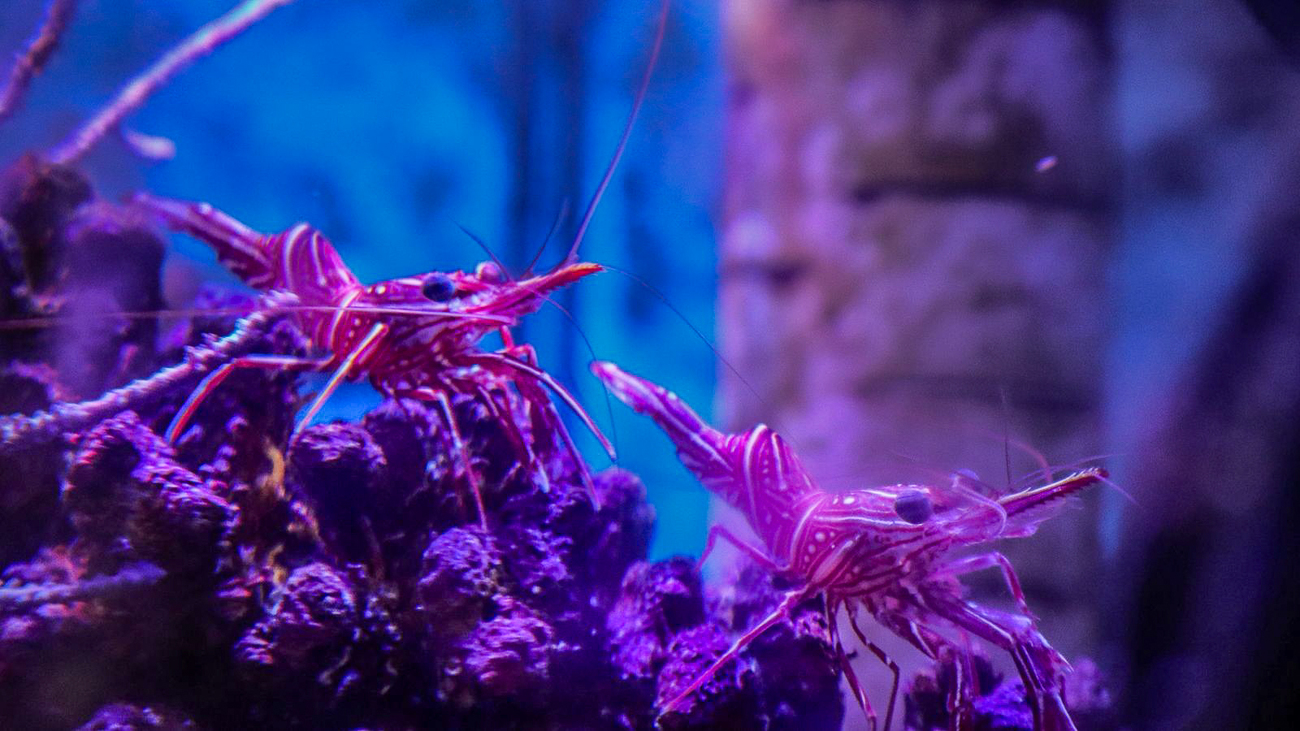
Camel Shrimp trafficked from Kenya seized by authorities during a wildlife trafficking enforcement operation in Argentina.
At dawn in Shimoni, Kenya’s main fishing port on the country’s southern coastline, the Indian Ocean is still half-asleep. Fishing boats return one by one as the tide laps gently against wooden piers.
Among the arriving boats is one skippered by Mwaro Charo. Barefoot, his trousers rolled above his ankles and a faded cap pulled low against the morning light, he steps onto the dock carrying several plastic bags filled with seawater. Each is tightly sealed and holds something fragile and alive. Inside, ornamental fish shimmer in electric blues, bright yellows, and fiery oranges.
Beside him are his two cousins, younger but already seasoned in the trade, hauling oxygen tanks used for deep-sea diving. Together, they carefully unload the bags and place them in shaded containers to protect them from the rising heat. The fish drift and dart in tight circles, disoriented but alive, suspended in a temporary world between reef and market.
“We go out very early morning,” Charo says, watching as the containers are arranged for collection. “You must know where the coral is, where the fish gather. It is not just fishing. You must be precise.”
Along Kenya's coast, collecting ornamental fish has quietly become an important source of income for many families. Less visible than tourism or commercial fishing, it supports livelihoods while supplying a global demand for exotic marine species.
But a recent wildlife seizure in Argentina has highlighted the risks hidden within this trade, from animal welfare concerns to the challenges of tracking wildlife once it enters international supply chains.
A shipment raises alarm in Argentina
That shadowy trade came sharply into focus in April when Argentine authorities and wildlife rehabilitation group Fundación Temaikèn, supported by IFAW, intercepted more than 700 marine animals that had been trafficked from Kenya at Ezeiza International Airport near Buenos Aires.
The shipment included sought-after aquarium species such as surgeonfish, pufferfish, lionfish, butterflyfish, octopuses, crabs, and starfish. Authorities identified documentation irregularities, including an unregistered importer and missing environmental permits.
By the time officials opened the cargo, many of the animals had already died. Survivors were severely weakened and stressed after days of confinement in sealed plastic bags with limited oxygen.
The seizure was the third involving exotic marine wildlife at the same airport in less than a year, raising concerns that an established trafficking route may be operating between East Africa and South America.
Thousands of kilometres away from the Kenyan coast, conservationists at Fundación Temaikèn were thrust into emergency rescue mode.
"Many of these animals were extracted from reef ecosystems and arrived at the limit of survival after spending days inside transport bags and boxes before the rescue could be carried out," said Cristian Gillet, Wildlife Director at Fundación Temaikèn.
Rescue teams carefully acclimatised surviving animals to clean water using specialised techniques designed to minimise shock caused by sudden changes in temperature and salinity.
"The scale of this shipment is unprecedented in Argentina," Gillet added.
A livelihood on Kenya’s coast
Back in Shimoni, Charo says they work under contract for wholesalers.
“They buy from us here and take everything to Mombasa. From there, it is packed and sent on,” he said.
Asked where the fish ended up, Charo pauses and glances at his catch.
“We don’t know exactly where they go. We are told some stay in Kenya, and some go abroad, to aquariums, hotels, and private collectors. Maybe Europe, maybe America. We just catch and sell. The rest is not ours to see.”
Like many fishers involved in the trade, Charo has never followed a shipment beyond Mombasa. Once the fish leave his hands, they disappear into a complex network of exporters, importers, distributors, and buyers.
The hidden costs of the ornamental fish trade
The seizure in Argentina highlights the growing global demand for ornamental marine species. Behind many home and commercial aquariums are complex supply chains that can be difficult to monitor, particularly when animals cross multiple international borders.
Animal welfare concerns are significant. Marine animals may spend days in transport, exposed to stress, fluctuating conditions, and confinement. Mortality during capture and transport remains a persistent challenge throughout parts of the industry.
There are also conservation concerns. Reef fish, invertebrates, and corals play important roles in maintaining healthy marine ecosystems. When extraction is poorly monitored or unregulated, it can place additional pressure on already vulnerable reef environments.
Kenya remains a major exporter of live marine species, including fish, corals, and invertebrates collected along its coastline and channelled through export systems centred around Mombasa. While the trade can operate legally under regulated conditions, experts warn that weak monitoring and reporting can create opportunities for illegal or unreported activity.
Following the trafficking route
According to IFAW program manager, Christian Plowman, the Argentina seizure should be viewed as part of a broader trafficking pattern rather than an isolated incident.
“Moving hundreds of animals and species across international cargo routes cannot be done casually,” he said. “It requires coordination along every link of the chain.”
Plowman noted that repeated seizures at the same Argentine entry point suggest an established commercial corridor.
“Traffickers identify routes that work and exploit them repeatedly until enforcement intervenes. These seizures provide valuable intelligence about where networks are operating.”
He also highlighted discrepancies between Kenya’s reported exports and destination-country import records, suggesting weaknesses in data reconciliation and oversight.
“Without accurate baseline data, you cannot identify anomalies. And without anomalies, enforcement is essentially blind.”
A May 2026 report by World Animal Protection (WAP) found that 77% of reptile species exported from Kenya between 2013 and 2023 had wild populations that were declining or poorly documented. The organisation reported that approximately 870,000 live animals were legally exported during that period, the majority consisting of reptiles and marine species.
Tennyson Williams, Africa Regional Director for WAP, raised wider concerns about animal welfare, disease risk, and conservation impacts linked to the global wildlife trade.
“Our position on wildlife trade is very clear. Whether legal or illegal, we have concerns related to animal welfare, health risks, and conservation,” he said.
Why international cooperation matters
For Plowman, the seizure demonstrates why international collaboration is essential to disrupting wildlife trafficking networks.
"These networks depend on every link in the chain remaining invisible," he said. "When authorities, conservation organisations, and rescue partners work together, those links become much harder to hide."
While the surviving animals in Argentina continue their recovery, the case serves as a reminder that wildlife trafficking is rarely confined to one country. From coral reefs on Kenya's coastline to airports thousands of miles away, protecting wildlife requires vigilance across every stage of the trade chain.
The rescue of these animals may have begun with a single intercepted shipment, but it exposed something much larger: the need for stronger oversight, international cooperation, and a shared commitment to ensuring that wildlife remains where it belongs—in the wild.
Related content
Our work can’t get done without you. Please give what you can to help animals thrive.