Landscape Conservation
Amboseli’s homecoming: A new dawn for community-led conservation
Amboseli’s homecoming: A new dawn for community-led conservation
December 9, 2025
By Ben Wandago, IFAW Kenya Country Director, and Victor Murunga, IFAW Planning, Monitoring, Evaluation & Learning Manager
The recent announcement by President William Ruto of Kenya to transfer management of Amboseli National Park to Kajiado County marks a historic homecoming. Fifty years after the Maasai first ceded custodianship of Amboseli to the national government, the park is returning to the very community whose cultural identity, pastoral traditions, and landscapes have long shaped its ecological integrity. It is a bold and progressive step.
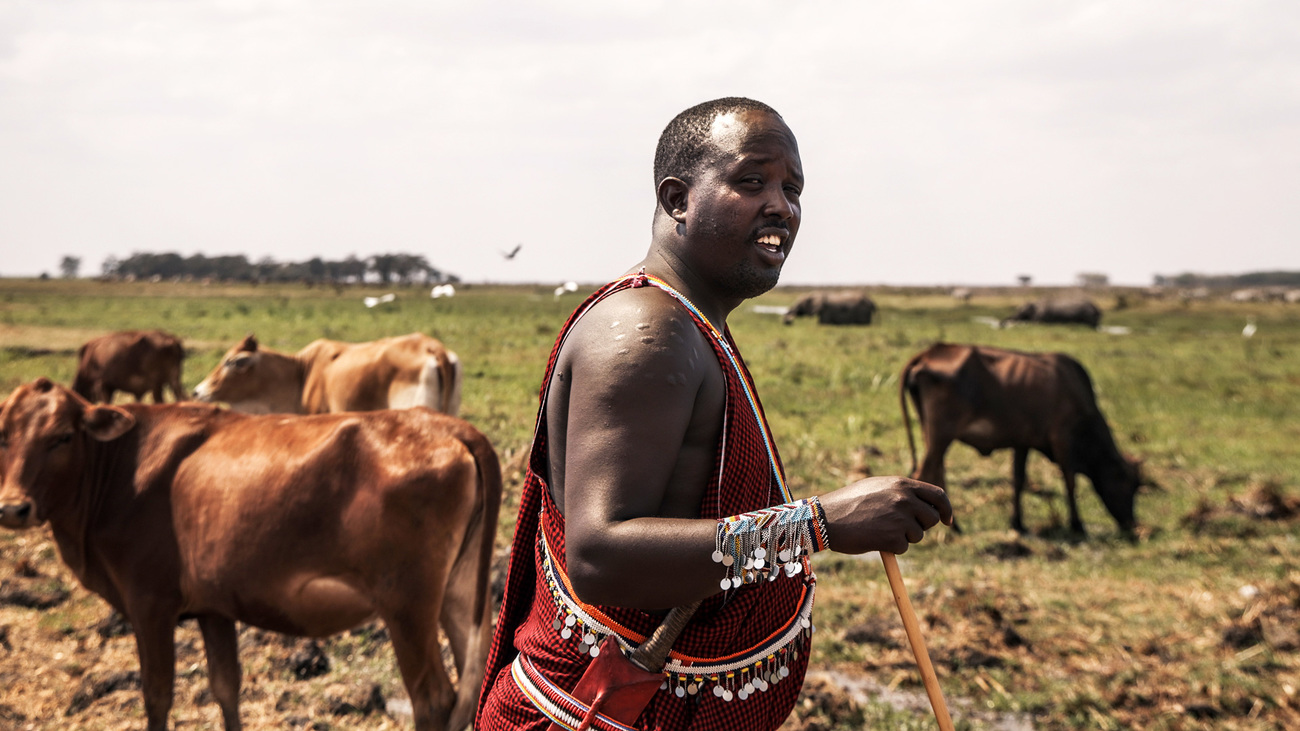
Maasai community member with cattle in Amboseli, Kenya. Photo: Michael Zomer / © IFAW
For generations, Maasai pastoralists have coexisted with elephants, lions, and a myriad of other species that roam the Amboseli ecosystem. Their knowledge of grazing cycles, water access, and migratory routes remains unmatched. Placing them at the forefront of decision-making is not just symbolic—it is a strategic move that aligns with initiatives already reshaping the landscape, such as IFAW’s Room to Roam initiative. Grounded in scientific research and community engagement, Room to Roam aims to ensure a future where animals and people can coexist and thrive. It recognizes that wildlife conservation cannot be confined to protected areas. Elephants, for example, range across thousands of kilometres, moving through community lands, group ranches, and conservancies as they travel between Mara, Amboseli, and Tsavo.
The proposal by community landowners to contribute one million acres of community land toward the creation of the new Amboseli National Reserve is therefore a transformative act of stewardship. This proposal anchors the handover in an ecosystem-wide reality, not just a park boundary; it reinforces the argument that the new Amboseli reserve must be managed around both people and wildlife.
But even as we celebrate this shift toward localised stewardship, it is equally important to acknowledge the indispensable role the Kenya Wildlife Services (KWS) has played—and must continue to play—in the long-term health of Amboseli’s ecosystem.
KWS brings decades of technical specialization that cannot be replicated overnight. Veterinary interventions for sick or injured animals, wildlife translocation, problem-animal control, intelligence-led anti-poaching operations, ecological monitoring, and firearms handling are complex disciplines requiring years of training, specialized equipment, and operational experience. These functions form the backbone of effective wildlife management.
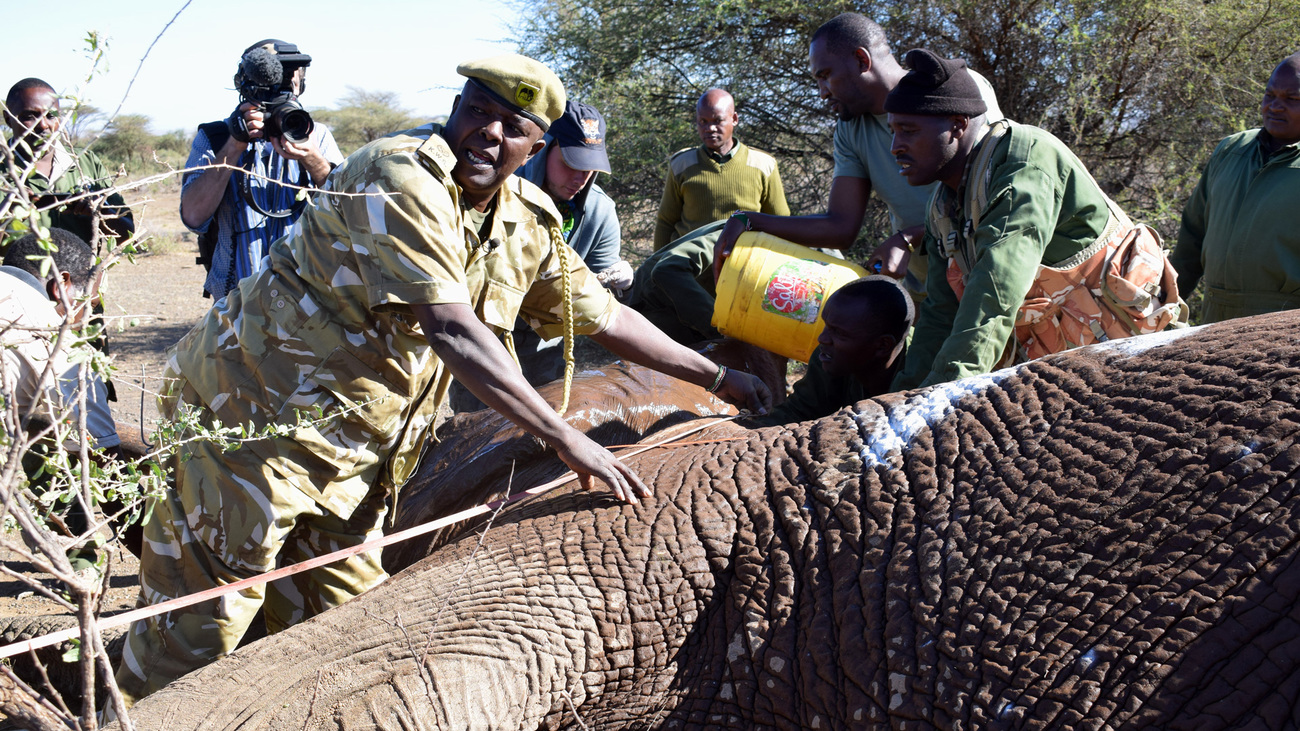
Kenya Wildlife Service (KWS) personnel fit a GPS-enabled collar on an elephant in Amboseli National Park to identify the landscape the elephant uses in search on a regular basis in search of food, water and mates. Photo: Jacqueline Nyagah / © IFAW
While the County Government may assume essential responsibilities such as maintaining the park’s 320 kilometres of road infrastructure and supporting community rangers, certain functions demand KWS’s seasoned expertise. Community wildlife rangers—valuable as they are—do not carry firearms and are not trained for high-risk operations involving dangerous wildlife or armed poachers. As Amboseli transitions to a county-led framework, incidents of human–wildlife conflict and wildlife emergencies will still require quick, skilled response teams. KWS should therefore remain within close reach, offering technical support and responding to emergencies that fall beyond county capacity.
The long-term success of this handover will also depend on robust governance structures, accountability, and transparent revenue-sharing frameworks that genuinely uplift local households. Community voices must remain central; women and youth must be included in decision-making and Indigenous knowledge must be recognized as a legitimate pillar of environmental management.
Amboseli is more than a national park—it is a global ecological asset, a cultural sanctuary, and one of Africa’s most iconic elephant landscapes. All stakeholders must approach the transition with humility, cooperation, and shared purpose. The county administration will require support. KWS will need to adapt to a technical advisory role and communities will need the space and resources to lead effectively. Conservation organizations, donors, private sector partners, and researchers must also lean in, bringing data, innovation, and funding that strengthen this new governance framework.
In truth, the handover of Amboseli is not an end but a beginning. A progressive idea whose success will depend on how well institutions work together, how much trust is built, and how deeply communities are empowered to shape their own conservation destiny. When people closest to wildlife lead its stewardship—and when government agencies provide the right support—coexistence becomes not only possible, but transformative.
Related content
Our work can’t get done without you. Please give what you can to help animals thrive.