Wildlife Crime
Wild pet trade in the UK needs urgent reform—here's how you can help
Wild pet trade in the UK needs urgent reform—here's how you can help
5 August 2026
For many of us, our homes are a sanctuary. But for millions of wild animals across Britain, from African grey parrots to royal pythons, a living room or a cage can never truly meet their needs.
Whether snatched from the wild or bred in captivity, a wild animal for sale faces a life sentence of suffering. Many face the trauma of capture and trafficking—packed into cramped, unsafe crates and moved across borders, with countless dying long before they are ever advertised for sale.
And captive-bred wild animals are still wild animals. African grey parrots evolved to fly through rainforest canopy; servals adapted to roam vast savannahs. They weren’t meant to live inside and suffer quietly through stress, disease, and behaviours their owners rarely recognise as distress. The sad reality is that this issue is only getting worse, as social media increasingly normalises wild animals as pets through our feeds.
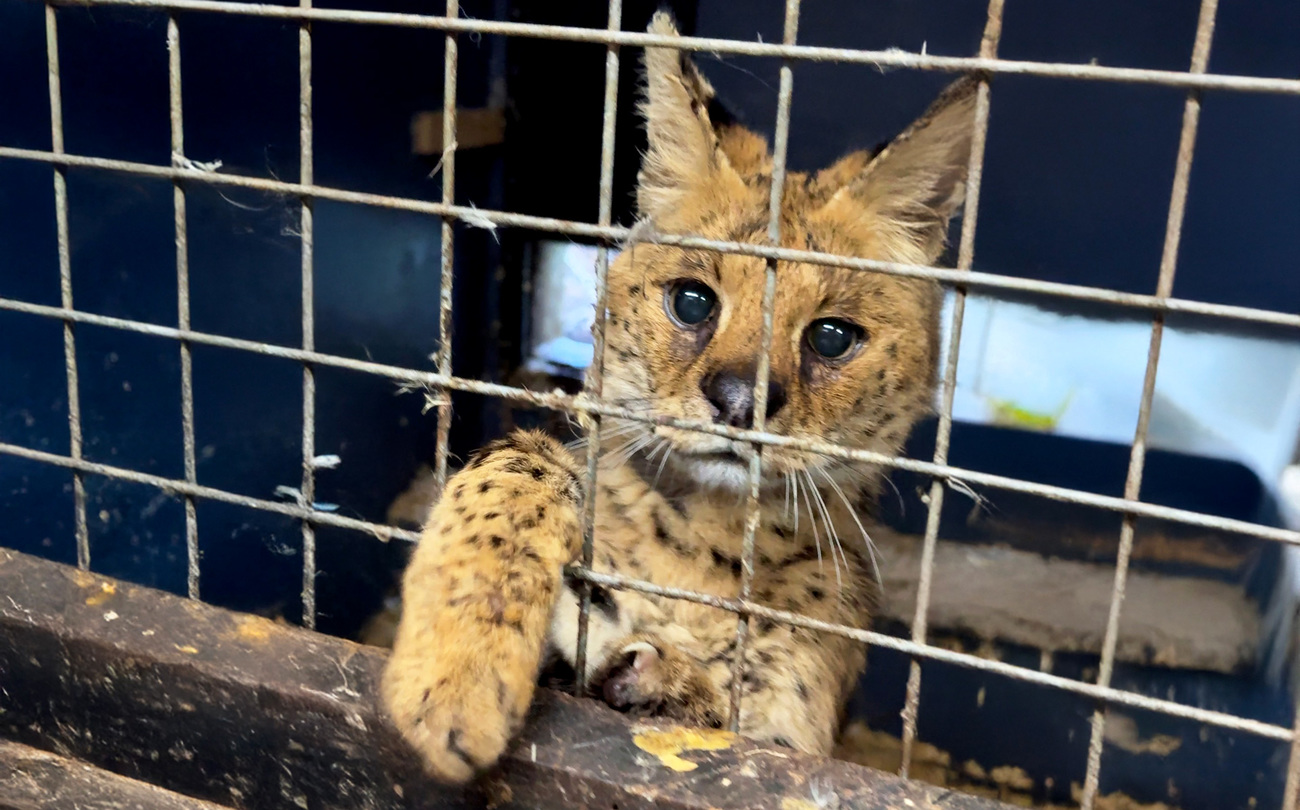
Serval cat kept at a private facility in the UK. Photo: © IFAW
Help us fix the broken system
At IFAW, we’ve been working diligently to uncover the realities of the wild animal pet trade. Following the release of our report, Behind closed doors, we now call on the public to help us fix this broken system by signing this new parliamentary e-petition.
Despite the suffering involved and the growing popularity of keeping wild animals as pets, surprisingly little is known about how many animals are being kept, where they come from, and whether existing laws are being followed. Our research helps shed light on this largely hidden trade.
A hidden trade built on misunderstanding
The wild animal pet trade is far larger than many people realise. Globally, wildlife trafficking—the illegal capture and sale of wild animals—is worth an estimated US $7–23 billion a year. It’s one of the largest illegal markets on earth, sitting alongside drugs, arms and human trafficking. Across Europe, an estimated 64 million wild animals are currently kept as pets, many captured from the wild and trafficked into the continent to satisfy demand. The UK is no bystander: from African grey parrots to servals, our appetite for wild animals makes us part of the problem.
Data on broader pet ownership hints at just how many wild species are kept in UK homes, while highlighting the significant gaps in our understanding. The UK Pet Food Data Report 2024, which surveys around 17 million households, estimates a non-aquatic pet population of 36 million animals. While cats and dogs account for the majority, the report also identifies hundreds of thousands of reptiles, amphibians, birds, and other non-traditional species kept as pets. Millions more animals are kept in indoor aquaria and outdoor ponds. Yet these figures provide only a partial picture, making it difficult to fully understand how many wild animals are being kept, where they’re from, and whether their trade is legal and sustainable.
To help address this knowledge gap, IFAW published research in our report Behind closed doors, offering a rare insight into the ownership of wild animals in the UK. Responses from the 620 wild animal owners surveyed revealed a concerning contradiction. Younger owners (ages 18-34) were the most concerned about where wild animals come from, yet almost half (49%) mistakenly believed that an animal being captive-bred is the same as being domesticated.
In reality, captive-bred wild animals are still wild. Domestication is a process that occurs over many generations of selective breeding, resulting in genetic, behavioural, and physical changes that distinguish a species from its wild ancestors—like a dog from a wolf. Unlike truly domesticated animals, captive-bred wild species retain their natural instincts, complex behavioural needs, and ecological roles, making them ill-suited to life in captivity.
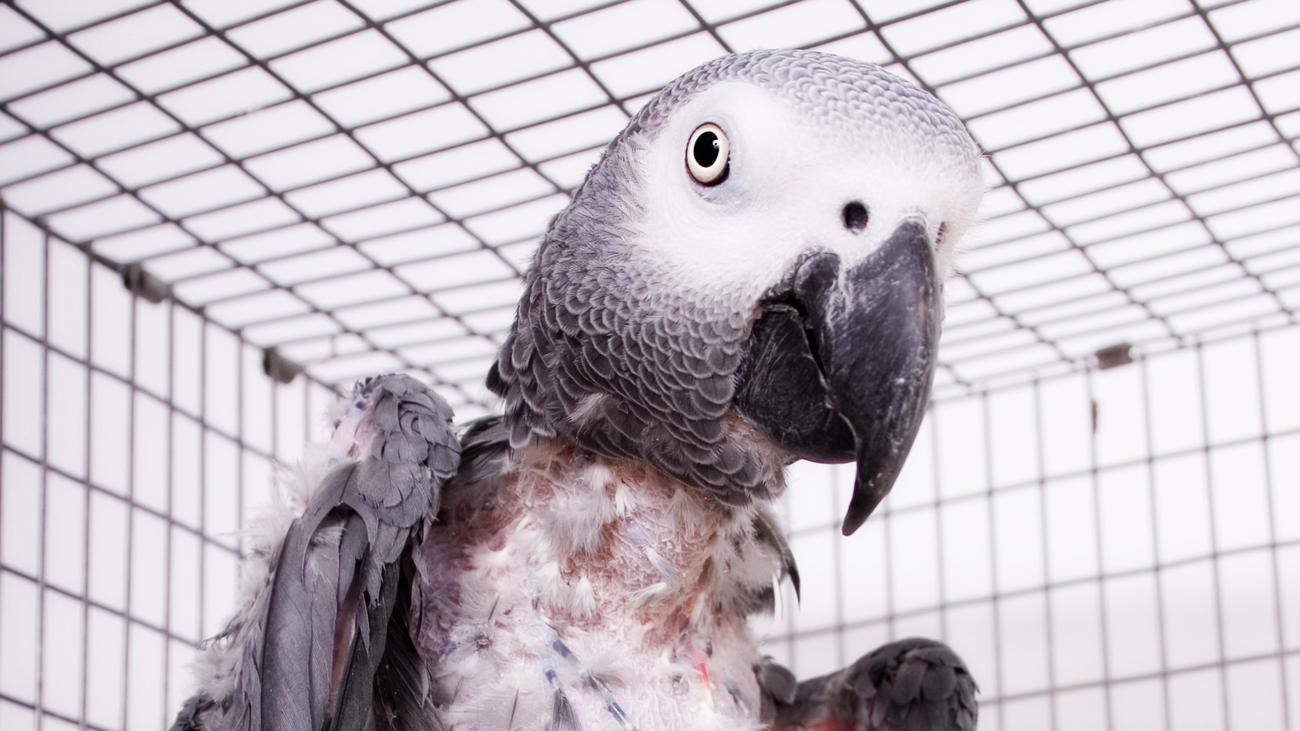
Portrait of an African grey parrot who has plucked his own feathers off his body.
A systemic failure: the licensing and compliance gap
There’s a startlingly large disconnect between awareness and action. While 86% of owners recognise that some species require a licence to be kept legally, a staggering 84% of those who know their pet needs a licence do not actually possess one.
This gap is particularly concerning when we consider the Dangerous Wild Animals Act (DWAA). More than 2,200 dangerous wild animals are officially licensed for private keeping in the UK, but the true figure is likely to be far higher. Most disturbingly, some species kept under the DWAA do not have any captive-bred populations and are endemic to their native range, meaning they must be taken directly—and most likely illegally—from the wild. Despite many being listed as endangered on the IUCN Red List, these vulnerable animals are currently being kept as pets right here in the UK.
How the wild pet trade threatens the planet
The risks of an unregulated trade extend far beyond the welfare of individual animals, impacting biodiversity, ecosystem services, biosecurity, and public health, and driving invasive species to dominate ecosystems.
- Biodiversity: The pet trade is a primary driver of wild population declines. For example, at least 1.3 million African grey parrots were extracted from the wild in just three decades.
- Ecosystem services: Wild animals play essential roles in maintaining healthy ecosystems, from pollination and seed dispersal to pest control and nutrient cycling. The removal of animals from the wild can disrupt these natural processes, undermining the ecosystem services that support food production, climate resilience, clean water, and human well-being.
- Biosecurity and public health: Contact between wildlife and humans is a known driver for zoonotic diseases. More than 70% of emerging diseases originate from animals.
- Invasive species: Abandoned or escaped wild pets are the predominant driver of invasive species establishment, which threatens ecosystems and native species.
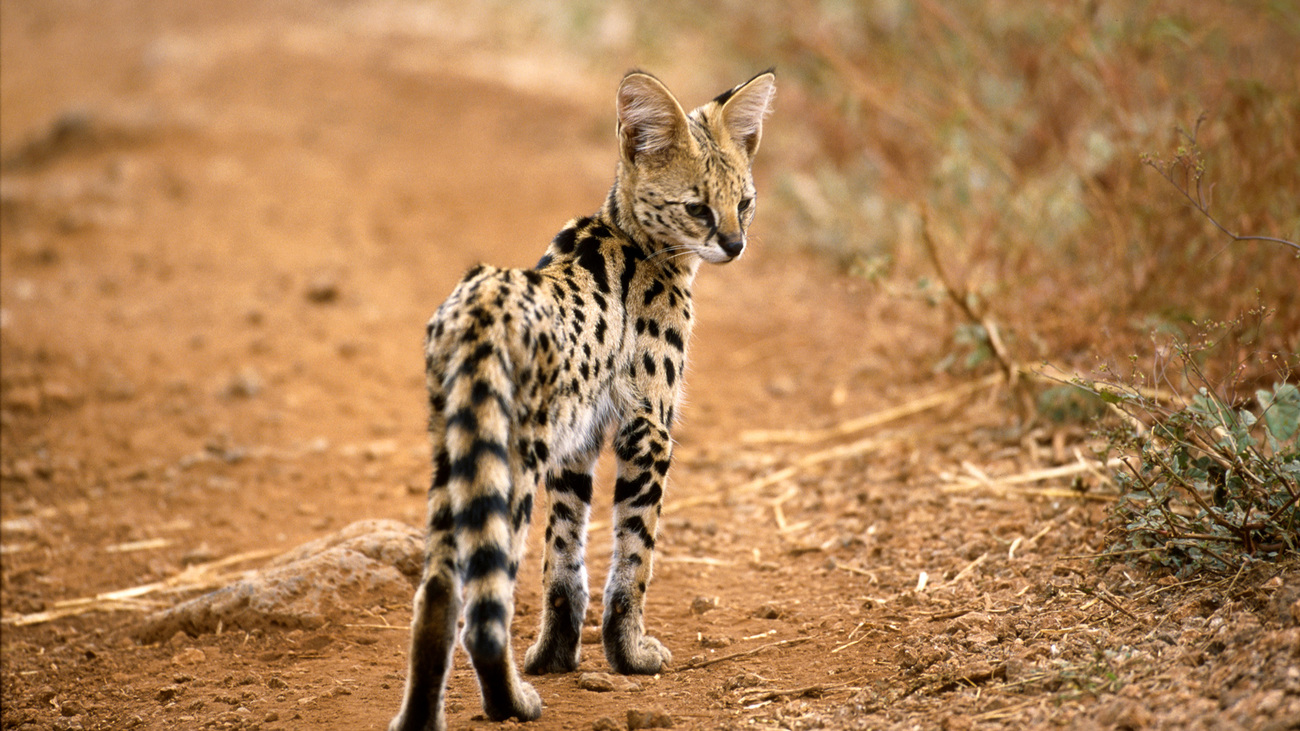
A Serval cat from Meru National Park, Kenya. Photo: © IFAW
The solution: a modern, evidence-based framework
The UK’s approach to regulating wild animals as pets is fragmented, reactive, and increasingly unable to keep pace with the realities of modern wildlife trade. We need a preventative, evidence-based framework that protects animals, people, and nature from further harm.
We are calling for practical measures that tackle the root causes of the problem, including a “Positive List” system, which permits only species demonstrated to thrive in captivity to be traded and kept as pets. This approach is supported by 68% of surveyed owners.
In addition, we must deploy forensic tools like Stable Isotope Analysis (SIA) at borders to verify an animal’s origin and stop the illegal laundering of wild-caught animals.
Lastly, we’re calling for new legislation, modelled after successful examples in Canada, the US, and Australia, to criminalise the trade of any wildlife taken in violation of foreign conservation laws.
Take action: sign the petition
The evidence is clear: the UK’s current approach to the trade in and keeping of wild animals as pets is not working. Wild animals belong in the wild, not in our homes, and it’s time for our laws to reflect that reality.
IFAW is calling on the Government to take urgent action and deliver the reforms needed to better protect animals, people, and nature.
Sign the petition today and add your voice to the growing call for change.
Help ensure that our homes do not become the final destination for the world's most vulnerable wildlife.
Related content
Every problem has a solution, every solution needs support.
The problems we face are urgent, complicated and resistant to change. Real solutions demand creativity, hard work and involvement from people like you.