Ocean Noise Reduction - Global
Saving marine life could be as easy as turning down the volumeGlobal whale summit marks milestone as whaling nations continue to block progress
Global whale summit marks milestone as whaling nations continue to block progress
October 2, 2026
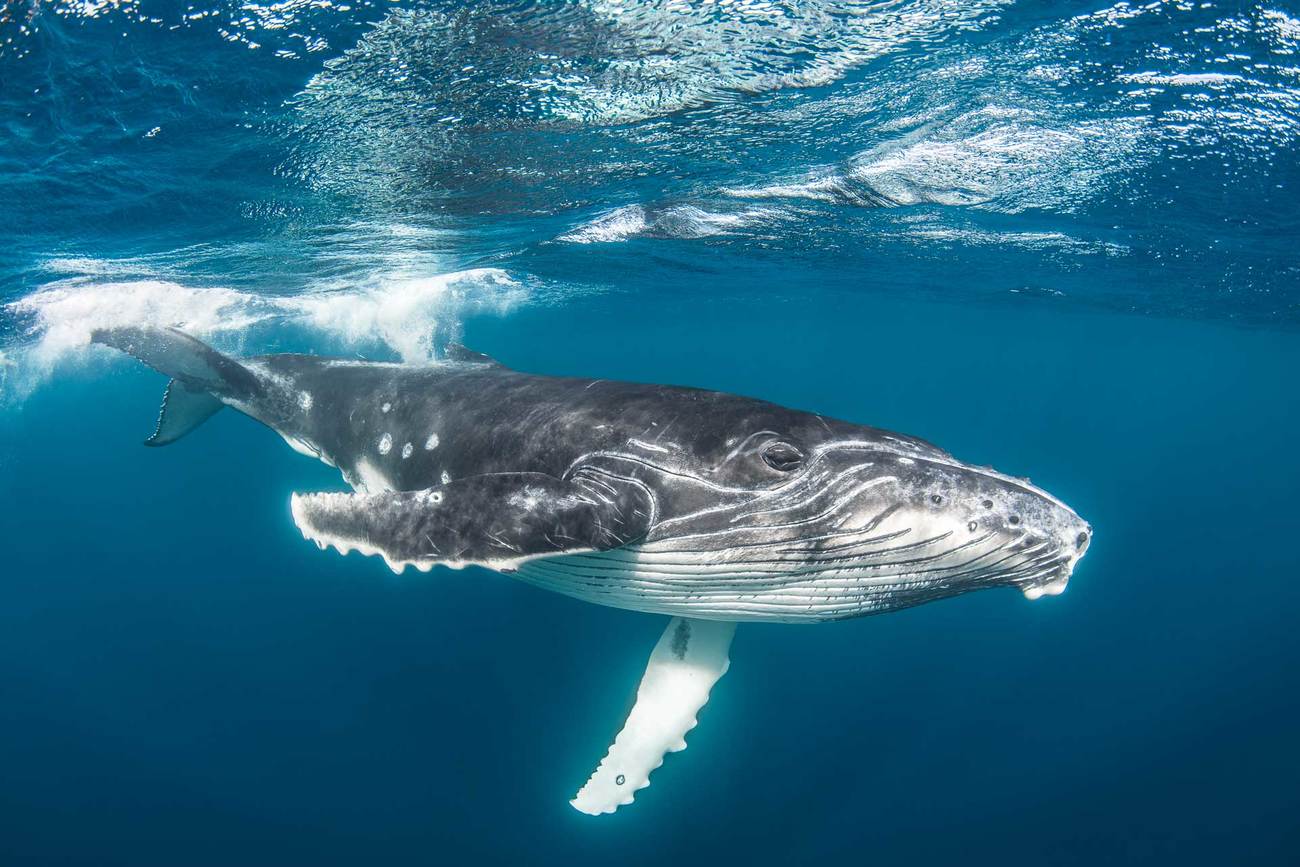
The humpback whale is a migratory species: it feeds in cold waters before migrating to warmer waters to breed and give birth. Photo: © Greg Lecoeur
Pro-whaling nations have again blocked the creation of a sanctuary to safeguard whales in the South Atlantic at an international meeting on whaling and whale conservation.
The proposal for the South Atlantic Whale Sanctuary has been tabled at almost every meeting of the International Whaling Commission (IWC) since 1999 but has been repeatedly blocked by a minority of pro-whaling nations.
This year's meeting in Hobart, Tasmania, was no different. The proposal received strong support from conservation-minded governments but failed to achieve the three-quarters majority needed to be adopted.
"It is outrageous that whaling nations and their supporters continue to block this proposal in a region where they do not even hunt whales," IFAW's senior director of policy Matt Collis said.
"For two decades now a minority of pro-whaling nations have stood in the way of whale conservation against the wishes of the majority of nations bordering the South Atlantic."
The sanctuary would provide long-term protection for blue, humpback, fin, minke, sperm, sei and southern right whales across the South Atlantic by permanently banning commercial whaling in the region. Like existing whale sanctuaries in Antarctica and the Indian Ocean, it would also support sustainable whale watching and encourage international cooperation on whale research.
Around the world, whales face growing threats from vessel strikes, fishing gear, and underwater noise with governments at the IWC adopting several resolutions to address these challenges.
This included adopting a resolution to tackle deadly ship strikes through safer shipping routes in high-risk areas, slower vessel speeds, and greater collaboration with the shipping industry and maritime authorities.
"For the whales that are not killed immediately, a collision can cause catastrophic injuries and often a slow, painful death. Yet simple solutions exist. Just as speed limits save lives on our roads, slowing vessels can save whales in our ocean," Mr Collis said.
Delegates also agreed to strengthen the global response to whale and dolphin strandings, in a move that will improve monitoring of marine mammal deaths and other emerging threats across the world's oceans.
Government representatives also adopted a resolution targeting the international fish maw trade, a major driver of bycatch that kills tens of thousands of whales and dolphins every year.
Discussions around a resolution to commemorate the 80th anniversary of IWC70 dominated much of the meeting before it was finally adopted by consensus on the final day, October 2.
“A lot of energy was spent negotiating with a minority of pro-whaling nations to say happy birthday to the IWC. The real milestone is the fact that 40 years ago the global moratorium on commercial whaling came into effect, helping transform the commission from overseeing whaling to conserving whales," Mr Collis said.
Despite the global moratorium coming into effect 40 years ago, Norway, Iceland, and Japan continue to disregard the ban, collectively killing an estimated 45,000 whales since 1986. This year alone, Japan has authorised the hunting of more than 400 whales, Norway has already killed more than 400 whales, while commercial whaling continues in Iceland.
A proposal from pro-whaling nations that would have started a process to overturn the moratorium on commercial whaling was once again withdrawn after failing to gain enough support. This was the third consecutive failed attempt at recent IWC meetings.
"Enough is enough. It's time for the three rogue whaling nations to put an end to commercial whaling once and for all," Mr Collis said.
The IWC is the global body responsible for whale conservation and the regulation for whaling and is holding its 70th meeting (IWC70) in Australia from 27 September to 2 October.
ENDS
Media contact:
Dominica Mack, +61 460 432 901, dmack@ifaw.org
Notes:
- Countries which voted against the sanctuary included: Antigua and Barbuda, Benin, Côte d'Ivoire, Cambodia, Grenada, Lao, Marshall Islands, Mauritania, Morocco, Naoero, Nicaragua, Norway, Palau, Senegal, St Kitts and Nevis, St Lucia, Suriname, Tuvalu. Iceland, Türkiye and St Vincent and the Grenadines abstained from voting.
- IFAW has been at the forefront of global efforts to reduce vessel collisions, including through its Blue Speeds initiative. The campaign calls for a modest 10% reduction in speeds across the global commercial shipping fleet to protect marine life from collisions, lower underwater noise, and reduce greenhouse gas emissions.
- IFAW opposes whaling because it is cruel and unnecessary; there is simply no humane way to kill a whale. Responsible whale watching offers a humane and economically viable alternative that is better for whales and provides more sustainable livelihoods for people.
- Whales are crucial to the health of marine ecosystems. Through their migrations, they distribute nutrients and promote the growth of phytoplankton – a microorganism that produces about 50 per cent of the world's oxygen and capture large amounts of carbon. Whales also bind large amounts of carbon dioxide in their own biomass. When a whale dies and sinks to the sea floor, this carbon is often stored there for very long periods of time. As a result, whales make a measurable contribution to carbon sequestration in the ocean and thus also to climate protection.
Related content
every problem has a solution, every solution needs support.
The problems we face are urgent, complicated, and resistant to change. Real solutions demand creativity, hard work, and involvement from people like you.