John Kogada
Young conservation leaders take action in Zimbabwe
Young conservation leaders take action in Zimbabwe
John Kogada | October 27, 2026
Across Zimbabwe's Hwange-Matetsi landscape, new Room to Roam Nature Clubs are helping learners turn conservation knowledge into practical action for wildlife, people, and the places they share.
IFAW's Room to Roam Nature Clubs have launched across 21 participating schools in Zimbabwe's Hwange–Matetsi landscape, giving students a place to understand the natural world around them, ask difficult questions, organize around the issues they care about, and put their ideas into practice.

Junior rangers and instructors participating in the Environmental stewardship program implemented in primary schools near Hwange National Park, Zimbabwe. Photo: Naudé Heunis / © IFAW
For a child growing up near Hwange National Park, wildlife is not something encountered only in a textbook or on a television screen. Elephants move close to fields and water points. Lions and other animals cross the routes children use to reach school. A changing climate can be felt in the availability of water, the condition of grazing land, and the harvest a family depends on.
In this landscape, conservation is part of daily life. That’s why young people must play a role in shaping its future.
The Nature Clubs are an important step towards making that possible. They also teach a larger lesson. Creating room for wildlife to move can’t be separated from creating room for people, especially young people, to learn, lead, and thrive.
A connected landscape depends on people
Room to Roam is IFAW's long-term initiative to secure and reconnect critical habitats across East and southern Africa. It is designed so elephants and other wildlife can move safely through the landscapes they need, while communities sharing those places are supported to prosper.
In Zimbabwe, the Hwange–Matetsi–Zambezi landscape is central to that vision. Hwange National Park and the surrounding areas form part of a much larger living system. Animals don’t recognize lines on a map—they move in search of water, food, breeding grounds, and safety, often crossing protected areas, communal lands, and places where people live and work.
Protecting that movement requires good science, effective law enforcement, and well-managed habitats. But these measures will not be enough on their own. Lasting conservation also depends on the knowledge, choices, and leadership of the people who share the landscape.
A wildlife corridor is more than a route between habitats. It’s also a place where a farmer makes decisions about crops, where a family collects water, where a teacher explains the value of biodiversity, and where a child begins to decide what kind of future is possible. If we want Room to Roam endure for generations, communities must see themselves within it—not at its margins.
From learning about nature to leading for nature
Room to Roam Nature Clubs are youth-led platforms, supported by teachers, mentors, community leaders, and conservation practitioners. Students elect their own leaders; form teams focused on the environment, wildlife, and community issues; identify priorities; and develop activities.
These clubs don’t simply ask children to receive information. They trust students to investigate, discuss, create, and lead.
Through the clubs, students can explore biodiversity, climate change, responsible land use, and human-wildlife coexistence. They can then apply that learning through tree planting, green gardening, clean-up campaigns, nature walks, visits to protected areas, storytelling, sport, drama, and community outreach.
The new Room to Roam Nature Club Guidebook, together with a companion guide for teachers, helps turn these ambitions into an organized program. It supports club members to plan activities, divide responsibilities, record progress, and reflect on what they have achieved. Two teacher patrons or mentors in each school will help create an inclusive environment in which young people can test ideas safely and connect classroom learning with local knowledge.
Along the way, students build skills that reach far beyond conservation: research, critical thinking, teamwork, public speaking, interviewing, problem-solving, and event organization. These are the skills young people need to participate meaningfully in decisions about their communities and their future.
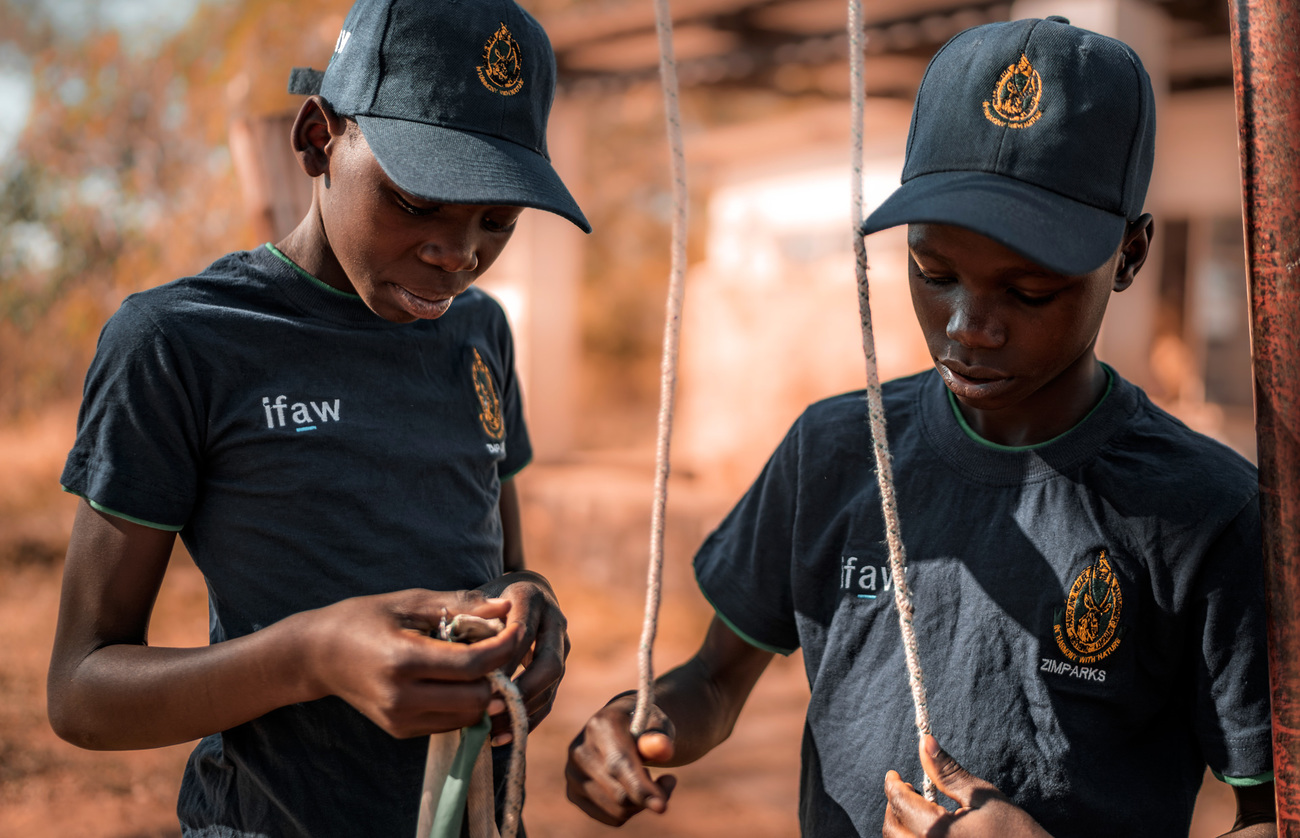
Junior rangers in the Environmental stewardship program implemented in primary schools near Hwange National Park, Zimbabwe. Photo: Naudé Heunis / © IFAW
Why young people matter now
Young people are often described as the conservation leaders of tomorrow—but they’re also essential stewards in conservation today.
A student who understands why an elephant follows a particular route may carry that understanding home. A club that organizes a clean-up can influence how a whole school manages waste. A child who listens to an elder's knowledge of seasons, wildlife, and water can help preserve that knowledge while also raising new questions and ideas. This movement between school, home, and community gives the clubs their power.
This is especially important in communities living close to protected areas. A child's experience of wildlife may include wonder, but also fear, crop loss, or a dangerous encounter on the way to school. Conservation education must make space for all of these realities. It should never ask young people to care for wildlife without recognizing the costs and risks that families may carry.
These clubs offer a constructive place to work through those tensions. They help students understand animal behavior and ecosystems while encouraging them to think about practical ways people and wildlife can coexist more safely.
Support that makes participation possible
Room to Roam Nature Clubs build on the Environmental Stewardship Programme implemented by IFAW and the Zimbabwe Parks and Wildlife Management Authority (ZimParks) since 2019. The programme supports 21 primary schools across Hwange, Tsholotsho, and Lupane districts and engages children growing up in communities bordering wildlife areas.
In March 2024, IFAW and ZimParks provided 100 bicycles to less-privileged learners who travelled long distances through wildlife corridors to reach school. The partners also handed more than 500 curriculum textbooks to 10 schools in Hwange and Tsholotsho, benefiting about 1,600 students at a time when approximately five pupils were sharing each book.
The launch at Matetsi Primary School continues that practical commitment through the Nature Club guides, curriculum textbooks, and bicycles. These resources may appear different, but they serve one purpose: helping more young people participate fully and safely in their education and in the conservation of the landscape they call home.
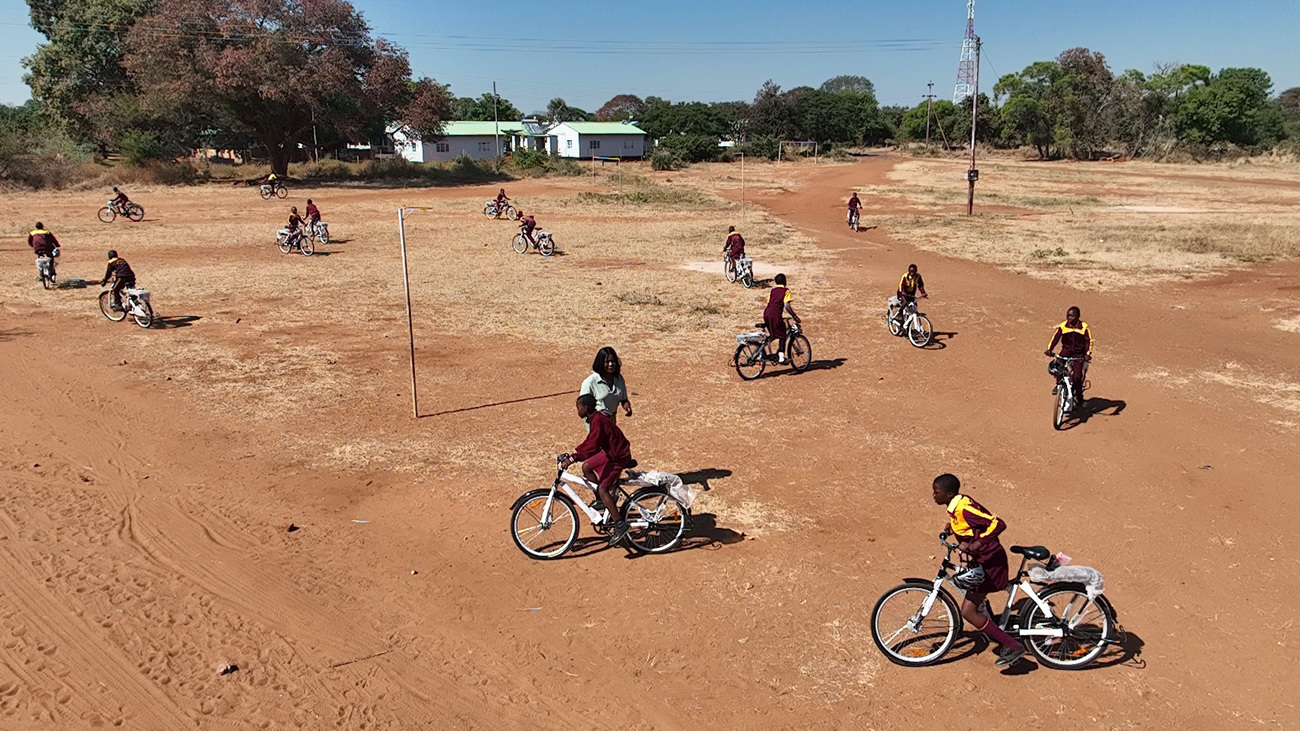
Children ride bicycles provided through IFAW’s Room to Roam, Riding for Conservation initiative in Dete, Zimbabwe. Photo: Arnold Tshipa / © IFAW
Building stewardship that lasts
For IFAW, community engagement begins with listening and respecting the ability of people to define priorities and lead responses. The Nature Clubs apply that principle to young people. They create a structure through which learners can decide what matters to them, work with others, and see the results of their actions.
Success will not be measured only by the number of clubs formed or activities completed. It will be seen in the confidence of a learner who speaks up about an environmental concern, in a teacher who brings local conservation challenges into the classroom, in a family that understands wildlife movement differently, and in a community that increasingly sees conservation as something it can shape.
The future of the Hwange–Matetsi landscape will be determined over many years, through countless decisions made by institutions, communities and individuals. Some of the people who will make those decisions are sitting in primary school classrooms today.
By giving them knowledge, practical experience, and a genuine role now, the Room to Roam Nature Clubs invite young people to help build the conservation vision they will inherit.
Related content
every problem has a solution, every solution needs support.
The problems we face are urgent, complicated, and resistant to change. Real solutions demand creativity, hard work, and involvement from people like you.