Community Engagement
Seeing conservation through a woman’s eyes
Seeing conservation through a woman’s eyes
October 13, 2026
By Crescentia Senteu, director at Ilkimpa Community Conservation Association in Kenya
"She is regal and vulnerable
And yet poor and strong
She has royalty in her stature and speech
And not a penny to her name."
I wrote these words about a Maasai woman in May 2020. I was trying to capture the contradictions within her life. She wears beauty in her colorful jewelry yet possesses little wealth of her own. She carries generosity and affection within her while concealing hardship and silent tears. She appears strong, because life has conditioned her to be strong.
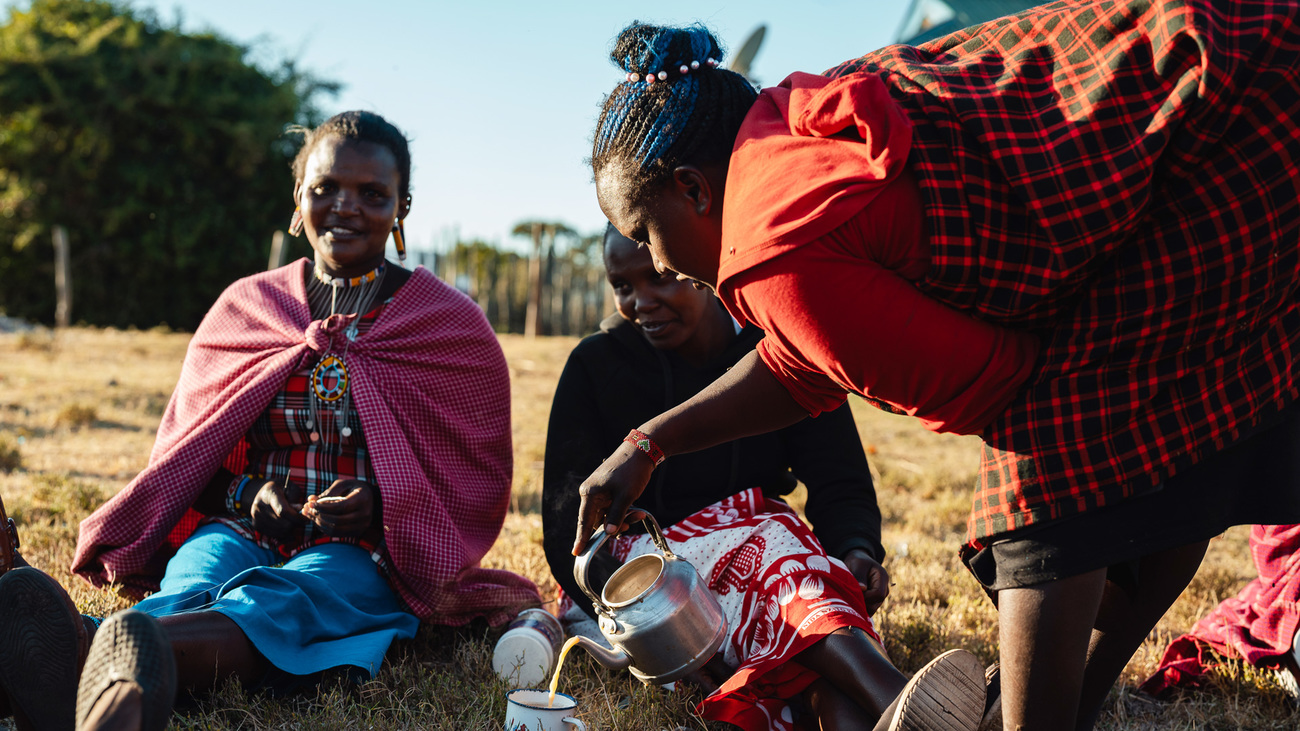
Representatives from eight IFAW-supported women’s groups in Loita drink tea together Photo: Teti Sulu / © IFAW
For generations, the Loita Maasai woman has been conditioned to respond—to her husband, his children, his livestock, his home, and his community. She fetches water, firewood, and herbs; finds food for her family; and absorbs the anxieties of poverty, drought, and insecurity. Her value has often been measured by how faithfully she fulfils these responsibilities rather than by how clearly she expresses her own knowledge or aspirations.
She does not always announce what she knows. Her knowledge is revealed in how she reads the landscape and performs her daily work. This is the background from which she now emerges: not in rejection of culture, family, or responsibility, but through breaking the cocoon that has kept her knowledge, economic potential, and contribution to conservation largely unseen.
The silent voice
It’s considered normal to invite women to conservation meetings—but their role typically ends there. Their presence fulfils a donor requirement for gender inclusion. But sitting in a meeting is not the same as participating in it. A woman may be invited to speak, but her freedom to do so is at men’s discretion.
Loita Maasai women have never been absent from conservation. They live it every day at water sources, on farms, along footpaths, and while collecting firewood. They bear crop losses, support family members protecting the landscape, and influence how conservation is understood within the home.
Conservation does not enter an empty landscape occupied only by wildlife. It enters a lived-in space populated by women and men, young people and elders, livestock and wildlife—all of them connected through longstanding relationships and systems of knowledge. Each has a narrative. Women are not being brought into conservation from outside. Conservation enters a place in which women have always played a role.
Unveiling conservation knowledge through photography
Loita Maasai women have always held rich conservation knowledge, although it has rarely been formally recognized or documented. From 2019 to 2021, an IFAW and Lensational photography initiative gave women a different way to capture it. Holding a camera enabled them to show the conservation they were already living and decide what should be seen.
Their images showed animal encounters including a buffalo at a waterhole, wildlife concealed in the bush while women collected firewood, and elephants encountered on the journey to a weekly market. One woman explained that when she finds a buffalo at a waterhole, she gives it time to finish its business. When women enter the forest to collect firewood, they call out to the ngwesi—the wildlife in the bush—asking to collect firewood peacefully and leave. Women and wildlife generally share these spaces without incident. It’s rare to hear of a woman being injured by wildlife while collecting firewood or fetching water.
The photographs unveiled practical knowledge of how women read danger, negotiate shared spaces, and practice coexistence. They also showed why conventional monitoring may fail to hear women’s stories or tell them accurately. An Indigenous woman may speak most naturally while walking, working, or sitting among other women. If we listen only in workshops, we may record her attendance without discovering what she knows.
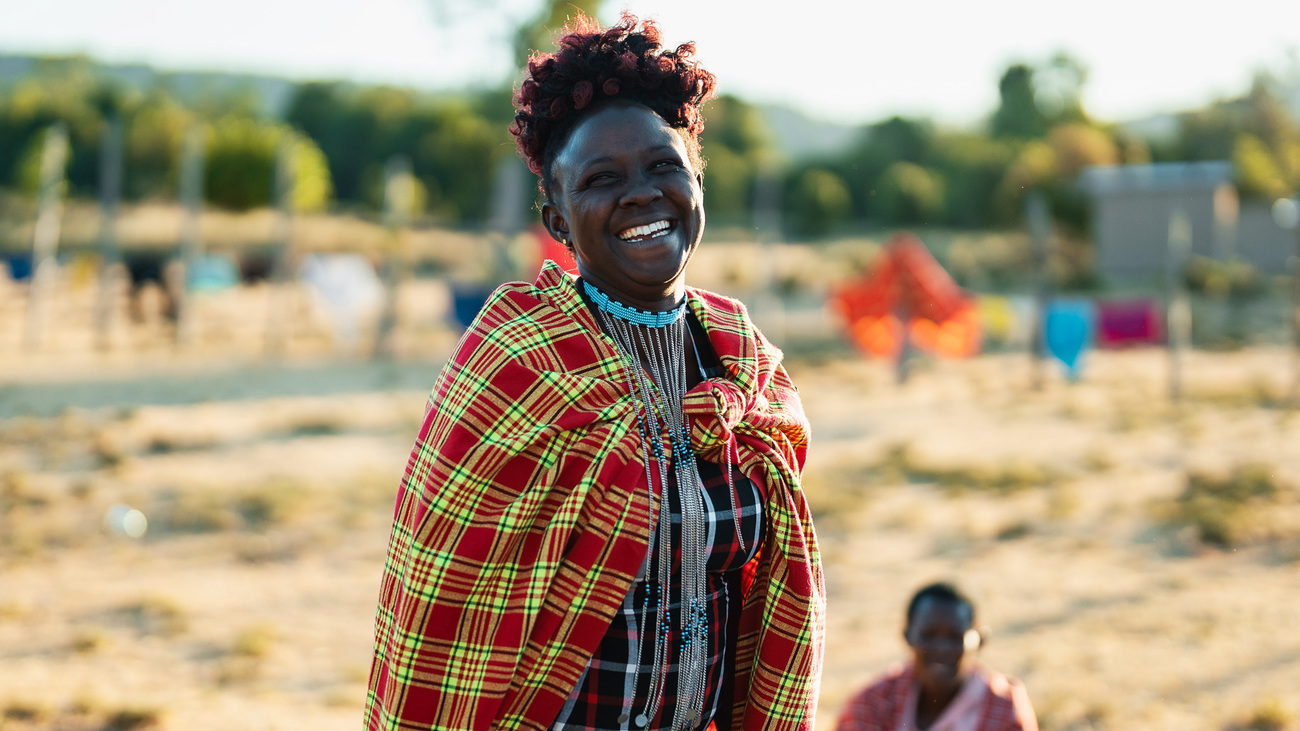
Gladys, a representative from one of eight legally registered, IFAW-supported women’s groups in Loita engaged in alternative livelihoods: beadwork, bullock fattening, and livestock enterprises. Photo: Teti Sulu / © IFAW
When women define the way forward
Once we begin listening, the priorities of Loita Maasai women are neither abstract nor difficult to understand. They ask for sustainable, income-generating livelihoods; education for their children; protection from human-wildlife conflict for themselves and others; and recognition of their knowledge.
Conservation cannot be separated from the rest of a Maasai woman’s life. She may respect wildlife and understand the importance of protecting the forest, but she must also feed her family, pay school fees, and buy uniforms for her children. She lives with the impacts of crop-raiding animals, including baboons, as well as other forms of human-wildlife conflict. Conservation cannot expect her continued support while ignoring the risks to her community.
Over the past eight years, Ilkimpa Community Conservation Association (ICCA-Loita), with support from IFAW, has mobilized and facilitated approximately 700 women into eight legally registered self-help groups and one cooperative. The women engage in beadwork jewelry production, bullock fattening, and sheep and goat enterprises.
Income helps a woman provide food, pay school fees, and buy uniforms. It also gives her greater confidence and room to participate in decisions. When more women participate, once overlooked voices gain collective weight.
When ICCA-Loita speaks of empowering women, we do not mean giving strength or knowledge to women who have none. Their strength already exists. What has been missing are the conditions through which it can become visible and influential, including economic opportunity, collective organization, recognition, and space to speak.
Women have also carried some of the hidden costs of coexistence. Before ICCA-Loita was established, wives, mothers, and sisters worried about husbands and sons involved in poaching and the possibility of arrest, imprisonment, injury, or death. Women are grateful that this chapter has largely closed and that several of their loved ones have moved from poaching into conservation careers, including becoming rangers.
The presence of women community rangers adds another dimension to this change. These women are showing what becomes possible when a community invests in its girls and offers equal opportunities. Their work is changing not only who carries out conservation, but also how the community understands the abilities and potential of its daughters.
Livelihood support must ultimately lead towards economic independence rather than permanent dependence on conservation projects. IFAW's support for women's empowerment through beadwork production has established an important foundation. Our desire now is for the women to market their work more directly and develop a wider range of sustainable, conservation-conscious livelihoods.
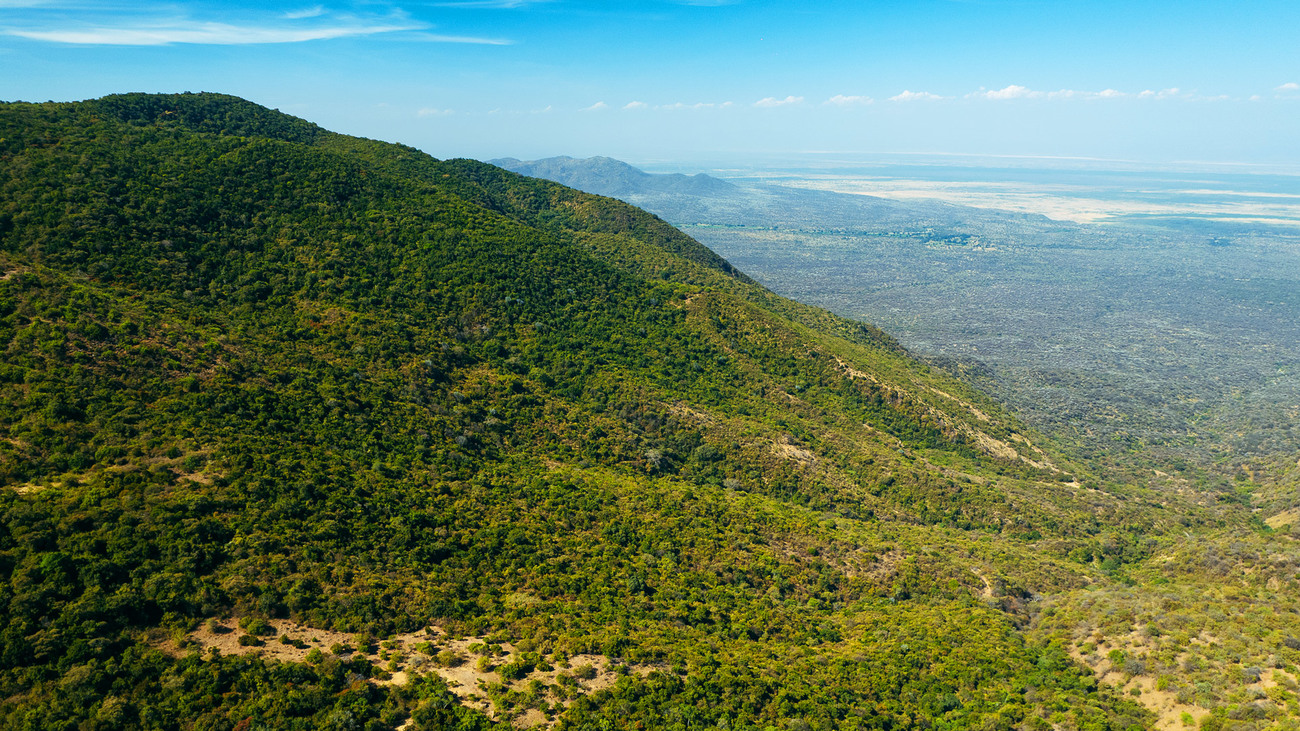
Aerial view of Loita Forest. Photo: Teti Sulu / © IFAW
What the Loita experience teaches us
Women must be involved before conservation projects are designed. By the time they are invited to participate, the important decisions—what the problem is, which activities will be funded, whose knowledge matters, and how success will be measured—have often been made.
Sustainable livelihoods, education, protection from human-wildlife conflict, and recognition of women's knowledge cannot be treated as secondary social benefits. Women must help identify problems, shape responses, influence resource allocation, and determine how success is understood.
Conservation organizations must also understand the circumstances from which women participate. Loita Maasai women live within a society in which their responsibilities, rights, and ability to influence decisions are connected to customary governance, family relationships, and access to land. Recognizing customary governance and Indigenous land rights is essential, because these institutions and relationships have helped sustain the Loita landscape and its biodiversity. But we must also make an honest examination of who speaks, who controls land, who benefits from conservation, and whose concerns remain unheard.
Respecting culture should not mean using culture to justify the exclusion of women. Equally, advancing women's rights should not require dismissing the culture and community within which women live. The challenge is to work within this reality honestly—recognizing its strengths while advancing women’s participation and influence.
Participation must also be accompanied by accessible grievance and accountability mechanisms. Women need safe and culturally appropriate ways to question decisions, report harm, raise concerns, and seek redress without fear of retaliation. These mechanisms must be explained in language people understand and made accessible beyond formal meetings.
Are we ready to listen?
To see conservation through the eyes of a woman is not simply to give her a camera, invite her to a workshop, or add her name to an attendance register. It is to recognize that she is already part of conservation.
The question is no longer whether the Loita Maasai woman has a conservation story. She does. The question is whether conservation institutions are ready to hear it—and whether they are prepared to change because of what she says.
We should stop asking how communities can be fitted into conservation programs and begin asking how conservation programs can respect and strengthen the communities that have helped sustain biodiversity for generations.
Related content
every problem has a solution, every solution needs support.
The problems we face are urgent, complicated, and resistant to change. Real solutions demand creativity, hard work, and involvement from people like you.