Beijing Raptor Rescue Center - China
Birds of prey are falling prey in ChinaWhen AI meets wildlife rescue: a common kestrel’s second chance
When AI meets wildlife rescue: a common kestrel’s second chance
March 4, 2026
On 20 February, as families across Beijing celebrated the Spring Festival, one local resident found themselves facing something very different.
Near White Stupa Temple in Xicheng District, just west of the Forbidden City, a common kestrel had become trapped in rodent glue. The small raptor was completely immobilized, its feathers stuck fast, unable to fly.
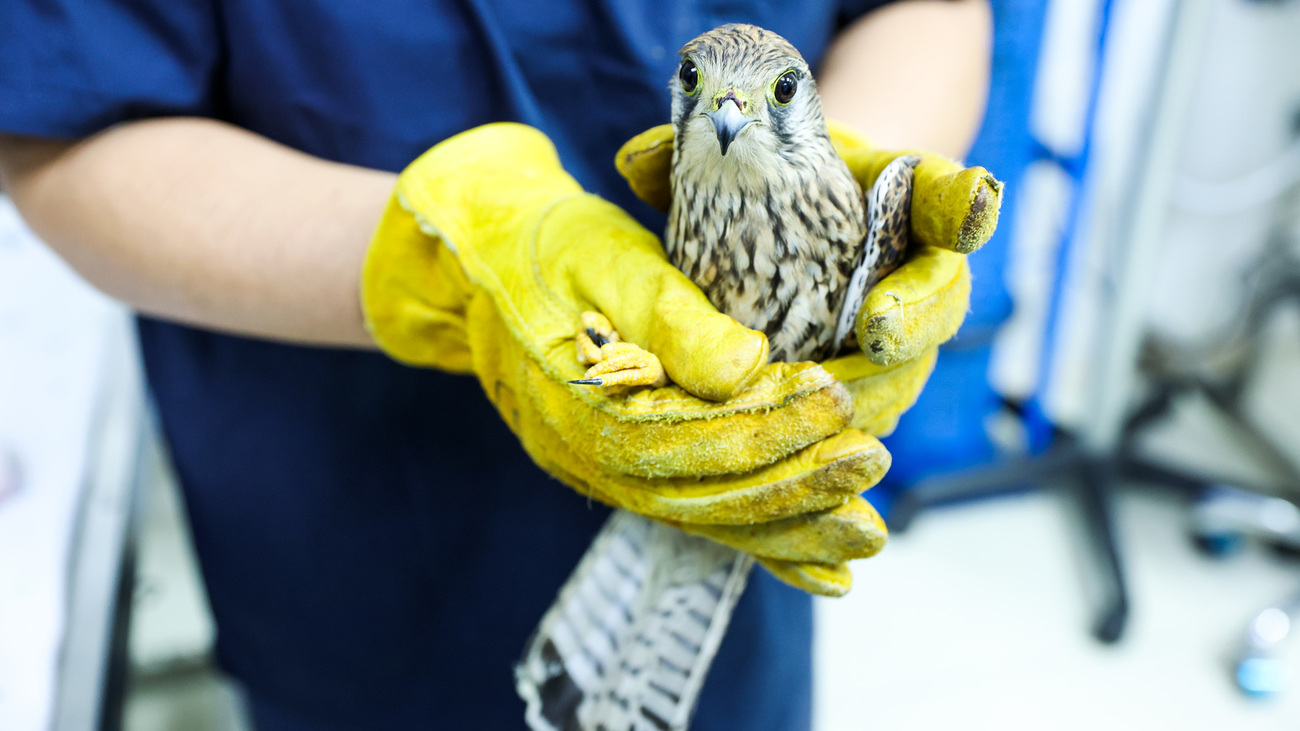
The common kestrel being restrained by a rehabilitator for physical examination Photo: © IFAW
Glue traps are silent urban killers. For birds of prey, getting ensnared can mean severe feather damage, shock, dehydration, and exhaustion. Without professional help, the odds of survival are slim.
This time, though, one decision changed the outcome.
The first step was to slow down
Instead of attempting a risky do-it-yourself rescue, the resident turned to Doubao, an AI-powered support platform, for guidance. The advice was calm and practical: keep a safe distance, avoid handling, feeding, or trying to release the bird, and place it carefully in a ventilated box, covered to reduce stress.
Just as importantly, it provided tips to avoid further injuring the bird, such as not lifting a raptor by its wings, not prying its beak open to feed it, and not using a net.
The platform also reminded the rescuer that raptors in China are nationally protected species, and that capturing or keeping them without authorization is illegal. The safest, most responsible option was clear: contact licensed wildlife professionals right away.
It then listed emergency contacts in Beijing, recommending the IFAW Beijing Raptor Rescue Center (BRRC) first.
By the following day, common kestrel #260204 was safely in our care, the first admission our team has seen that was guided to us through an AI search.
What we found at intake
Our rehabilitators recorded the kestrel’s weight at 180 grams, with a keel score of 4.0, indicating it was not underweight. Adhesive residue coated sections of its feathers, and there was visible wear from struggling to free itself. Fortunately, no fractures were detected.
The team noted a minor injury to the cere and a slight abnormality in the fourth toe on the left foot, which affected posture but not severely. Overall, the bird presented as depressed, weak, and mildly dehydrated.
Fluids were administered immediately to stabilize its condition. Because the kestrel’s body weight was adequate, the team opted for careful monitoring rather than force-feeding when it didn’t eat right away. Blood tests the following day returned normal results. With the bird still low in energy, our veterinarians administered meloxicam to ease inflammation and discomfort, while continuing close observation.
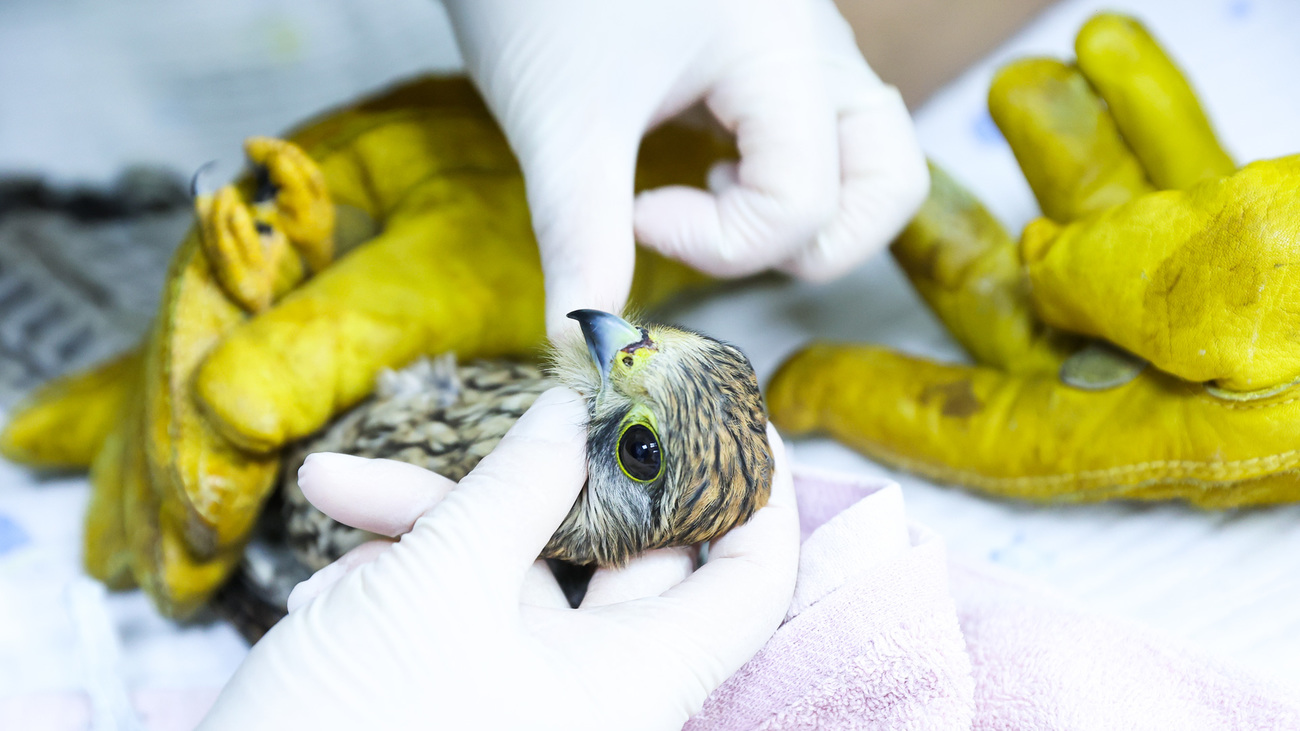
Rehabilitators performing regular check-ups for the common kestrel. Photo: © IFAW
Small signs of progress
By 22 February, the kestrel was standing more steadily and began eating independently. On 23 February, medication was discontinued and the focus shifted to monitoring and feather care.
Glue does not come out in one go, and feathers need time to recover their structure and function after adhesive removal. Release won’t be immediate, but the direction of travel is positive.
For raptors like kestrels, that matters beyond the individual. Birds of prey help maintain balance in urban ecosystems by keeping rodent populations in check. Saving one animal can ripple outwards, in ways we don’t always see.
Why the right information matters
One detail from the rescuer stood out to our team. Alongside the handling guidance, the AI described our rescue centre as Beijing’s dedicated professional raptor facility, and listed our hotline and location accurately.
That prompted some curiosity. Later, our rehabilitation team asked the platform a similar question: “What should I do if I find an injured owl in Beijing?” The response was again clear and responsible, emphasising minimising stress, avoiding home treatment, and contacting licensed wildlife professionals.
In wildlife rescue, minutes matter, and so does good advice. Technology can’t replace trained hands, veterinary expertise, or the patient work of rehabilitation, but it can help a concerned person make safer choices in a high-stress moment, and connect an animal to professional care faster.
Wildlife rescue is always a race against time. This time, timely information helped kindness win.
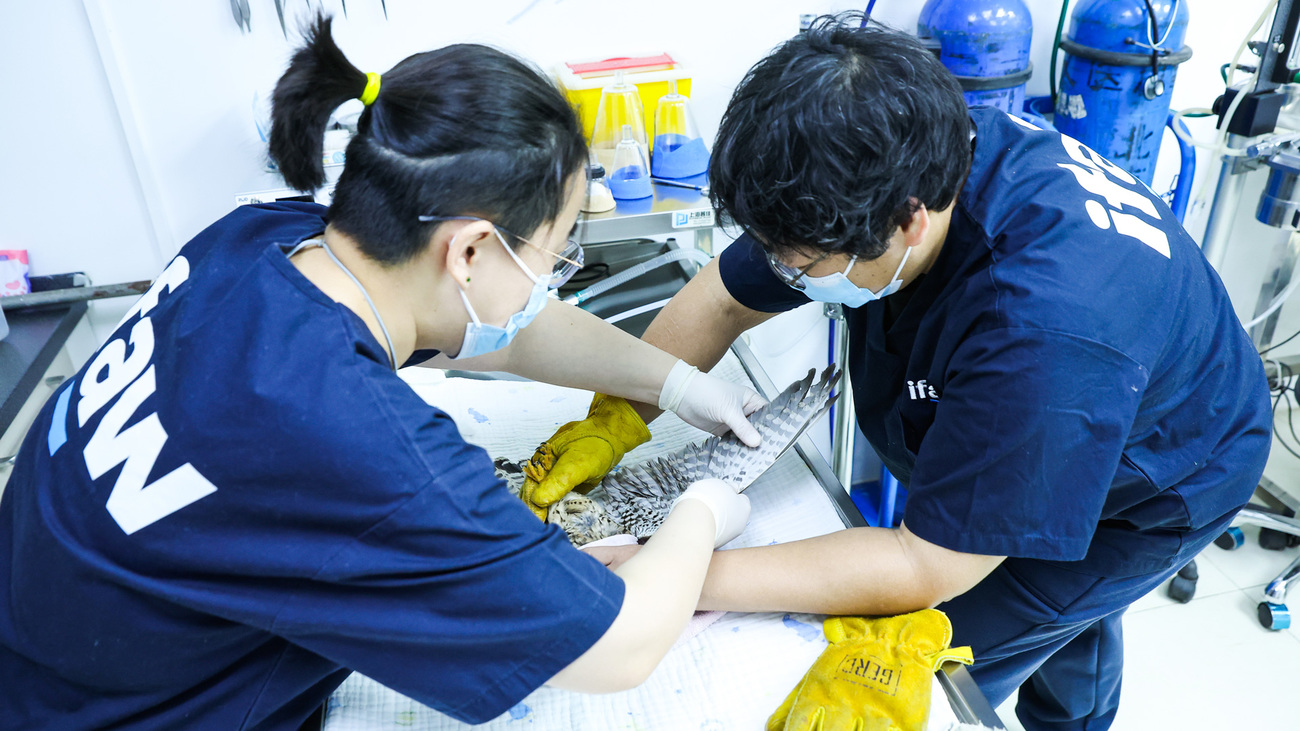
Rehabilitators performing regular check-ups for the common kestrel. Photo: © IFAW
If you find wildlife in distress
If you come across an injured or trapped wild animal:
- Keep a safe distance and reduce noise and disturbance.
- Do not attempt to feed, treat, or release the animal yourself.
- Contact licensed wildlife rescue professionals as soon as possible.
At IFAW, our teams respond to wildlife emergencies every day, from individual rescues to large-scale disaster response. Sometimes, protecting wildlife starts with protecting one small bird.
Related content
every problem has a solution, every solution needs support.
The problems we face are urgent, complicated, and resistant to change. Real solutions demand creativity, hard work, and involvement from people like you.