Saving the North Atlantic right whale - North America
Don't fail our whaleWeakened US protections put marine wildlife at greater risk
Weakened US protections put marine wildlife at greater risk
October 8, 2026
As you read this, a North Atlantic right whale may be traveling along the East Coast of North America, feeding, migrating, and playing its part in a healthy ocean ecosystem.
These enormous whales contribute to the cycling of nutrients that support phytoplankton, microscopic organisms that capture carbon and produce much of the oxygen in our atmosphere. They are also one of the world’s most endangered large whale species. Hunted to the brink of extinction, North Atlantic right whales today number only about 380 individuals.
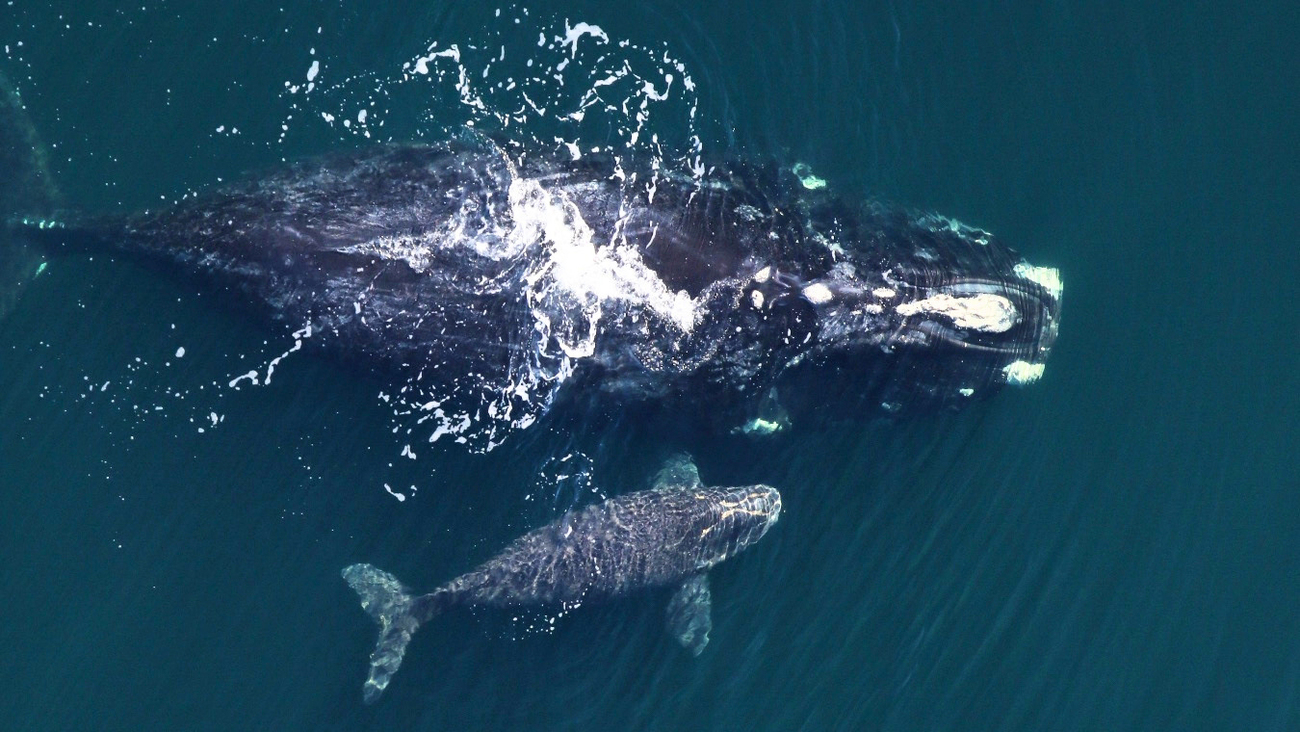
North Atlantic right whale Magic (catalog #1243) and her new calf were sighted east of Amelia Island, FL in January 2026. Photo: © Clearwater Marine Aquarium Research Institute, taken under NOAA permit #26919. Funded by Georgia DNR and NOAA Fisheries.
Their recovery depends on reducing preventable threats, particularly entanglements in fishing gear and collisions with vessels. Yet two White House Executive Orders, proposed federal legislation, and sweeping reforms recently announced by the US National Oceanic and Atmospheric Administration (NOAA) Fisheries could make that work more difficult, with implications not only for right whales but also for sea turtles, sea lions, seals, sharks, and other marine wildlife.
At issue are Executive Order 14276: “Restoring America’s Seafood Competitiveness" and Executive Order 14430: “Restoring American Saltwater Angling and Recreation,” as well as NOAA Fisheries reforms that support EO 14276, and H.R, 9436, the Northeast Lobsterman Protection Act of 2026, which thus far has been passed by the US House of Representatives.
These actions, coupled with recent changes that will severely damage the Endangered Species Act’s (ESA) ability to protect imperiled wildlife, could dismantle many of the safeguards that the American public and decisionmakers have for decades deemed essential to the survival of imperiled species.
The NOAA Fisheries reforms, announced September 2, 2026 in a leadership message, feature an array of frontline and more obscure actions described as an “operational roadmap for regulatory, scientific, and administrative reform.” Despite a nod to “maintain ocean ecosystem health,” these actions—some of which are already underway—could have serious consequences for marine wildlife.
Concerningly, NOAA Fisheries is instructing regional fisheries to “consider removing species that no longer require conservation and management,” without specifying how these determinations are to be made.
This type of language echoes the administration’s final rule to rescind the longstanding regulatory definition of “harm” under the ESA, limiting how the act can protect threatened and endangered animals when habitat destruction or degradation kills or injures them. This change became effective September 14, 2026. Twenty states and the District of Columbia have filed lawsuits focused on the final rule, as well as rule changes related to the designation of critical habitat.
In addition, federal regulators have proposed further changes to the ESA that would narrow protections against the direct killing of endangered animals. Under the US Fish and Wildlife Service’s proposed reinterpretation of the law, actions that foreseeably harm or kill endangered species but were not specifically undertaken to do so will not be considered ESA violations.
In starker terms, a leaked memo from the Service states: “A vessel that inadvertently strikes a whale has not taken it, because the vessel’s course was not set against the whale...” It is unclear how this new interpretation will affect NOAA Fisheries reforms as they relate to ESA-protected species.
A shift in how US fisheries are managed
The new NOAA Fisheries reforms support the administration’s “America First Seafood Strategy” and Executive Order 14276, with an emphasis on reducing regulatory burdens, increasing domestic seafood production, and improving profitability. But fostering a strong fishing industry and healthy ocean ecosystems should not be competing goals. In fact, they are deeply connected through their impacts now and into the future.
Years of work between the fishing industry and conservation interests have built a level of trust and cooperation that could be jeopardized by NOAA Fisheries’ planned actions. In addition, these reforms risk undermining protections under laws such as the ESA and Marine Mammal Protection Act at a time when they already face numerous other threats.
Right whales need solutions, not delay
Entanglement in fishing gear remains one of the greatest threats to North Atlantic right whales. Ropes connecting traps and pots on the seafloor to buoys at the surface create vertical lines in the water column that whales can encounter as they migrate and feed. North Atlantic right whales will continue to needlessly face entanglement threats as the NOAA Fisheries reforms call on fishery councils to ignore requirements for on-demand fishing gear.
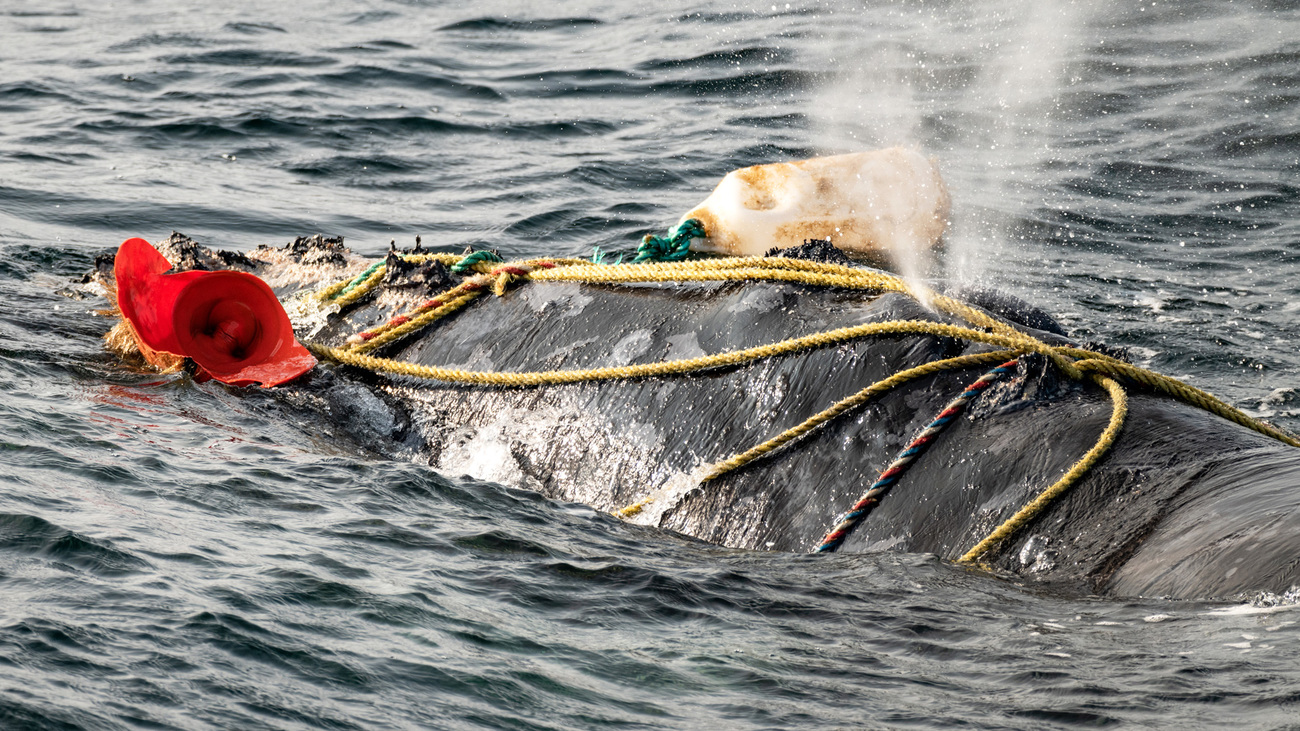
Fishing ropes wrap over the blowhole of a severely entangled North Atlantic right whale (catalog #3960) in the Gulf of Saint Lawrence, Canada in 2018. Photo: © Nick Hawkins
By removing persistent vertical lines from the water, on-demand technology can dramatically reduce entanglement risk while allowing fishermen to continue accessing important fisheries, without requiring widespread use of the gear. Instead, on-demand gear can allow fishermen to access areas that might otherwise be closed to fishing. For example, the first seasonal closure to protect migrating right whales impacted Massachusetts in 2015. This closure provided substantial, necessary protection during the whales’ migration, but these closures come at a significant cost to a portion of the commercial fishing industry.
Regrettably, Congress refuses to acknowledge the effectiveness of on-demand gear. H.R. 9436 would extend a moratorium on new lobster and crab gear regulations for an additional seven years, nearly two years before the current moratorium is due to expire. This extension would prolong threats to many whale species, including North Atlantic right whales, even as IFAW has worked closely with congressional offices, agency representatives, lobster fishermen, other industry representatives, and nongovernmental organizations to advance pragmatic solutions that protect whales while supporting fishing communities.
Data show on-demand fishing gear works to prevent whale entanglements. NOAA’s Northeast Fisheries Science Center has collected data on more than 21,000 hauls of on-demand gear with a more than 90% success rate. Since 2020, more than 1 million pounds of seafood have been safely harvested and sold commercially in the US and Canada using on-demand gear, with no documented whale entanglements, demonstrating the efficacy of this equipment.
With this type of success rate, and with ongoing, dialogue and cooperation among fishermen, scientists, and conservationists, there is no scientific justification to further extend or delay developing and implementing measures to protect whales from accidental entanglements. Any extension of the moratorium puts whales at greater risk at a time when their populations are tenuous at best and when other protections, such as the ESA, are being challenged.
IFAW brings decades of direct experience to this challenge. As first responders to large whale strandings and whale entanglements, we see firsthand what happens when whales become caught in fishing gear. IFAW is a member of the Atlantic Large Whale Take Reduction Team and works with fishermen and other partners to offer pragmatic solutions such as on-demand gear.
Protecting whales and supporting fishing communities are not mutually exclusive. Innovation provides an opportunity to do both.
Vessel strikes remain a serious threat
The NOAA Fisheries reforms also call for “reducing unnecessary burdens while ensuring responsible conservation practices” in vessel speed limits designed to reduce collisions with whales. For the North Atlantic right whale, vessel strikes are a leading cause of death and injury, alongside entanglement.
Over the past seven years, 41 North Atlantic right whales have died, with vessel strikes the most common determinable cause of death. IFAW works closely with industry partners to decrease the risk of vessel strikes with high-tech solutions. It is unclear if and how the reforms may impact these efforts.
Any changes to vessel speed protections should be guided by the best available science and the urgent need to prevent avoidable deaths. For a species with so few individuals remaining, the survival of each whale matters.
Sea turtles, sharks, and other species could also be affected
The implications of the reforms extend well beyond whales.
For example, in guidance to the Western Pacific Fisheries Council, NOAA Fisheries calls for the removal of longline fishery caps that protect endangered leatherback turtles. Steller and California sea lions and harbor seals may also be affected.
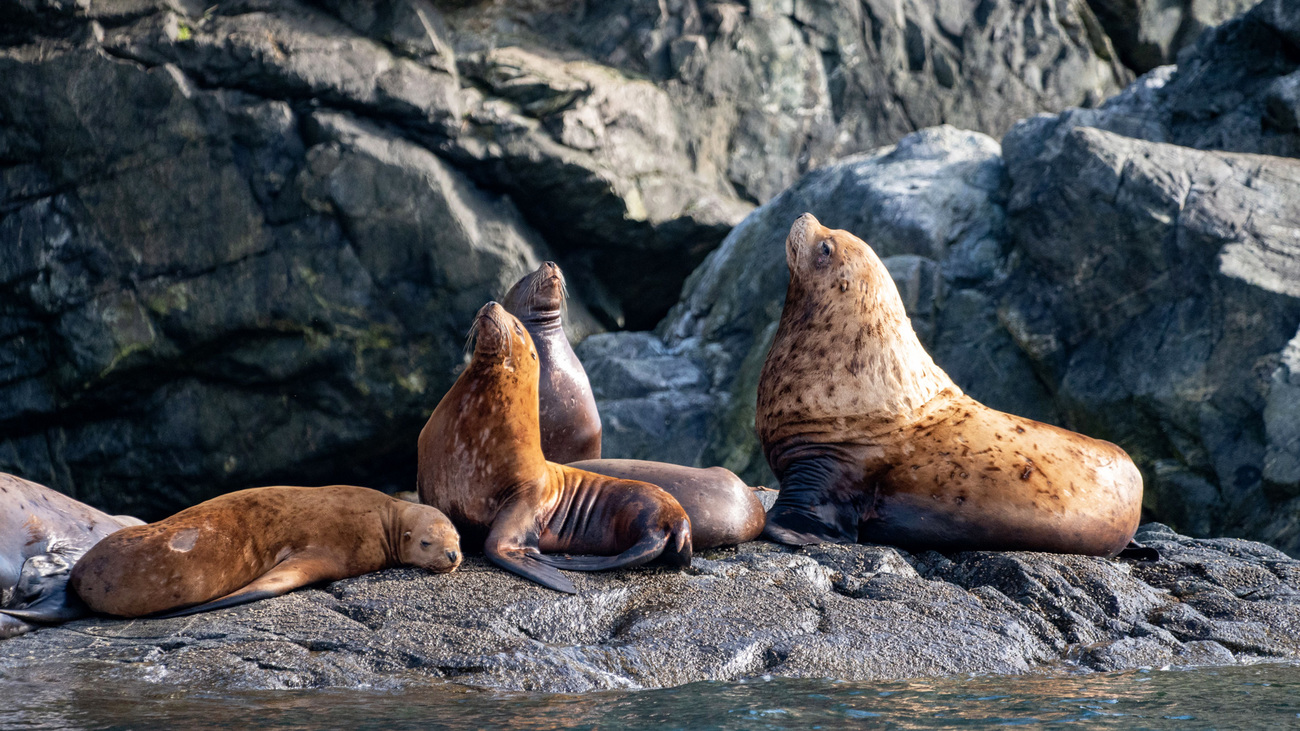
Sea lions sunbathing on a rocky shore in Elfin Cove, Alaska Photo: © Beth Fitzpatrick via Pexels
In addition, Executive Order 14430 contains a number of unknowns and proposed actions of concern to marine species, including sharks. For example, the order gives priority to grantmaking partnerships involving charter boat captains and recreational angling organizations to “reduce the economic and ecological impact of shark depredation on the recreational angling sector.” According to the executive order, listings of sharks under the Convention on International Trade in Endangered Species of Fauna and Flora (CITES) would be assessed, and all conventions, treaties, and other agreements would be reviewed “to ensure that their measures and actions promote robust commercial and recreational harvests.”
Healthy fisheries depend on healthy oceans
As the NOAA Fisheries Assistant Administrator acknowledges in a July 2, 2026, message about the reforms, the US is a global leader in sustainable fisheries management. What he does not say is that this leadership role has been built on years of dialog among and within the fishing industry, conservation organizations, governments, scientists, policymakers, and the public.
IFAW works around the world to safeguard marine animals and the ecosystems they depend on while recognizing that coastal communities also depend on healthy, productive oceans. We have seen that durable conservation solutions are possible when people work together.
Weakening protections may deliver short-term regulatory relief, but healthy fisheries ultimately depend on healthy oceans. The better path is to continue investing in science, innovation, and collaboration that allows wildlife and people to thrive together.
For North Atlantic right whales, there is little time to lose. With so few remaining, every individual matters, and every preventable death makes recovery harder. The solutions already being developed show we do not have to choose between protecting marine wildlife and supporting the people whose livelihoods depend on the sea. We need responsible policies and the commitment to put those solutions to work.
Related content
every problem has a solution, every solution needs support.
The problems we face are urgent, complicated, and resistant to change. Real solutions demand creativity, hard work, and involvement from people like you.