Saving the North Atlantic right whale - North America
Don't fail our whaleNorth Atlantic right whale population dips slightly as conservation efforts remain critical
North Atlantic right whale population dips slightly as conservation efforts remain critical
November 16, 2026
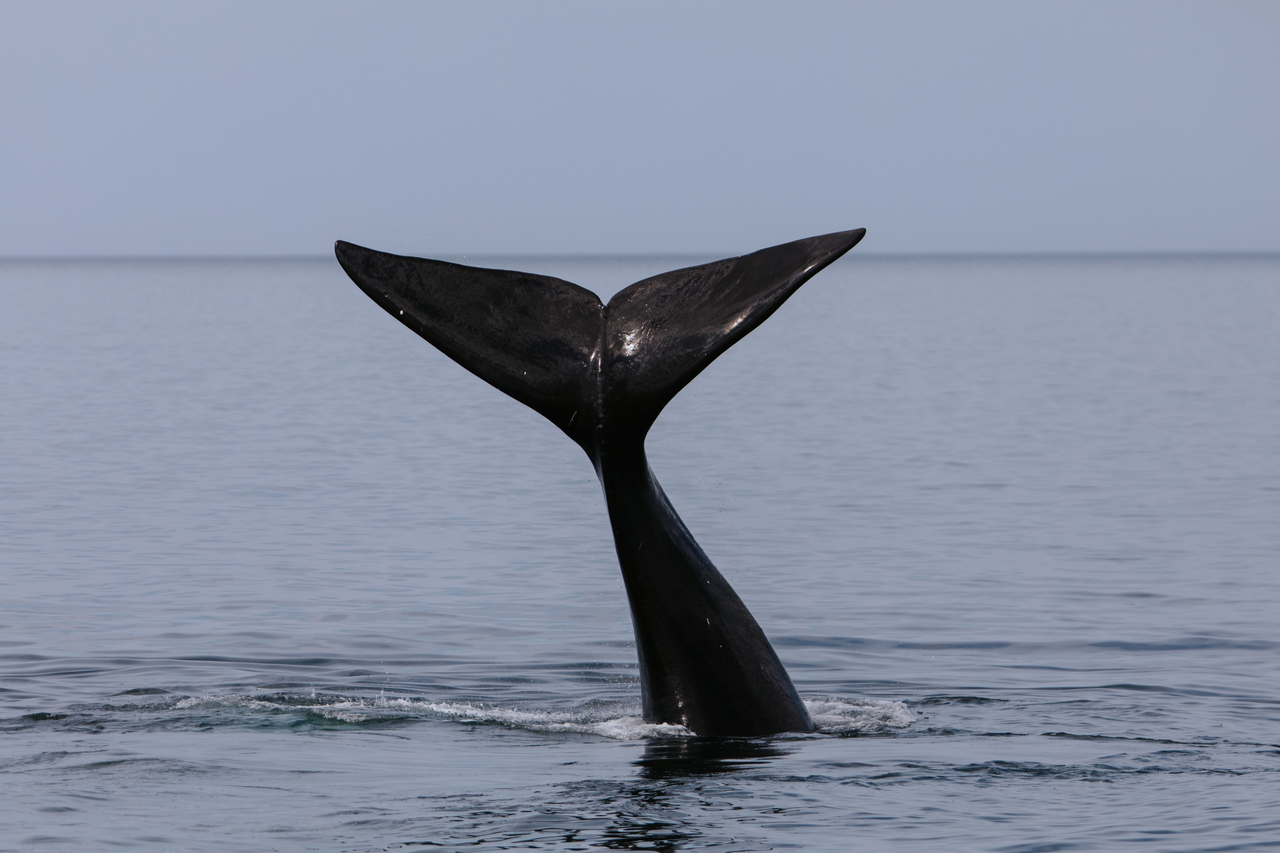
A North Atlantic right whale in Cape Cod Bay. © IFAW
IFAW urges continued protections against fishing gear entanglements and vessel strikes as new population estimate highlights need for sustained growth.
(November 16, 2026– Washington, DC) — The latest North Atlantic right whale population estimate, released today by the North Atlantic Right Whale Consortium, shows a slight decline from a revised estimate of 389 individuals in 2024 to 382 in 2025. While the change falls within the estimate's margin of uncertainty, the findings underscore the continued vulnerability of one of the world's most endangered whale species.
The announcement follows a 2025-2026 calving season that saw 24 documented births, the highest number since 2009, with no documented calf deaths. These births are not yet reflected in the 2025 population estimate.
Kathleen Collins, Senior Marine Campaigns Manager at the International Fund for Animal Welfare (IFAW), said:
“While the latest population estimate shows a slight decline, the bigger concern is that North Atlantic right whales have yet to achieve the sustained growth needed for recovery. With so few individuals remaining, we cannot afford to lose more whales to preventable threats.
“Innovative solutions, including shore-to-ship AIS messaging to help prevent vessel strikes and the growing adoption of on-demand fishing gear, can help reduce the threats these whales continue to face. Continued investment, collaboration with mariners and fishing communities, and effective protections across US and Canadian waters are essential to turning this potential into lasting recovery.
“The latest numbers remind us that recovery cannot be taken for granted. Continued action can make the difference. The 24 calves born during the most recent calving season give us reason to hope. Our responsibility now is to give them every chance to survive.”
Dr Sarah Sharp, veterinarian and animal rescue expert at IFAW, added:
“Every calf born is an encouraging sign of this species' resilience. Now we must give these young whales the chance to grow into healthy adults by protecting them from entanglement in fishing gear and vessel strikes.
“For a population this small, the health and survival of every individual matters. Each whale that reaches adulthood, and each female that survives to reproduce, contributes to the future of the species. These new calves represent tremendous potential, and it's our responsibility to give them the best possible chance of survival. Protecting them throughout their lives is how we turn hopeful population numbers into meaningful, lasting recovery.”
Press contact:
Stacey Hedman | IFAW | +1 508 737 2558 | shedman@ifaw.org
Related content
every problem has a solution, every solution needs support.
The problems we face are urgent, complicated, and resistant to change. Real solutions demand creativity, hard work, and involvement from people like you.