Asian elephant protection – China
Conserving Asian elephant populations through coexistence initiativesFrom fear to trust: a community ranger’s path to protection
From fear to trust: a community ranger’s path to protection
February 6, 2026
Blog series: Part 2 of 3
By Dafan Cao, Program Officer with IFAW’s Asian Elephant Protection project in China
Part 1: From the ground up: launching a network for people and elephants
Part 3: upcoming
When we arrived in Mengla in May 2024, the air was heavy with summer rain. The township hall where we ran our training was packed—dozens of new faces, curious, cautious, listening closely. I was focused on making sure the lessons landed. But even through the crowd, one man stood out. He was nearly a head taller than the rest, standing quietly in the back. That was Sanshuai Ai.
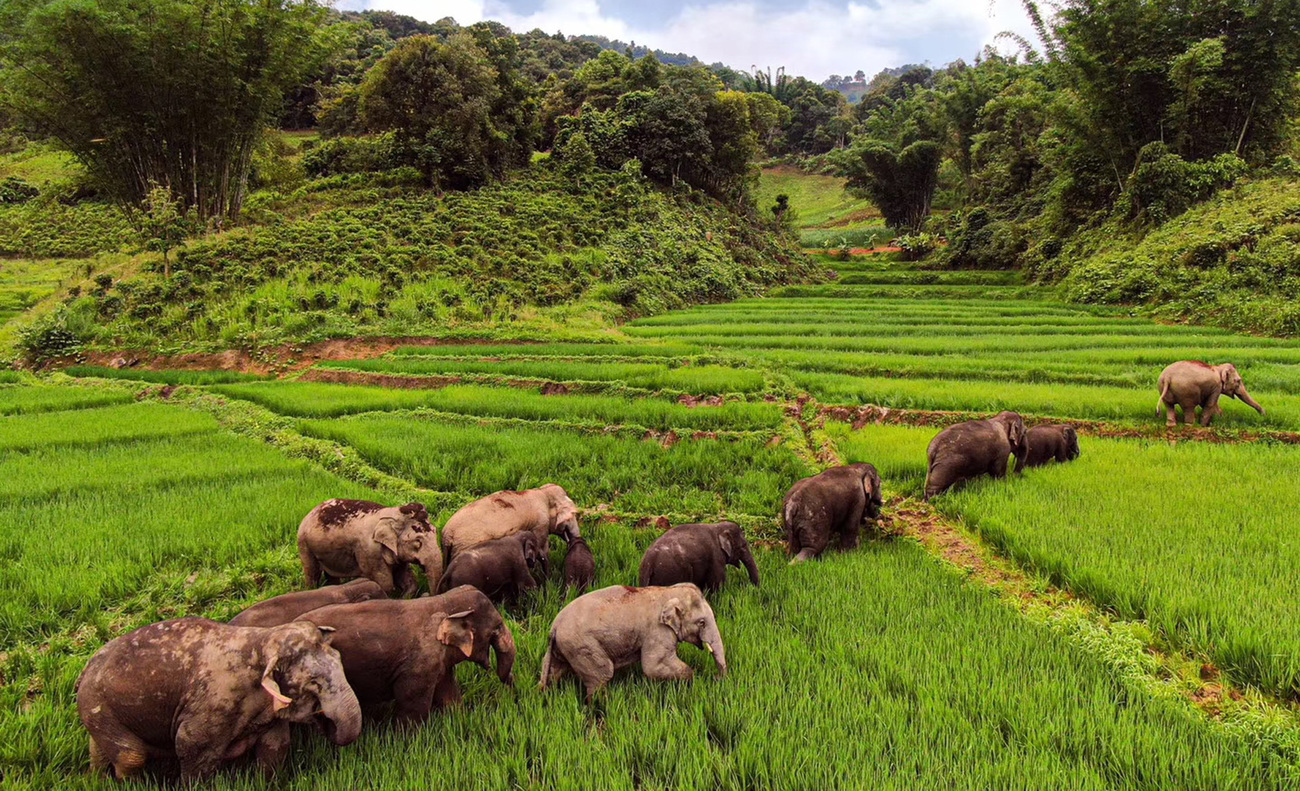
A herd of Asian elephants walking through a field in Xishuangbanna Dai Autonomous Prefecture, Yunnan province, China. Photo: © Xuan Zheng
At first, I didn’t know his name. He was simply "the tall Dai man"—a local from one of the nearby villages, part of the ethnic minority groups that have long called Yunnan’s forests home. But over time, as the Community Ranger Network expanded into new areas, I came to know him not only as a trainee, but as a deeply committed community ranger.
The Community Ranger Network was already three years old by then. Launched by the IFAW and the Jinghong Forestry and Grassland Administration in 2021, it had begun as a local solution to a growing challenge. Human–elephant conflict was no longer the exception—it was becoming the norm in many parts of Yunnan. Asian elephants wandered through farmland, destroyed crops, and unsettled daily life. Villagers were scared, and too often, caught unprepared.
Our response was not just about alerts and setting up deterrents. It was about building local capacity—training people who lived alongside elephants to become rangers who could anticipate, respond, and educate. It was about community resilience.
By the end of 2024, rangers like Sanshuai were not just observing. They were leading. I saw this firsthand in December, during a field exercise in a Dai village near the county town. The community had frequent elephant visits, and the team’s job was to conduct a live safety demonstration. Sanshuai’s group was chosen to lead.
Before they began, the rangers were laughing and trading stories. But when it came time to speak, Sanshuai froze. His hands clenched. His voice stumbled. The villagers, kind and attentive, fell silent. It only made it harder. I recognized the moment—it was the same one I had faced, years ago, when I first spoke in front of a crowd. That blend of fear, pressure, and pride.
Still, Sanshuai didn’t quit. With help from his teammates, he pushed through. His message landed. It wasn’t perfect, but it was honest, and it was heard. That moment stuck with me—not because of its polish, but because of his persistence. It was the beginning of his voice.
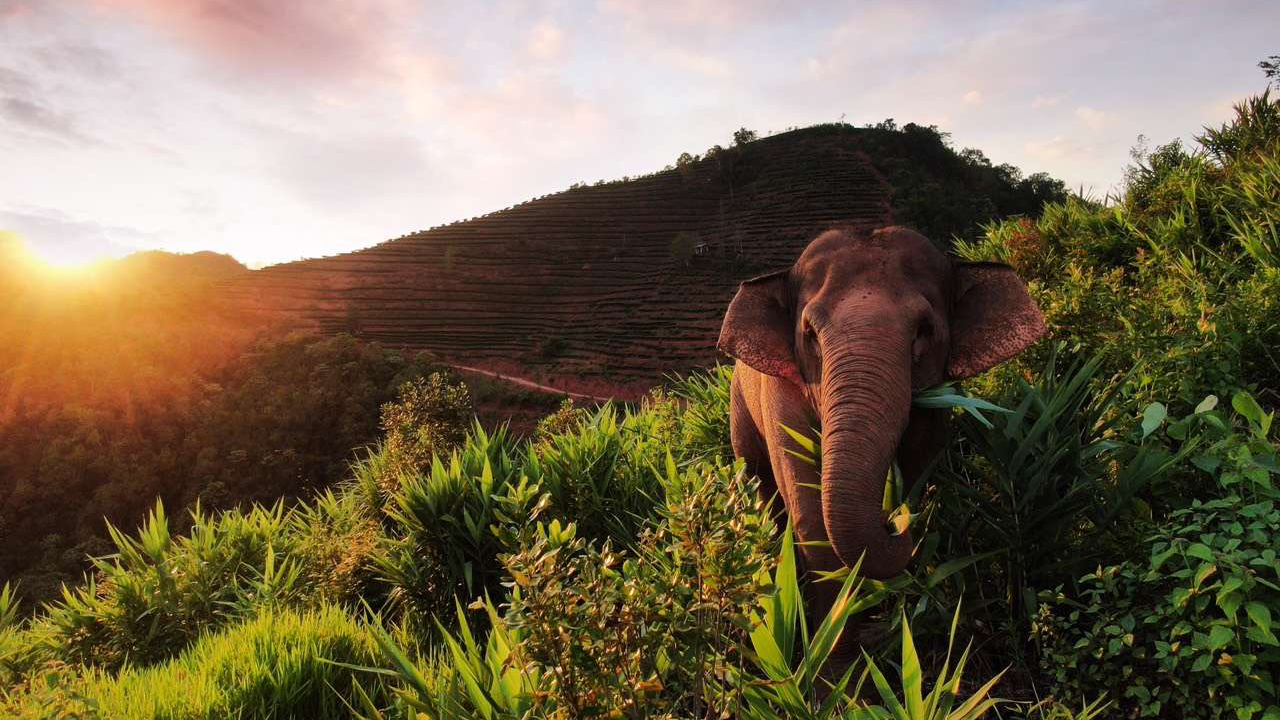
A drone photo captures a peaceful moment during sunset of a female elephant Asian elephant leisurely eating tiger grass in an open space beside a tea garden in Meng'a Town, Menghai County, Xishuangbanna Dai Autonomous Prefecture, Yunnan Province, China. Photo: © Xuan Zheng
A few weeks later, I returned to visit him in Mengman Township. I tried to call but couldn’t reach him. Instead, his colleague Guan Yan invited me to their home. “Come eat,” she said. “They’re preparing a meal.”
His house stood near the road, new and clean, with wide eaves to keep off the rain. The kitchen was alive with the rhythm of family: sisters, aunts, pots clattering, voices rising over the steam of rice. In Dai families, when a guest arrives, everyone contributes. It felt less like a meal, more like a welcome.
Over tea, I asked Sanshuai why he chose this work, even though it was often hard, sometimes dangerous. He paused before answering.
"At first, it was just a job," he said. "It was close to home. I could care for my family. But then I saw it had meaning. In the beginning, villagers didn’t listen. They simply wished for us to ‘control the elephants’. Now, it’s different. When they see me in the fields, they come and ask: ‘Where are the elephants? Are they close?’ Sometimes they even tell me what they’ve seen. That trust—it makes the work worth it."
He smiled, then added, "Before, I only walked the nearby villages. Now, following elephants, I’ve walked every field, every valley in Mengman. I’ve come to know my home again."
“People here are afraid of elephants, but they also love them. If we do our job well, if we monitor, warn, and promote safety measures day after day, then fewer people and elephants will be hurt. That is the best gift we can give our home and our community.”
That’s what the Community Ranger Network has become—a way to protect, to connect, and to come home. It isn’t always easy. It requires long days, sleepless nights, and deep patience. But through the work of Sanshuai, and others like him, we are seeing fewer injuries, more understanding, and a future where people and elephants can share space with less fear and more respect.
In the next piece in this series, we’ll step back to look at the wider impact of this program: the data, the shifts in public perception, and what it takes to support the rangers who carry the work forward every day.
Related content
Our work can’t get done without you. Please give what you can to help animals thrive.