Phillip Kuvawoga
The conservation trilemma across Africa's landscapes
The conservation trilemma across Africa's landscapes
Phillip Kuvawoga | November 16, 2026
Across Africa, protecting wildlife corridors while supporting communities and economic development requires difficult choices. IFAW's Room to Roam initiative offers a way to navigate them.
The future of Africa's wildlife largely depends on the land-use choices made each season by the millions of people who share the land. Complex, interconnected ecological, social, and economic factors shape these choices. We can ignore them only at our own risk.
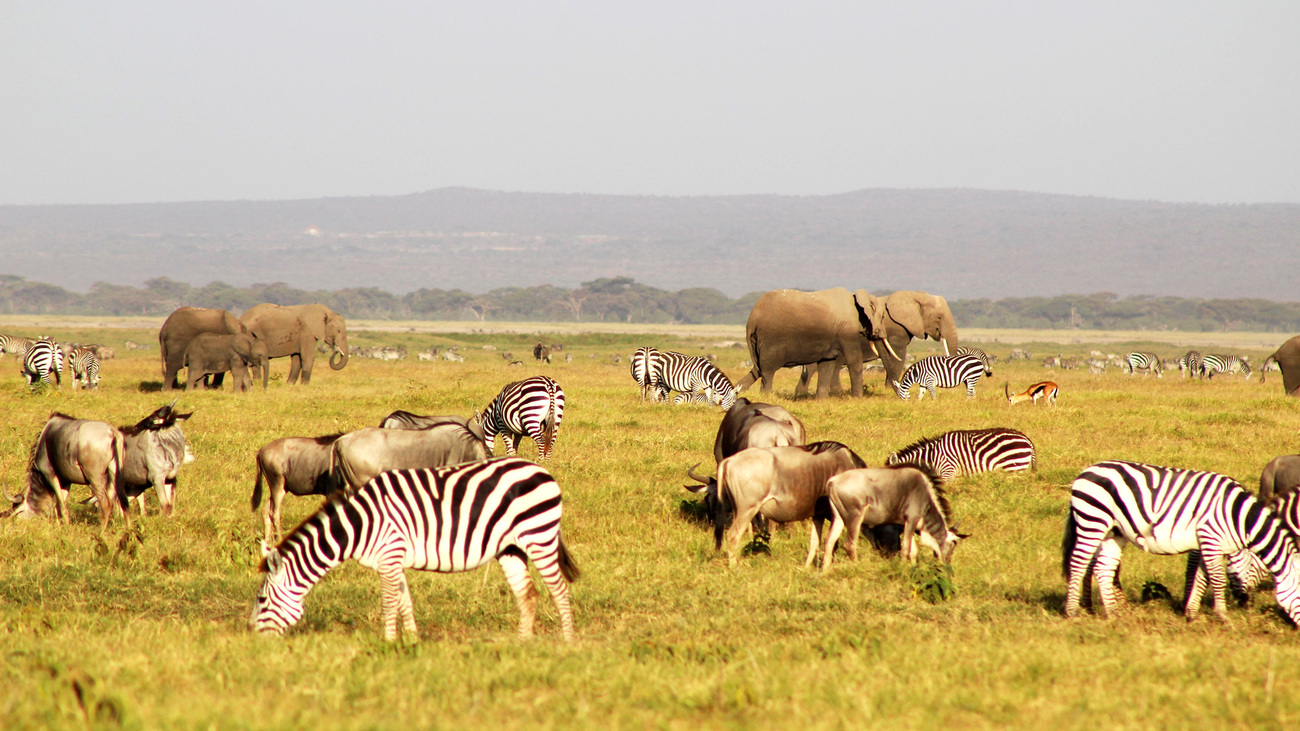
Zebras, elephants, and wildebeests in Amboseli, Kenya. Photo: Jen Prelack / © IFAW
If you spend enough time in Africa's savannahs and rangelands, you quickly notice the competing demands on the land, each with a valid reason. Farmers need more land as their families grow. Pastoralists move livestock based on available resources. Governments need space for roads, power infrastructure, and economic development. Wildlife, meanwhile, needs room to move across the boundaries humans have drawn on maps.
For years, conservation policies assumed these needs could be balanced on paper and would work themselves out in practice. They don’t. Someone always bears the cost.
The question, then, isn't whether trade-offs exist but how we balance them, creating a future where communities and wildlife both thrive.
Applying an economist's theory to conservation
In the early 1960s, economists Robert Mundell and Marcus Fleming showed that a country cannot simultaneously maintain a fixed exchange rate, allow capital to move freely, and pursue an independent monetary policy. It can only choose two.
Landscape conservation requires the same honesty. On the same finite land, we are pursuing three objectives: ecological integrity and connectivity, economic development and land conversion, and equitable human well-being grounded in rights and legitimacy.
Pursued without regard for the others, each can undermine the rest. Unchecked land conversion fragments the ecosystems that regulate water, buffer drought, and sustain wildlife economies. Protection that excludes communities erodes legitimacy and breeds conflict. Short-term extraction consumes natural capital.
Many African landscapes have suffered because conservation and development initiatives have failed to account for these connections. For years, programs were designed sector by sector, with poverty reduction in one silo and ecosystem management in another. The trilemma calls for a different approach.
Why community rights must remain central to conservation
This is where the economic analogy breaks down and becomes a warning.
A central bank can surrender any one of its three goals and still function. Conservation doesn't offer that freedom. There is one priority we cannot give up without undermining the other two, and that is equitable human well-being, grounded in rights and legitimacy.
Africa's experience offers important lessons. Where communities hold secure rights, have a meaningful voice in decisions, and receive a fair share of benefits, they can be effective stewards of natural resources. Where they have been excluded, even carefully planned wildlife corridors and dispersal areas can struggle to function.
Legitimacy requires clear rights over land and wildlife, rules and norms that local people have helped establish, community participation in monitoring, fair and proportionate sanctions, and accessible ways to resolve disputes. When these arrangements connect village, district, national, and transboundary institutions, landscapes are better able to function across different scales. When rules are imposed from above or remain unclear, trust erodes, and the corridors that depend on it become vulnerable.
This leaves us with a difficult question. How much ecological perfection and development speed are we prepared to trade off to preserve community trust and legitimacy?
Connectivity is infrastructure and must be budgeted
Governments across Africa plan and borrow for roads, dams, and power lines because they know economies cannot function without them. The ecological networks that keep rivers flowing, rangelands productive, and tourism viable deserve the same treatment.
They are infrastructure, even if they aren't made of concrete.
Connectivity is where the three priorities of the conservation trilemma physically meet. It enables elephants and other wide-ranging species to persist in shared landscapes. It allows wildlife and livestock to follow rain and forage during drought. It helps catchments supply water to towns and farms downstream.
The late Professor Rudi van Aarde of the University of Pretoria spent much of his career demonstrating the importance of connectivity.
For decades, southern Africa's response to perceived overpopulation of elephants in some parks was to manage their numbers through culling, translocation, or contraception. Rudi argued that these approaches treated the symptom rather than the underlying cause.
Elephants had become concentrated partly because fences, artificial waterholes, and protected areas that were too small or poorly connected restricted their natural movements. These are animals that evolved to move with the seasons. Restore space and movement, he argued, and the problem changes character.
His answer was megaparks for metapopulations. A megapark is not one vast fenced reserve. It is a network of national parks and reserves linked by wildlife corridors, buffer zones, and community-managed lands, allowing separate elephant populations to function as one larger system.
In such a system, some areas support population growth, while dispersal and natural limits help regulate numbers elsewhere. Movement also enables genetic exchange between groups, supporting healthier and more resilient populations.
The evidence has since accumulated. Research published in Science Advances found that elephant populations in large, connected, strictly protected areas were more stable year to year and suffered less from poaching. In contrast, isolated populations continued to grow because animals had nowhere to disperse.
Kruger National Park offers an example of this principle in practice. Following changes to water management and the end of culling in the mid-1990s, many artificial water points were closed. Some fences were also removed under transboundary agreements, helping restore more natural patterns of wildlife movement.
Research has suggested that reconnecting suitable landscapes could bring a substantial proportion of southern Africa's elephants into a functioning metapopulation.
High local elephant densities can damage woodlands and increase encounters with neighboring farms. Restoring connectivity can help distribute that pressure more widely, benefiting habitats, communities, and the public budgets that fund intensive wildlife management.
The central lesson: Space, not numbers, is the lever.

IFAW's Bernard Tulito (second from left) and Evan Mkala (right) with community leaders showing the signatures of community members who signed the lease for the Kitenden Conservancy, Kenya. Photo: © Donal Boyd
Managing landscapes rather than isolated wildlife populations
The Kavango–Zambezi Transfrontier Conservation Area (KAZA), covering roughly 520,000 km² across Angola, Botswana, Namibia, Zambia, and Zimbabwe, demonstrates what conservation at an operating-system scale can look like.
Its mandate connects protected areas and wildlife dispersal routes with tourism, development, and poverty reduction. The Great Limpopo landscape applies a similar approach across Mozambique, South Africa, and Zimbabwe, recognizing that ecosystems and the challenges associated with them do not stop at national borders.
IFAW's Room to Roam grew directly out of this connectivity thinking and builds on it, working to secure and connect habitats across East and southern Africa through science, climate resilience, community-led coexistence, and rescue-to-release. We treat connectivity as essential infrastructure and community participation as a requirement not an afterthought.
The human dimension
The benefits of connected landscapes flow widely, to national economies, the tourism sector, and the global climate. But the costs fall locally on households that lose crops, farm animals, and sometimes family members. Some of the poorest rural families on the continent subsidize a global public good. Arguments about global conservation benefits offer little reassurance to a household that loses an entire season's harvest in one night.
Zimbabwe's CAMPFIRE program, launched more than three decades ago, helped us prove that communities will manage wildlife when they have rights over it and benefit from it. It also showed that where benefits were captured at the district level rather than felt in households, where some wards benefitted more than others, and where local leadership weakened once external support withdrew, community backing eroded.
The Greater Mara is a cautionary tale from the other direction. As land was subdivided and fenced, one parcel at a time, researchers linked the cumulative effect to the collapse of the Mara–Loita migration and long-term declines in migratory wildlife.
Buffer zones: where conflict concentrates
In a connected network, the core areas are stable, but buffer areas experience variability. The communal lands and dispersal areas that make a megapark work are exactly where elephants arrive unpredictably and numbers swing from year to year. This is where the risk of conflict concentrates.
Rudi asked an uncomfortable question that still deserves debate: rather than fencing elephants into parks, should we sometimes fence fields and homesteads in, and let elephants move across the wider landscape? Where to put a fence is itself a trade-off decision, and one that communities must make, not have made for them.
Room to Roam's work in Kenya tries to learn from all of this, securing space through community agreements and conservancies, investing directly in coexistence, and easing pressure on habitat through practical alternatives such as renewable energy that cuts fuelwood demand. The real test is whether those arrangements hold when the rains fail and patience runs short.
Why conservation finance is an investment in resilience
Conservation finance is still widely discussed as philanthropy. This framing has helped keep conservation out of the budgets that matter, including those of finance ministries, development banks, and climate funds. In reality, conservation is an investment in resilience and adaptation. It is an investment in our future.
Tourism is the most visible return. But as the COVID-19 pandemic demonstrated, it cannot carry the entire burden.
The larger returns are often harder to see. Connected rangelands act as drought insurance, reducing livestock losses and the need for emergency relief. Intact woodlands, wetlands, and catchments deliver water security, recharging groundwater and sustaining dry-season flows for people far from any protected area. We also benefit from avoided damage—conflict losses that never happen, recovery costs never incurred, tourism value never lost, and the recurring bill for translocations, contraception, and pumping artificial water.
Every payment for ecosystem services, conservancy lease, or benefit-sharing arrangement involves its own trade-offs between efficiency, effectiveness, and equity.
The cheapest per-hectare scheme may target the wrong land. The most effective may reward those who already hold secure title and bypass those who don’t own land, young herders, and women. The fairest arrangement may be costly to administer. There is no perfect design. Financiers should ask not only what a scheme conserves, but whose incentives it changes and whose interests it overlooks.
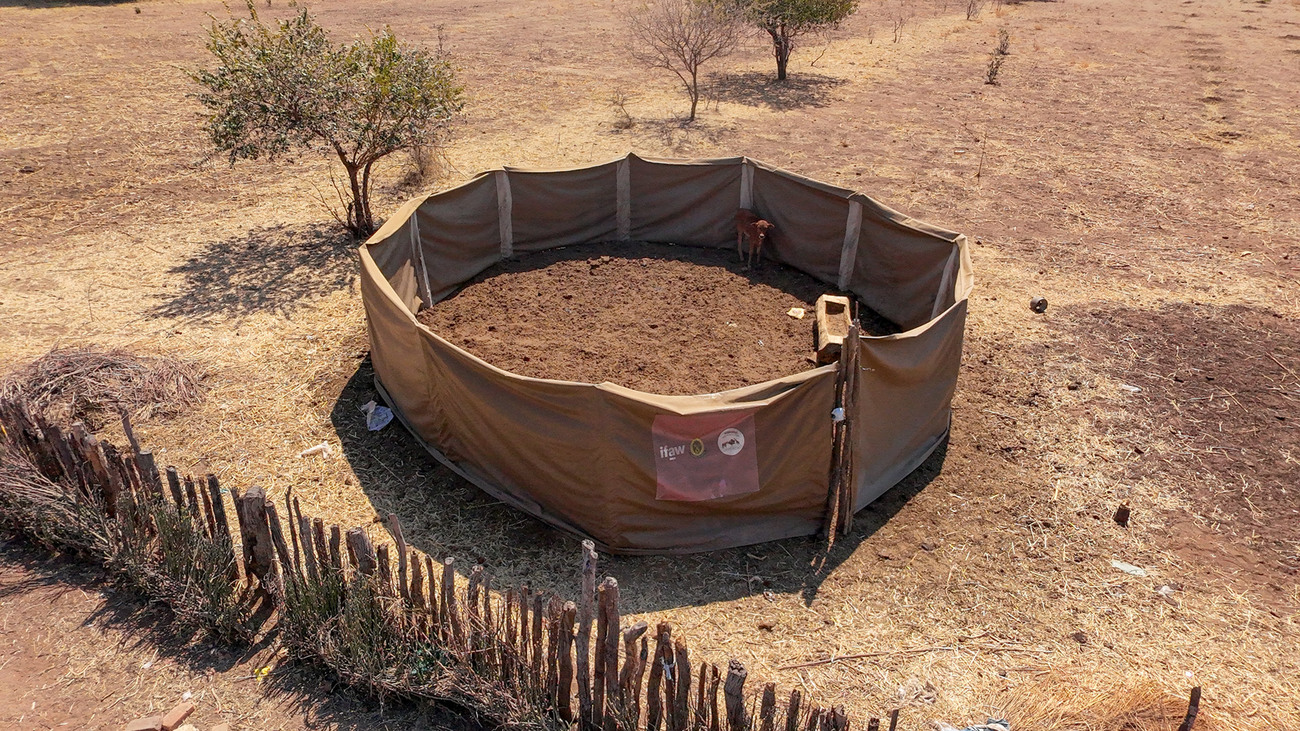
An aerial image of an predator-proof boma in Matetsi, Zimbabwe. Photo: Jesse Maree / © IFAW
The trade-offs with Room to Roam
An initiative operating inside a genuine trilemma should be judged partly on how honestly it names its trade-offs. IFAW's Room to Roam makes four deliberate choices.
- Speed for durability: Regulated land use and diversified, nature-based economies grow more steadily than unregulated conversion or extraction, but more slowly in the short run. That’s a real cost, and it falls on people who might have gained from faster conversion. It should be acknowledged and, wherever possible, offset.
- Ecological perfection for consent: Corridors negotiated with communities rarely follow the line an ecologist would draw. They may be narrower or more heavily used. The initiative accepts habitats that are adequate and defended over ones that are ideal but threatened.
- Tidiness for traction. Connectivity secured agreement by agreement, community by community, advances unevenly. Some links will take years, some will need renegotiating. A purely ecological plan would look cleaner on paper, but would likely fail.
- Local control for regional stability. Connectivity means accepting that elephant numbers in any one park or district will rise and fall, rather than being held steady by intervention. It asks park managers, politicians, and communities to tolerate uncertainty, and must be matched by rapid support where the swings hurt people.
What Room to Roam cannot trade away is legitimacy.
Because these choices involve uncertainty, corridor agreements should be treated as opportunities for learning and adaptation rather than finished products.
We establish baselines before interventions, compare outcomes with places where conditions have not changed, monitor progress over years rather than project cycles, and adjust our approach when the evidence shows something is not working.
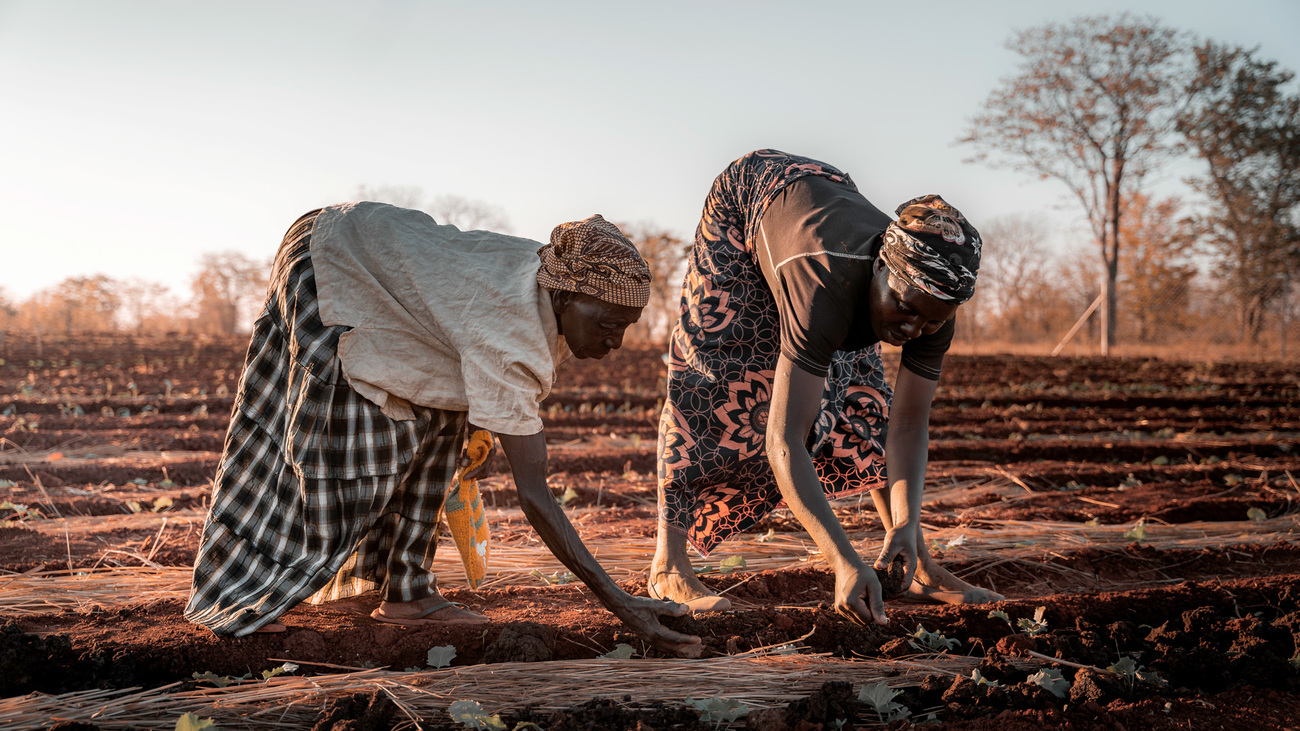
Community nutritional gardening supported by the Water is life project in Zimbabwe. Photo: Naudé Heunis / © IFAW
Measuring what matters
If trade-offs are unavoidable, we can measure an initiative’s success by how transparently it manages them.
In Room to Roam, we measure movement of collared elephants between clusters, stability of core populations, gene flow, the number of artificial barriers and water points removed, and trends in fragmentation—at the scale of the network, not the park.
For development, we measure tourism revenue and it’s shared, jobs, diversification of rural incomes, and avoided damage.
For human well-being, we focus on conflict trends and response times, fairness of benefit-sharing, security of tenure, and strength of local institutions.
Communities, local authorities, and the private sector should help decide which evidence matters most, so that we address the questions people on the land are asking.
We also measure success by seeing if, when a community corridor agreement comes up for renewal, the people who live there choose to renew it. If they do, the trilemma is being managed. If they don't, no volume of satellite data or donor reporting will hide the failure.
Questions we should be debating
I don't offer Room to Roam as a finished answer. Instead, I want to end with questions I believe governments across southern and East Africa, financiers, and conservation practitioners should be debating openly.
If rural communities carry the costs of coexistence, who should meet those costs? Should payments be understood as compensation for a service that benefits the wider world?
Should wildlife corridors be included in national infrastructure and land-use plans and financed with the same seriousness as highways?
How do we help young people build livelihoods that give them a stake in the future of the landscapes they call home?
Are we willing to treat corridor agreements as opportunities for learning, publishing what fails as openly as what succeeds? And when an agreement fails the renewal test, are we prepared to redesign our approach?
We should be honest. There is no universal solution in which every objective can be achieved without compromise. But there is a credible path forward.
Room to Roam is ultimately a leadership choice. We can manage the conservation trilemma now through connectivity, community rights, and shared decision-making, or face greater ecological, economic, and social costs later.
If we want landscapes where wildlife and people both thrive, we must give nature room to recover and treat the people who share that space as partners in shaping its future.
Related content
every problem has a solution, every solution needs support.
The problems we face are urgent, complicated, and resistant to change. Real solutions demand creativity, hard work, and involvement from people like you.