Wildlife Crime Prevention - Europe
The European Union is widely considered to be the third largest destination for illegal wildlifeNew EU Commission studies expose the hidden scale of Europe's exotic pet trade
New EU Commission studies expose the hidden scale of Europe's exotic pet trade
November 27, 2026
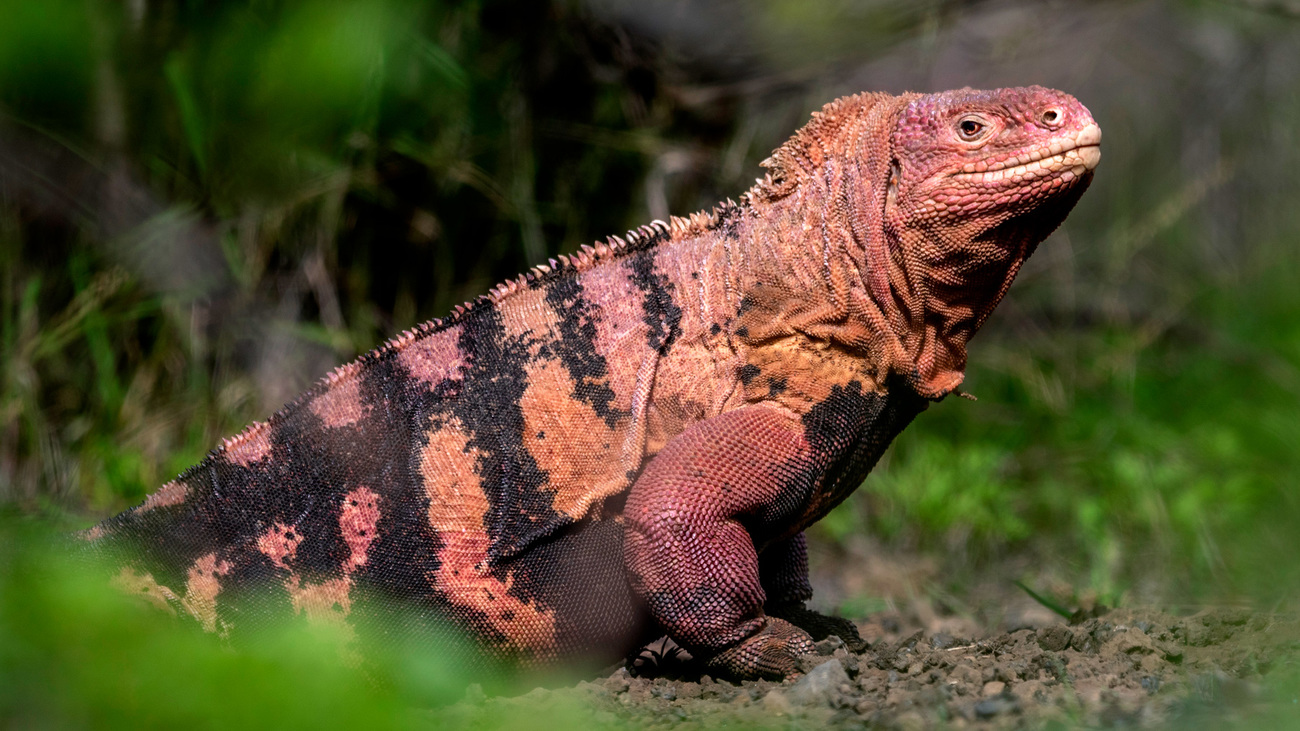
Galapagos pink iguana (Conolophus marthae) © www.naturepl.com
Brussels, 27 November 2026 – The EU is a major hub and destination for wild animals traded as pets, according to two new studies published today by the European Commission. The first study looks at how to reduce demand for wild animals as pets. The second study investigates whether the EU could introduce a "positive list" of animals that people are allowed to keep as pets.
The trade now involves a growing number of species. Demand is high for rare and little-known animals, which puts them at particular risk. Live reptiles are among the most illegally trafficked of these animals. More than five million reptiles were imported into the EU between 2003 and 2022, according to official records. These records only cover protected species. Once customs and other import data are added, reptile imports are up to four times higher and exports up to twenty times higher. Most reptiles coming into the EU are caught in the wild.
Illegal trade is likely widespread and badly underreported. It relies heavily on online platforms, making it harder to monitor, regulate and police. The demand reduction study surveyed more than 4,000 people in Czechia, Germany, Spain and the Netherlands. It found that people interested in keeping reptiles and amphibians tend to be younger than average, and social media plays a central role in sparking their interest. Many believe these animals need less time, care and money than a cat or dog, which can lead to impulse buying.
"A gecko or a snake is not a low-maintenance pet. These are wild animals with complex needs, and far too many suffer because someone saw a cute video and bought one spontaneously," said Ilaria Di Silvestre, Director of Policy and Advocacy, Europe at the International Fund for Animal Welfare (IFAW). "The good news is that people do think twice once they know the facts."
IFAW's own Liked to death research from April 2026 found that 70% of Europeans surveyed disagree that wild animals make good pets.
However, evidence from the demand reduction study shows that awareness campaigns alone are unlikely to produce sustained changes in demand. They should be combined with regulatory and enforcement measures.
The positive list study confirms that the current rules are patchy. They differ widely between Member States, which makes them easy to get around. The study makes a strong case for one set of rules across the EU and finds that an EU positive list is legally possible, even if complex.
The EU knows too little about the animals crossing its borders. Better data is needed on which species are kept, traded and bred and where they come from. The Trade Control and Expert System (TRACES), the EU's system for tracking animal imports, often does not record the species of unprotected animals.
IFAW is calling on the European Commission and EU Member States to:
- use the studies' findings to fund and run campaigns that reduce demand for wild animals as pets,
- revise TRACES so it records the species of every wild animal imported into the EU,
- criminalise trade in any animal taken illegally from its country of origin,
- prepare legislation for a science-based EU positive list with a clear timeline, while at the same time building the data and expertise needed to make it work.
"We have clear evidence that this trade is devastating for wild animals, for nature and for our own health. What is missing is the political will to act," said Di Silvestre. "Every year of inaction means that more animals are taken from the wild and shipped to Europe to spend their lives in captivity. These studies must now be turned into action."
Everyone can help by thinking twice before buying a wild animal and by not liking or sharing exotic pet content online.
ENDS
About the International Fund for Animal Welfare (IFAW)
IFAW is a global non-profit helping animals and people thrive together. We are experts and everyday people, working across seas, oceans, and in more than 40 countries around the world. We rescue, rehabilitate, and release animals, and we restore and protect their natural habitats. The problems we're up against are urgent and complicated. To solve them, we match fresh thinking with bold action. We partner with local communities, governments, non-governmental organisations, and businesses. Together, we pioneer new and innovative ways to help all species flourish. See how at ifaw.org.
Media contact
Jürgen Noack, Communications Consultant, IFAW,
jnoack.contractor@ifaw.org; +32 470 48 49 05
Related content
Every problem has a solution, every solution needs support.
The problems we face are urgent, complicated, and resistant to change. Real solutions demand creativity, hard work, and involvement from people like you.
DonateIFAW affiliates are registered as tax-exempt nonprofit organizations in several countries. Depending on where you reside, your donation may qualify for a tax deduction or benefit. See the pull-down menu at the bottom right of this page to see how IFAW operates in your country.