Landscape Conservation
Solar fences bring safer harvests for farmers and elephants in Zambia
Solar fences bring safer harvests for farmers and elephants in Zambia
July 10, 2026
At Zambia’s eastern edge, where farmland meets the wild landscapes stretching into Malawi’s Kasungu National Park, harvest season once came with fear.
For farming families in Lumezi District, elephants moving through the landscape at night often meant disaster by morning—flattened maize fields, destroyed livelihoods, and, in some cases, danger to human life. Communities along elephant corridors had grown used to sleepless nights, guarding their crops with whistles and shouting, often with little success.
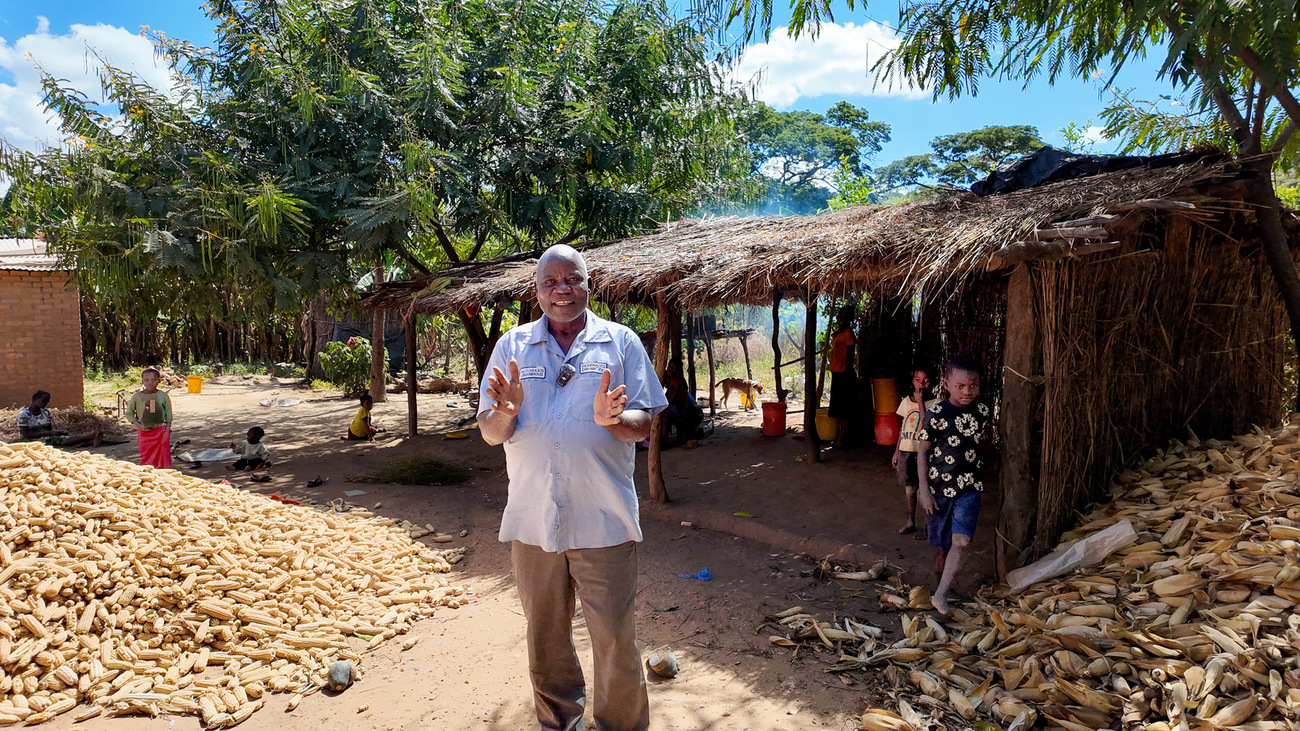
Headman Raphael Nyirongo looks cheerful as he stands between piles of stands beside piles of harvested maize. Solar-powered elephant-proof fences have helped reduce crop losses to wildlife, with farmers in Chikomeni, Mwasemphangwe, and other chiefdoms along the Kasungu–Lukusuzi landscape reporting harvests that are filling their granaries for the first time in years. Photo: Zanji Sikhala / © IFAW
This year, however, something changed.
Across parts of Chikomeni, Mwasemphangwe, and other chiefdoms bordering the Kasungu–Lukusuzi landscape, farmers say their harvests are filling storage granaries for the first time in years. They say the difference is polywire fencing, a solar-powered electric deterrent supported by IFAW, working alongside Zambia’s Department of National Parks and Wildlife (DNPW), traditional leaders, and local communities.
The impact has been dramatic. Approximately 180 kilometres of solar-powered polywire fencing now protect nearly 2,000 hectares of farmland across communities bordering Kasungu National Park.
In the 2024-2025 harvest season, authorities recorded 502 reports of human-elephant conflict from Kaleza, Mutu wa Njovu, Chindindindi, and Kavikuyu. During the 2025-2026 season—one year later—only 10 cases were recorded in the same areas, and DNPW officials say those incidents occurred on farms outside the fenced areas.
In Wajingo Village, Chikomeni Chiefdom, Headman Raphael Nyirongo stood beside towering piles of harvested maize, some shelled and some still in sacks.
“Because of the polywire fence IFAW gave us, I have harvested a large amount of maize compared to last year,” he said. “These here are shelled, and those are unshelled. So, this time, I am not facing hunger because of the polywire fence provided to us.”
The fencing does not create permanent barriers across wildlife landscapes. Instead, it forms strategic protective lines around clusters of farms. The solar-powered fences deliver a mild electric shock that discourages elephants from entering crop fields while allowing wildlife to continue moving across the broader transboundary landscape.
The fencing is part of IFAW’s Room to Roam initiative, which works across East and southern Africa to secure, connect, and protect the landscapes wildlife need to move freely.
In the Malawi–Zambia transboundary landscape, Room to Roam supports practical solutions that help people and wildlife coexist. By reducing conflict around farms while maintaining connectivity for elephants moving between protected areas, these interventions can help build safer, more resilient communities alongside one of Africa’s most important wildlife corridors.
For one farmer, a harvest brings relief
For Esnart Banda this year's harvest represents more than a successful farming season—it is a rare moment of relief. Although married, Banda shoulders the responsibility of providing for her household because her husband, who has diabetes, is no longer able to farm. For years, elephants repeatedly raided her fields, destroying crops the family depended on for food and income. The persistent crop losses were among the reasons Chimwando Village, despite being smaller than many surrounding communities, was prioritised for the installation of polywire fencing.
“I am from Chimwando Village,” says Esnart Banda, as she harvests groundnuts with family members in Mwasemphangwe Chiefdom. “Last season, elephants were destroying our crops. But this season, we have not had any elephants enter our fields since the polywire fence was installed. This year, God has blessed us with a good harvest, and we expect to produce more bags of maize, groundnuts, sunflowers, soybeans, and other crops.”
As she works alongside her aunt and granddaughter, Banda reflects on what the change means for her family.
“I want to thank IFAW and the government for installing the polywire fence for us, because since it was put up, we have not experienced elephants entering our fields,” Esnart says.
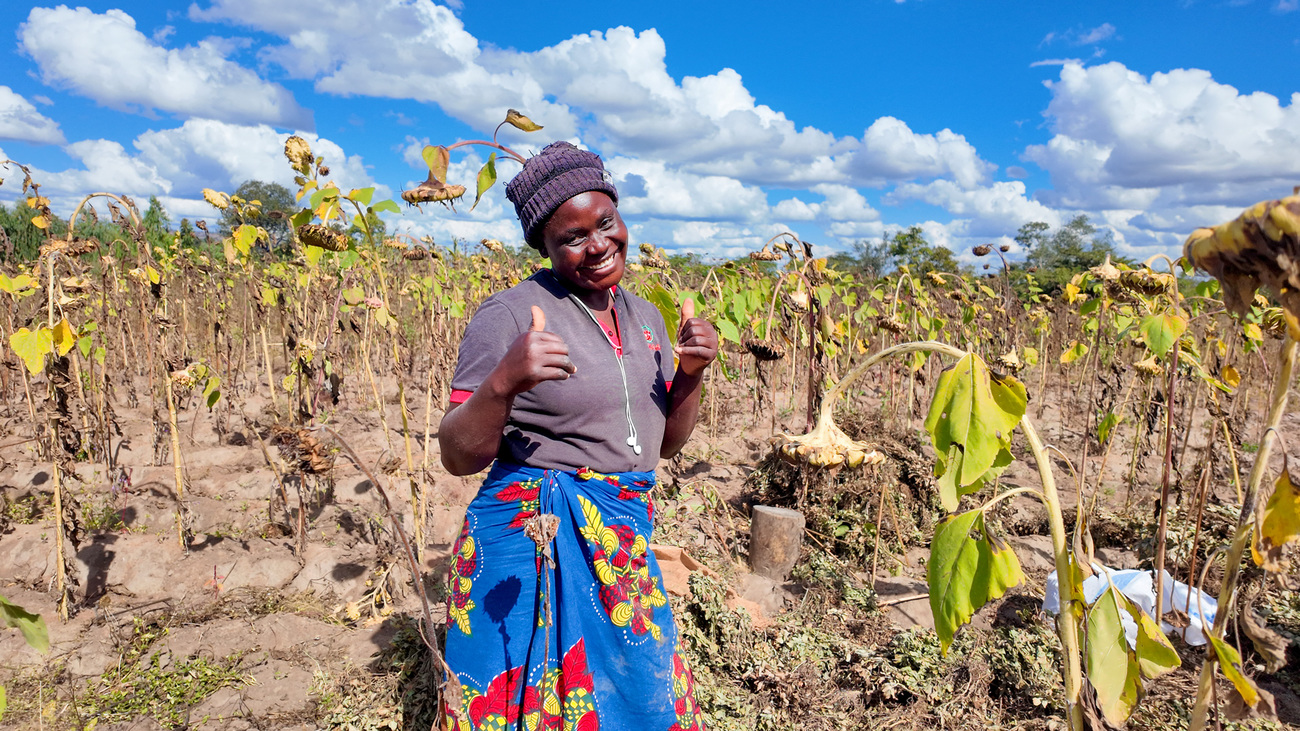
Esnart Banda harvested a full crop of sunflowers from her field in Zambia in 2025, protected by IFAW's solar-powered polywire fencing to help reduce crop damage from wildlife, including elephants. Photo: Zanji Sikhala / © IFAW
Preventing conflict before it happens
The results are significant in a region where human-elephant conflict has intensified in recent years, driven in part by climate pressures, changing migration patterns, and expanding agriculture near wildlife corridors. During drought years, elephants have moved earlier into farming areas in search of food and water, bringing them into direct contact with communities.
Now, district authorities say the results of the fencing intervention are impossible to ignore.
“Lumezi District has recorded a significant reduction in the number of human-elephant conflict cases,” said Acting District Commissioner Malvin Malasha.
“The Government is pleased that the initiative with our partners, IFAW, has worked positively. Food for farmers is now secure, and they can harvest to maximum capacity without elephants disturbing them.”
Malasha said the district has not recorded any new cases of human-wildlife conflict in the fenced areas since installation began.
The project, he emphasised, is not simply about protecting crops but also about protecting people.
“Elephants are dangerous, and they can cause havoc in crops and destroy human life as well,” he said.
A recent survey conducted by WildAfrica and IFAW found that 94% of respondents in rural areas identified polywire fencing as their preferred response to human-elephant conflict. The finding signals a clear community preference for preventive solutions that can deliver lasting benefits.
Building on that success, local authorities have used Zambia’s Constituency Development Fund to expand the project.
The investment reflects growing recognition that coexistence solutions must operate at the scale of the landscapes elephants use, particularly in regions where wildlife moves across the border between Zambia and Malawi within the broader Malawi-Zambia Transfrontier Conservation Area.
Fewer crop raids, safer communities
At the frontline of the intervention are officers from Zambia’s Department of National Parks and Wildlife, who say reports of crop raids have sharply reduced.
“Human-elephant conflict has reduced because when elephants coming from Kasungu National Park encounter the polywire fence before entering the Game Management Area where people farm, they are deterred from crossing,” said DNPW officer Pethious Mutale, based at Chipuka in Chitungulu Chiefdom. “The solar-powered electric fence acts as a barrier, causing the elephants to turn back towards the park.”
“As a result, we are no longer receiving as many reports of human-elephant conflict because of the effectiveness of the polywire fencing,” he added.
The experience of communities outside the protected clusters underscores the difference these interventions can make.
In Wadokota Village, Mwase-Lundazi Chiefdom, Raphael Jere recalled that his family declined to participate because the Zambia-Malawi boundary line cut through part of their farmland. The family feared losing access to portions of land if the fence was installed.
“My father refused the wire because of the beacon demarcating Zambia and Malawi, which falls on our farmland,” Jere explained. “He opted not to have the fence because it was going to cut through our farm and leave part of it outside the fence.”
Without protection, the fields remained exposed.
“Our crops were destroyed,” he said. “And the few that were left, we couldn’t leave them to dry for long for fear they would be destroyed. We now regret that decision.”
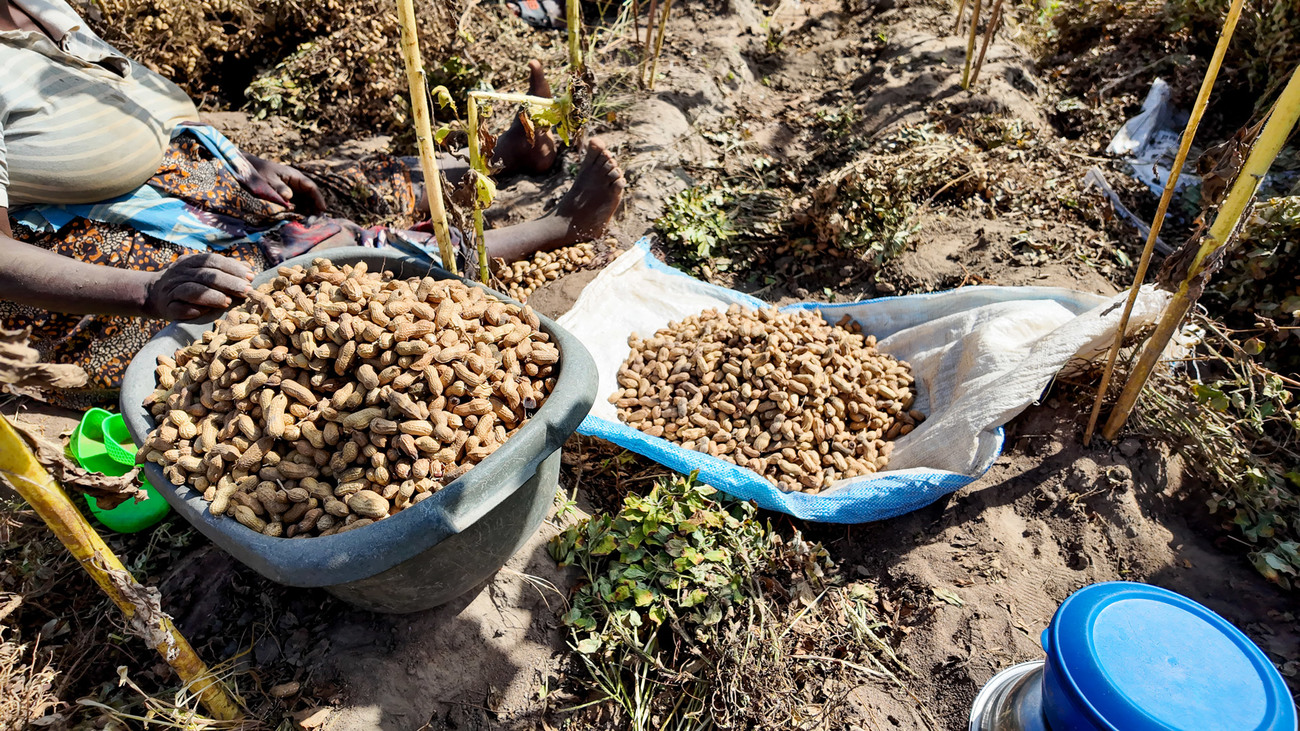
Groundnuts harvested from Esnart’s croplands in Zambia. The crops are protected by solar-powered polywire fencing which has prevented wildlife, including elephants, from damaging her 2025/2026 harvest. Photo: Zanji Sinkala /© IFAW.
Coexistence brings food security and peace
For traditional leaders, the project has become more than conservation. It is increasingly tied to dignity, food security, and trust between communities and conservation partners.
Chieftainess Mwasemphangwe says her chiefdom has experienced sustained calm since the intervention began.
“We have had no instances of human-elephant conflict. Though we do not know what the future holds, we have had peace. The last time we recorded such reports was November last year, before the fencing—since then, so far so good.”
She said the fencing has helped reduce pressure on forests while improving protection for communities.
“IFAW has tried very hard to ensure we have minimal problems,” she said.
Her chiefdom is among the areas benefiting from the fencing initiative Like many leaders across the landscape, she now sees conservation and community welfare as deeply intertwined.
A future where people and elephants can thrive
As harvest season unfolds across eastern Zambia, maize stacks dry in village fields that once stood vulnerable to nightly elephant raids.
For many families, this year’s harvest is me than the result of a successful farming season. It is evidence that practical, community-supported solutions can protect livelihoods while giving elephants the space they need to move through the landscapes they have used for generations.
The results also demonstrate a central principle of IFAW’s Room to Roam initiative: protecting wildlife and supporting people are not competing goals.
When communities have the tools to prevent conflict, farmers can harvest their crops, families can feel safer, and elephants can continue moving across connected landscapes.
And for local authorities, communities, and conservation partners, the next step is clear: scale up solutions that work before the next migration season begins.
Related content
Our work can’t get done without you. Please give what you can to help animals thrive.