Landscape Conservation
El Niño threatens ‘catastrophic’ impacts on wildlife and communities, experts warn
El Niño threatens ‘catastrophic’ impacts on wildlife and communities, experts warn
June 15, 2026
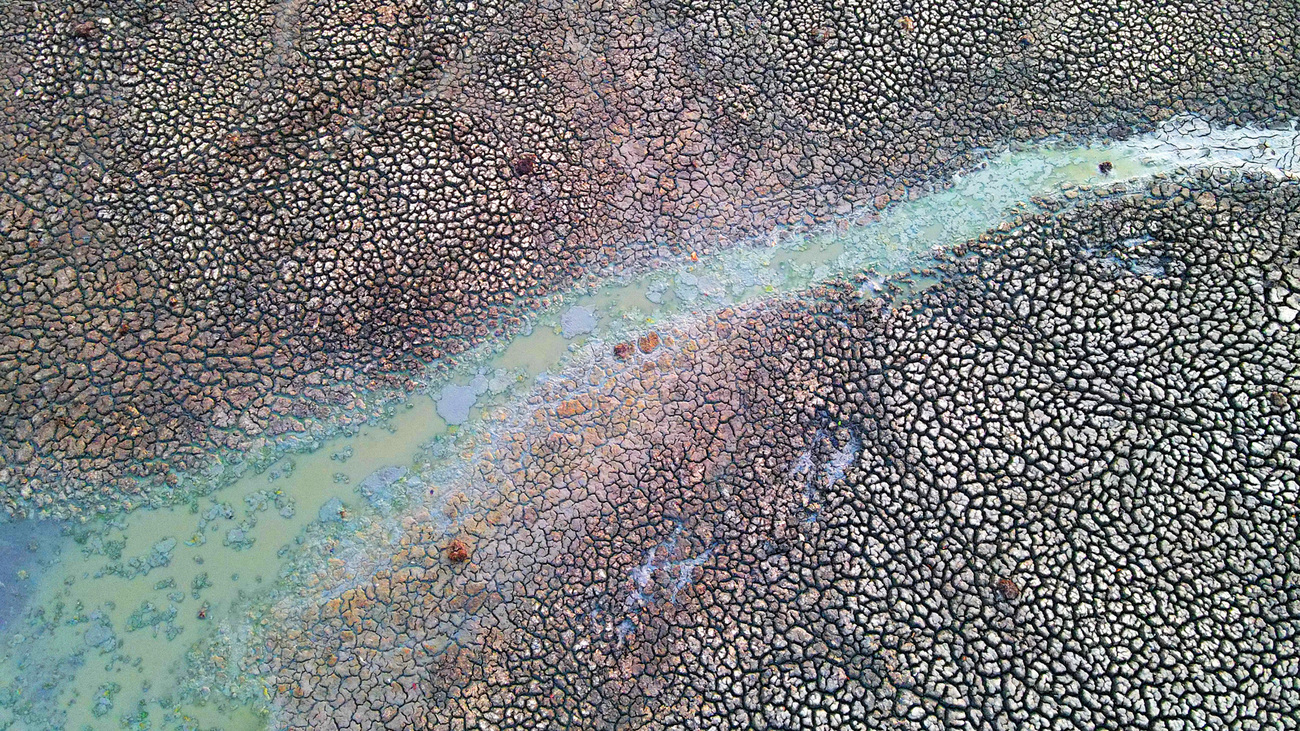
Aerial view of drought in Hwange National Park. Photo: © Privilege Musvanhiri
(June 15, 2026)—With an El Niño event on the horizon, experts warn the world could face a devastating year for wildlife, communities, and ecosystems, and urgent action must be taken.
Hotter and drier conditions are expected to intensify across Asia, Australia and Africa in the second half of 2026, placing enormous pressure on wildlife already struggling under the combined weight of habitat loss and climate change.
“We’re heading into a year that could be catastrophic. The impacts on wildlife, landscapes and communities could be immense,” International Fund for Animal Welfare (IFAW) senior director of policy Matt Collis said.
While El Niño is a naturally occurring climate pattern, climate change is amplifying its effects—making extreme weather events more intense, more frequent, and more destructive. The compounding impacts are stressing the health of ecosystems.
In regions like Australia and across Africa, areas historically adapted to extreme weather, the scale and frequency of events are beginning to outpace nature’s ability to bounce back.
“This is a significant climate risk requiring contingency planning that must embrace worst-case scenarios for both people and wildlife. IFAW is an unwavering partner committed not only to tackling the immediate effects of this El Niño but also to building long-term resilience in the landscapes and communities where we work,” IFAW senior director of conservation Phillip Kuvawoga said.
“Through climate action, technology-enabled early warning systems, and landscape-level climate proofing, we can safeguard communities and ecosystems together, ensuring human well-being and biodiversity are protected today and strengthened for generations to come.”
Australian climate change expert Professor Brendan Mackey explained that Australia’s climate is variable, and wildlife has a natural adaptive capacity, but there are factors working against this.
“We have lost a lot of natural habitat, and much of what remains is being fragmented. This loss of connectivity is impeding the ability of many animals to escape a bushfire or take refuge during a drought,” he said.
He warned an El Niño this year could bring about severe fire conditions and more extreme heatwaves which would have significant impacts ecologically.
“At the end of a dry winter the vegetation has low moisture content and is highly combustible. When this is followed by spring with very hot weather, the result is dangerous bushfire conditions for eastern and southern Australia,” Prof Mackey added.
“We’re then at more risk of major to catastrophic fire conditions. The Black Summer of 2019-20 was on the back of one of the deepest droughts in winter and hottest springs on record, so that gives you an idea of what can happen off the back of a major El Niño event.”
IFAW is urging governments to fundamentally rethink disaster preparedness and climate change action by placing wildlife and ecosystems at the centre of planning.
ENDS
Notes:
- To tackle climate change, cutting emissions is essential—but it’s not enough. We also need to restore nature’s ability to store carbon and adapt to climate change, and that’s where IFAW’s work plays a critical role. Wild animals are powerful allies in tackling climate change, and protecting them helps keep ecosystems healthy and resilient.
- IFAW puts nature‑based solutions into action by protecting and restoring landscapes. In places like Tsavo, Kenya, we work with communities to plant fruit trees that reduce erosion and flood risk while helping the land retain moisture.
- Building resilience is central to everything we do. IFAW helps communities and landscapes prepare for increasingly extreme weather, including working with governments in Australia to ensure wildlife is included in disaster planning.
- Supporting wildlife‑friendly livelihoods is also key. By helping farmers, fishers and communities adopt climate‑smart, nature‑positive practices, we reduce pressure on ecosystems and support people at the same time.
- Protecting wildlife isn’t separate from tackling climate change—it should be seen as a package deal.
Press contact:
Dominica Mack
dmack@ifaw.org
+61 460 432 901
Christina Pretorius
cpretorius@ifaw.org
+27 (82) 330-2558
Related content
Every problem has a solution, every solution needs support.
The problems we face are urgent, complicated, and resistant to change. Real solutions demand creativity, hard work, and involvement from people like you.
DonateIFAW affiliates are registered as tax-exempt nonprofit organizations in several countries. Depending on where you reside, your donation may qualify for a tax deduction or benefit. See the pull-down menu at the bottom right of this page to see how IFAW operates in your country.