Wildlife Crime
UK’s nation of animal lovers is unknowingly fuelling wildlife trafficking
UK’s nation of animal lovers is unknowingly fuelling wildlife trafficking
28 April 2026
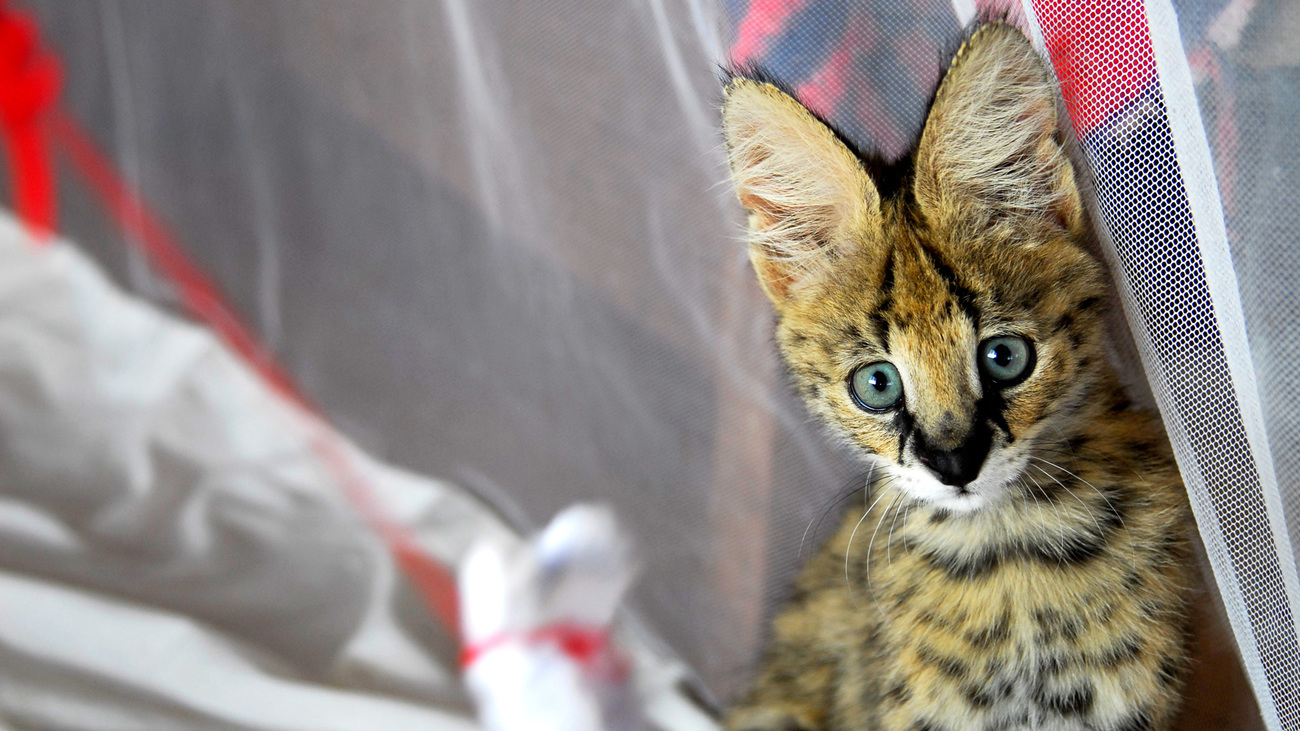
Ziwa the orphaned serval cat. Photo: © IFAW
(London, 28 April, 2026)—A new study focused on “exotic pet” owners has revealed low awareness around laws, concerns about social‑media influence, and strong support for tougher protections.
In the UK, the trend of keeping wild animals as pets, commonly known as “exotic pets”, is enabling illegal wildlife trade, which appears to be on the rise. During a single month in 2025, UK Border Force seized more than 250 endangered species and illegal wildlife products—an alarming 73% increase from 2023.
Research commissioned by the International Fund for Animal Welfare (IFAW) published in Behind Closed Doors, was carried out by YouGov with a sample of 620 UK wild pet owners. It reveals:
- Most owners lack clarity on licensing—54% did not know whether their current or past wild pets required a licence. Of those who knew a licence was needed, 84% did not have one.
- Social media influence is significant—29% believe celebrity and online content encourage wild pet ownership, while 57% worry that liking or sharing such content fuels exploitation.
- Owners are concerned about if their pets were wild caught—79% said they would be unlikely to buy or adopt a wild caught animal.
- Strong support for wild animal regulation reform—68% favour stricter regulation, including the adoption of a scientific Positive List system used in countries such as Belgium.
“Millions of wild animals are being exploited for the pet trade, which causes suffering and in many cases, death for individual animals”, Samara P. El-Haddad, Senior Programs Officer, IFAW UK said.“Not only this, but biodiversity is placed under increased strain, at a time when many ecosystems are already at breaking point. Online platforms and social media influencers producing viral content have a lot to answer for, helping to normalise and glamorise the ownership of wild animals as pets.”
This UK-specific research adds to IFAW’s wider campaign, showing a major disconnect between public concern about wildlife trafficking across Europe and the reality of the wild animal pet trade.
This additional research was implemented in five European countries, including the UK, with over 3,700 respondents. It found 70% of people disagree that wild animals make good pets; 82% believe wildlife trafficking is a serious global problem that needs greater attention and 84% believe European wildlife protection laws need strengthening.
In addition, only one in three people realise Europe is a major hub for wildlife trafficking or that online platforms play a significant role in the trade; three in four people say they know little or not much about wildlife trafficking; and only 54% believe individuals play a role in reducing wildlife trafficking.
“This is a clear case of when good intentions go wrong”, El-Haddad added. “If an animal is taken from the wild and placed in a home environment, it doesn’t make them domesticated. Even if bred in captivity, it is still a wild animal, not suited to a life in captivity. This trade thrives on misinformation and presents wild animals as suitable companions while obscuring the true cost to animals, ecosystems, and people”.
Global wildlife trafficking is estimated to be worth US$7–23 billion annually, making it one of the world’s largest illicit markets and a major driver of organised crime.
To tackle this growing crisis, IFAW is calling on the UK government to urgently:
- Introduce a UK version of the US Lacey Act to criminalise the import, possession and sale of wildlife taken in violation of foreign laws. This legislation would close loopholes, strengthen enforcement, and protect global biodiversity.
- Deploy forensic tools, such as X‑Ray Fluorescence (XRF) and Stable Isotope Analysis (SIA), at ports and borders to verify the origins of wild animals and disrupt illegal supply chains.
- Implement regulatory reform - a Positive List system for pet animal ownership, ensuring that only animals capable of thriving in captivity and posing no danger to people or local environments can be kept as pets.
IFAW is also urging citizens to help combat wildlife trafficking by avoiding engagement with wild animal pet content online, resisting the purchase of wild animals as pets, reporting suspicious wildlife sales online, and supporting conservation campaigns such as those initiated by IFAW. A new campaign, ‘Liked to death’, has also been launched, to help educate and increase awareness of the issue.
ENDS
Notes to editors:
African grey parrots, for example, have seen wild populations plummet by about 90% in some regions in some regions over the past 50 years, largely driven by the pet trade. Yet public understanding of their conservation status remains limited, with many respondents unaware the species is endangered and some still believing they can be suitable pets.
It is estimated that there are 64m wild animals being kept as exotic pets in Europe, as animals are being captured in the wild and trafficked into the continent to fuel unrelenting demand. This causes harm to the animals and fuels one of the biggest drivers of organised crime on the continent.
Research carried out in the UK by YouGov among 620 respondents in November and December 2025.
Related content
Every problem has a solution, every solution needs support.
The problems we face are urgent, complicated and resistant to change. Real solutions demand creativity, hard work and involvement from people like you.