Landscape Conservation
Wildlife recovery in Zimbabwe: Cameras confirm return of lions and elephants
Wildlife recovery in Zimbabwe: Cameras confirm return of lions and elephants
6 April 2026
At the heart of Matetsi Unit 5, north of Hwange National Park, a small camera is strapped to a mopane tree along a well-worn wildlife trail. Quietly and consistently, it captures what few people get to see, elephants passing through at dusk, lions moving under cover of night.
These glimpses are helping us understand how wildlife is returning to this recovering landscape.
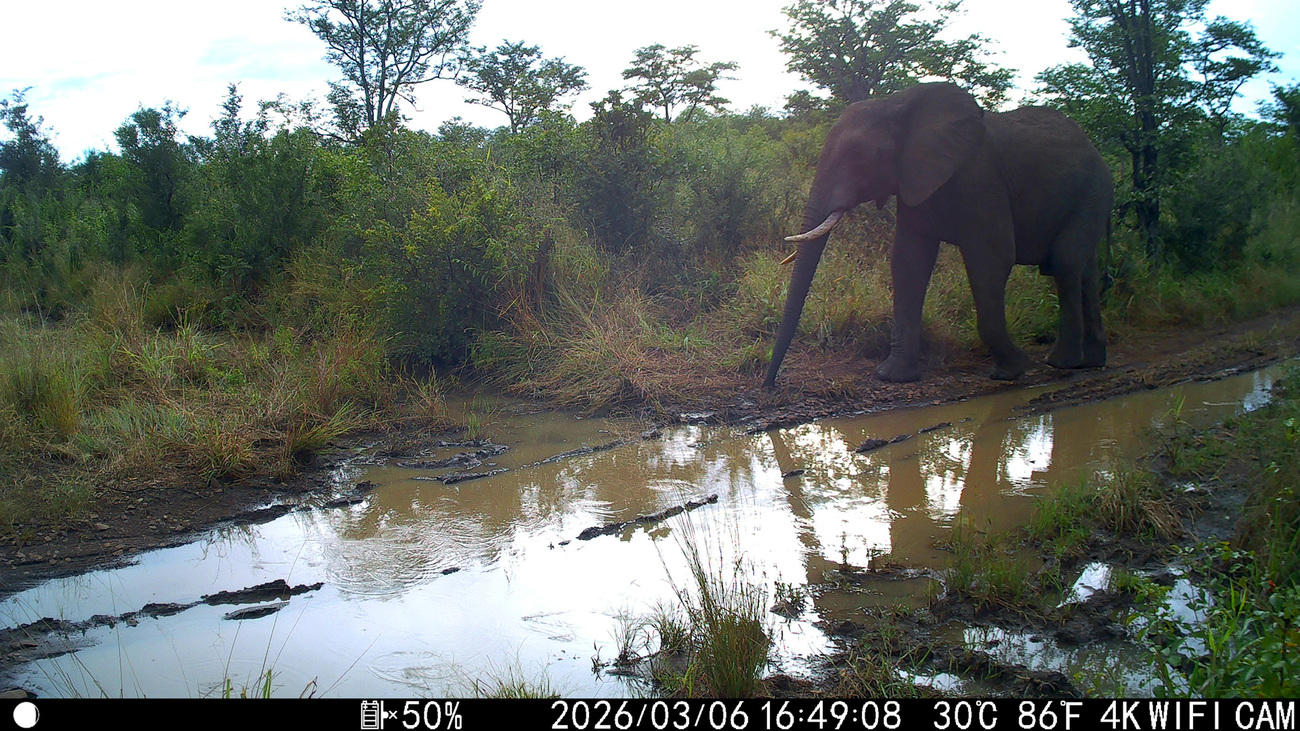
An elephant walking along a migratory corridor in Matetsi Unit 5. Photo: © IFAW
A clearer picture of wildlife movement
The device is part of a broader effort to monitor and understand wildlife movement in this recovering landscape. It represents a shift toward data-driven conservation—using technology to inform protection and management strategies.
In February 2026 IFAW, ZimParks, and Munchkin deployed 11 camera traps across this important Room to Roam landscape. Matetsi Unit 5 plays a vital role in maintaining connectivity for elephants and other species moving between ecosystems.
Camera traps are triggered by movement and heat, capturing images of passing animals. Placed along trails marked by tracks, dung, and other signs of activity, they offer a window into how wildlife is using the landscape.
“To give the cameras the best chance of telling the full story, we place them where the signs of wildlife are unmistakable, along paths marked by spoor, near dung piles, and where fresh scats hint at recent movement,” said Walter Mupezuweni, IFAW Project Officer based at Matetsi Unit 5.
Each image contributes to a growing dataset, helping conservation teams understand how wildlife uses the landscape. Early results have been significant.
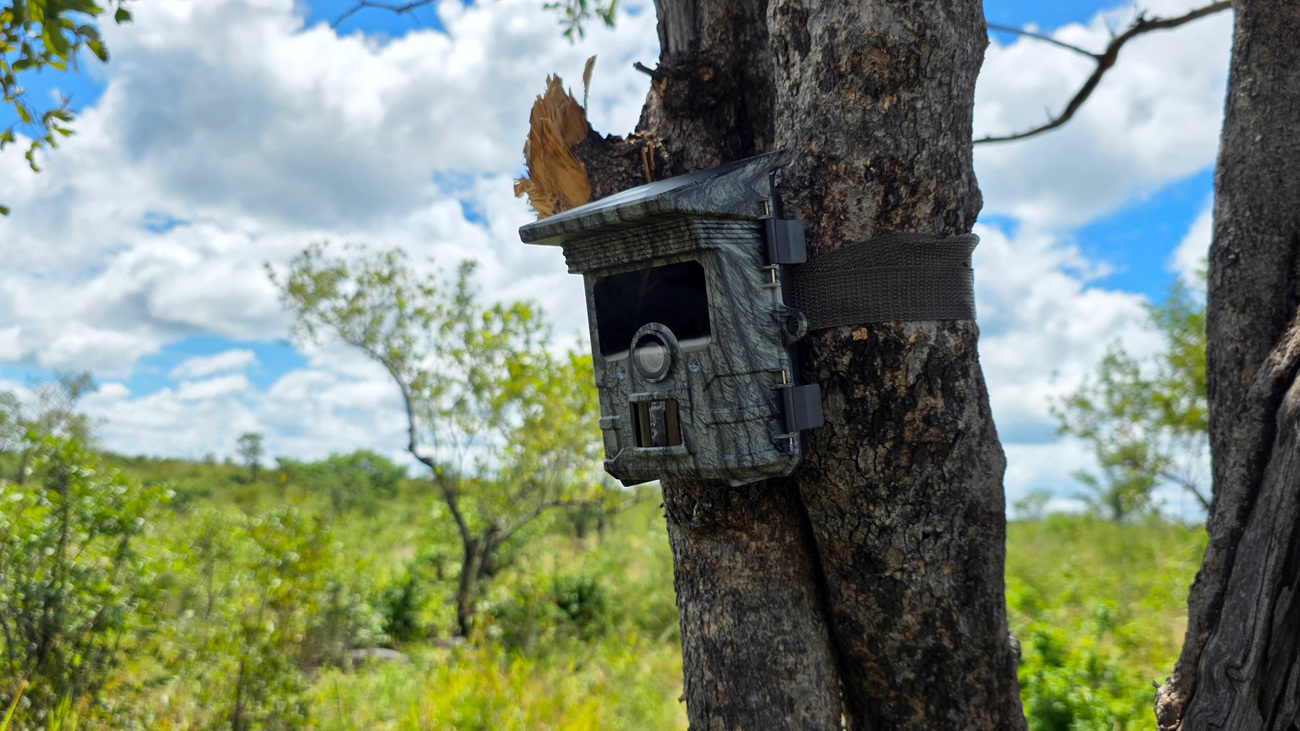
A camera trap mounted in Matetsi Unit 5 to monitor wildlife movement along key migratory routes. Photo: © IFAW
Signs of wildlife returning
“Already, the results have been thrilling. We’ve captured rare footage of lions and leopards moving through the area—elusive animals that are often difficult to spot. Seeing them return and use this landscape is a powerful reminder of why this work matters,” said Mupezuweni.
The deployment marks the start of a baseline survey aimed at mapping species distribution and habitat use across Matetsi Unit 5.
“In Matetsi Unit 5, these camera traps are quietly getting to work,” said Henry Ndaimani, IFAW’s Landscape Conservation Manager. “Their deployment marks the start of a baseline survey designed to uncover who truly calls this protected landscape home.”
Preliminary data, collected within weeks of deployment, points to an ecosystem showing early signs of recovery. Images confirm the presence of key species, including elephants, buffalo, lions, and leopards.
A landscape in transition
Since 2019, IFAW and its partners have been working to restore and protect this area, supporting both wildlife and the habitats they depend on. The goal is simple, to ensure Matetsi Unit 5 can once again sustain healthy, thriving populations.
This work is also supporting a broader shift in how the area is managed. Once primarily used for hunting, Matetsi Unit 5 is transitioning towards a conservation-focused, photographic tourism model, creating opportunities for more sustainable tourism that benefits both wildlife and local communities.
“Our work is driven by a deep belief in nature’s ability to recover when given the chance. By restoring fragile habitats, supporting the return of wildlife, and developing infrastructure that aligns with eco-tourism, we are helping this landscape recover and ensuring it can be protected for future generations,” said Ndaimani.
The wider Matetsi Safari Area, named after the river that sustains it, lies between Hwange National Park and the Zambezi River. This positioning makes it a critical corridor for elephants moving between Zimbabwe and Botswana.
Looking ahead
“Matetsi plays a critical role in the context of IFAW’s Room to Roam initiative,” said IFAW Senior Conservation Director Phillip Kuvawoga. “It is an ecosystem worth protecting if we are to support the persistence of migratory species such as elephants.”
As a science-led organisation, IFAW continues to use tools such as camera traps and tools like EarthRanger to strengthen monitoring and guide conservation decisions across the Greater Hwange Ecosystem.
As more images come in, they are telling a hopeful story—one of movement, return, and a landscape beginning to recover. With continued protection, Matetsi Unit 5 can once again support thriving wildlife populations for generations to come.
Related content
Every problem has a solution, every solution needs support.
The problems we face are urgent, complicated and resistant to change. Real solutions demand creativity, hard work and involvement from people like you.