Beijing Raptor Rescue Center - China
Birds of prey are falling prey in ChinaSpring brings a surge of young raptors to Beijing's rescue centre
Spring brings a surge of young raptors to Beijing's rescue centre
11 June 2026
Spring is one of the busiest times of year at the IFAW Beijing Raptor Rescue Center (BRRC). As temperatures rise and nesting season gets underway, young raptors begin arriving in increasing numbers, often after falling from nests, becoming separated from their parents, or encountering hazards before they are ready to survive on their own.
Some need only a short period of care before returning to the wild. Others arrive with injuries too severe to overcome. Together, their stories offer a glimpse into both the resilience and vulnerability of wildlife during the breeding season.
This spring, two very different owl cases have highlighted the realities of rescue work.
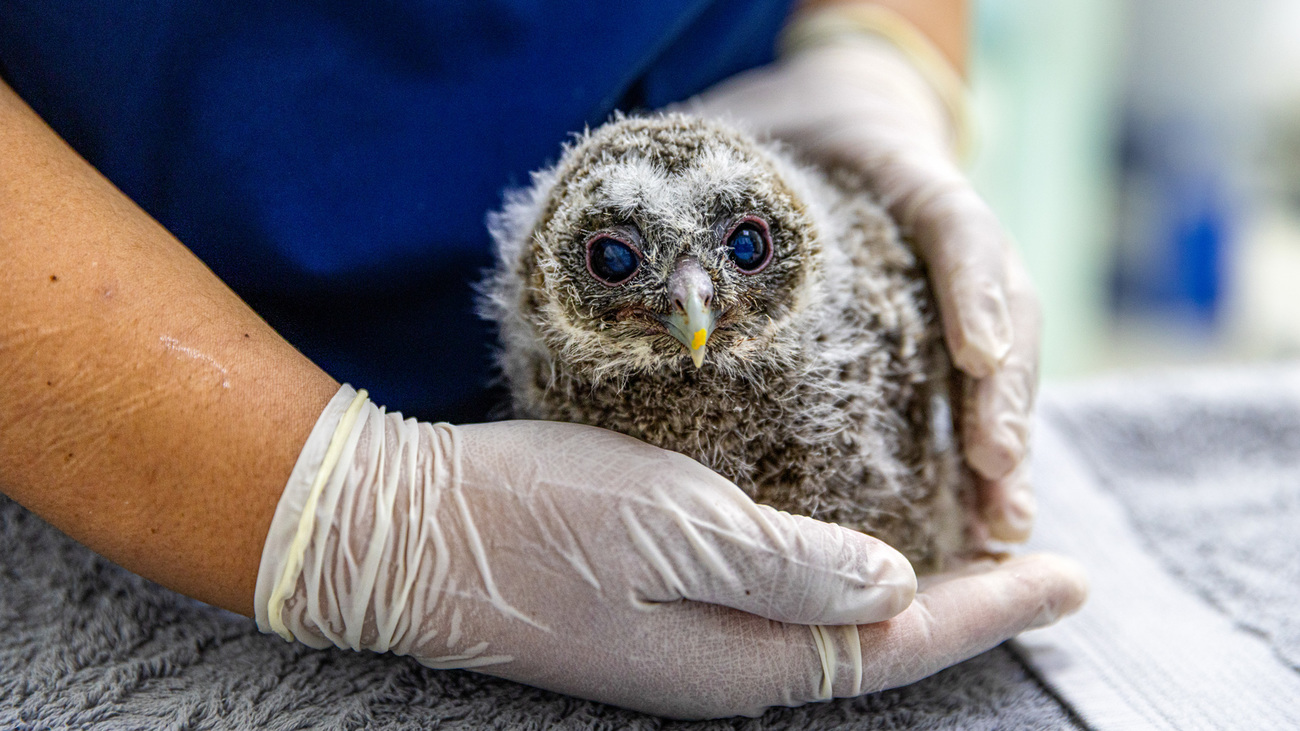
A baby Himalayan owl receives veterinary care at IFAW's BRRC after being found in a mountainous area in China. Photo: © IFAW
A busy start to spring
On 1 May, two baby Himalayan Owls arrived at BRRC after being discovered on Dongling Mountain, west of Beijing.
The rescuer first spotted the young owls on the ground beneath a stand of trees while hiking through the forest. Following wildlife rescue guidance, they monitored the area for some time to see whether the parents would return. When no adult birds appeared, they contacted BRRC for advice and transported the nestlings to the centre, keeping them warm and secure during the journey.
Examinations showed that both birds were in relatively stable condition. They had sustained bruising inside their ears, likely from a fall from the nest or nearby branches. Rehabilitators also found maggots on their feathers, although neither bird had open wounds, suggesting the insects appeared after the fall rather than as a result of an active injury.
At admission, the owls weighed 160 grams and 132 grams respectively.
For the BRRC team, the next few weeks centred on a simple but essential routine: regular feeding, careful monitoring, and creating the right conditions for growth.
The nestlings were initially housed in small recovery containers where their health and feeding could be closely observed. As they gained strength, they were moved to a larger indoor enclosure equipped with raised platforms and rope structures designed to encourage climbing, balancing, and exploration.
The results have been remarkable. Less than a month after arriving at the centre, both owls have more than doubled their body weight, reaching 334 grams and 340 grams. They have become increasingly active and confident, spending their days testing their coordination and exploring their surroundings.
If their development continues as expected, they could reach the subadult stage by late June or early July, opening the possibility of a future release back into the wild.
Spring's most vulnerable arrivals
Cases like these are common during spring, when young birds begin their first encounters with the outside world.
Storms, unstable nests, predators, urban hazards, and human disturbance can all interrupt those early weeks of life. While some young raptors need only temporary support before returning to the wild, others arrive at rescue centres after suffering severe injuries.
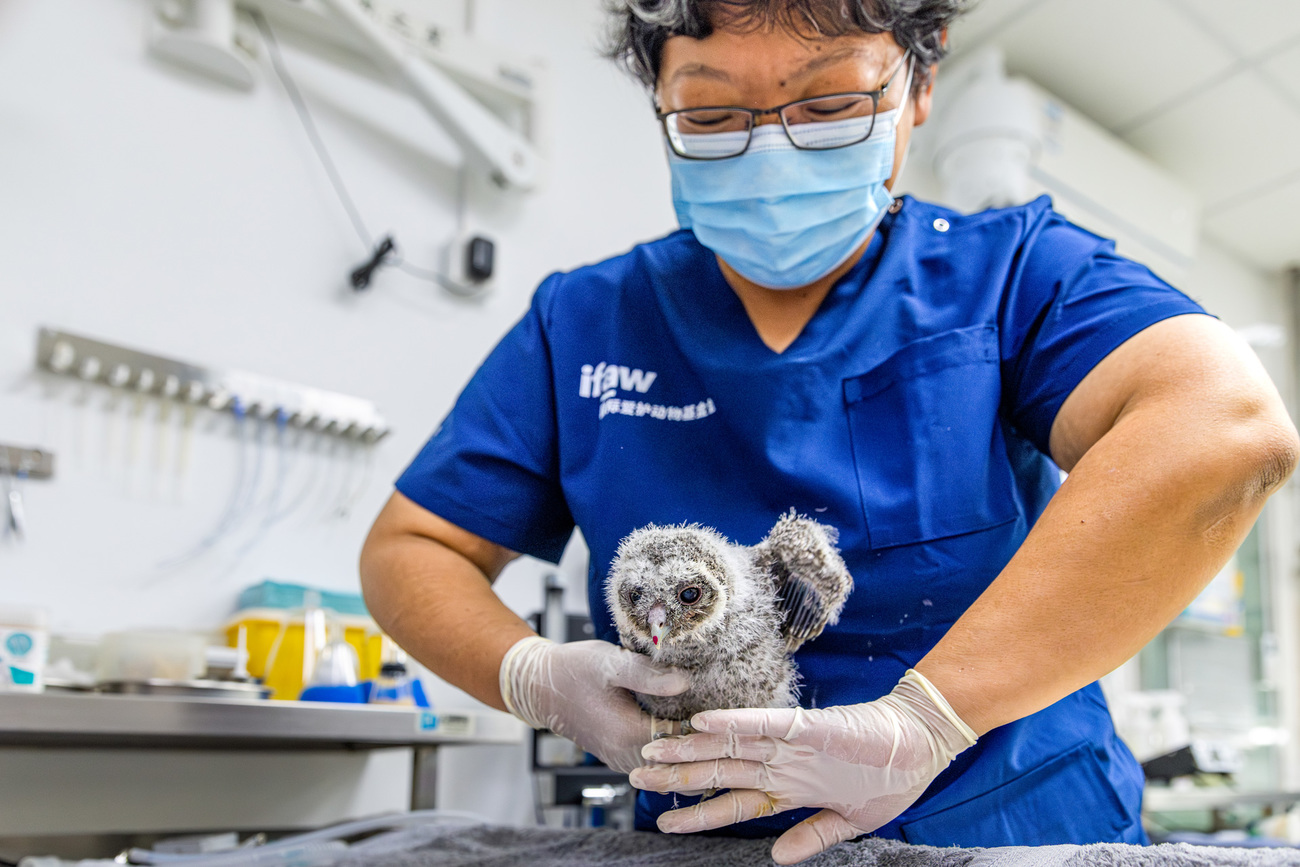
An IFAW BRRC rehabilitator gently restrains a baby Himalayan owl during a physical examination. Photo: © IFAW
Since BRRC was established, the centre has admitted 1,942 young raptors. This year's nesting season is already proving busy. By 26 May, BRRC had received 14 young birds, including four Himalayan Owls, one Little Owl, and nine Common Kestrels.
Just days after the Himalayan Owls arrived, another owl was brought to the centre under very different circumstances.
When rescue isn't enough
On 6 May, a university student near Tsinghua University in Beijing's Haidian District discovered a small owl on the ground surrounded by attacking magpies.
After contacting BRRC, the bird was collected by a rehabilitator later that morning and identified as an Oriental Scops Owl, a small species known for its distinctive ear tufts and exceptional camouflage.
The owl arrived in critical condition. Examination revealed more than a dozen facial wounds, including severe trauma around the head and a ruptured right eye. Part of the skull was exposed, with injuries consistent with repeated pecking from the magpies.
During the assessment, rehabilitators uncovered an additional complication. The female owl was carrying an egg and showed signs of egg binding, a life-threatening condition in which an egg becomes trapped and cannot pass naturally through the reproductive tract.
Emergency surgery was performed to close her wounds, followed by a second procedure to remove the retained egg. Despite intensive care and treatment, the injuries proved too severe, and the owl later died from complications related to her trauma.
For wildlife rehabilitators, losses like this are among the most difficult aspects of the work. Every animal receives the best possible care, but not every outcome can be changed.
Yet even in this case, one possibility remained. The egg survived.
Rehabilitators transferred the egg to an incubator, carefully managing temperature and humidity in the hope that development might continue. Early signs suggest embryonic growth may be occurring, although the outcome remains uncertain.
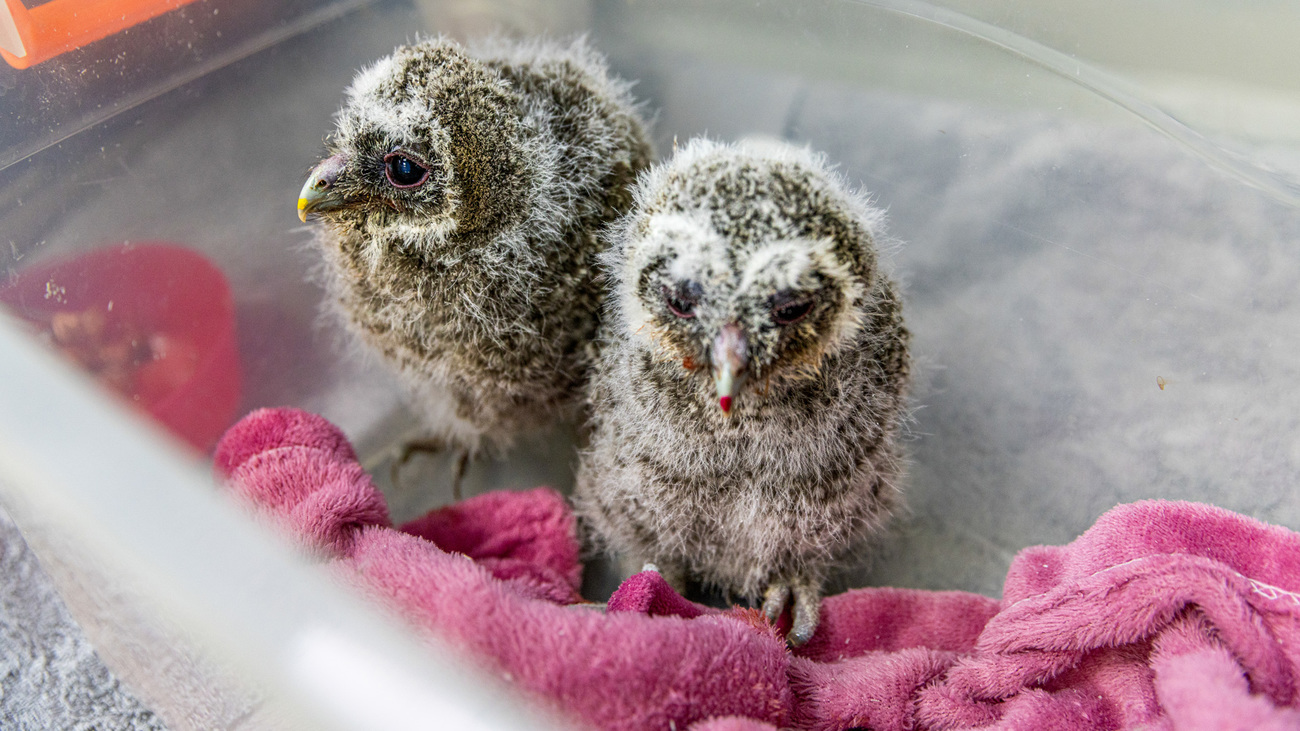
Two baby Himalayan owls receive veterinary care at IFAW's BRRC after being found in a mountainous area in China. Photo: © IFAW
What spring reveals
Today, the two Himalayan Owl nestlings continue to grow stronger, climbing between perches and developing the skills they will need to survive in the wild. Elsewhere in the centre, rehabilitators continue monitoring the Oriental Scops Owl's egg, hoping it may still develop.
Together, these cases reflect the reality of spring wildlife rescue. For every young bird that gains a second chance, there are others whose injuries arrive too late for recovery.
They also highlight the importance of public awareness during nesting season. The decision by hikers, students, and other members of the public to seek expert advice when they encounter wildlife can make a critical difference to an animal's chances of survival.
As more young kestrels, owls, and other raptors arrive in the weeks ahead, BRRC's team will continue preparing them for the same goal: a safe return to the skies.
For the centre's rehabilitators, spring may be the busiest season of the year, but it is also one of the most important. Each young bird that passes through their care represents an opportunity to help strengthen wild populations, one individual at a time.
Update: Since this article was first drafted, BRRC rehabilitators have confirmed that the Oriental Scops Owl egg did not survive. While there were early signs of possible embryonic development, the chick ultimately died before hatching.
Although this outcome was disappointing, the case remains a reminder of the challenges wildlife rehabilitators face each spring. Even when every possible intervention is made, some injuries and complications prove too severe to overcome.
Related content
Every problem has a solution, every solution needs support.
The problems we face are urgent, complicated and resistant to change. Real solutions demand creativity, hard work and involvement from people like you.