Landscape Conservation
Kenya’s push for international tourism sparks ecological concerns
Kenya’s push for international tourism sparks ecological concerns
23 February 2026
By Edward Indakwa, contributing writer
Tourism remains one of Kenya’s most powerful economic engines and an enduring link between nature, livelihoods, and national development. Its savannahs, forests, coastlines, and coral reefs attract visitors from around the world. But as in other popular destinations, ensuring that tourism strengthens ecosystems and communities, rather than placing unsustainable pressure on them, is becoming more challenging as visitor numbers rise and infrastructure expands.
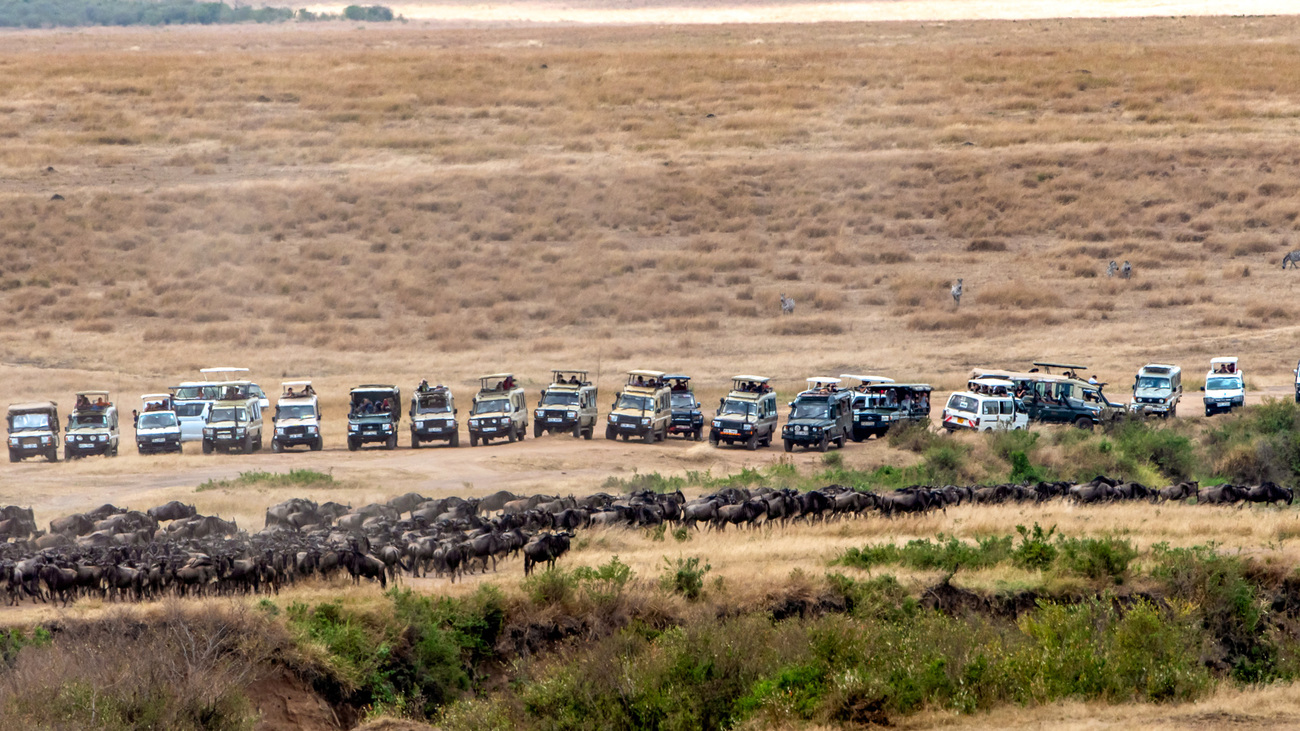
Tourist vehicles cluster at a river crossing during the annual wildebeest migration between the Serengeti and the Maasai Mara. Photo: © Paolo Torchio
The proposal to double international tourist arrivals under the draft National Tourism Strategy 2025–2030 could place unprecedented strain on some of the Kenya’s most fragile ecosystems unless growth is guided by conservation science, strong regulation, and responsible tourism practices.
“Growing tourism is strategic for national development, but we must ensure that there are firm safeguards to protect our iconic landscapes from unchecked expansion,” warns Ben Wandago, IFAW Country Director for Kenya. “Tourism must be planned at the scale of ecosystems—not just markets—if wildlife and communities are to survive the pressure.”
The strategy—developed in consultation with national and county governments, the private sector, communities, and development partners—aims to double tourism capacity nationwide. It proposes increasing international arrivals from 2.4 million to 5 million visitors staying an average of 12–14 nights, creating 2.5 million jobs, and injecting Ksh1.2 trillion (US$9 billion) into the economy.
Yet Kenya’s tourism history offers cautionary lessons.
Tourism grown at a crossroads
Despite boasting 23 terrestrial national parks, 28 terrestrial national reserves, four national sanctuaries, and four marine national parks, Kenya’s international tourism has largely been concentrated in just six national parks: the Maasai Mara, Tsavo, Amboseli, Nairobi, Mt Kenya, and Kisite Marine National Park. Limited infrastructure in emerging destinations and minimal promotion of non-safari attractions have entrenched reliance on wildlife and beach tourism. The result has been overcrowding and environmental degradation in a handful of popular parks, described in the strategy itself as “ecological islands with weak buffer zone protection.”
Lessons from overcrowded parks
The Maasai Mara, globally recognised for the annual wildebeest migration, illustrates the consequences of unmanaged growth. Its 2023 management plan acknowledges a surge in poorly regulated accommodation development in the 1990s, leading to weak enforcement, overcrowding, off-road driving, animal harassment, and habitat damage.
At peak migration periods, as many as 150 vehicles have been recorded at a single river crossing. Dense clusters of lodges and camps along the reserve boundary block wildlife movement and occupy vital habitats such as riverine forests. Overcrowding has disrupted breeding sites and migration corridors, while poor waste disposal has polluted rivers.
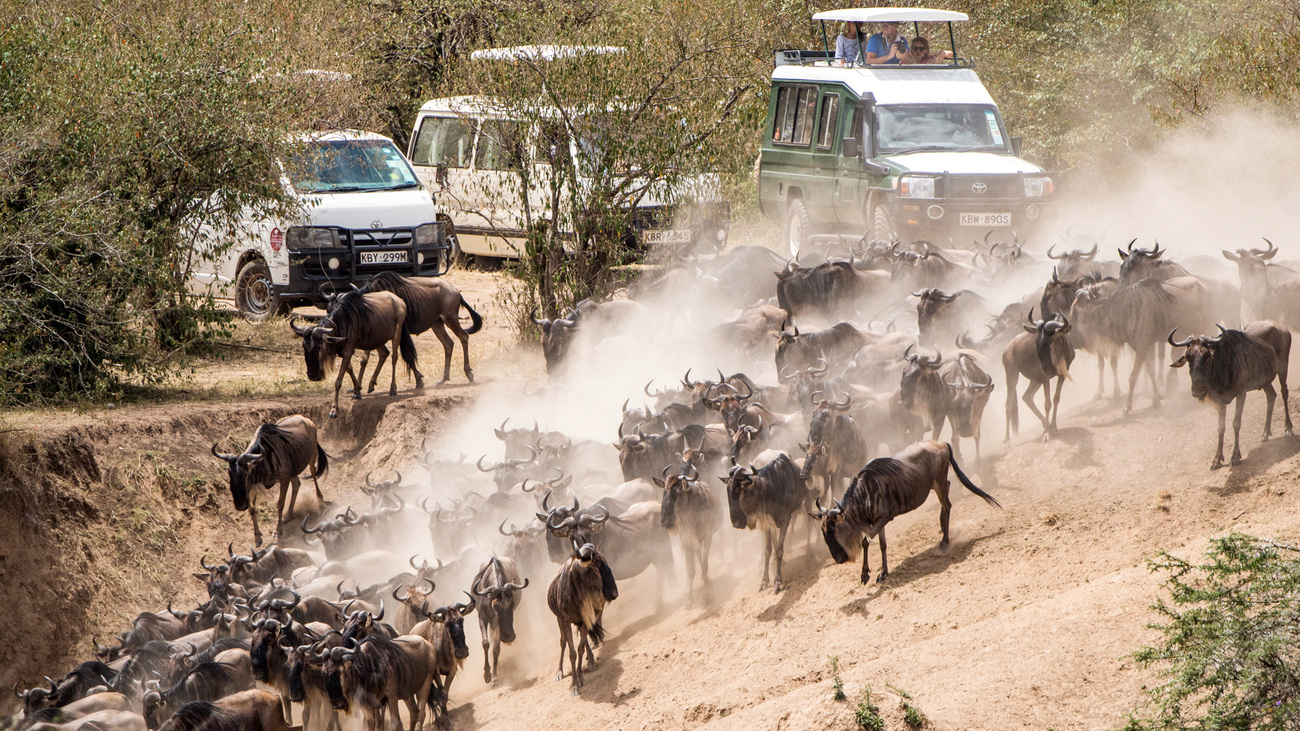
A wall of vehicles line up to watch the annual migration of about two million wildebeest, zebra, and other herbivores from the Serengeti in Tanzania, to the Maasai Mara in Kenya. Photo: © Paolo Torchio
Data from the Kenya Tourism Research Institute further highlights the strain: a tourist in a five-star hotel generates about one kilogram of waste per day and consumes between 170 and 440 litres of water—far exceeding domestic use in water-scarce wildlife landscapes. In savannah ecosystems already under pressure from climate variability, excessive water extraction can intensify competition between wildlife, livestock, and people.
A strategy with purpose—but risks remain
The tourism strategy nevertheless commits to “long-term environmental, economic and social sustainability.” It proposes diversifying Kenya’s tourism portfolio beyond safari and beach products to include cultural heritage, adventure, agri-tourism, ecotourism, sports, and wellness tourism. It also seeks to resolve overlapping legal mandates, weak enforcement, and compliance gaps that undermine environmental stewardship.
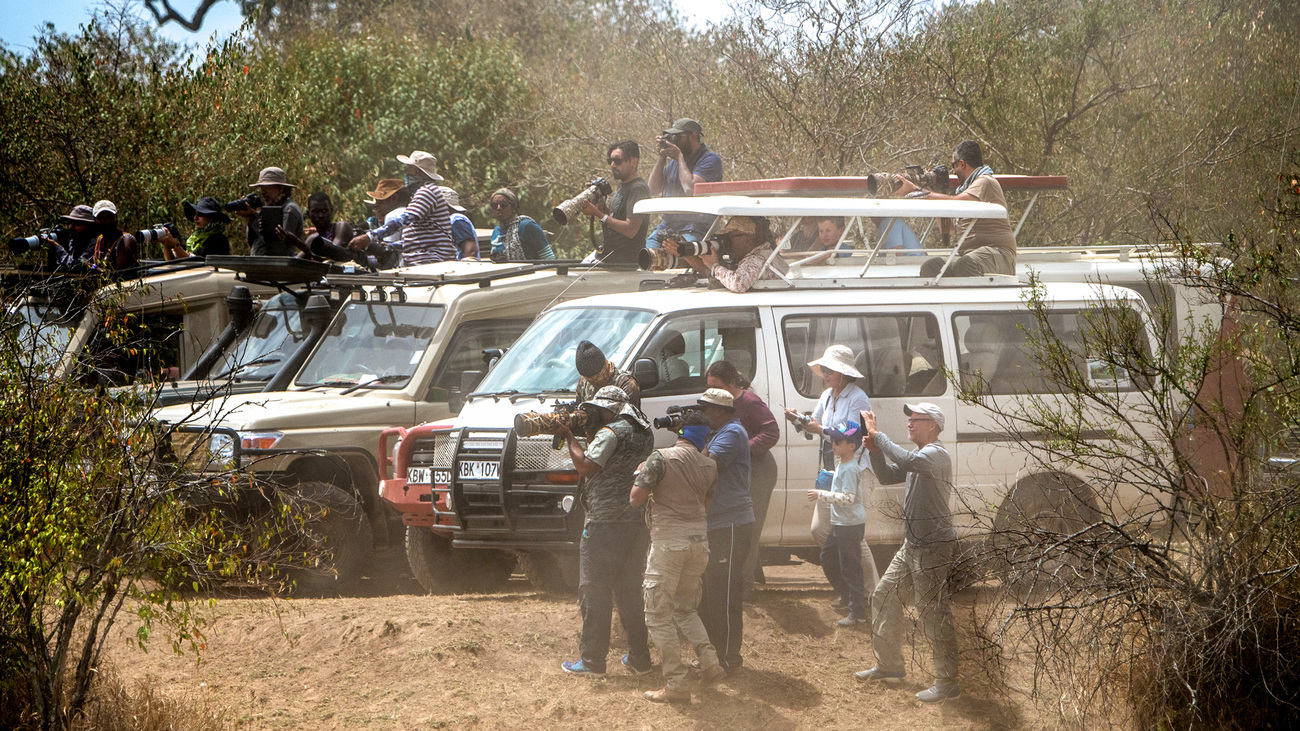
Tourists break safety rules demanding they remain in their vehicles, as they scramble to “get the shot” of migrating wildebeest. Photo: © Paolo Torchio
A proposal to create wildlife-adjacent resort cities in Mtito Andei (Tsavo), Nanyuki (Mt Kenya), and Narok (Mara) is particularly transformative. According to the plan, these gateway cities—supported by park zoning and streamlined access to prevent overcrowding—should stimulate local economies while reducing infrastructure pressure inside protected areas.
“If done right, this could be a turning point,” says Wandago. “But if growth outpaces governance, we will see shrinking habitats, rising conflict, and declining wildlife—outcomes that threaten tourism itself.”
Whether strategy targets can be achieved within five years remains uncertain, but the renewed emphasis on sustainability and benefit sharing is encouraging.
Ensuring communities benefit
Currently, landowners in the ecosystems that support nearly 70 of Kenya’s wildlife receive less than 0.5 percent of national tourism revenue, despite bearing the daily realities of living alongside elephants, predators, and migratory herds.
Without equitable revenue sharing, communities have little incentive to maintain open rangelands and migration corridors that wildlife depend upon.
IFAW’s Room to Roam approach offers a framework to address this imbalance. By securing connected landscapes beyond park boundaries and supporting community-owned conservancies, Room to Roam reduces pressure on overcrowded parks while ensuring people who live with wildlife share in the benefits.
“This strategy could strengthen community conservancies like Kitenden and Illaingarunyoni in the Amboseli ecosystem,” Wandago notes. “It could expand Room to Roam for wildlife, ease ecological pressure on fragile national parks, and deliver meaningful income to pastoralist landowners who coexist with elephants and other species.”
A pivotal moment for Kenya’s wildlife
As Kenya looks ahead to a new chapter of tourism growth, the opportunity is to ensure expansion strengthens—rather than strains—the natural systems on which the sector depends. With thoughtful planning, strong institutions, and continued investment in landscape connectivity and community stewardship, tourism can remain a powerful force for conservation and inclusive development.
Approaches such as IFAW’s Room to Roam underscore the importance of giving wildlife the space to move and ecosystems the resilience to absorb change, while ensuring communities remain central beneficiaries of conservation success. Done well, Kenya’s tourism future can safeguard its extraordinary natural heritage while sustaining livelihoods for generations to come.
Related content
Every problem has a solution, every solution needs support.
The problems we face are urgent, complicated and resistant to change. Real solutions demand creativity, hard work and involvement from people like you.