Policy
England’s animal welfare strategy leaves gaps for wildlife
England’s animal welfare strategy leaves gaps for wildlife
21 January 2026
By Samara P. El‑Haddad, Senior Programs Officer, IFAW UK
In December 2025, the UK government published a new Animal Welfare Strategy for England, setting out how it plans to improve protections for animals over the coming years, including wild animals in the countryside, animals in captivity, and those affected by trade and tourism. IFAW welcomes several important commitments in the strategy, but some measures fall short of what animals urgently need. Turning promises into real protection will now depend on speed, clarity, and strong enforcement.

A brown hare in the grass in the Alps.
Ending harmful practices like trail hunting and snares
Among the most significant commitments is the government’s plan to ban trail hunting. For many years trail hunting has put wild mammals at risk and been used as a smokescreen for illegal hunting, undermining public confidence in wildlife protection laws and making enforcement extremely difficult. The government has committed to launching a consultation in early 2026 on how to deliver a ban.
IFAW welcomes this step, but a future ban must be clear, enforceable, and free of loopholes—animals cannot afford further delays or weak drafting that allows harmful practices to continue under another name.
The decision to ban snare traps in England is a major, long‑overdue victory for animal welfare. Snares are indiscriminate devices that can trap and seriously injure non‑target animals including badgers, hedgehogs, foxes, and even family pets. Animals caught in snares often suffer for hours or days before being found, and ending their use will prevent immense suffering.
Expanding protections for wild species
The strategy includes new measures to protect wild species, such as introducing a close season for hares during their breeding period. Without this seasonal protection, young hares can be left to starve if their mothers are killed—so this step reflects basic welfare principles. The strategy also addresses the welfare of decapod crustaceans and cephalopods such as crabs, lobsters, and octopuses, which are now legally recognised as sentient. Guidance on humane killing methods, including confirmation that live boiling is unacceptable, is welcome; however, guidance alone is not enough. These animals need enforceable protections across the supply chain.
On kept wild animals and zoos, the government has committed to enforcing the licensing scheme introduced in 2024 for people keeping primates, which requires “zoo‑level welfare standards”—an improvement on the previous situation. However, primates have complex social, emotional, and cognitive needs that cannot be met in private homes. IFAW continues to call for a full ban on keeping primates as pets.
Fixing gaps in enforcement and trade policy
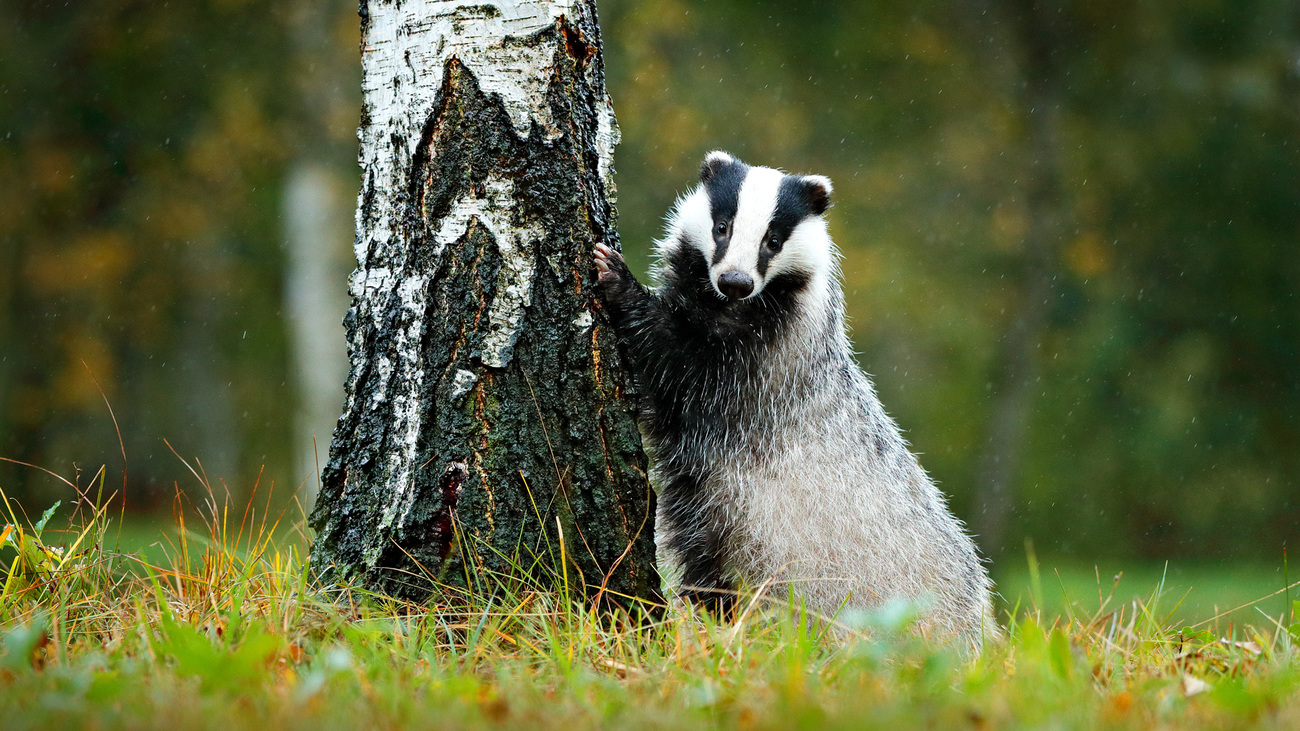
European badger by a tree in the forest.
Strengthening penalties for cruelty to wildlife so they align with penalties for harm to pets and livestock is a critical and overdue correction—there is no justification for weaker protection for wildlife. However, tougher penalties alone will not protect animals unless enforcement bodies have adequate resources, training, and coordination; laws must be applied consistently if they are to act as a real deterrent.
On international trade, the strategy proposes creating a working group to examine fur imports and responsible sourcing. This does not resolve a fundamental contradiction: fur farming is banned in the UK, yet the import and sale of fur produced abroad using methods rejected at home remain legal. IFAW believes the only ethical solution is a full ban on the import and sale of fur. Public support for ending this cruel trade is clear, and the policy pathway already exists.
The government has also committed to exploring ways to stop advertising in the UK of low‑welfare wildlife tourism abroad. Many animals are exploited, confined, or cruelly trained to provide tourist “experiences” that would be unacceptable in the UK. IFAW strongly supports this direction alongside plans to help travellers identify genuinely high‑welfare activities. To be effective any measures must close loopholes that allow harmful attractions to be marketed under misleading labels such as “sanctuary”, “rescue”, or “ethical encounter.”
The strategy’s commitment to modernising the Veterinary Surgeons Act 1966 is an important recognition of the vital role veterinary professionals play in protecting wild animals. Wildlife medicine has changed dramatically over the past six decades, yet the legal framework governing the profession has not kept pace with modern science, welfare standards, or the realities of caring for wild animals. IFAW welcomes the forthcoming consultation as an opportunity to ensure vets working with wildlife—from emergency rescue to rehabilitation and zoo care—are properly supported, empowered, and regulated to deliver the highest possible welfare standards.
While the strategy includes measures to improve welfare standards across regulated and unregulated pet sales, it misses a critical issue: the growing trade in wild animals sold as pets. Many species can still be legally sold despite being unsuitable for private ownership, poorly regulated, or illegally sourced and laundered through legal markets. Without clear action to address the sale of wild animals, serious welfare risks, conservation harm, and public health concerns will continue. IFAW believes the UK should consider a Positive List approach, allowing only species proven to be suitable as pets, to create a clear, science‑based system that protects animals and people alike.
What comes next for animal welfare in England
The strategy lays important foundations, but animals cannot wait for protections that stall in consultations or remain voluntary. To turn commitments into real change we need swift implementation, clear and enforceable laws, loophole‑free policy design, and properly resourced enforcement. IFAW stands ready to provide evidence, expertise, and collaboration to help ensure this strategy delivers real protection for wild animals at home and abroad.
Related content
Every problem has a solution, every solution needs support.
The problems we face are urgent, complicated and resistant to change. Real solutions demand creativity, hard work and involvement from people like you.