Landscape Conservation
Africa energy crisis drives charcoal use, threatening wildlife and forests
Africa energy crisis drives charcoal use, threatening wildlife and forests
11 May 2026
Before sunset in Nairobi’s Mathare settlement, the blue flame in Millicent Atieno’s kitchen used to flicker to life with a quick turn of the knob. These days, the stove often stays cold.
Instead, she crouches over a small charcoal burner outside her tin-roofed home, coaxing a smoky fire to cook for her family.
“Cooking gas has become too expensive, and sometimes you can’t even find it,” Atieno said. “Charcoal is what we can rely on.”

Cars queue for fuel at a gas station in Nairobi, Kenya. Photo: © Joy Kahashi
Across Africa, stories like Atieno’s are becoming more common as the Iran conflict disrupts global oil flows and pushes fuel prices higher, sending shockwaves through economies far from the front lines. Increasingly, the effects are being felt not only in kitchens, but in forests, wildlife habitats, and the delicate balance between people and nature.
The crisis has strained shipments through the Strait of Hormuz, a vital corridor for the world’s energy supply. The result has been rising fuel costs and fears of shortages, particularly in regions heavily dependent on imports. In much of Africa, those pressures are now being felt in kitchens, forests, and wildlife habitats.
In most countries, adoption had been slowly growing. But as cooking gas and fuel prices climb and supplies become uncertain, many households are reverting to charcoal and firewood—fuels that are cheaper upfront and more readily available, even if they carry hidden environmental costs.
“People are going back to what they know,” said Amos Wemanya, a senior analyst on renewable energy at Power Shift Africa. “When incomes are squeezed, cleaner options are the first to go.”
The shift may seem small at the household level. But across cities and rural areas alike, the cumulative effect could be significant.
“The first conservation risk from an energy shock is households switching fuels,” said Paula Kahumbu, a wildlife conservationist and chief executive officer of WildlifeDirect. “When kerosene and cooking gas become scarce or expensive, many households quickly turn to charcoal or firewood. These are readily available in cash-poor environments, even though they are environmentally costly.”
Charcoal remains one of the most widely used cooking fuels in sub-Saharan Africa. Its production is a major driver of deforestation, often involving the slow burning of wood in earth kilns. As demand rises, so too does pressure on already fragile ecosystems and the wildlife corridors that depend on intact forests.
“In the last few weeks, we have seen increased demand from our customers in Nairobi’s low-income settlements,” said Moses Wambua, a trader loading bags of charcoal off trucks along the Southern Bypass in Nairobi, shipments that arrive via the Mombasa highway.
“These are from the Samburu area. My customers like them because they produce less smoke,” he said.
Samburu lies within the Tsavo wildlife corridor, a key landscape for wildlife movement, restoration, and reforestation efforts in Kenya, and an example of why connected habitats are essential for both people and wildlife to thrive.
Across parts of eastern and southern Africa, conservationists warn that a prolonged energy crunch could accelerate forest loss, degrade habitats, and increase carbon emissions, reversing years of progress.
“The environmental impact can also extend beyond tree cover,” Wemanya said. “As communities venture deeper into forested areas in search of fuel, encounters with wildlife become more likely, raising the risk of human–wildlife conflict.”
“There is a cascading effect,” he added. “Energy shocks don’t just affect transport; they reshape livelihoods, land use, and ultimately biodiversity.”
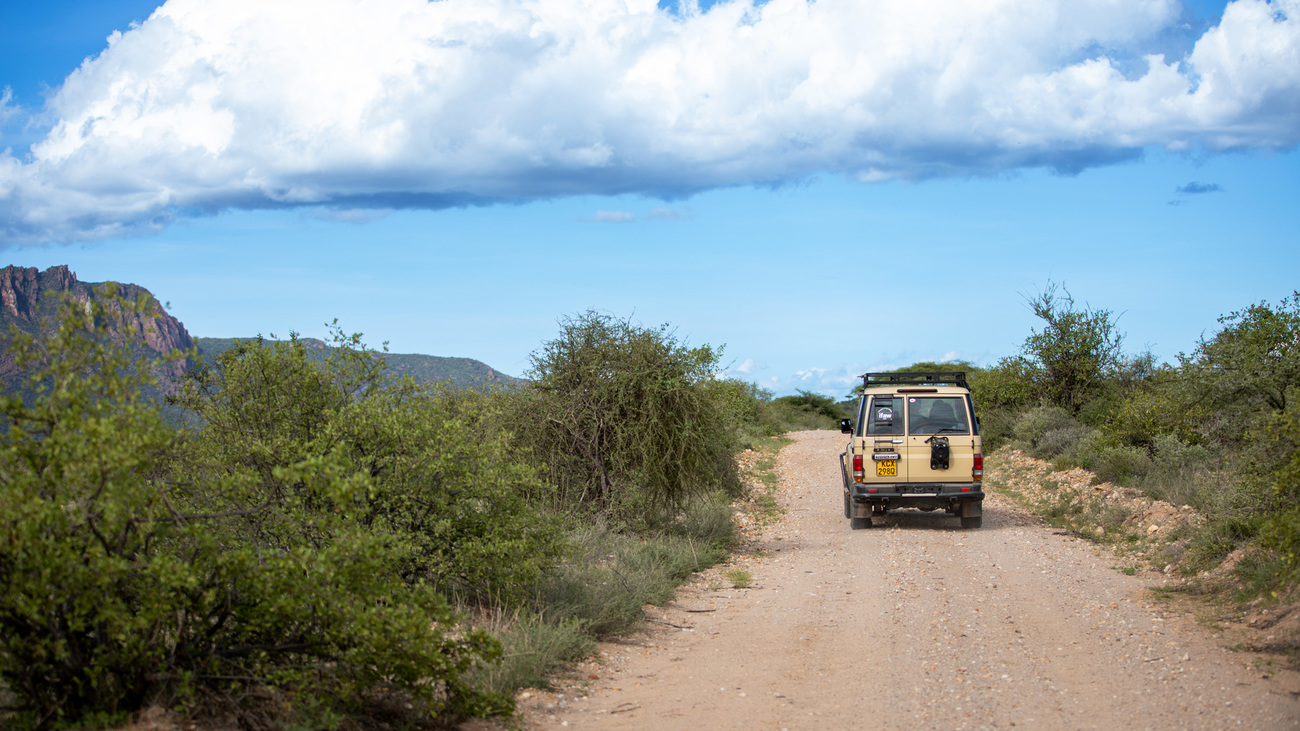
IFAW vehicle traverse the landscape, supporting conservation efforts in Kenya. Photo: Jesse Maree / © IFAW
Within IFAW’s Room to Roam approach, these linkages are clear: when forests shrink, wildlife corridors narrow, and the space animals need to move safely across landscapes is reduced, increasing conflict and ecological strain.
Across Africa’s vast conservation landscapes, rising fuel costs are beginning to strain already limited resources. From ranger patrols to emergency response operations, much of wildlife protection depends on steady access to fuel. Conservationists warn that ongoing price shocks could quickly disrupt these critical efforts.
“Fuel is the hidden backbone of wildlife protection, from patrols and rapid response teams to aerial surveillance and veterinary work—all of it depends on a reliable and affordable supply,” said Phillip Kuvawoga, senior director of conservation programs at IFAW.
Kuvawoga noted that conservation efforts across Africa are already chronically underfunded, with organisations like the Zimbabwe Parks and Wildlife Management Authority, Kenya Wildlife Service, and IFAW stretching limited resources across vast, remote landscapes.
In Zambia, the petroleum-based energy crisis began to manifest in March, when the country experienced a weeklong diesel shortage. On 31 March 2026, the government announced sharp increases in fuel prices, with petrol rising by 20.5% and aviation fuel by 41%. The hikes are expected to trigger a ripple effect across the economy, driving up the cost of goods and services and, in turn, increasing the expense of conservation operations such as patrols and responses to human–wildlife conflict.
“When prices rise sharply, or supplies become unpredictable, the operational impact is immediate,” he said. “Rising fuel costs are compounding that strain, cutting into already tight budgets and placing even more pressure on rangers being asked to do more with less.”
The ripple effects are also expected to reach Africa’s tourism sector, a cornerstone of conservation funding. Higher fuel prices are making travel more expensive, while disruptions to aviation routes through Middle Eastern hubs are complicating access to some destinations.
For many African countries that rely on wildlife tourism to finance protected areas, even a modest decline in visitor numbers could have outsized consequences. Tourism revenue supports everything from park operations to anti-poaching patrols and community conservation initiatives. A slowdown would leave these programs more vulnerable at a time when environmental pressures are increasing.
Experts warn the current situation mirrors previous global oil shocks, when rising fuel costs pushed households back toward biomass energy with long-term environmental consequences. According to the UN Food and Agriculture Organization (FAO), nearly four million hectares of African forests are lost each year, with Zambia, the Democratic Republic of Congo, and Nigeria leading in tree loss.
“In past crises, we’ve seen this pattern repeat itself,” said Wandetto Mwangi, a Nairobi-based environmental campaigner. “The economic shock comes first, and the environmental impact follows years later.”
The concern now is that if high prices persist, the shift could become entrenched. For households like Atieno’s, however, the choices remain immediate and practical.
As the charcoal fire crackles, she fans the flames and watches the pot begin to boil, smoke rising into the morning air.
“We don’t have many options,” Atieno said. “You use what you can afford.”
Related content
Our work can’t get done without you. Please give what you can to help animals thrive.