Lusaka Elephant Nursery - Zambia
Rescuing orphaned elephants and returning them to the wildInside the rescue and rehabilitation of orphaned elephants in Zambia
Inside the rescue and rehabilitation of orphaned elephants in Zambia
September 8, 2026
By Florian Kriechbaumer, wildlife photographer and winner of the IFAW–Pexels ‘Our Wild World’ competition
Recently, I spent two weeks in Zambia exploring several of its national parks and seeing a wide range of wildlife, including one of my favorite animals—and one of the continent’s most threatened species—elephants.
Elephants in Africa face major pressures, from habitat loss and human-wildlife conflict to continued poaching for their ivory. One consequence of this is that many young elephant calves end up orphaned. But in Lusaka National Park, an elephant nursery is giving young calves a second chance at survival.
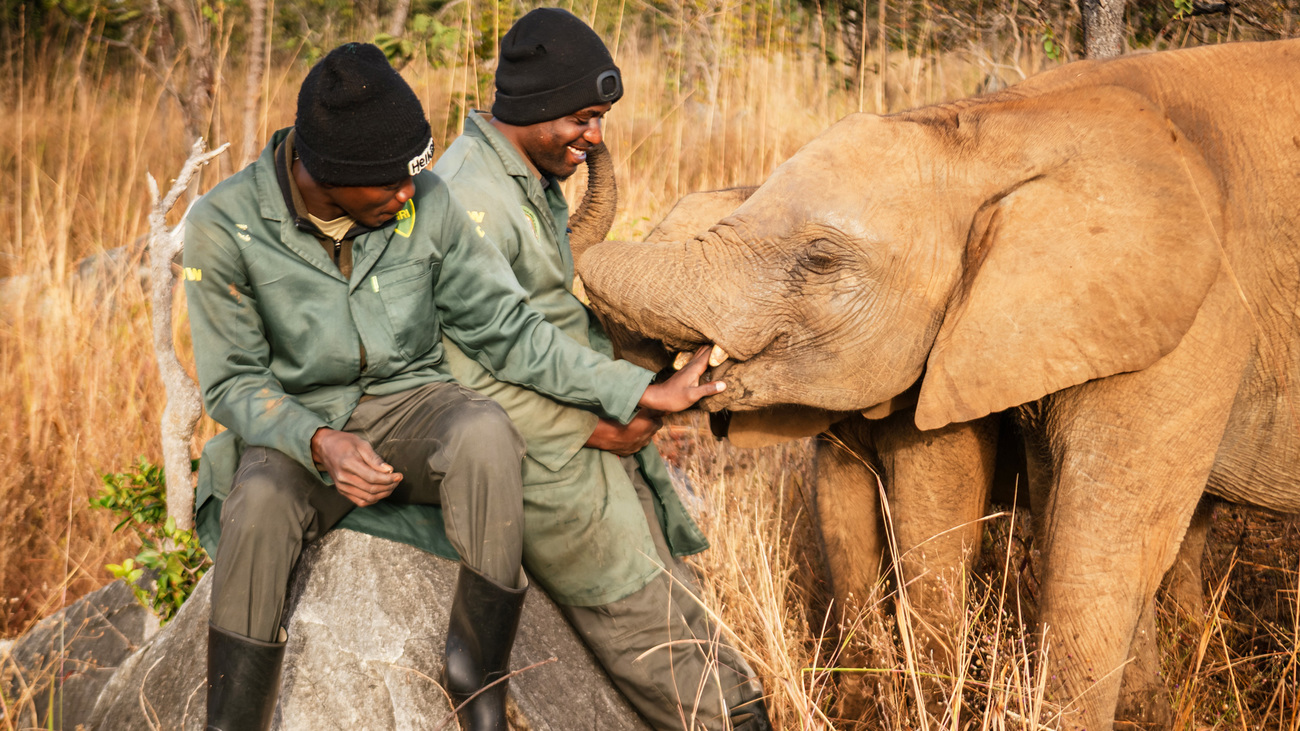
Elephant with keepers at Lusaka Elephant Nursery, Zambia. Photo: © Florian Kriechbaumer
Saving Zambia’s elephants
Run by Game Rangers International (GRI) and supported by IFAW, the team at the Lusaka Elephant Nursery rescues, rehabilitates, and eventually returns young elephants to the wild. The nursery was established in 2008 and is currently home to four elephants.
The work is particularly important given the recent decline in Zambia’s elephant population. Just a century ago, the country had an estimated 250,000 elephants, yet today only around 25,000 remain.
Rehabilitation is a long-term process that can take many years. Young elephants are highly social and emotionally dependent animals, so the keepers effectively become surrogate ‘mothers’, as one of them put it.
At the same time, it’s important to prepare the calves for eventual independence in the wild. During the day, the elephants spend much of their time outdoors together, grazing and getting comfortable with the bush and its movements and sounds.
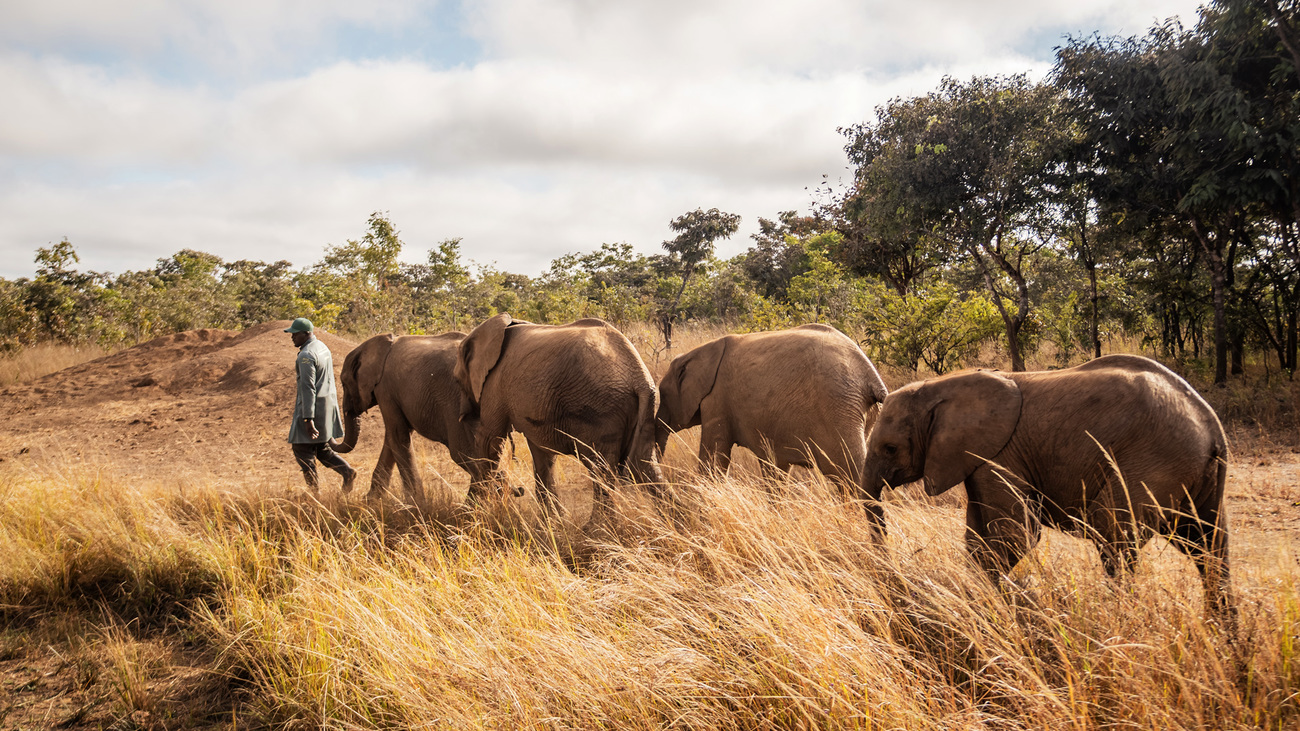
Elephant with keepers at Lusaka Elephant Nursery, Zambia. Photo: © Florian Kriechbaumer
Round-the-clock care
I arrived at the nursery before sunrise, just as preparations for breakfast were beginning—not only for the staff, but also for the calves.
Calves are bottle-fed every three hours, including throughout the night, with each elephant consuming around 16 liters of formula daily. This formula is specially made from milk powder, coconut, oats, and other nutritious ingredients. At night, the keepers even sleep directly above the calves inside the boma, as young elephants can become distressed if left alone.
The keepers wear green coats, to match the color of the elephants’ natural environment. When a young calf is left alone at night, the keepers will often leave their coats with them, as the familiar scent provides comfort.
When one rescue ends, another begins
I spoke with one of the keepers, Matthews. Growing up, he lived in a community where animals were rarely seen, so he had little connection to wildlife. That changed when he moved closer to Kafue National Park during his childhood.
Through everyday exposure to wildlife and conservation education from GRI, Matthews developed a passion for elephants and preserving their future. He eventually joined the team, initially working in grounds and maintenance before later becoming an elephant keeper.
Not every rescue succeeds. Some calves are found too late or arrive in extremely poor condition, Matthews explained. But when a rescue is successful and an orphan gains its independence, the experience is incredibly rewarding for him.
One of his stories was about an orphan named Nanzhila, the only female in the group and the youngest elephant here. Shortly after the team had completed the move of two elephants to the Kafue reintegration unit, they received another emergency call about a calf that had been seen alone for several days. They immediately left to rescue Nanzhila and brought her into care. One mission ends and another begins just as quickly.
Another keeper, Young, shared that he himself, much like the elephants he now cares for, grew up as an orphan. In some ways, that personal experience helped shape the connection he feels toward the calves under his care.
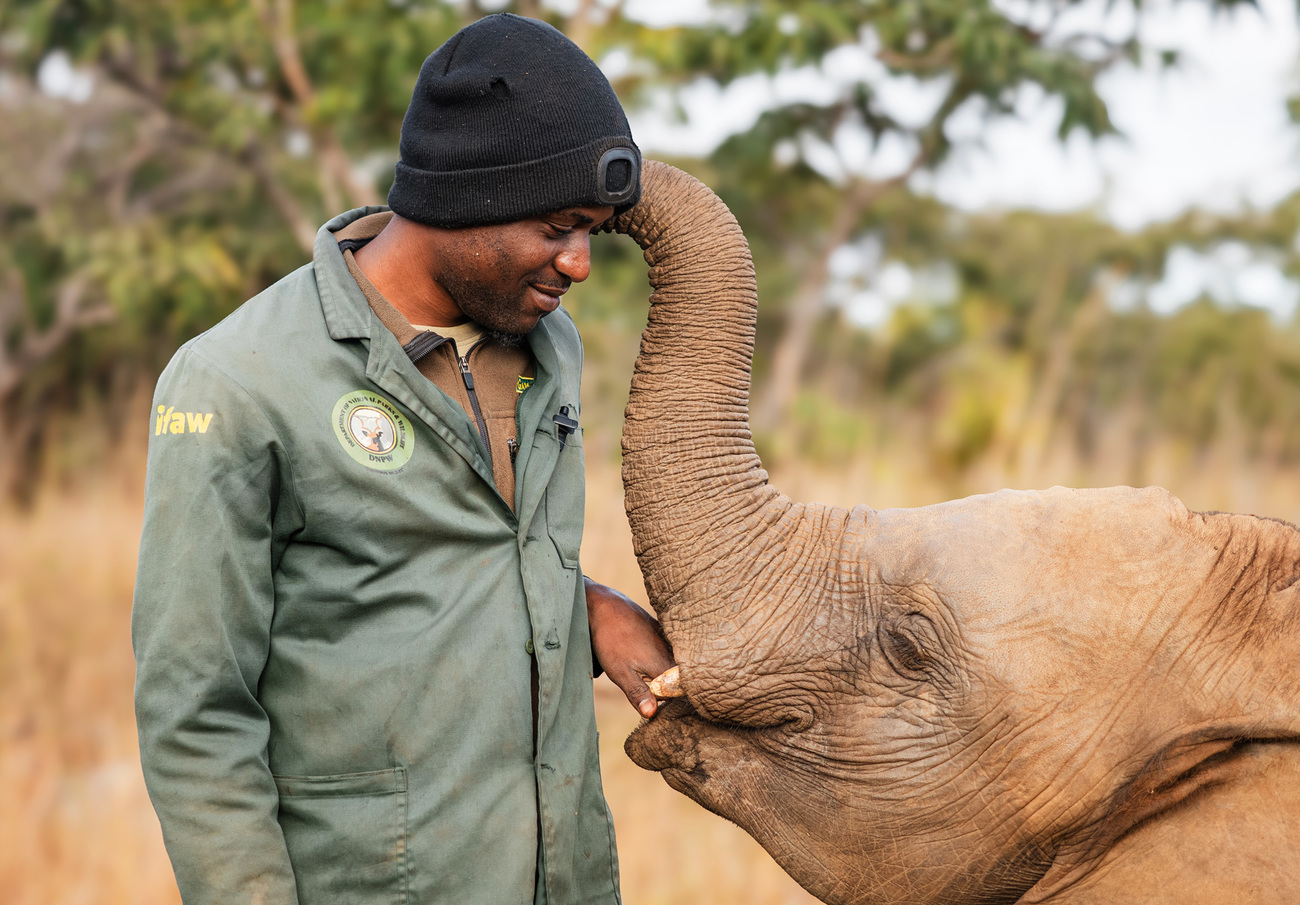
Elephant with keeper at Lusaka Elephant Nursery, Zambia. Photo: © Florian Kriechbaumer
Measuring success
The rehabilitation process is hands-on. The orphanage tracks the development of each elephant carefully, taking monthly growth and weight measurements—quite an amusing process to witness. Luckily, elephant calves can easily be distracted with a milk bottle.
The keepers also monitor their health closely and intervene if needed: one calf, Mataya, was being treated for an eye infection during my visit and required regular eye drops throughout the day.
Spending time at the nursery reinforced for me how emotionally intelligent elephants are. Even at a young age, they form strong bonds with one another and with their keepers, and it shows in their intimate interactions.
At the same time, the nursery actively tries to minimize long-term dependency on humans so the elephants can eventually reintegrate into wild herds. The release process takes place gradually in Kafue National Park, once the elephants approach 4-5 years old.
Even then, the process remains gradual and voluntary. Once in Kafue, the elephants are free to leave when they are ready rather than being forced into immediate independence. Some orphaned elephants have even gone on to reproduce successfully in the wild, including Chamilandu. This is one of the clearest indicators that rehabilitation and release efforts can work.
Places like this elephant nursery exist because of the threats elephants face in the wild—but also because of people who care. Protecting elephants ultimately depends not only on rescuing orphans, but also on preserving habitats, reducing conflict, limiting poaching, and maintaining connected ecosystems where elephants can move safely across larger landscapes—an approach central to IFAW’s Room to Roam vision.
Together, by saving individual animals, we can help save a species.
Related content
Our work can’t get done without you. Please give what you can to help animals thrive.