Saving the North Atlantic right whale - North America
Don't fail our whaleWhy this year’s right whale calving season matters more than ever
Why this year’s right whale calving season matters more than ever
April 16, 2026
With 23 calves born, this is the strongest calving season in recent years and a meaningful step forward for a species with only about 380 individuals remaining. While this progress is encouraging, it is also fragile. North Atlantic right whales continue to face significant human-caused threats, and their recovery depends on the strength and consistency of the protections in place.
To better understand what’s driving this progress—and what could put it at risk—we’ve assessed this year’s calving season through a report card, looking at key factors including population trends, threats, policy, and emerging solutions.
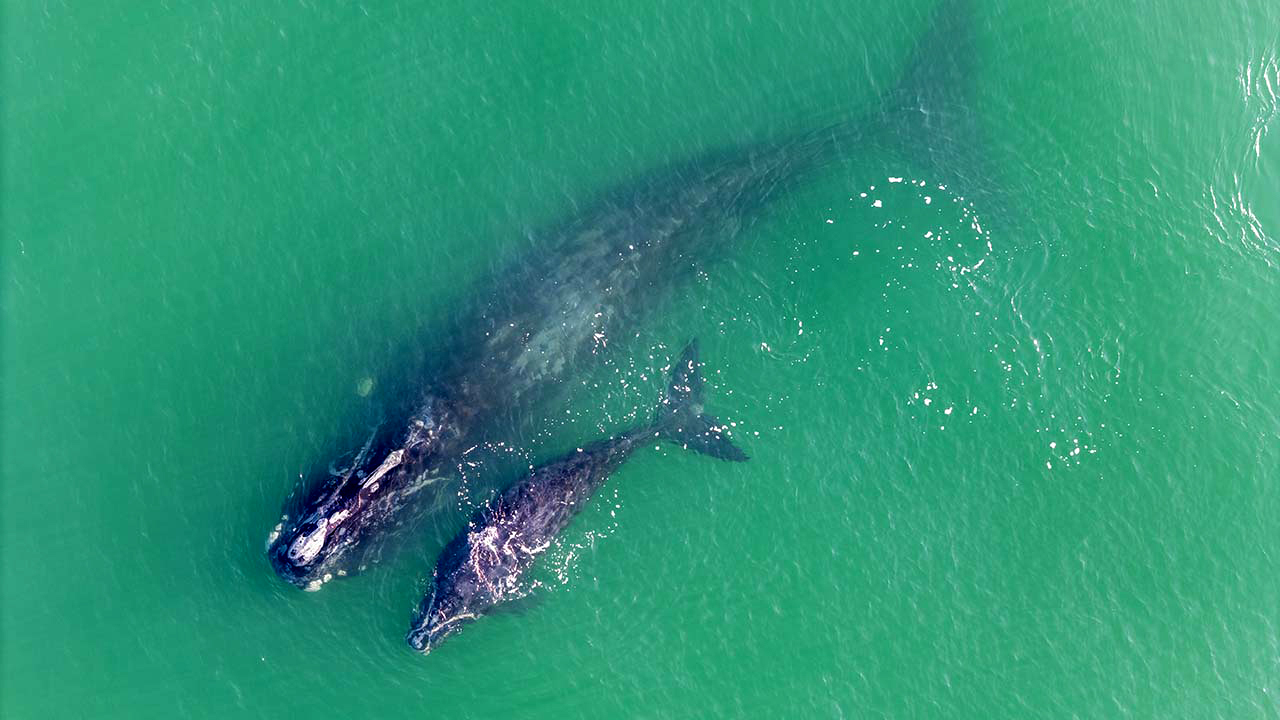
Ghost (Catalog #1515) was sighted with a calf on January 30, 2026 just offshore of Flagler Beach, FL. Photo: © Marineland Right Whale Project, taken by Jeff Greene under NOAA permit #26562
Population outlook: stable, with cautious signs of improvement (Grade: C+)
This year’s calving numbers suggest the population may be stabilizing after a period of decline. However, the overall population remains critically low, and a single year of higher births is not enough to indicate long-term recovery.
- Since last year: The outlook has shifted from decline toward potential stabilization, driven by increased calf production.
Calves born: 23, the highest in 17 years (Grade: B+)
The birth of 23 calves marks a significant improvement as the highest number of calves born in 17 years. This is a strong indicator that, under the right conditions, reproduction can rebound.
At the same time, calf survival remains uncertain. Young whales face immediate risks from vessel strikes, entanglement, and other threats as they migrate and develop.
- Since last year: Calf numbers have increased, making this the most productive calving season in 17 years.
Vessel strikes: ongoing and preventable risk (Grade: C)
Vessel collisions remain one of the leading causes of mortality for North Atlantic right whales. The overlap between whale habitat and busy shipping routes and recreational boating activity continues to create dangerous conditions, particularly for mothers and calves that spend their time near the surface and close to shore.
- Since last year: The level of risk remains largely unchanged, with continued exposure to vessel traffic in key habitats, but US regulatory protections are under threat.
Entanglement: persistent threat with signs of progress (Grade: C+)
Entanglement in fishing gear remains one of the most serious and long-standing threats to North Atlantic right whales. Injuries from entanglement can be severe, often leading to prolonged suffering, reduced reproductive success, and death. This season underscored the impact of this threat with the death of Division, a well-known North Atlantic right whale lost to entanglement.
At the same time, there are emerging signs of progress. Recent commitments, including Canada’s long-awaited plan to reduce whale entanglements, signal increased recognition of the need for stronger, more coordinated action. Efforts to test and implement safer fishing practices, including ropeless and reduced-risk gear, are also advancing.
While these developments are encouraging, they have not yet translated into a measurable reduction in risk at the population level. Continued implementation and scaling of these solutions will be critical to achieving meaningful change.
- Since last year: Policy momentum is improving, with new commitments to reduce entanglement risk, but overall threat levels remain high.
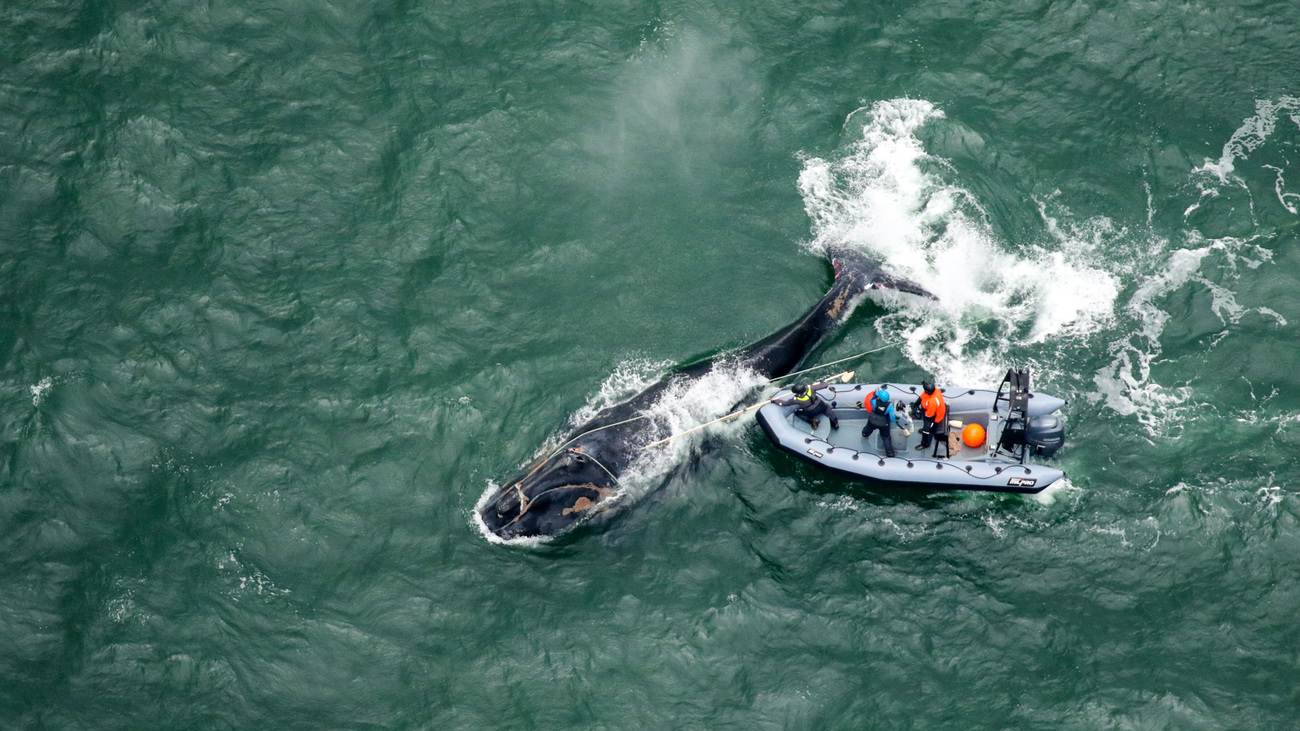
Authorized on-water response teams work to remove entangling gear from North Atlantic right whale “Division” near St. Simons Island, Georgia, cutting line over the whale’s head and blowholes, though some gear remains. Photo: © Clearwater Marine Aquarium Research Institute, taken under NOAA permit #24359. Aerial survey funded by NOAA Fisheries and Georgia Department of Natural Resources.
Policy and protection: mixed progress at a critical moment (Grade: C+)
Existing vessel speed measures remain one of the most effective tools for reducing the severity and likelihood of vessel strikes. These protections are particularly important in areas where whales are known to be present.
However, proposed amendments to the critical 2008 vessel speed regulation risk erasing these safeguards. At a time when recent data suggests that protections are contributing to improved outcomes, any rollback could undermine progress.
- Since last year: Protections remain in place but face increased uncertainty due to proposed regulatory changes.
Innovation and solutions: expanding tools and partnerships (Grade: B+)
There has been meaningful progress in the use of technology in coordination on reducing speeds to reduce risk to whales. In particular, the application of Automatic Identification System (AIS) data is improving our ability to identify areas of concern in near real time and alert mariners when they are in designated slow zones.
Efforts to expand AIS coverage, including through lighthouse-based systems, are helping close data gaps in coastal regions where whale presence and vessel activity intersect. These advancements support more informed decision-making and more effective protection measures.
- Since last year: There has been clear growth in the application of AIS and in cross-sector collaboration to address vessel strike risk.
What this season shows—and what comes next
This year’s calving season demonstrates that recovery is possible when the right protections and solutions are in place. The birth of 23 calves is a clear signal that cross-sector collaboration is making a difference.
But this progress is fragile. Vessel strikes and entanglement remain persistent threats, and proposed changes to the core vessel speed regulation risk weakening protections at a critical moment.
The path forward is clear. We must strengthen, not scale back, the measures that are already working. That means maintaining effective vessel speed protections, expanding the use of technologies like AIS to work in concert with a reduction of speeds, and continuing to invest in solutions that reduce human-caused harm.
This year has shown what is possible. The next step is to ensure that this progress continues.
Related content
Our work can’t get done without you. Please give what you can to help animals thrive.