Wildlife Crime
IFAW meets EU Commissioner in push for stronger wildlife protections
IFAW meets EU Commissioner in push for stronger wildlife protections
April 17, 2026
Wildlife trafficking is one of the world’s most lucrative criminal trades, threatening elephants, seals, reptiles, birds, and countless other species. This week in Brussels, IFAW joined leading animal welfare and conservation organisations to urge the European Union to go further and faster in tackling it.
Representatives from IFAW met with European Commissioner for Environment, Water Resilience and a Competitive Circular Economy, Jessika Roswall, on 15 April, alongside partners WCS, Humane World for Animals, Eurogroup for Animals, David Shepherd Wildlife Foundation, and FOUR PAWS.
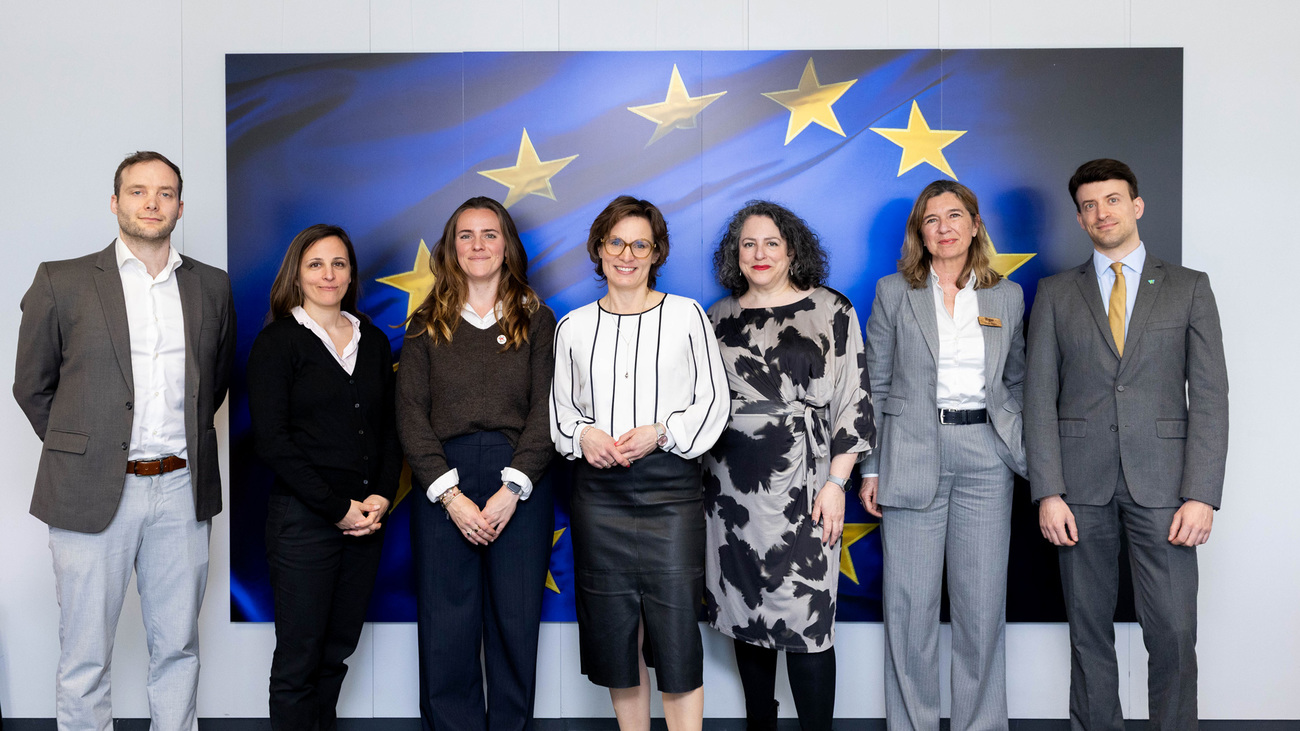
IFAW and partner organisations meet European Commissioner Jessika Roswall in Brussels to discuss stronger EU action against wildlife trafficking. Photo: © European Commission
Together, we called for stronger laws, sustained political commitment, and long-term investment to stop wildlife crime, close loopholes, and protect animals from exploitation.
Keeping Europe’s wildlife trafficking action plan alive
The EU Action Plan against Wildlife Trafficking (WTAP) has been the cornerstone of Europe's response to one of the world's most profitable criminal activities. It has helped raise the political profile of wildlife crime, strengthen cooperation, and unlock funding to tackle trafficking networks. That progress must not stall.
The current plan runs until 2027. IFAW and partners welcomed the Commissioner’s commitment to full implementation, while stressing the need to renew the plan before momentum is lost.
This matters because Europe remains both a destination market and a transit hub for illegal wildlife products. Since 2017, authorities across the EU have recorded an average over 6,000 annual seizures involving protected wildlife species listed under CITES.
Behind every seizure is an animal harmed, removed from the wild, or killed for profit.
Wildlife crime has moved online
Increasingly, wildlife trafficking is no longer happening only in ports, markets, or border crossings. It is happening on screens, through online marketplaces, social media platforms, and private messaging apps.
The EU's Digital Services Act (DSA), fully in force since February 2024, is an important opportunity to change that. The law is designed to ensure illegal activity offline is also illegal online.
IFAW is among the organisations recognised as Trusted Flaggers, enabling us to work directly with online platforms to identify and report illegal wildlife listings. We strongly support the European Commission’s commitment to develop clear EU guidelines on the online wildlife trade under the Digital Services Act.
Ivory loopholes still put elephants at risk
Despite progress, ivory sales in Europe remain a serious concern. IFAW research published in 2024 found more than 1,300 ivory items listed for sale across online marketplaces in seven EU countries. Fewer than 10% of listings included verifiable proof that the ivory was legal. That means loopholes are still being exploited, and elephants continue to pay the price.
Some current EU ivory restrictions are not legally binding. By contrast, the UK Ivory Act, which is enforceable in law, led to a 66% drop in online ivory listings.
The EU now has a clear opportunity to strengthen its rules and shut down this trade for good.

IFAW and partner organisations meet European Commissioner Jessika Roswall in Brussels to discuss stronger EU action against wildlife trafficking. Photo: © European Commission
Protecting a landmark victory for seals
We also highlighted the importance of defending the EU Seal Trade Regulation, which has banned seal products from the EU market since 2009 and is currently under evaluation. This law remains as one of Europe's most significant animal welfare achievements.
When Canada and Norway challenged the regulation at the World Trade Organization, the WTO upheld the EU’s right to restrict trade on animal welfare grounds. That decision sent a powerful message, cruelty should never be rewarded with market access.
What happens next
Protecting wildlife requires more than promises. It requires funding, enforcement, and political will.
IFAW and partners urged the Commission to ensure biodiversity protection is properly funded in the EU’s next long-term budget. We also called for new legislation to criminalise the import, transhipment, purchase, and sale of wildlife taken illegally in its country of origin. A joint position paper has now been delivered to the Commissioner.
A safer future for animals is possible
From elephants targeted for ivory, to seals hunted for profit, wildlife around the world depends on stronger protections and decisive leadership.
IFAW will continue working with EU institutions, governments, and partners to make sure Europe leads the fight against wildlife crime—and helps build a future where animals are valued alive, in the wild, and protected.
Related content
Every problem has a solution, every solution needs support.
The problems we face are urgent, complicated, and resistant to change. Real solutions demand creativity, hard work, and involvement from people like you.
DonateIFAW affiliates are registered as tax-exempt nonprofit organizations in several countries. Depending on where you reside, your donation may qualify for a tax deduction or benefit. See the pull-down menu at the bottom right of this page to see how IFAW operates in your country.