Mia Crnojevic
Content creators join IFAW in the fight against wildlife trafficking
Content creators join IFAW in the fight against wildlife trafficking
Mia Crnojevic | May 18, 2026
In April 2026, I spent a day in Paris with IFAW colleagues and six French content creators exploring a challenge I’ve been working on for years—how social media is quietly fuelling the demand for wild animals as pets.
On the surface, these cute, cuddly photos seem harmless, even heartwarming. But behind that content is a much more troubling reality.
As a wildlife crime campaigner at IFAW, I see the consequences up close. These videos don’t just entertain—they shape perceptions. When wild animals are presented as pets, it sends a powerful message that keeping them in domestic settings is normal and acceptable. And that perception can directly contribute to demand, driving the illegal wildlife trade.
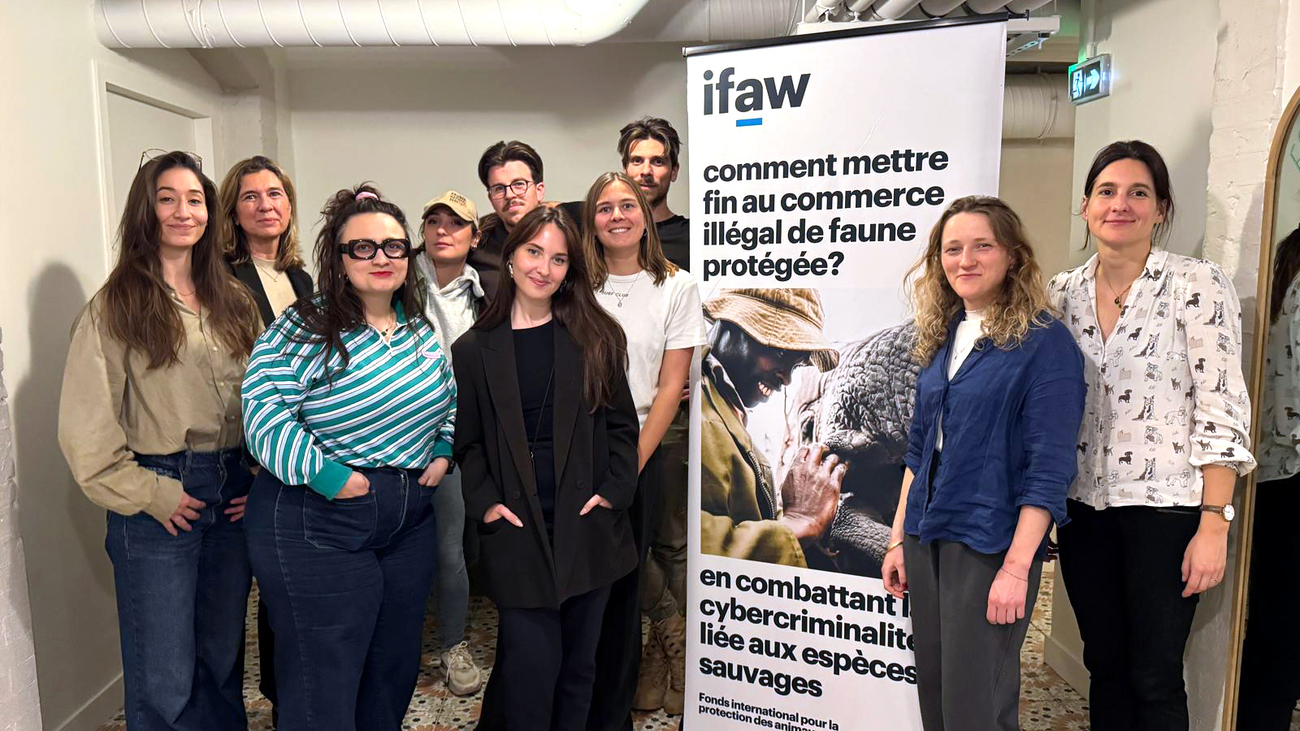
Participants of the workshop on responsible influencing and wildlife, organized by IFAW. Photo: Camille Vicet / © IFAW
The scale of the problem
Wildlife trafficking is one of the world’s most profitable illicit trades, generating an estimated US$7 to 23 billion annually. But what’s most striking is how little of it we actually see. Based on the data we discussed during the workshop, seizures likely represent only around 10% of the total trade.
The rest operates through organised criminal networks, with the EU, including France, acting as a major destination. Increasingly, demand is being shaped online—through platforms like TikTok, Instagram, and YouTube—where content can spread rapidly, often without context.
That’s why this workshop felt so important. We weren’t just talking about the problem—we were bringing in people who are part of the digital ecosystem shaping it.
Learning from creators
We invited @drole_de_biologiste, @animals.interest, @emiliepriou, @lele_wild, and @amdeoff to join us for an open, honest discussion. The session was facilitated by Anaïs Therond, co-founder of Réseaux Sauvages, whose work focuses on how social media can amplify wildlife crime.
What struck me most was how engaged and thoughtful the creators were. Together, we looked at how harmful content spreads, the role algorithms play in amplifying it, and the limits of current regulations, including the Digital Services Act, and IFAW’s status as a trusted flagger of illegal wildlife content online.
Using real examples—from staged ‘rescues’ to misleading sanctuaries and videos that present captive animals as wild—we unpacked why this content resonates so strongly, and how it can be misleading.
But importantly, we didn’t stop at identifying the problem.
Finding what works
One of the most encouraging parts of the day was focusing on solutions. The creators shared what they know works with their audiences—humour, clear and simple fact-checking, personal storytelling, and strong calls to action.
That matters. Because if we want to change behaviour, we need to communicate in ways that people actually connect with.
We also talked about responsibility. Content creators have enormous influence, and with that comes the opportunity to shape more informed, ethical conversations about wildlife.
Turning awareness into action
By the end of the day, one thing was clear—we all want to be part of the solution.
We’ve committed to continuing this collaboration, starting with the development of a charter of best practices for content creators. Our goal is to expand this initiative across Europe, building a network of voices that can help shift the narrative around wildlife online.
But this isn’t just about creators. It’s about all of us. Many of us care deeply about wildlife, but we feel powerless to act. The truth is, small actions can have real impact:
- Pause before liking or sharing content
- Avoid engaging with posts that show wild animals in domestic settings
- Report harmful or misleading content
Every click, like, and share influences what platforms promote. By being more mindful, we can all help reduce the visibility—and demand—for content that harms wildlife.
Why this matters
At IFAW, we often talk about the connection between individual animals and wider ecosystems. The animals we see in these videos are not just props for entertainment—they are part of complex, fragile environments. Removing them from the wild doesn’t just harm that individual animal, it can have ripple effects on entire populations.
That’s why this work matters. And why conversations like the one we had in Paris give me hope.
Related content
Our work can’t get done without you. Please give what you can to help animals thrive.