Wildlife Crime
Connected conservation is helping Uganda fight wildlife trafficking
Connected conservation is helping Uganda fight wildlife trafficking
May 12, 2026
By Guyo Adhi, contributing writer
Uganda is one of Africa’s most biodiverse countries, home to 10 national parks, 12 wildlife reserves, montane forests, more than 165 lakes, and the world’s largest population of endangered mountain gorillas. The Nile River, which rises here, supports millions of people far beyond the country’s borders.
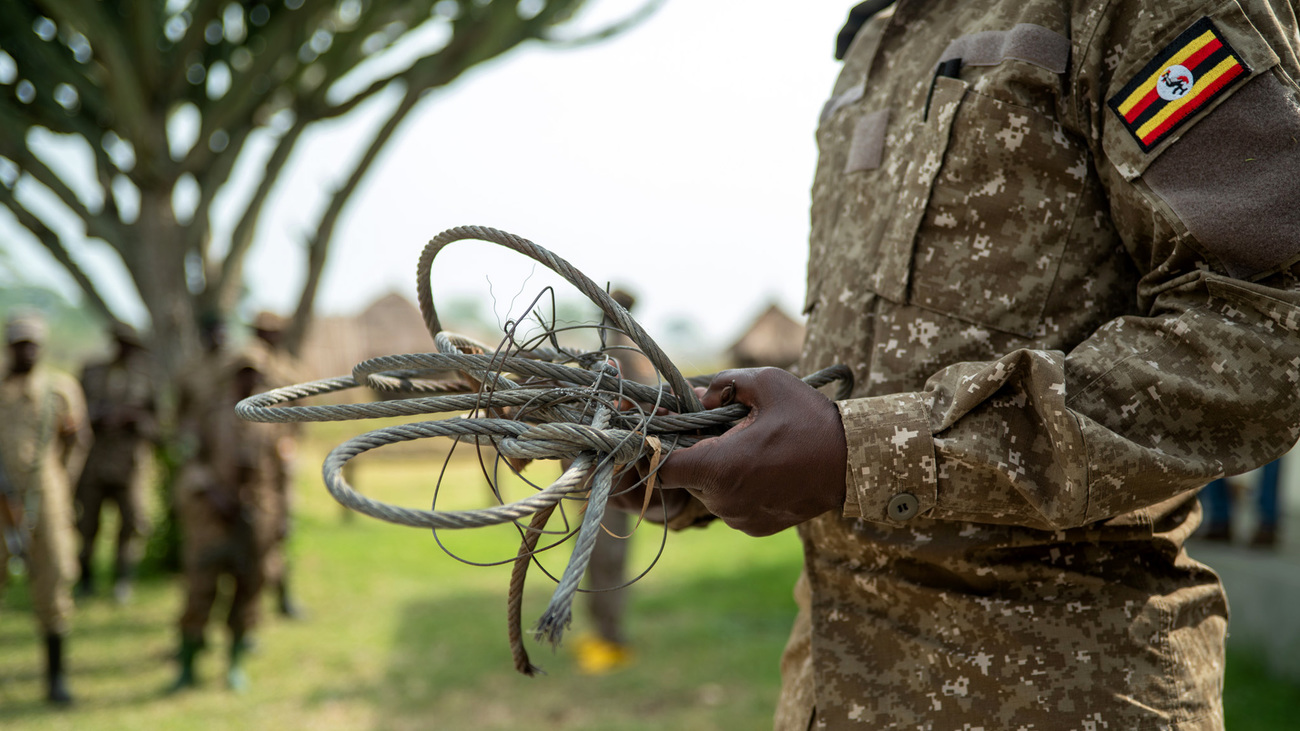
A warden in Queen Elizabeth National Park holds recovered wire snares often used to capture wildlife. Photo: Jesse Maree / © IFAW
Yet Uganda’s rich wildlife and connected landscapes also make it vulnerable to wildlife crime. Porous borders, regional instability, and growing international demand for live wild animals have created opportunities for trafficking networks operating across East and Central Africa.
In recent years, IFAW, through its Room to Roam initiative and the CARE Project sponsored by the US Bureau of International Narcotics and Law Enforcement Affairs (INL), has worked with Ugandan authorities to strengthen efforts to combat the illegal wildlife trade. Early signs suggest that collaboration is beginning to make a measurable difference.
Partnerships are helping turn the tide
Working alongside the Uganda Wildlife Authority (UWA), the Uganda Revenue Authority (URA), and other enforcement partners, IFAW has focused on strengthening frontline capacity by providing training, equipment, and practical support for officers responding to wildlife crime.
The results are already visible. Pangolin trafficking cases dropped by 50%, from 14 cases in 2024 to seven in 2025. Interceptions involving grey crowned cranes, Uganda’s national bird, fell from 12 to just one during the same period.
These gains show that targeted investment and strong partnerships can disrupt trafficking networks and better protect vulnerable species.
A landscape under pressure
At the centre of Uganda’s conservation model is the Conservation Area Man and Biosphere Reserve stretching along the border with the Democratic Republic of Congo (DRC). Few protected areas in Africa operate this way. Eleven fishing villages exist within the park, reflecting efforts to balance conservation with local livelihoods.
The model supports coexistence between people and wildlife, but it also creates challenges. Ongoing instability and weak governance across parts of the DRC have allowed illegal wildlife trade routes to expand across largely unmonitored border areas. Animals captured in Uganda are trafficked through regional networks before reaching international markets.
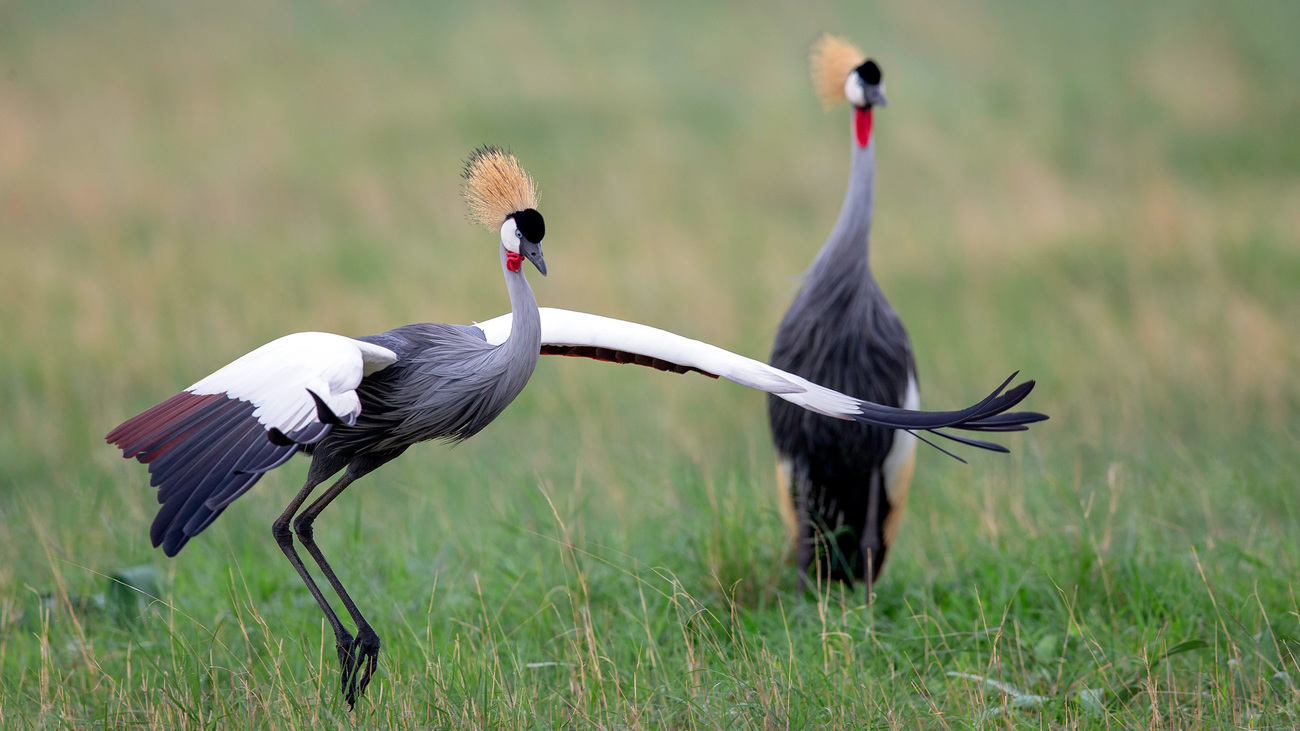
Grey crowned cranes, the national bird of Uganda, are under threat from being caught in the wild and trafficked to neighbouring countries, and from there to markets in Europe and Asia. Photo: Prof Rudi van Aarde / © CERU
Wildlife trafficking is evolving
Wildlife trafficking in East Africa is no longer focused only on elephants and rhinos. Criminal networks are increasingly targeting smaller species, including birds, reptiles, and primates, driven largely by demand from the international pet trade.
African grey parrots, grey crowned cranes, African fish eagles, and vipers are among the species being removed from the wild and transported across borders. In some cases, trafficking routes move through Uganda into South Sudan and the DRC before reaching markets in Europe and Asia.
According to Global Financial Integrity, wildlife trafficking generates up to US$23 billion annually in illicit financial flows.
International legal protections exist for many species. African grey parrots, for example, are listed under Appendix I of CITES, which prohibits international trade in wild-caught specimens. However, gaps in enforcement and regional compliance continue to be exploited by trafficking networks. South Sudan, for example, is not currently a member of CITES.
Border towns such as Ishasha and Mpondwe have become important transit points, exposing the challenges of enforcing wildlife laws across connected landscapes and international borders.
When rescued animals become evidence
As trafficking of live animals has increased, enforcement agencies have faced a different kind of challenge.
Animals are often transported in sacks or cartons and concealed inside vehicles crossing into neighbouring countries. When seizures occur, officers may have only minutes to safely secure animals that are injured, distressed, or at risk of escape.
Uganda previously lacked standardised systems for handling live wildlife seizures. Equipment was limited, training inconsistent, and confiscated animals were sometimes lost before they could be properly documented or rehabilitated.
“You lose the animals in the first five to ten minutes,” said Moses Olinga, IFAW programme manager for Uganda and the Horn of Africa. “Poor handling weakens cases and reduces the chances of conviction. It is also a mode for disease transmission, especially zoonoses.”
To address these gaps, the IFAW–INL partnership has delivered targeted training for more than 50 law enforcement personnel, including veterinary staff responsible for assessing and rehabilitating confiscated wildlife. The programme has also supplied 85 confiscation kits and specially designed cages to improve the safe handling and transport of rescued animals.
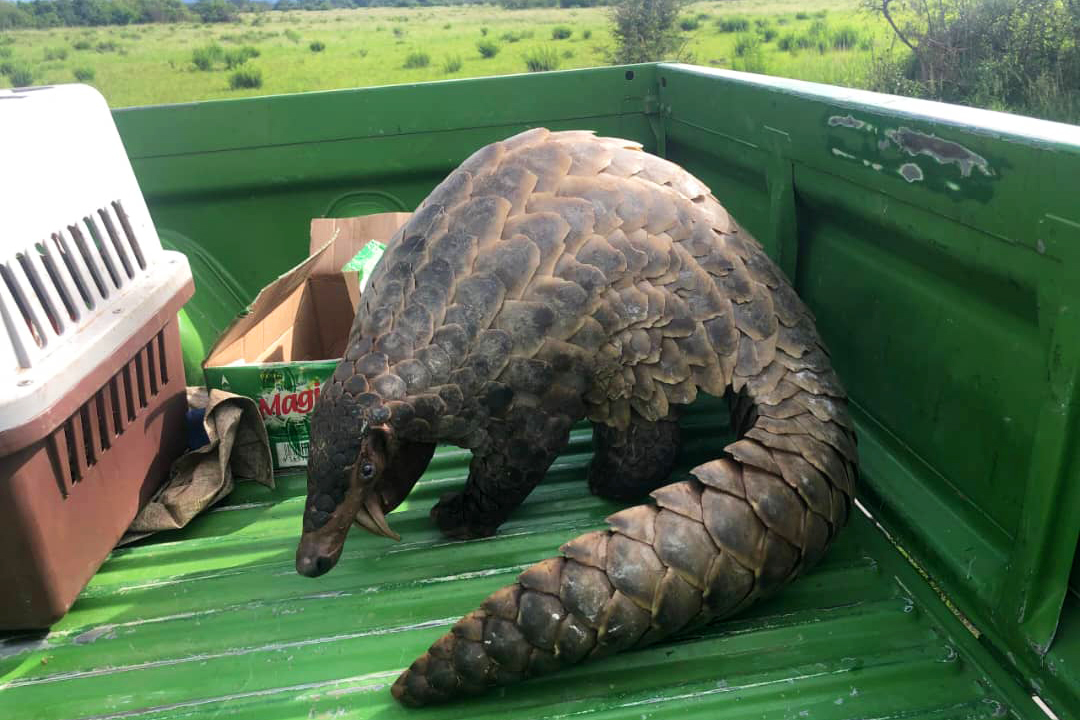
A pangolin rescued by the Uganda Wildlife Authority (UWA), with support from IFAW, being released back into Queen Elizabeth National Park. Photo: © Uganda Wildlife Authority
Strengthening the legal response
Operational improvements are now being reinforced through legal reform.
During the CARE Project, IFAW worked with partners, including Legal Atlas, to analyse gaps in Ugandan legislation related to the handling of live animals as evidence, animal welfare considerations, and the release of confiscated wildlife.
The resulting recommendations aim to strengthen the connection between enforcement, animal welfare, and prosecution so that trafficking cases are not only intercepted but successfully concluded in court.
Progress worth building on
Uganda still faces significant challenges. Porous borders, regional insecurity, and sustained international demand for wildlife continue to drive trafficking across the region.
But enforcement agencies and conservation organisations are beginning to work more closely across borders, improving coordination, strengthening prosecutions, and helping protect vulnerable species.
What is emerging in Uganda is a more connected model of conservation, one that recognises wildlife crime cannot be addressed by a single organisation or country acting alone. It also recognises that local communities must remain central to conservation efforts.
If this progress continues, Uganda could offer an important model for tackling wildlife crime across connected landscapes, protecting animals while supporting the communities that live alongside them.
Related content
Every problem has a solution, every solution needs support.
The problems we face are urgent, complicated, and resistant to change. Real solutions demand creativity, hard work, and involvement from people like you.
DonateIFAW affiliates are registered as tax-exempt nonprofit organizations in several countries. Depending on where you reside, your donation may qualify for a tax deduction or benefit. See the pull-down menu at the bottom right of this page to see how IFAW operates in your country.