Arnold Tshipa
How a 25-year partnership is protecting wildlife and communities in Zimbabwe
How a 25-year partnership is protecting wildlife and communities in Zimbabwe
Arnold Tshipa | November 9, 2026
For more than six years, IFAW and the Zimbabwe Parks and Wildlife Management Authority (ZimParks) have worked together to protect wildlife, strengthen conservation in Hwange National Park, and support the communities living alongside it. What began as a five-year partnership has grown into a 25-year commitment to conservation across Zimbabwe's Hwange–Matetsi landscape.
I grew up near Hwange National Park, where wildlife was never an abstract idea. Elephants, lions, and other animals were part of the landscape around us, as were the realities faced by communities living beside protected areas.
That experience shaped my understanding of conservation. Protecting wildlife cannot be separated from supporting the people who share the land and its resources. Nor can lasting progress be achieved through isolated projects or short-term interventions. It requires trust, shared purpose, and a willingness to stay the course.
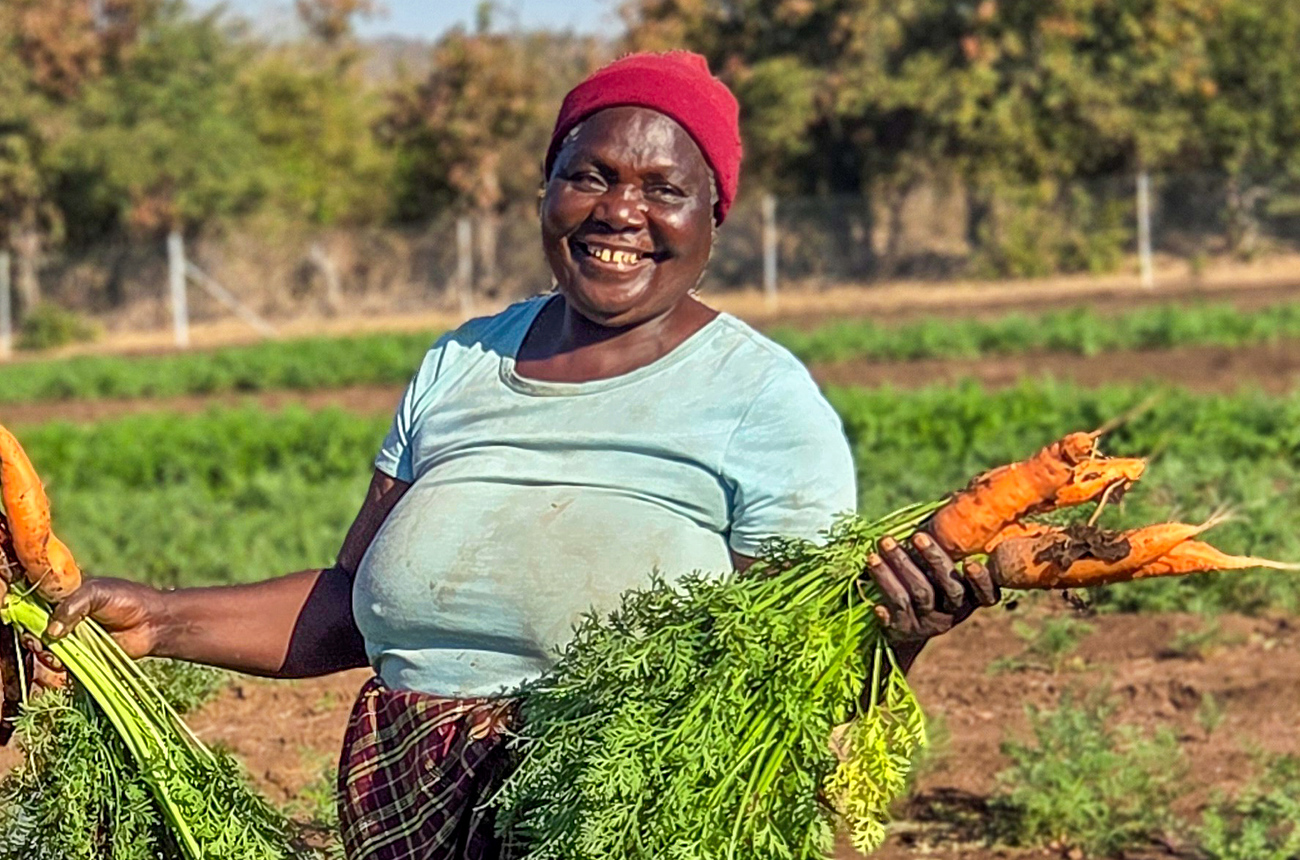
A community member harvests carrots at Isla Village 2 Community Garden in Matetsi, Zimbabwe. Photo: Caroline Gwature / © IFAW
A partnership created for lasting change
In September 2019, IFAW and ZimParks signed an initial five-year agreement focused on strengthening the protection and management of Hwange National Park and its surrounding landscape.
The ambition was never simply to fund a collection of activities. It was to help build a stronger conservation system, one capable of protecting wildlife, supporting frontline personnel, restoring habitats, improving tourism infrastructure, and creating meaningful opportunities for neighbouring communities.
The partnership began with an immediate operational need in the Makona area of southern Hwange. This remote section of the park had previously been vulnerable to wildlife crime, including the devastating cyanide poisoning of elephants and other wildlife in 2013. Building a permanent ranger presence in Makona became an early priority.
What followed was the construction of Hwange National Park’s first modern-era ranger station, including an operations centre, offices, staff accommodation, and facilities for rangers and their families. Today, Makona provides a permanent base from which rangers can patrol this vast area, protect wildlife, and respond more rapidly to human-wildlife conflict affecting nearby communities.
When COVID-19 placed extraordinary pressure on conservation operations, the partnership adapted. Support for ranger welfare helped ensure that those responsible for protecting Hwange could remain at their posts during a period of profound uncertainty.
This ability to respond to immediate needs while keeping sight of long-term goals has become one of the defining strengths of the partnership.
Restoring the foundations of conservation
Effective conservation depends on several factors. Rangers need roads, vehicles, communications systems and safe places to live. Wildlife need water and connected habitats. Visitors need secure, welcoming facilities. Communities need to see meaningful improvements in their own lives.
Over the years, the IFAW–ZimParks partnership has invested across all these areas. We’ve helped rehabilitate patrol roads, allowing teams to reach previously inaccessible sections of the park. We’ve helped secure 15 vehicles to support operations, investigations, and veterinary services.
At Nyamandlovu Pan, we supported restoration work that increased the water-holding capacity to the equivalent of more than four Olympic swimming pools. The return of hippos offered a visible reminder that when habitats recover, wildlife responds.
Together, we’ve strengthened infrastructure across the landscape. This includes ranger accommodations commissioned at Makona and Matetsi Unit 5 and an operations room at Hwange Main Camp built to improve coordination and decision-making.
We’ve also invested in tourism facilities, including Mandavu Picnic Site, Main Camp accommodation, and the new one-stop access pavilion. Tourism cannot be separate from conservation. When well-managed, it generates revenue, creates jobs, and garners wider public support for protecting wildlife long-term.
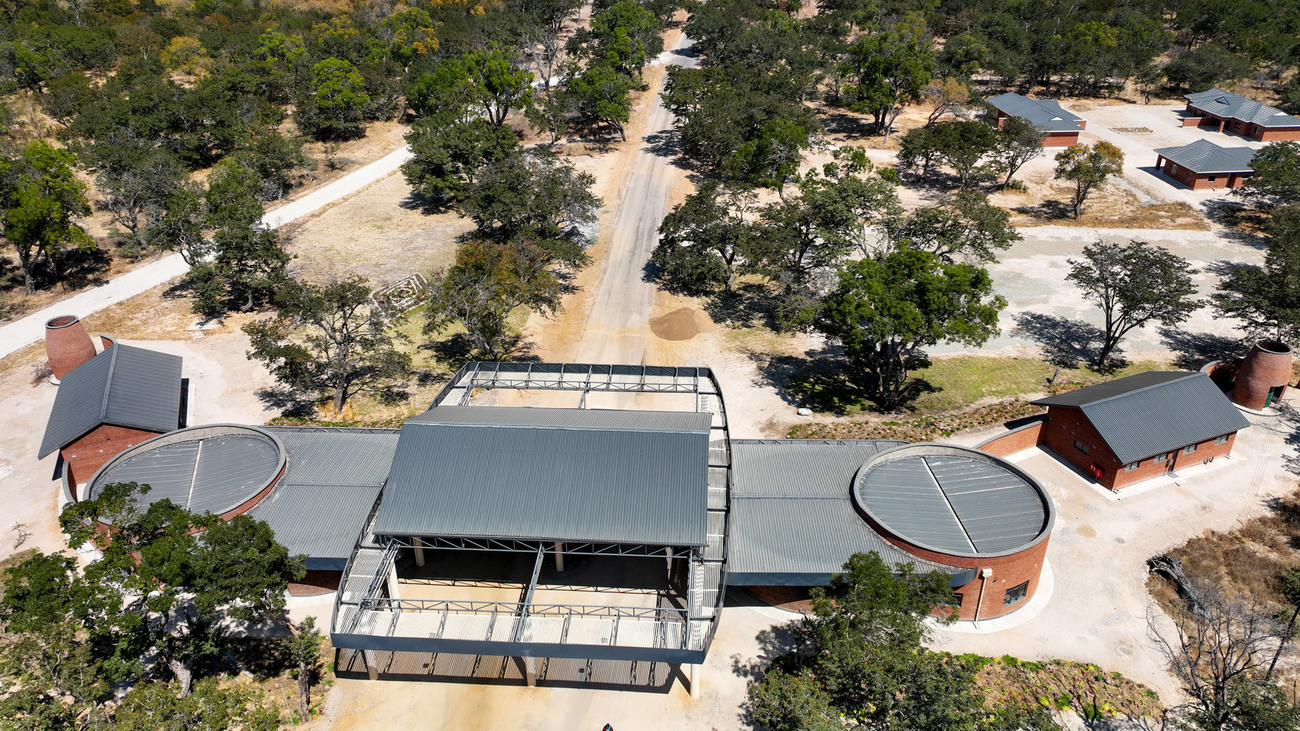
The completed tourism complex at Hwange National Park’s main entrance, developed with support from IFAW and ZimParks. Photo: Augustine Gomba / © IFAW
Science that guides action
As conservation pressures increase, good intentions are not enough. We must support decisions with scientific evidence.
Through the partnership, we’ve fitted elephants with GPS satellite collars, while equipping conservation teams with EarthRanger technology to monitor animal movements and potential conflict risks.
Data from EarthRanger helps us understand where elephants travel, which water sources they depend on, where they move beyond protected areas, and where their routes intersect with farms and settlements. This is particularly important as drought, habitat fragmentation, and human development place growing pressure on both wildlife and people.
The better we understand animal movement, the better we can identify important corridors, support early-warning systems, and direct limited conservation resources to the places where they are most needed. Science allows us to move from reacting to problems after they occur towards anticipating risks and planning more effectively.
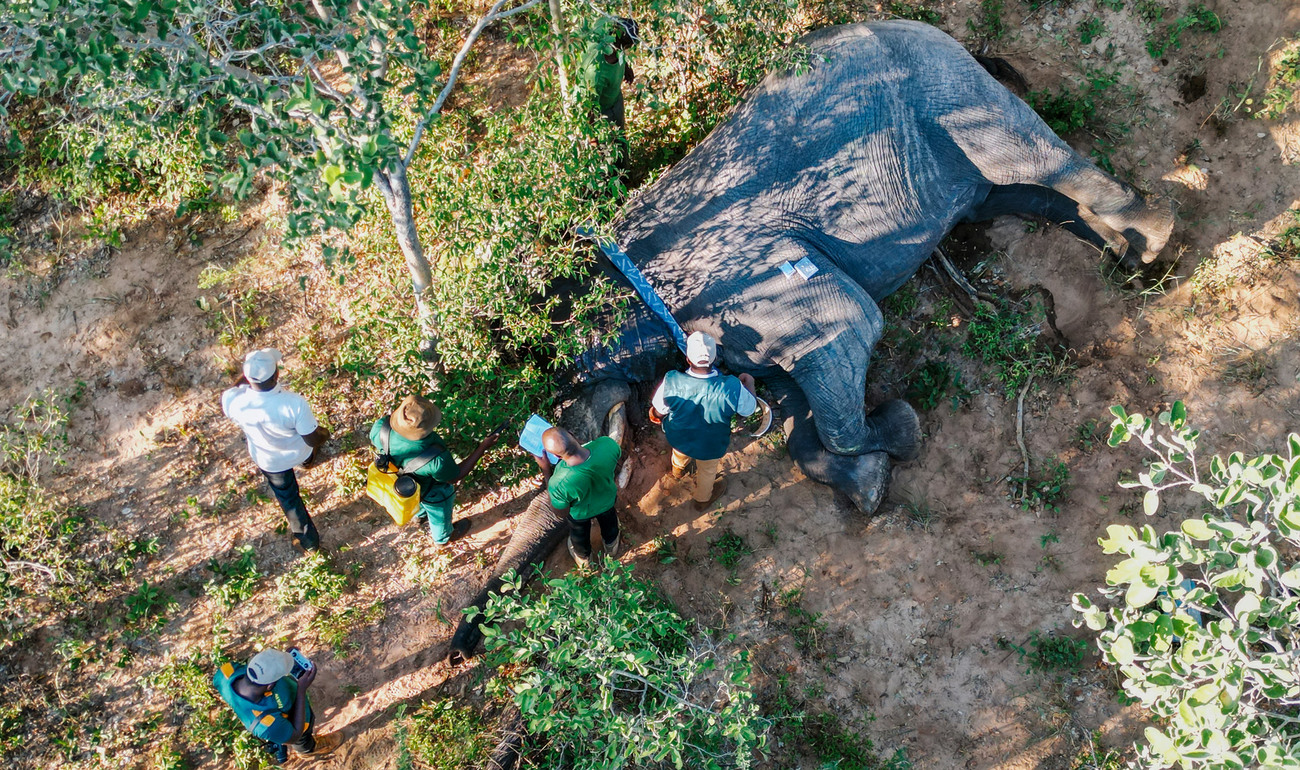
Collaring an elephant in Hwange National Park, Zimbabwe. Photo: © ZimParks
Conservation that works for communities
The long-term future of Hwange cannot be secured without the people living around it.
Communities neighbouring protected areas often carry the greatest costs of conservation. They may lose crops or farm animals to wildlife, face personal safety risks, and contend with limited access to employment, water, and public services. A successful conservation partnership must recognise those realities.
Through the IFAW–ZimParks partnership, we’ve helped distribute thousands of school textbooks, support hundreds of students with tuition fees, and provide bicycles to help students travel more safely through areas used by wildlife. We’ve supported communities to construct boreholes to improve access to water and predator-proof bomas to protect cattle from lions and other carnivores. Primary response teams, well-equipped thanks to this partnership, are strengthening local capacity to respond to human-wildlife conflict.
Together, we enable community gardens to support food security, income generation, and climate resilience. Renovations we supported at Dete Old People’s Home have improved living conditions for elderly residents.
These initiatives are not secondary to conservation. They are fundamental to it. When people have access to water, education, food and sustainable income, they are better positioned to participate in conservation and less likely to depend on activities that degrade habitats or threaten wildlife. Conservation thrives when we treat communities not as passive beneficiaries, but as decision-makers, custodians, and essential partners.
From five years to a generation
In 2023, IFAW and ZimParks renewed and expanded their commitment through a landmark 25-year conservation agreement, with an expected investment of approximately US$50 million.
The length of that agreement matters. Ecosystems do not recover according to short funding cycles. Elephant corridors cannot be secured in a single project year. Strong institutions, trusted community relationships, and effective conservation systems take time to build.
A 25-year horizon allows us to think across generations rather than reporting periods. It provides the opportunity to consolidate progress in Hwange National Park, strengthen the Matetsi–Zambezi landscape, and scale community-based approaches that support coexistence. It also allows us to plan for a future in which climate change, population growth, and infrastructure development will continue reshaping the relationship between people, wildlife, and land.
A living example of Room to Roam
The Hwange–Matetsi–Zambezi landscape is an important part of IFAW’s Room to Roam initiative—an ambitious vision to secure and reconnect landscapes across East and southern Africa for elephants and other wildlife.
Hwange does not exist in isolation—it forms part of the Kavango-Zambezi Transfrontier Conservation Area, where wildlife moves across vast landscapes and national borders. Matetsi provides a critical connection between Hwange, the Zambezi River, and neighbouring ecosystems, including routes used by elephants moving towards Botswana.
The IFAW–ZimParks partnership responds to the needs of wildlife and communities together: protecting habitats, strengthening management, using science to understand movement, and investing in the people who share the landscape.
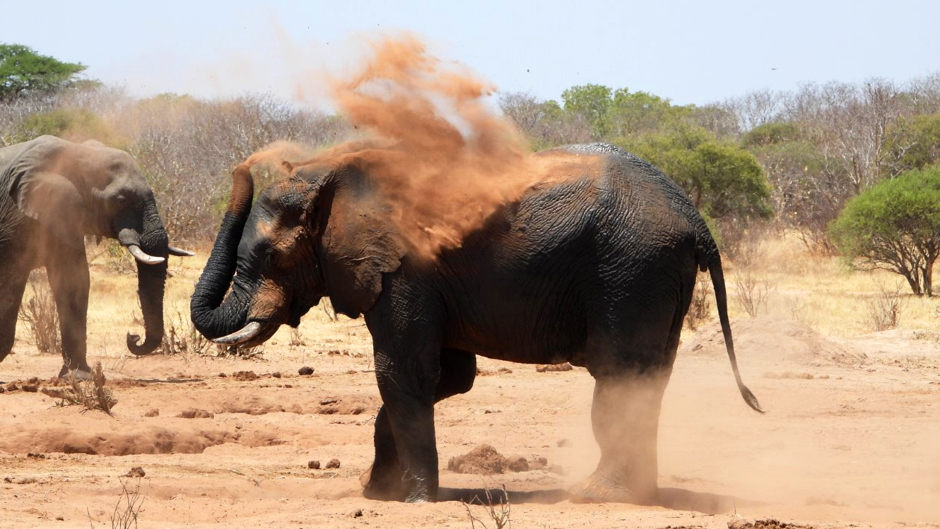
An elephant showers itself with red Hwange dust, a daily ritual that cools the skin, protects against insects and reflects the freedom of life in a healthy ecosystem. Photo: Arnold Tshipa / © IFAW
A model for the future
Conservation takes place in complex social, economic, and ecological environments, and progress is rarely linear. Our partnership provides a foundation for navigating these challenges together.
Government leadership provides mandate, national ownership, and conservation expertise. IFAW contributes technical support, investment, and global experience in conservation and animal welfare. Rangers bring frontline knowledge, scientists generate evidence, and communities contribute lived experience and local stewardship. Donors and private-sector partners provide resources that allow promising approaches to grow.
Together, we work to a shared vision: Greater Hwange as a connected, well-protected landscape where elephants can move freely, ecosystems can flourish and communities can build secure and resilient futures.
For me, this is what successful conservation looks like—a ranger able to return home safely after patrol. A child travelling to school with greater confidence. A family protecting its livestock without harming predators. Water returning to a restored pan. An elephant moving through a corridor that remains open because people acted before it was too late.
We work together not only for the next project, but for the next generation. The work is far from finished, but we have a strong foundation, a clear direction, and a partnership built to last.
Related content
Press releases
African traditional leaders sign landmark declaration to protect wildlife and communities
Read morePress releases
African traditional leaders unite to strengthen wildlife conservation
Read morePress releases
Malawi and IFAW renew partnership to protect wildlife and support communities
Read moreOur work can’t get done without you. Please give what you can to help animals thrive.