Policy Conventions & Agreements - Global
Protection for wildlife & habitats is preserved in global agreementsTwo-toed sloths granted international trade protections
Two-toed sloths granted international trade protections
3 December 2025
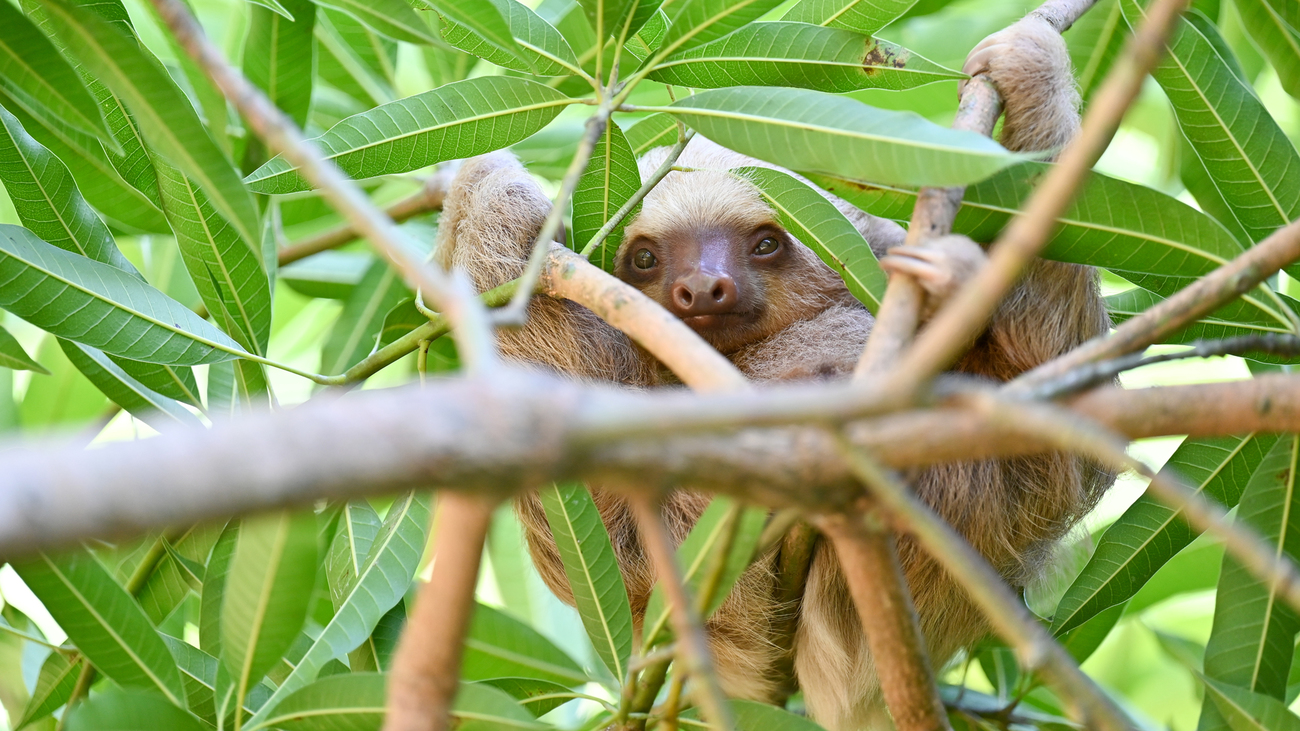
A Hoffmann’s two-toed sloth, an emblematic species impacted by habitat loss and the illegal wildlife trade. Photo: Sam Trull / © The Sloth Institute
Two species of sloths—Linnaeus's and Hoffman’s sloths which are increasingly exported as pets and for the tourist trade, have been granted international protections at a UN conference.
Sloths are increasingly being taken from their natural habitats and sold either into the exotic pet trade or displayed in roadside “sloth encounter” attractions, particularly in the United States. Conservationists warn that the numbers being removed from the wild put sloth populations on a dangerous trajectory, with today’s decision welcomed by experts from the International Fund for Animal Welfare (IFAW).
While two-toed sloths are currently considered as ‘least concern’ at a global level, the Hoffman’s sloth is classified as ‘threatened’ or ‘endangered’ in parts of their habitat ranges. Linnaeus's sloths are not currently threatened but their close resemblance to Hoffman’s sloths makes it difficult for authorities to distinguish between the species in trade without a DNA test. As a result, Linnaeus’s sloths have been listed as a “look-alike species” to strengthen enforcement.
Linnaeus's sloths have also seen a steep rise in imports to the USA, one of the few countries in the world that tracks imports of non-CITES listed species. In 2012, 59 individuals were imported, and by 2023, this number had almost tripled to 160. The new Appendix II listing will provide essential data on the scale and nature of their exploitation across the globe.
Sloths reproduce slowly, with long gestation periods and usually produce only one offspring at a time. They are particularly vulnerable to shifts in their environment because they cannot regulate their own body temperature, and in captivity they often suffer from disease and high mortality rates. It is estimated that only 10 % of all sloths taken from the wild manage to survive, while the remaining 90 % die while being hunted or during transport. Combined with ongoing habitat loss, unregulated trade could push some populations toward rapid decline.
To regulate the trade and slow their decline, they were granted Appendix II protections today at the 20th Conference of the Parties (CoP20) of the Convention on International Trade in Endangered Species of Wild Fauna and Flora (CITES).
“These listings are not just about paperwork—they’re about preventing suffering and stopping a silent decline” Joaquin de la Torre Ponce, Regional Representative—Latin America at IFAW, said. “We need to better understand what’s happening to these animals before it’s too late, so this listing offers a critical layer of protection.”
IFAW supported the proposal and emphasises that wildlife interaction and pet-keeping trends are a significant driver of demand. Reducing that demand is key to protecting sloths in the wild.
Joaquin de la Torre Ponce said “Sloths may appear calm in captivity, but behind every ‘cute’ selfie is a wild animal ripped from the forest. There is untold harm caused by holding, touching, or buying wild animals such as sloths as pets, and what might seem like an innocent interaction, can quickly escalate into a conservation crisis.”
“If more people were aware of the damage they were inflicting on wild animals, the more people could turn their back on this harmful trade. And when demand falls, so does the incentive to steal these animals from the wild,” de la Torre Ponce added.
The proposals for Appendix II protections were spearheaded by Brazil (lead) and supported by Costa Rica and Panama. The proposal was passed by consensus.
CITES CoP20 opened in Samarkand, Uzbekistan on November 24th and runs until December 5th. All decisions taken during the Conference need to be endorsed by the final plenary session at the end of the Conference and will take effect 90 days after the Conference ends.
ENDS
Notes to editors:
CITES sloth factsheet submitted as an official party document by the government of Brazil.
Press contacts:
Dominica Mack dmack@ifaw.org / +61 460 432 901
Kirsty Warren kwarren@ifaw.org / +44 (0) 7809269747
Related content
Our work can’t get done without you. Please give what you can to help animals thrive.