Disaster Response
IFAW responds to bushfires and floods in Australia
IFAW responds to bushfires and floods in Australia
9 February 2026
Impacted wildlife continue to receive lifesaving care as threat eases
9 February 2026
Our partners at Southern Koala and Echidna Rescue continue to treat several koalas suffering from heat stress due to the extreme heat wave in South Australia.
The veterinary clinic and rehabilitation facility at one point had more than 20 koalas in care.
IFAW provided the team with vital veterinary equipment to help treat the influx of animals.
Save Our Wildlife Foundation Inc (SOWFI) in South Australia is also dealing with a surge of animals – with 177 heat stressed animals in care. IFAW has provided emergency funds to support the team’s rescue and rehabilitation efforts.
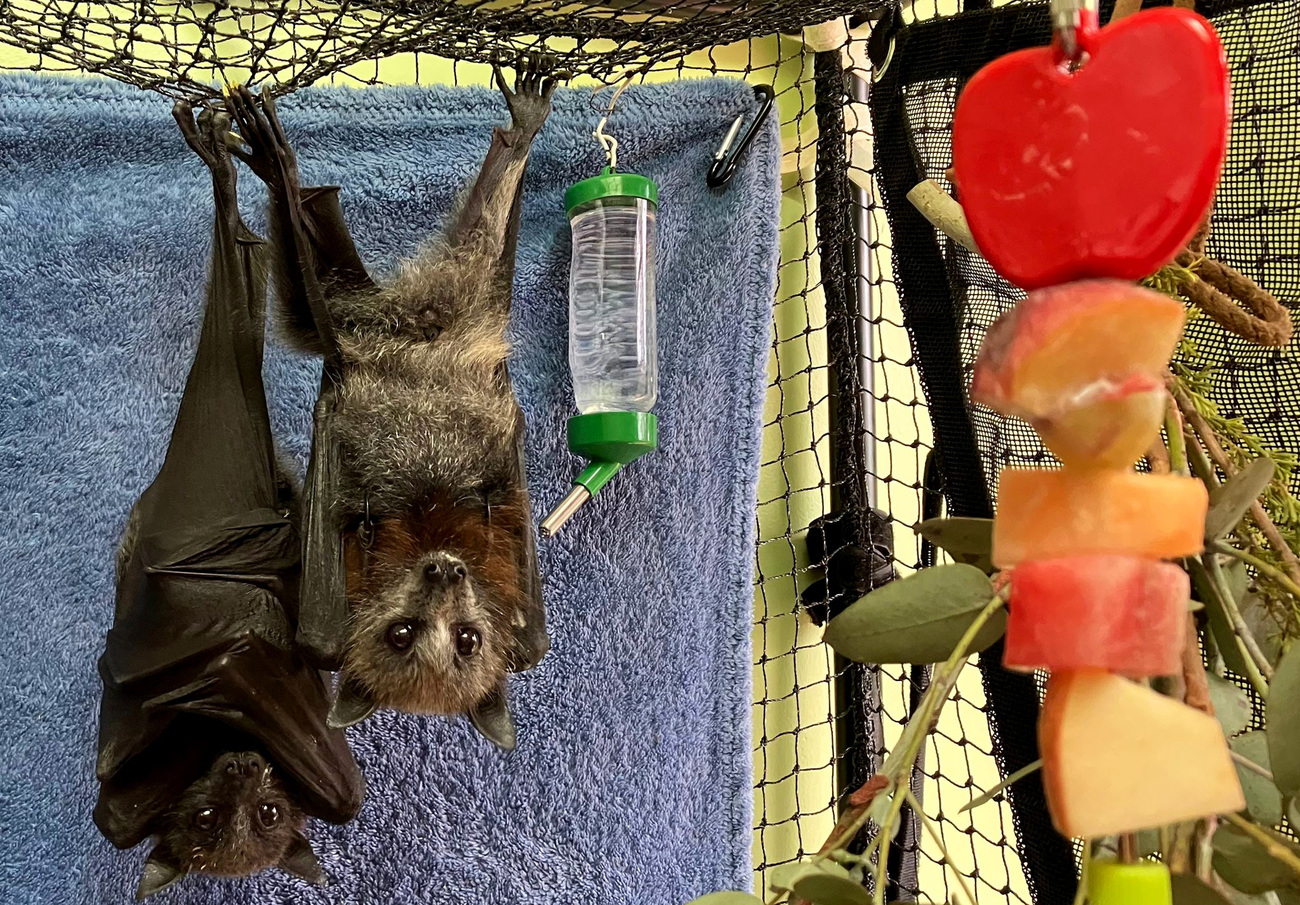
Robbie and Jana, two of the flying fox pups rescued during an extreme heatwave in Cowra NSW in January 2026. Photo: Cathy Watson / © ACT Wildlife
In New South Wales, two of the flying fox pups rescued by the expert team on the ground in Cowra, are doing well under the care of ACT Wildlife.
The pups, one of which is named Robbie after IFAW’s own Robert Leach and another named Jana after the onsite veterinarian, are slowly gaining weight and recovering. They will spend a long time in care until they’re old enough to be released back into the wild.
IFAW is also supporting Bouddi Wildlife Flying Fox facility which is caring for 17 of the rescued flying fox pups. They all arrived in care in a severely compromised state, with poor body condition and dehydration. However, due to their rapid rescue and transfer to expert carers, they are now gaining weight and doing well.
In an update to IFAW, Bouddi Wildlife Flying Fox facility said:
“The cost to support a flying fox pup from admission through to release and successful reintegration into colony life is considerable. It includes intensive and crèche care, daily fruit provision, and specialised flying fox protein supplementation until independence is achieved. We would like to sincerely acknowledge and thank IFAW for the pivotal role your organisation played in responding to this event and supporting the rescue and triage of affected animals under exceptionally challenging conditions.”
As Australia continues to feel the impacts of a changing climate, IFAW remains on standby to rescue and protect wildlife and provide its expertise and support to groups on the ground.
Threat eases for vulnerable flying foxes
30 January 2026
The flying fox colony in Cowra, New South Wales has fared better than expected during the extreme heatwave, according to IFAW’s Robert Leach.
“We were preparing for catastrophe, but we know it’s always better to be over-prepared,” he said.
Thankfully, only one additional flying fox pup needed rescuing today by the team. In total, nearly 40 flying foxes have been rescued this week and are now in the care of experienced wildlife rehabilitators across the state.
With temperatures expected to ease over the weekend, Robert and the team will begin travelling home.
Meanwhile, in South Australia, our partner Southern Koala and Echidna Rescue continues to treat heat-stressed animals, particularly koalas. IFAW is providing further support with essential supplies, including sprinklers for fire prevention and veterinary equipment to help them save more lives.
Wildlife carers across the country are now looking to the weekend, hoping for relief as temperatures begin to drop.
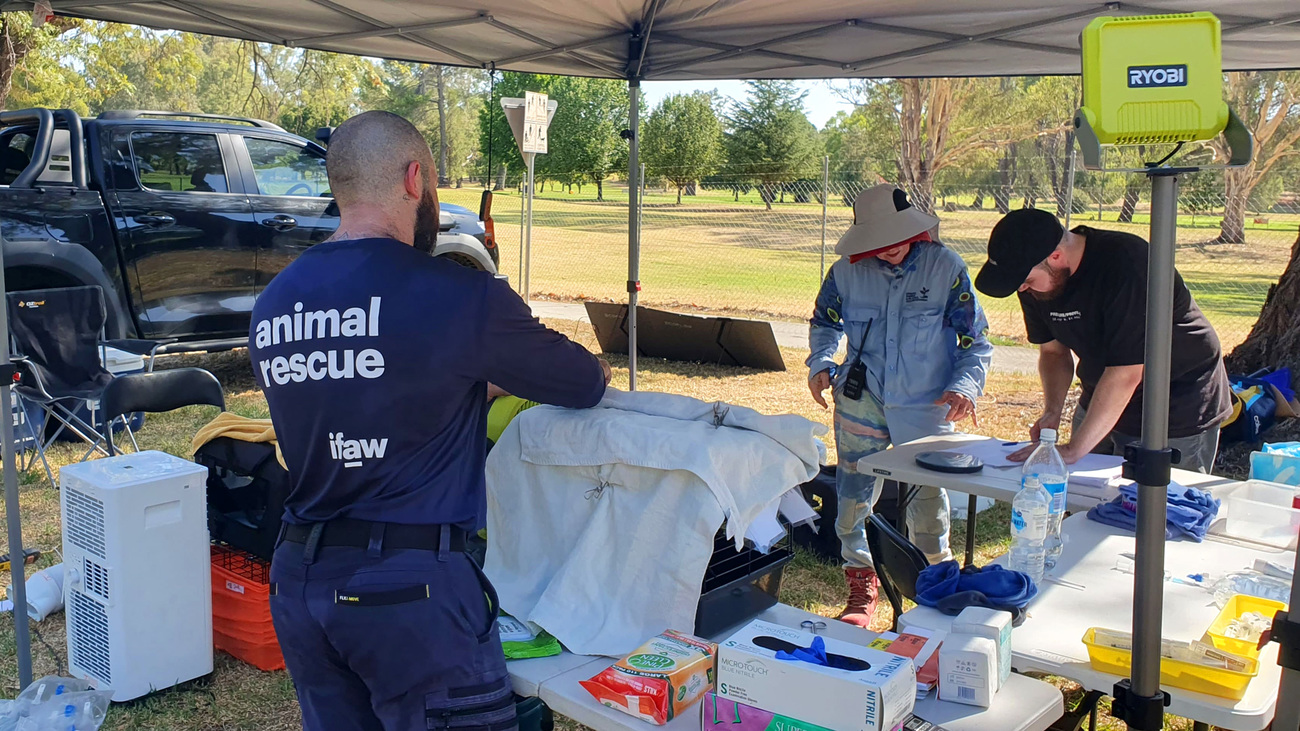
IFAW animal rescue officer Robert Leach was deployed to help coordinate the response to a flying fox heat stress event. Photo: Robert Leach / © IFAW
In Cowra, New South Wales, IFAW’s animal rescue officer Robert Leach is coordinating a response for a vulnerable flying fox colony, working closely with a team of local experts and with support from the Landcare group on logistics.
Flying foxes are highly vulnerable to extreme heat, with consecutive hot days often proving fatal. On 28 January, the team rescued another seven flying foxes, bringing the total number of rescues this week to nearly 40. All are now receiving care from experienced wildlife rehabilitators across the state.
In South Australia, partner organisation Southern Koala and Echidna Rescue continues to respond to the heat crisis, with 20 koalas currently in care due to heat stress.
Temperatures are expected to remain high until the weekend, when some relief is forecast.
On the ground as heatwave tests wildlife survival
29 January 2026
Extreme heat is sweeping across Australia, with many regions reaching historic temperature highs.
In Victoria, the towns of Hopetoun and Walpeup both hit a record-breaking 48.9°C. IFAW is supporting partner Tiny but Wild with vital supplies as they respond to a heat-stress event affecting a grey-headed flying fox colony near Melbourne.
Supporting frontline efforts as heat intensifies
27 January 2026
IFAW’s animal rescue officer Robert Leach spent two days in South Australia searching for surviving wildlife alongside partners Southern Koala and Echidna Rescue (SKER) and the Wildlife Welfare Organisation SA.
Tragically, many of the animals the team found had suffered catastrophic burns and could not be saved.
Robert also visited SKER’s onsite vet clinic, where the team had moved all the koalas inside ahead of extreme heatwave conditions over the weekend. The move enabled the team to set up sprinklers to keep the koalas cool. This type of preparation can make all the difference, both for animals and the SKER team.
With extreme temperatures forecast in other parts of the country this week, Robert is now deploying to New South Wales, where there are serious concerns over the survival of a flying fox colony.
Flying foxes are vulnerable to heat stress and often collapse from the trees due to extreme exhaustion in high temperatures. IFAW is joining a team of experts on the ground to help rescue as many as possible.
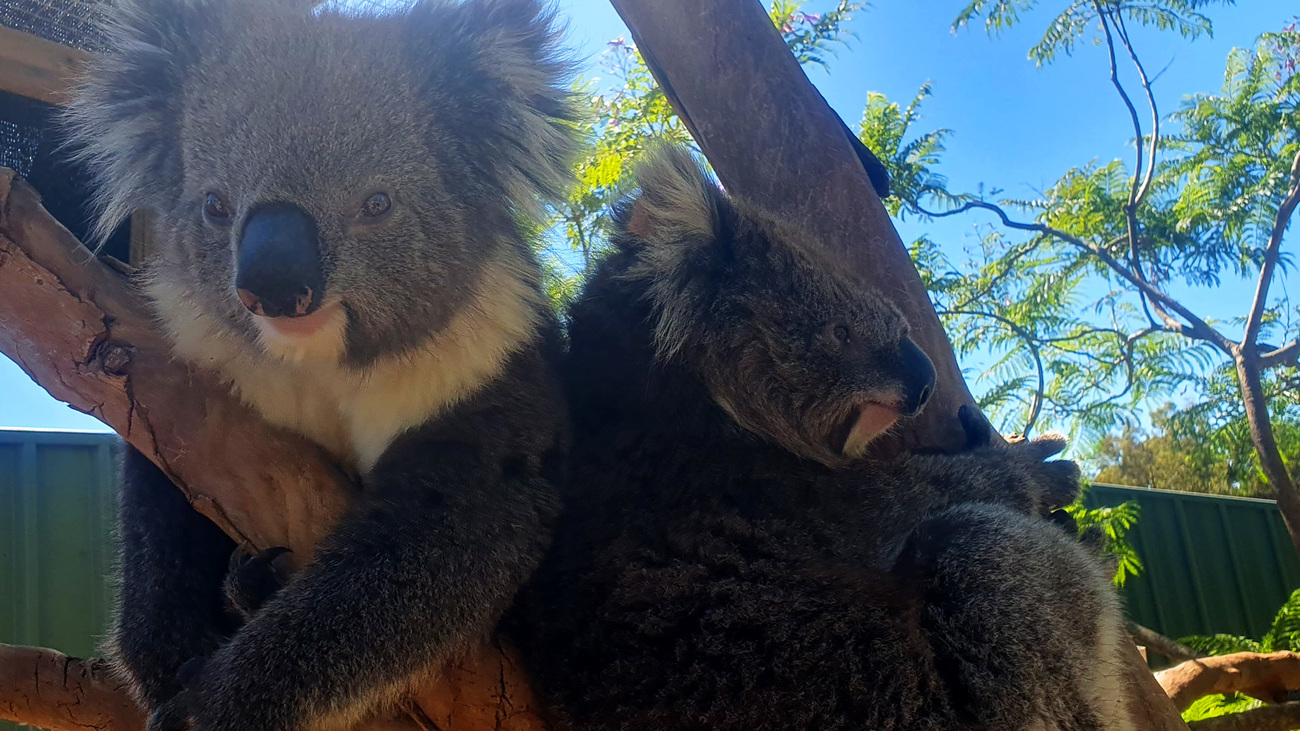
Violet and Crumble, two koalas, being rehabilitated by our partners Southern Koala and Echidna Rescue in South Australia. Photo: Robert Leach / © IFAW
Searching for survivors amid the devastation
22 January 2026
IFAW’s animal rescue officer Robert Leach joined partners Southern Koala and Echidna Rescue and the Wildlife Welfare Organisation SA in the fire-affected areas of South Australia, searching for any signs of surviving wildlife.
Formally integrated into the incident response, the team participated in the morning fire crew briefing before heading out into the field.
Robert described large sections of the landscape as “completely incinerated,” though scattered pockets of unburnt refuge and small water bodies remained.
Tragically, many of the animals the team found had sustained catastrophic burns and could not be saved.
The team is scheduled to return for another search on Friday, ahead of worsening conditions with high temperatures and strong winds forecast.
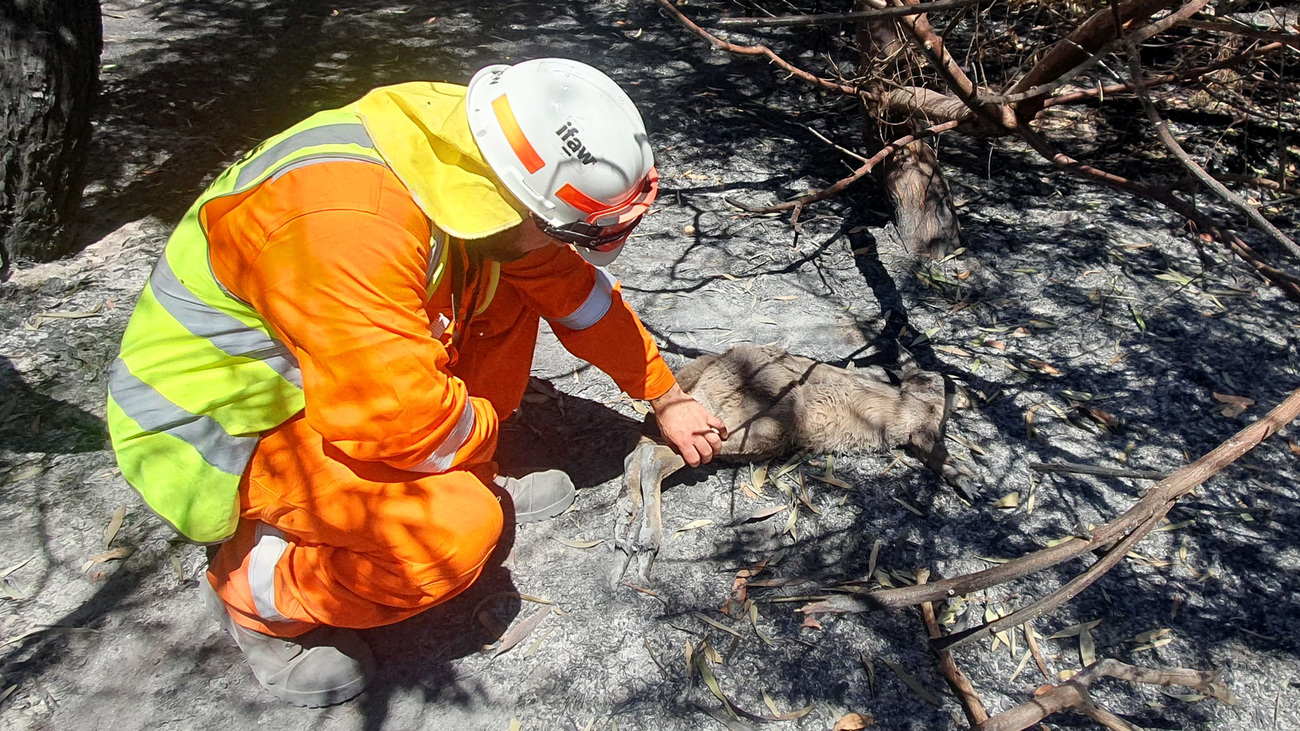
IFAW animal rescue officer Robert Leach with a kangaroo burnt in the fire at Tooperang in South Australia. Photo: © IFAW
IFAW responds as South Australian wildlife faces new bushfire impacts
21 January 2026
IFAW is now deploying to South Australia to support our long-standing partners Southern Koala and Echidna Rescue (SKER) after a bushfire swept through an area known to be home to koalas, kangaroos, possums and native birds. The fire has added to the extreme heat pressures already facing wildlife across the region.
IFAW’s animal rescue officer Robert Leach is on the ground as the team conducts a black walk—a systematic search for surviving wildlife in need of urgent care. The operation has state government and local fire authority approval.
Trained SKER rescuers and a veterinarian have already begun assessing the fireground. In an initial survey on 21 January, the team found a burnt koala drinking from a dam, though they were unable to rescue it at that time. Additional animals with burns are believed to be in the area.
IFAW has supported SKER with critical supplies, equipment, and wildlife search and rescue training. Earlier in January, we provided essential supplies to help SKER rescue and treat animals suffering from extreme heat. According to SKER director Mish Simpson, that recent training gave her team the confidence and capability to undertake the black walk now.
With temperatures expected to rise again this weekend, the team has a narrow window to find and assist animal survivors. “If anything was injured in this fire, I don’t think it would be able to cope in the heat again. We are hoping to find some life,” Mish said. “The support from IFAW has been hugely helpful so we can scale up our efforts if we need.”
Temperatures are expected to soar once again over the coming week in South Australia, New South Wales, and Victoria. IFAW remains on standby to provide additional support where it’s needed most.
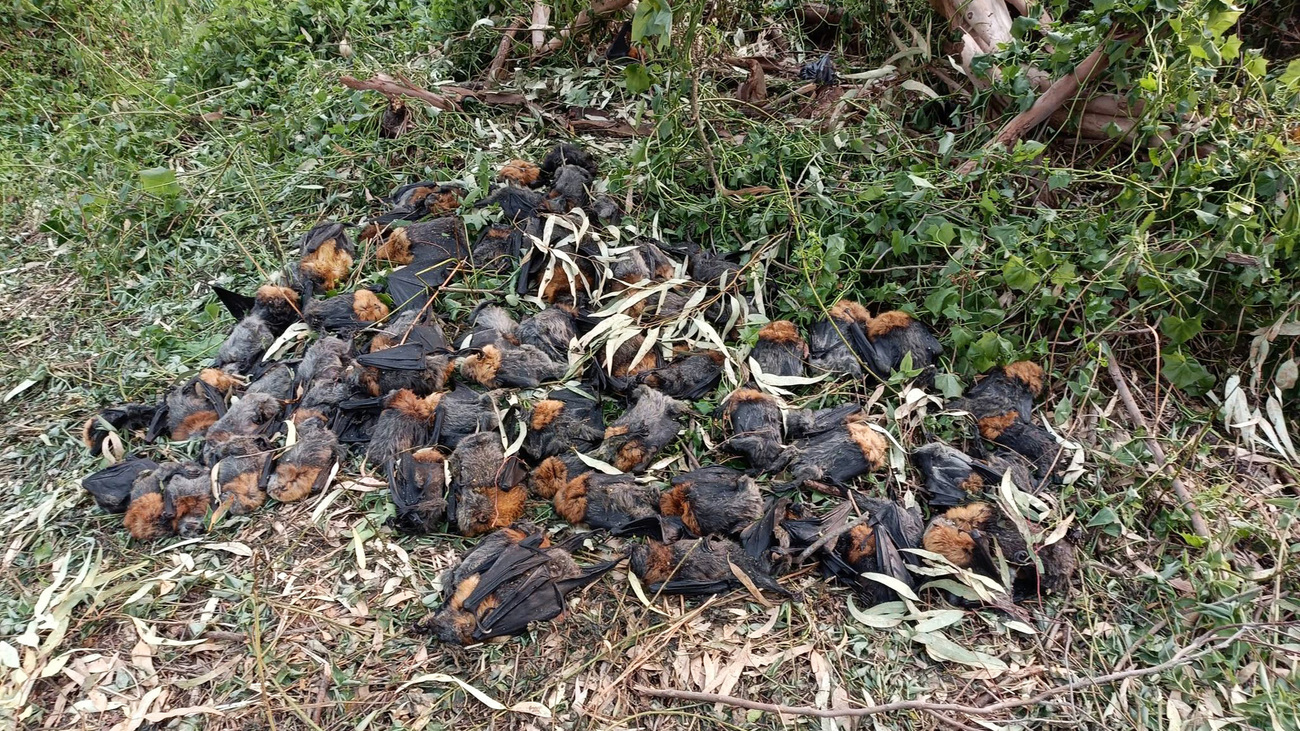
Flying fox mass deaths in heat stress event in Victoria, Australia Photo: © Fly By Night Bats
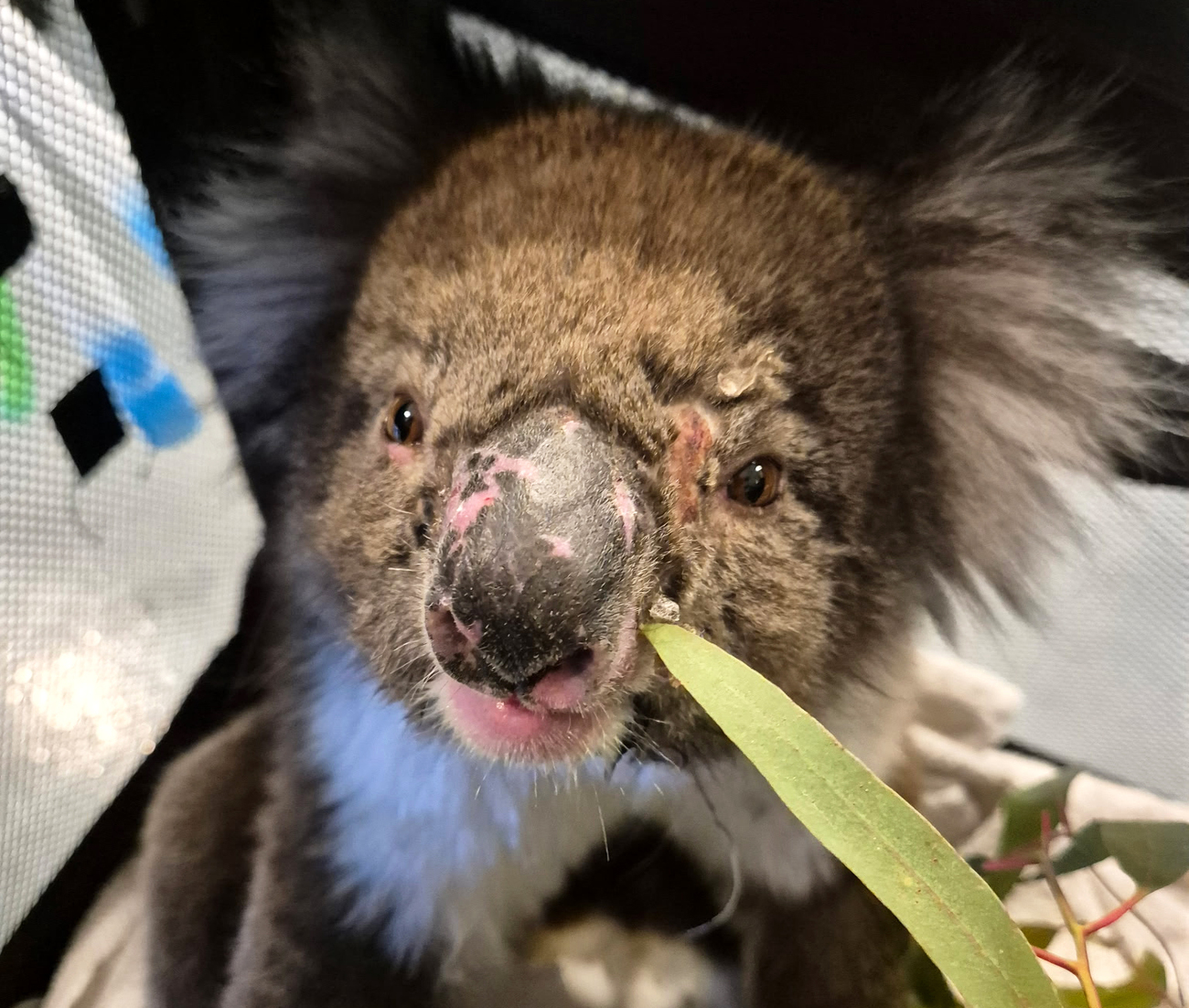
Wildlife caught between bushfires and floods in Australia
14 January 2026
Australia is currently facing two sides of a worsening climate crisis. While the north is being inundated by record breaking floods, and an ex-tropical cyclone, the south is being ravaged by devastating bushfires. The consequences are far-reaching—not only for people, but also for the many animals that depend on fragile habitats.
Conditions are still changing, and wildlife responders across Australia continue to need help as this situation unfolds.
Carers across Australia are telling us that this summer has been "chaotic" with barely any respite from multiple back-to-back extreme weather events and an inundation of wildlife needing care.
Extreme heat takes a heavy toll
Parts of Australia endured the longest spell of extreme heat and catastrophic fire danger since the 2019–20 Black Summer fires. Temperatures above 40°C have moved across South Australia, Victoria, New South Wales and Western Australia, increasing fire risk and taking a heavy toll on wildlife.
Extreme heat is proving deadly for wildlife—particularly for species already under pressure.
Read more >>
Related content
Every problem has a solution, every solution needs support.
The problems we face are urgent, complicated and resistant to change. Real solutions demand creativity, hard work and involvement from people like you.