CARE – Brazil, Guyana, Congo, and Uganda
Empowering frontline officers to rescue animals from wildlife traffickingSaving trafficked wildlife through legal analysis and reform
Saving trafficked wildlife through legal analysis and reform
August 4, 2026
By Murilo Pratezi, Programme Officer, IFAW
When a wild animal is rescued from wildlife traffickers, every decision that follows matters.
From the moment an animal is confiscated, authorities must quickly determine how it will be transported, cared for, and, where possible, rehabilitated and returned to the wild. Those decisions can mean the difference between life and death, while also helping preserve vital evidence needed to bring traffickers to justice. That's why strong laws, clear procedures, and well-trained responders are essential to successful wildlife rescues.
Between 1999 and 2018, authorities seized more than 180,000 trafficked wild animals across 149 countries, according to the United Nations Office on Drugs and Crime (UNODC). Yet, despite these successful interceptions, many animals do not survive the days and weeks that follow. Injuries, dehydration, stress, and inadequate care after confiscation can all take a devastating toll.
Frontline officers may have mere minutes to save wild animals confiscated from traffickers before they lose the very animals they are trying to protect. While officers may be professionally trained in various matters of illegal trafficking, the sudden care for live wildlife is often overlooked.
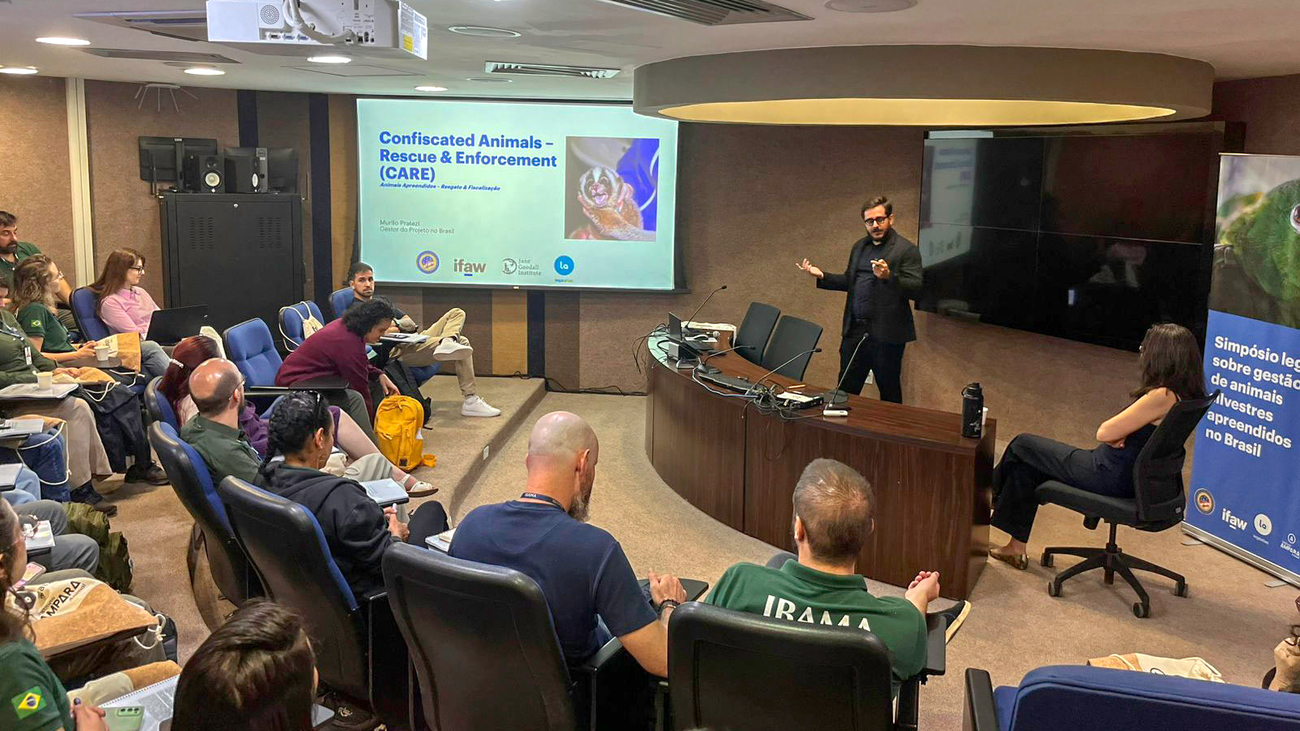
IFAW presents the findings of the legal gap analysis conducted under the CARE project to Brazilian authorities at a legal symposium held in Brazil in 2026. Photo: © IFAW
Best practices help improve care for animals in custody
Often, countries lack standardized procedures that enable their law enforcement agencies to safely handle and care for confiscated wildlife while simultaneously preserving live evidence for prosecutions.
This is where the International Legal Best Practices for the Custodial Management of Trafficked Live Wild Animals (ILBP) come in.
Developed by IFAW in collaboration with Legal Atlas, the ILBP consist of a set of legal guidelines developed to support governments and law enforcement agencies in the proper care and management of live wild animals confiscated from traffickers. They establish guidelines for government agencies managing confiscated wildlife throughout the various stages of custody, providing standards for care, transportation, and disposition of animals, as well as institutional governance, and procedures related to investigations and judicial processes.
The ILBP bring together legal and institutional principles based on international experience, with the goal of strengthening regulatory frameworks and ensuring more effective, coordinated, and humane responses following wildlife seizures.
The guidelines are informed by international recommendations from the Convention on International Trade in Endangered Species of Wild Fauna and Flora (CITES) and the International Union for Conservation of Nature (IUCN), in addition to contributions from experts in environmental law, conservation, and animal welfare.
Crucially, countries are now supported in identifying and addressing gaps in their laws and regulations with the aim of improving outcomes for seized wildlife and improving the outcomes of prosecutions of the trafficking.
What is legal gap analysis, and how does this help animals?
One of the most effective ways to improve outcomes for confiscated wildlife is surprisingly simple: compare what a country's laws say with what international best practices recommend.
This process, known as a legal gap analysis, identifies where laws already protect rescued animals well, where important safeguards are missing, and where reforms could help authorities respond more effectively. The goal isn't simply to strengthen legislation. It's to ensure that rescued animals receive appropriate care, evidence is preserved for prosecutions, and wildlife has the best possible chance of recovery and release.
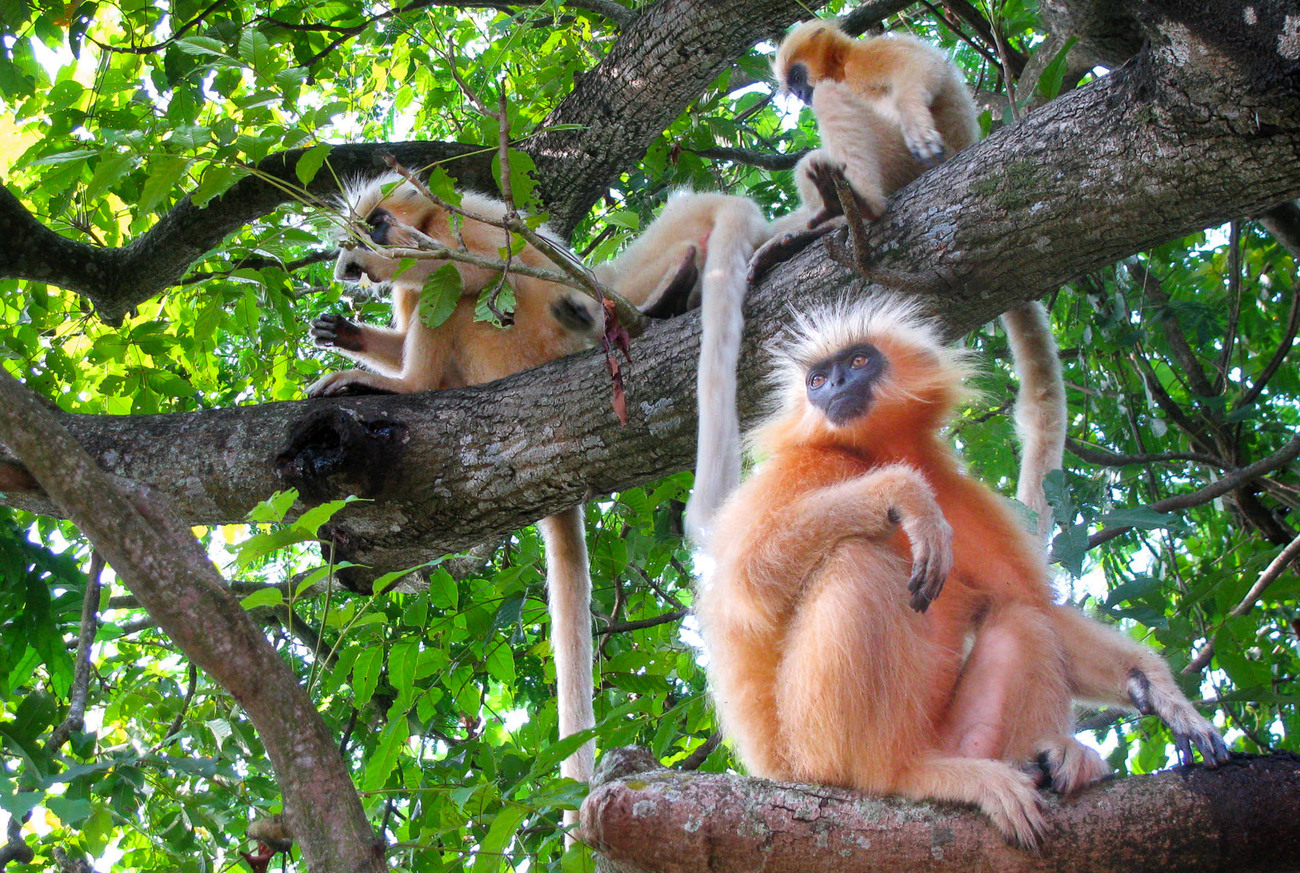
Golden langurs are endangered and found only in a small region of India and Bhutan, where habitat loss and fragmentation, alongside threats such as wildlife trafficking, put their survival at risk. Photo: © IFAW
Putting theory into practice
During the CARE Project, several countries—Brazil, Congo, Guyana, and Uganda—conducted a legal gap analysis with IFAW and Legal Atlas’ support.
Brazil demonstrates what's possible. Working alongside Legal Atlas and Brazilian authorities, IFAW reviewed 42 laws, regulations, and decrees governing wildlife confiscation.
The analysis found that Brazil already has several areas of strong practice while also identifying opportunities to strengthen protections further. When the findings were shared with wildlife authorities during a national symposium in March 2026, they sparked constructive discussions about future reforms and generated strong interest in continuing the work.
That's exactly what legal gap analysis is designed to do—not criticize existing systems but help governments build on what's already working.
Every successful wildlife rescue should end with an animal on the path to recovery, not facing new risks because systems aren't equipped to protect it. By helping governments strengthen the laws and procedures that guide wildlife confiscations, IFAW is making sure that rescue doesn’t stop when traffickers are arrested. It continues through every stage of care, giving more animals the chance to heal, return to the wild where possible, and play their role in healthy ecosystems once again.
These best practices were developed by IFAW in collaboration with Legal Atlas through the Confiscated Animals Rescue & Enforcement (CARE) project—a global project aimed at assisting frontline officers in the humane and safe handling of confiscated animals. This project was made possible thanks to the support of the US Department of State Bureau of International Narcotics and Law Enforcement Affairs.
Related content
Our work can’t get done without you. Please give what you can to help animals thrive.