Centre for Wildlife Rehabilitation and Conservation - India
Every year, animals in Kaziranga National Park are caught in severe floods, orphaned, and separated from their herdsRescuing wildlife against all odds
Rescuing wildlife against all odds
March 16, 2026
Veterinarians, biologists and keepers around the world devote their lives to saving vulnerable wildlife. The outcome is often uncertain, but the commitment never wavers.
Wildlife rescue is often told through its happiest endings. The moment an animal returns to the wild. The first steps out of a transport crate. The triumphant images that remind us why this work matters.
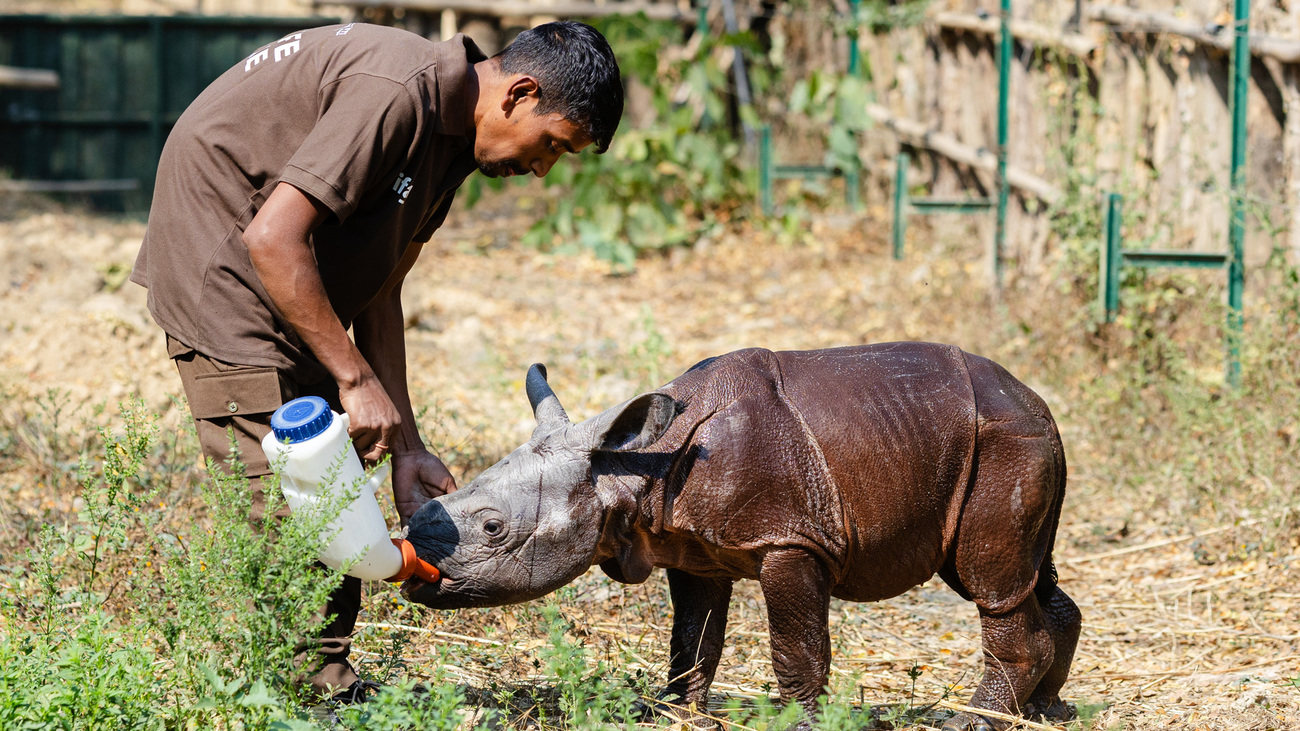
The young calf was bottle-fed a specially prepared milk formula, custom-designed in India, to approximate the nutritional profile of rhino milk. Photo: Stacey Hedman / © IFAW
But rescue work holds another reality, too. One that is quieter, more complicated, and deeply human.
Recently, our team at the Centre for Wildlife Rehabilitation and Conservation (CWRC) in Assam, India, faced that reality with a young rhino calf whose life began with extraordinary fragility.
A fragile beginning
In January, forest staff in Kaziranga National Park found the calf alone in tall grass, only a few days old. With no mother in sight and no way to survive alone, the calf was brought to CWRC, a joint initiative of the Assam Forest Department, the Wildlife Trust of India (WTI), and IFAW.
The centre exists for moments like this. Each year, animals across Kaziranga are separated from their mothers due to flooding, habitat pressures, or conflict at the edges of the park. CWRC provides emergency veterinary care and, when necessary, long-term rehabilitation so these animals can eventually return to the wild.
Survival is never guaranteed, but for calves this young, the odds are steep. Rhino newborns depend heavily on their mother’s first milk, called colostrum, which provides essential antibodies for early immunity. Without it, they are highly vulnerable to infection and digestive complications.
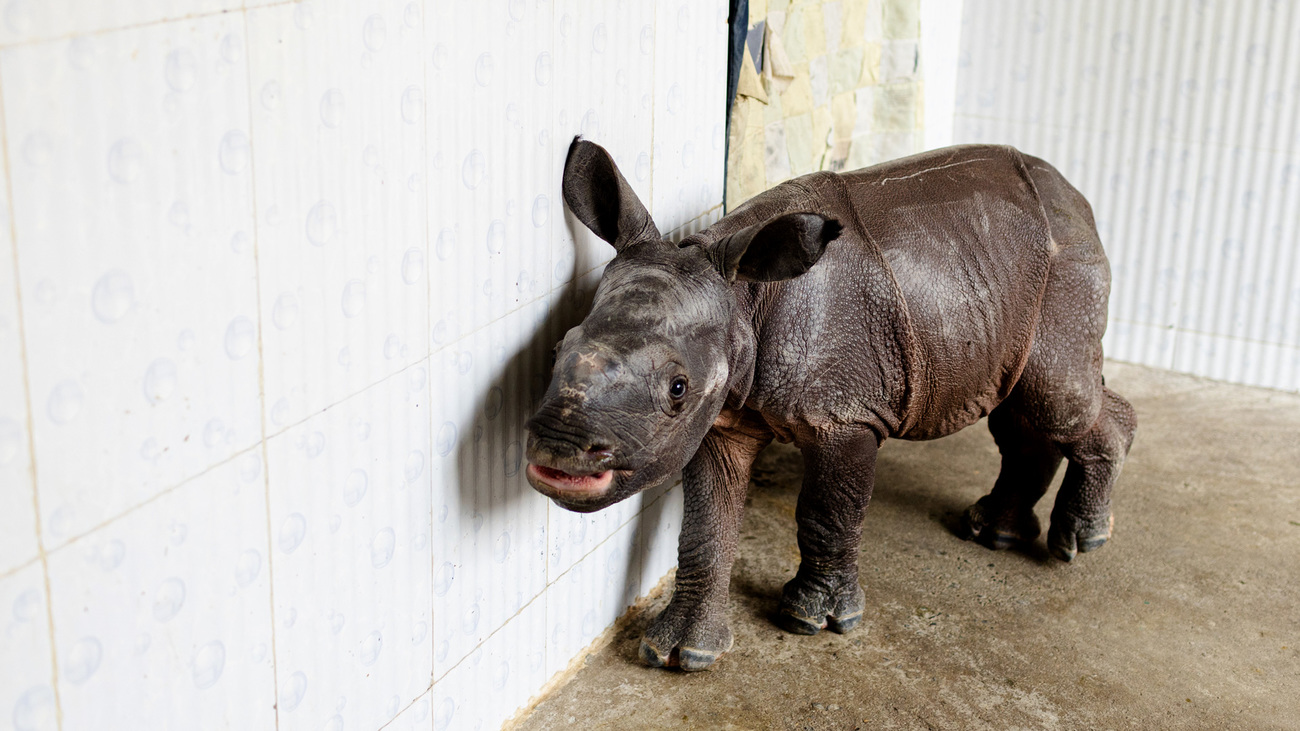
The young male rhino calf in early stages of care at the IFAW-WTI Centre for Rehabilitation and Conservation (CWRC). Photo: Stacey Hedman / © IFAW
Around-the-clock care
Caring for a newborn rhino demands intensive monitoring and patience. Veterinarians and animal keepers at CWRC work in shifts to provide feeding, treatment, and observation throughout the day and night.
The calf was bottle-fed a specially prepared milk formula, custom-designed in India, to approximate the nutritional profile of rhino milk. Feedings were carefully measured and delivered at frequent intervals to help stabilize his digestion and provide steady energy. As the days passed, the team monitored hydration, body temperature, weight gain, and overall behavior to assess whether his organs and digestive system were beginning to strengthen.
Gradually, the calf began showing encouraging signs. He drank eagerly from his bottle and started nibbling on small amounts of fresh vegetation, an early indicator that his digestive system might be beginning to adapt. These moments matter deeply in wildlife rehabilitation. Each small improvement signals that a fragile animal may be gaining the strength needed to survive.
The people behind the care
Behind every rescued animal at CWRC is a group of people who quietly dedicate themselves to that animal’s survival.
For this rhino calf, one of those people was Dr Bhaskar Choudhury, a senior wildlife veterinarian with WTI who has spent decades caring for injured and orphaned wildlife across northeast India.
For weeks, he remained close to the calf’s side, monitoring his condition and adjusting treatments as needed. He spent this time away from his own family, committing long days and sleepless nights to supporting this young rhino’s attempt at survival.
Animal keepers also formed part of the calf’s small circle of care, preparing bottles, monitoring room temperature and humidity, cleaning enclosures (required after every urination), and offering the calm, familiar presence that young animals often respond to.
In rehabilitation centres like CWRC, these relationships can become powerful. And it makes the difficult moments even harder.
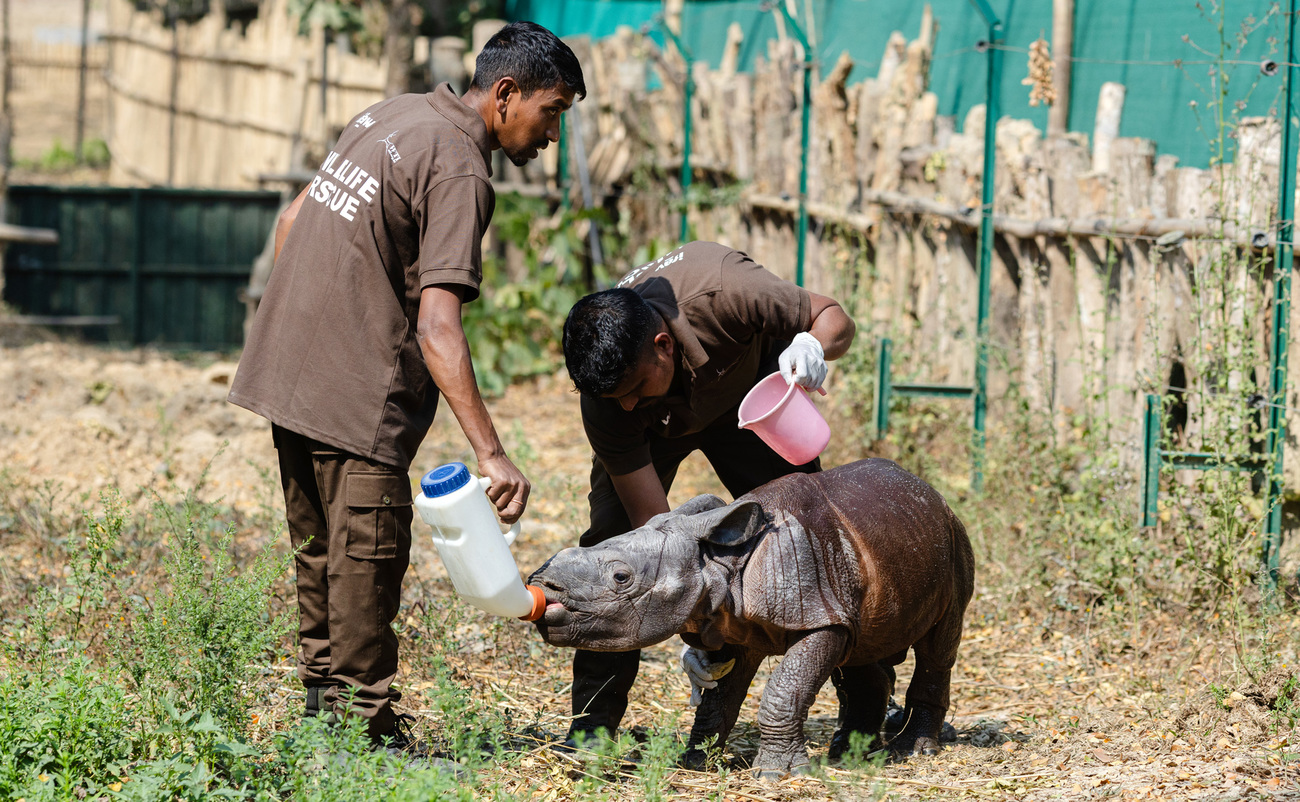
The rhino calf at 28 days old, getting midday bath from his carers—something his own mother would do for him in the midday sun. Photo: Stacey Hedman / © IFAW
When the outcome changes
Despite weeks of dedicated care, the calf’s underlying challenges proved too great. His body had simply been too young, his immune and digestive systems too underdeveloped, to fully overcome the obstacles of those earliest days without his mother.
After 40 days of care, the calf passed away.
Loss is never easy in wildlife rescue. For those who spend weeks fighting for an animal’s survival, it can be especially painful. Yet it is also part of the reality of this work.
Every rescue begins with uncertainty. Even with expert veterinary care, advanced rehabilitation techniques, and tireless dedication, some animals cannot overcome the circumstances they arrive with.
Why this work continues
Over the past two decades, CWRC has rescued and cared for thousands of wild animals displaced across Assam. Many have returned to the wild, including 25 orphaned rhinos that now roam protected landscapes and have even given birth to calves of their own.
These successes are built on the same commitment that surrounded this young rhino’s life—the belief that every animal deserves a chance.
The reality is that conservation work includes both successes and losses. Being transparent about this reality honors the animals we try to save and the people who commit their lives to protecting them.
Every rescue—successful or not—helps us improve care, deepen our understanding, and strengthen the systems that protect wildlife. With your support, IFAW and our partners around the world will continue rescuing, rehabilitating, and returning animals to the wild whenever possible.
Related content
Our work can’t get done without you. Please give what you can to help animals thrive.