Centre for Wildlife Rehabilitation and Conservation - India
Every year, animals in Kaziranga National Park are caught in severe floods, orphaned, and separated from their herdsA rescued rhino calf grows stronger in India
A rescued rhino calf grows stronger in India
November 5, 2026
Found alone and severely weakened near Kaziranga National Park, a young greater one-horned rhino is making encouraging progress under the care of IFAW and the Wildlife Trust of India.
When a young rhino calf was spotted alone near a village on the eastern fringes of Kaziranga National Park in Assam, India, the rescue team had reason to be concerned. At approximately one month old, she was far too young to survive without her mother's care, and her condition suggested she had already been alone for several days.
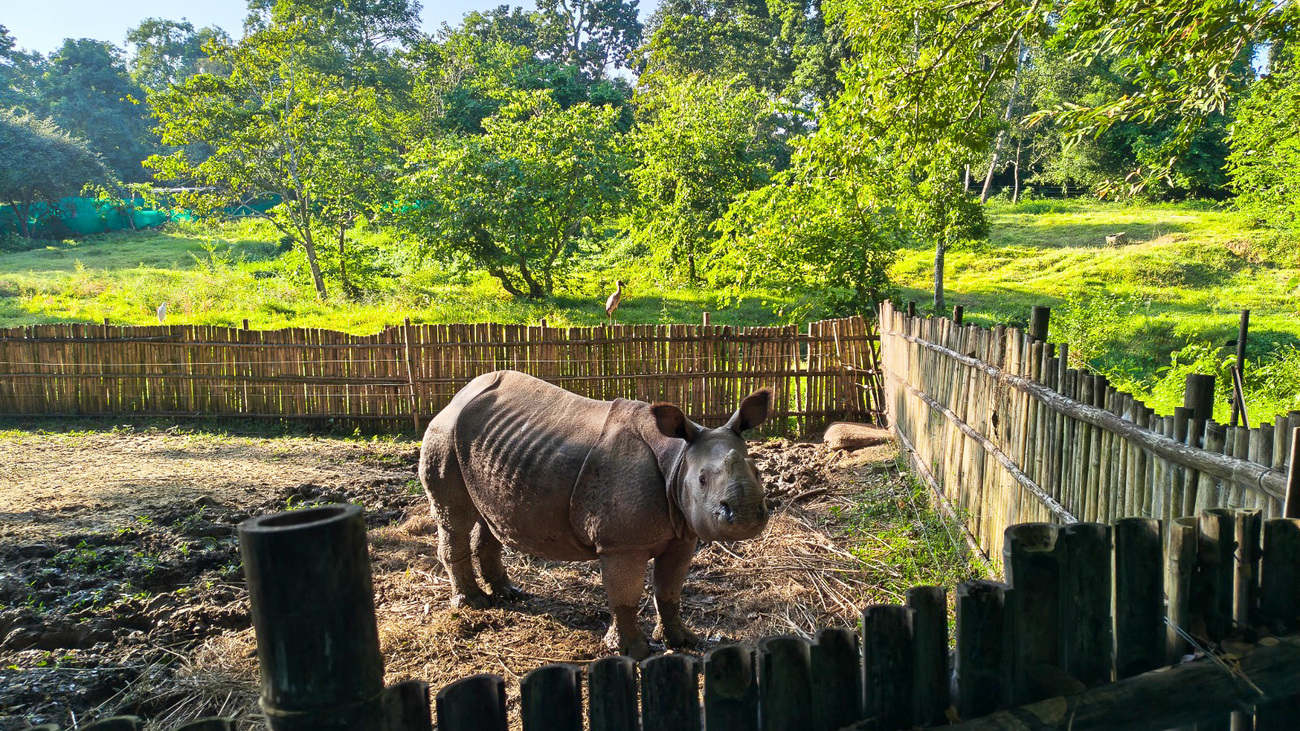
A rhino calf in care at IFAW-WTI’s CWRC after being rescued from the eastern range of Kaziranga National Park in Assam, India. Photo: © IFAW-WTI
The team travelled along a dyke to reach the calf, spotting an adult tigress crossing the same route along the way. When they finally examined her, they found a severely weakened animal with several superficial injuries, likely caused by thorns and vegetation. She was suffering from low blood sugar associated with starvation, and her oxygen saturation was below normal.
With no adult rhino nearby, the team decided to bring her to the Centre for Wildlife Rehabilitation and Conservation (CWRC), a joint initiative of IFAW, Wildlife Trust of India (WTI), and the Assam Forest Department.
It was 15 September 2026, and the young female weighed just 48 kilograms.
The careful work of helping a calf recover
At CWRC, the calf received fluids, electrolytes, and nutritional support to address her weakened condition. Her keepers began feeding her a specialized milk formula every two hours, while the veterinary team closely monitored her weight, digestion, and other indicators of health.
Caring for a young rhino involves much more than ensuring she receives enough food. The team must also monitor how her developing digestive system responds to changes in diet, track her physical development, and adjust her care as she grows.
In the first days following her rescue, the calf began gaining weight, although her digestive function required continued attention.
After nearly one month in care, her premolar and molar teeth had begun to emerge, and she was chewing blades of grass. These were encouraging signs of her development, even as the team continued to monitor her irregular bowel movements.
By 23 October, the calf weighed 60 kilograms, an increase of 12 kilograms since her arrival. She was feeding regularly, showing a healthy appetite and strong suckling reflex, and beginning to nibble on young leaves alongside her milk formula.
Her growing confidence was also becoming apparent. The calf that had arrived exhausted and undernourished was now running around her enclosure, exploring her surroundings, and becoming increasingly active.
Every stage of recovery matters
For the veterinarians and keepers at CWRC, these changes are meaningful indicators of progress, but they are only the beginning of a much longer rehabilitation process.
Young rhinos normally spend years alongside their mothers, learning how to navigate their environment and developing the skills they need to survive. When a calf is separated from its mother at such an early age, rehabilitation requires sustained care and careful planning to give it the best possible chance of eventually returning to the wild.
The team at CWRC has extensive experience with this work. Since its founding in 2002, the center has rescued more than 10,000 wild animals, with 64% successfully returned to the wild, according to 2026 figures.
Among those animals are greater one-horned rhinos that have gone on to live independently in protected habitats. In January 2026, two rescued rhinos, Chandra and Kanai, were moved to pre-release enclosures in Kaziranga National Park after years of rehabilitation at CWRC.
Their journey offers an example of what long-term care can make possible, although each animal's rehabilitation follows its own course.
For this newest arrival, the immediate priorities remain helping her grow, maintaining her health, and supporting her development. Any decision about her eventual release will depend on her progress and readiness to live independently.
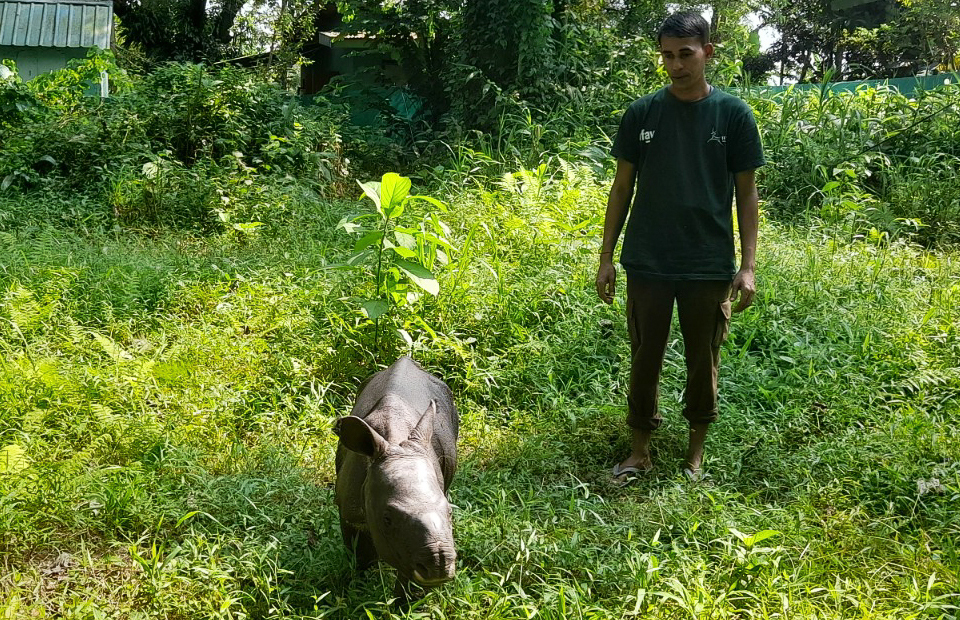
A rhino calf in care at IFAW-WTI’s CWRC after being rescued from the eastern range of Kaziranga National Park in Assam, India. Photo: © IFAW-WTI
One animal's future is part of a much bigger picture
Greater one-horned rhinos have made a significant recovery in India and Nepal through decades of conservation work, including habitat protection, anti-poaching efforts, and the involvement of local communities. Yet their future still depends on protecting the animals and habitats that sustain these populations.
Rescue and rehabilitation contribute to that effort by giving vulnerable individuals an opportunity to survive and, where possible, return to their natural environment.
The importance of this work can be seen in places such as Manas National Park, where rhinos were once locally extinct. Through sustained conservation efforts, including the reintroduction of rehabilitated animals, a wild population has been re-established. Some of the rhinos released through CWRC have subsequently produced calves of their own, contributing to the next generation.
For the young female currently in care, adulthood and a possible return to the wild are still a long way off. But her progress illustrates how conservation outcomes begin with practical interventions, from responding to a report of an animal in distress to providing the specialized care needed for its recovery.
The people involved are essential to this process. Local communities, forest officials, veterinarians, and animal keepers all have a part to play in protecting wildlife, often working together over many years.
Today, the young rhino is continuing to gain strength under the watchful care of the CWRC team. Her increasing weight, appetite, and activity are encouraging developments for an animal that arrived in such poor condition just weeks ago.
There is still a long road ahead, but her recovery has already demonstrated the value of giving an individual animal the care it needs. Each rhino that can eventually return to the wild has the potential to contribute to the health and future of its population, connecting the welfare of one animal with the conservation of an entire species.
Related content
every problem has a solution, every solution needs support.
The problems we face are urgent, complicated, and resistant to change. Real solutions demand creativity, hard work, and involvement from people like you.