Community Engagement
Local champions helping elephants and people share the landscape
Local champions helping elephants and people share the landscape
July 17, 2026
Across India, elephants move through landscapes increasingly shared with people, crossing forests, agricultural land, tea estates, railway lines, roads, and settlements as they travel between areas of habitat. These movements are essential to the survival of elephants and the health of the ecosystems they help sustain. As landscapes become increasingly fragmented, however, maintaining safe passage for wildlife while reducing risks to communities requires sustained monitoring, local knowledge, and cooperation among the people who live and work in these areas.
Through the Green Corridor Champions initiative, the Wildlife Trust of India (WTI), IFAW, and other supporters work with local individuals, organizations, and communities to monitor elephant movement routes and support conservation efforts across India. Launched in 2017, the initiative is designed to build a network of local conservation partners who can provide regular information about elephant movement, emerging threats, and the challenges facing communities that share these landscapes with wildlife.
Green Corridor Champions are sometimes described as the “eyes, ears, and voices” of the landscapes they monitor. Their work, however, extends beyond observing and reporting changes. Champions engage with communities, raise awareness about living safely alongside elephants, work with young people and schools, and contribute local knowledge that can help inform conservation action.
Conservation rooted in local knowledge
For Green Corridor Champion Anil Tallang, from Arunachal Pradesh, protecting wildlife is closely connected to his own history and relationship with the landscape.
Anil grew up around forests and wildlife and worked as a nature guide before becoming a Green Corridor Champion. He describes generations of his family living alongside the forest, and his interest in conservation grew from that experience.
Becoming a Green Corridor Champion offered him an opportunity to continue learning while contributing to the protection of a landscape he knows well.
Today, Anil monitors elephant movement and threats to wildlife habitat, including expanding agricultural land, construction, fencing, and other pressures associated with growing human populations and infrastructure.
An important part of his work is helping other people understand why conflict between people and elephants occurs and what communities can do to reduce it. Through awareness activities with schoolchildren and young people, Anil encourages greater understanding of the wildlife with which communities share their surroundings.
This combination of observation, education, and community engagement is central to the Green Corridor Champions initiative. People who spend time in these landscapes can recognize changes as they happen, identify emerging threats, and help conservation organizations better understand what is taking place on the ground.
From an interest in wildlife to protecting elephant movement
For Ravi Yadav, a Green Corridor Champion working in Assam, an interest in wildlife began in childhood.
While other children watched cartoons, Ravi remembers choosing wildlife programs on television. As he grew older, that interest led him to volunteer with the forest department and participate in wildlife rescue activities, initially focusing on snakes before becoming increasingly interested in other animals.
Elephants particularly captured his attention.
The more Ravi learned about them, the more he came to understand their importance to the wider landscape. Elephants create trails through forests that are used by other wildlife, disperse seeds as they move, and influence the ecosystems they inhabit. Ravi describes elephants as animals that help create the forest itself.
As a Green Corridor Champion, Ravi now monitors three elephant movement routes. Two face significant pressures from railways, national highways, increasing traffic, and expanding human settlements. When traditional movement routes become difficult or dangerous for elephants to navigate, animals may move into surrounding communities, increasing risks for both people and wildlife.
Ravi works with communities to build understanding of why allowing elephants safe passage matters. He has also advocated for measures such as speed restrictions in areas where roads and wildlife movement routes intersect, working with government agencies and other stakeholders to reduce risks to elephants and other animals.
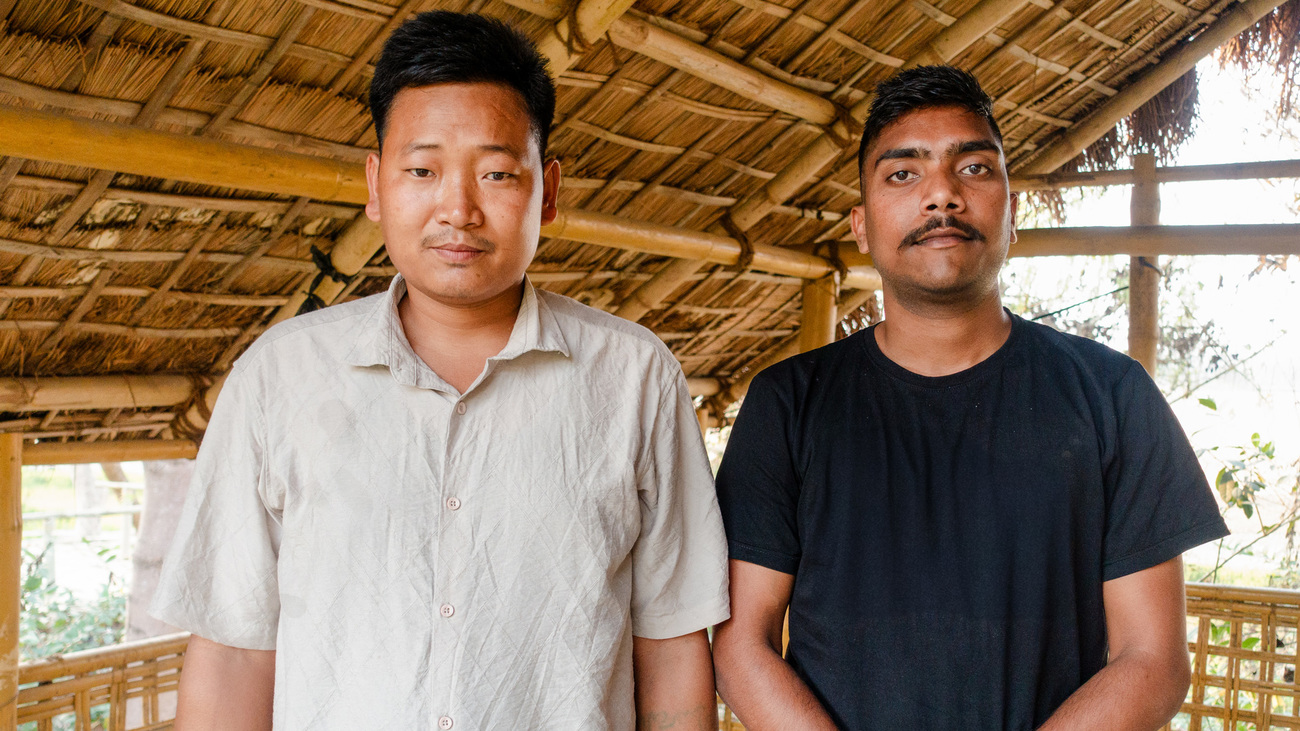
Green Corridor Champions from Assam, India, transition from traditional hunting/poaching practices to leading rapid response and human–wildlife conflict mitigation efforts. Photo: Stacey Hedman / © IFAW
Changing how communities respond to elephants
Perhaps one of the most encouraging changes Ravi has observed is in how some people respond when elephants move through their communities.
In the past, fear could lead residents to attempt to chase elephants away. Ravi says that continued awareness and engagement are helping people understand that blocking elephants or disturbing them as they move can increase the likelihood of conflict.
Over time, some residents have begun to keep their distance and allow elephants to pass more peacefully.
The change did not happen immediately, and Ravi is clear that much more work remains. Building trust and changing behavior require time, repeated engagement, and people who are willing to continue working within their own communities.
Yet this gradual change illustrates why locally led conservation efforts are so important. Green Corridor Champions are not occasional visitors to these landscapes. They live and work within them. They understand local concerns, observe changes over time, and can maintain relationships with communities long after a single conservation activity or awareness campaign has ended.
The eyes, ears, and voices of a changing landscape
Across India, the landscapes elephants depend on are under growing pressure. Infrastructure development, expanding settlements, agricultural land, and other changes can fragment habitats and make traditional wildlife movement routes increasingly difficult to navigate.
Monitoring these changes requires more than maps and periodic surveys. It requires people who know the landscape and can recognize when something has changed.
Green Corridor Champions provide that local presence. Through regular monitoring, community engagement, education, and collaboration with conservation organizations and other stakeholders, they help identify emerging threats and contribute to efforts to reduce conflict between people and wildlife.
Their observations can also help inform larger conservation decisions. By sharing information about elephant movement, infrastructure risks, changes in land use, and community concerns, Green Corridor Champions connect what is happening at the local level with broader efforts to protect wildlife habitat and maintain connectivity across landscapes.
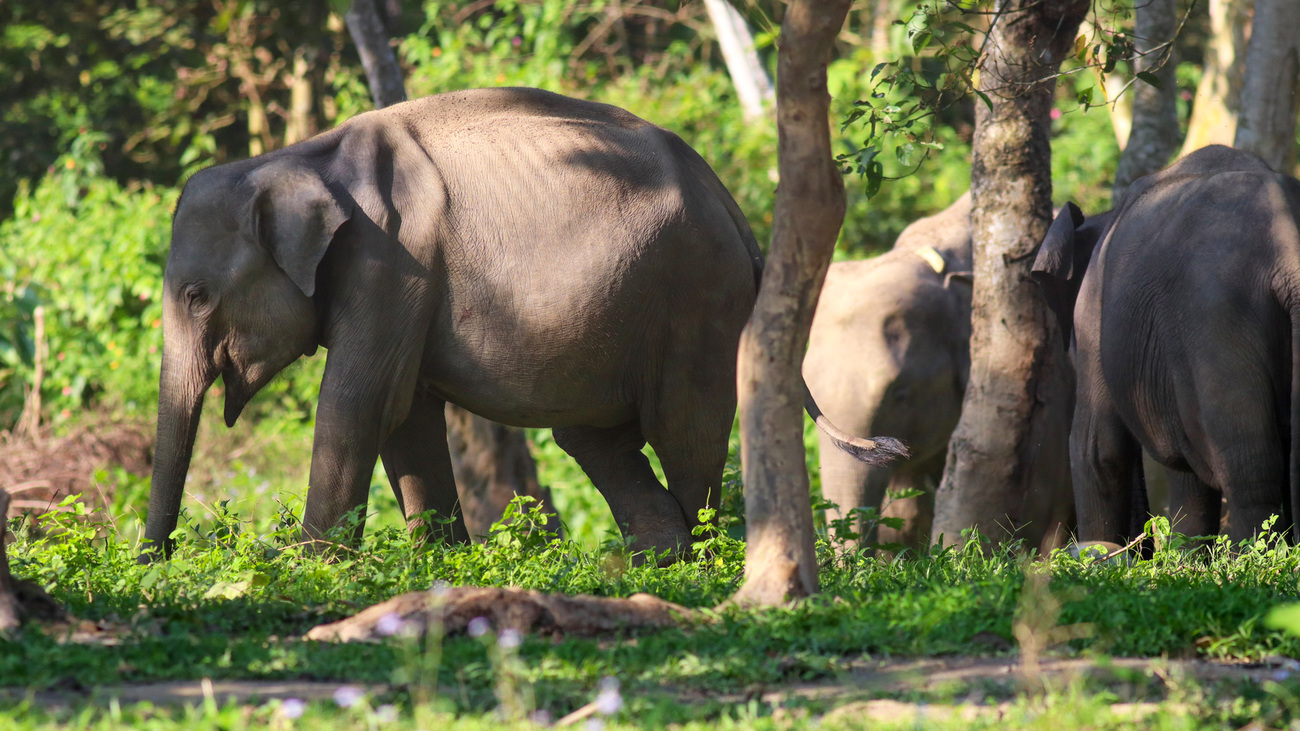
Side view of an elephant calf walking through the forest with other elephants. Photo: Subhamoy Bhattacharjee / © IFAW-WTI
Sharing knowledge across elephant landscapes
The challenges facing elephants and communities in India are shaped by the particular landscapes, cultures, and pressures found there, but the importance of maintaining connectivity is shared across elephant range countries.
This is also a central principle of IFAW’s Room to Roam initiative in Africa, which works to secure and connect habitats so elephants and other wildlife can move safely through landscapes that are also home to people. While conservation approaches must always be adapted to local contexts, there is much that practitioners can learn from one another about supporting coexistence, engaging communities, monitoring wildlife movement, and responding to threats.
During a recent exchange in India, IFAW colleagues working across African elephant landscapes met Green Corridor Champions and learned directly from their experiences. The visit created an opportunity for conservation practitioners working thousands of kilometers apart to discuss common challenges, share approaches, and consider how locally led solutions might inform conservation efforts in other landscapes.
These exchanges are an important part of strengthening conservation practice. Knowledge does not move in only one direction, nor does a successful approach simply transfer from one landscape to another. By creating opportunities for practitioners and community conservation leaders to learn from one another, conservation organizations can help useful ideas travel, adapt, and improve.
Ultimately, the strength of the Green Corridor Champions initiative lies in the people who carry the work forward.
For Anil, that means building on a lifelong relationship with the forest and helping younger generations understand the wildlife around them. For Ravi, it means continuing to learn about elephants, working with communities to reduce conflict, and advocating for safer passage for wildlife.
Together with Green Corridor Champions across India, they demonstrate the essential role local conservation leaders can play in helping people and wildlife share changing landscapes. By connecting those leaders with conservation practitioners working in other elephant range countries, their knowledge and experience can also contribute to a wider exchange of ideas about how communities, governments, and conservation organizations can work together to maintain connected landscapes for wildlife and people.
Related content
Our work can’t get done without you. Please give what you can to help animals thrive.