Josey Sharrad
How koala detection dog Bear found his purpose
How koala detection dog Bear found his purpose
Josey Sharrad | March 23, 2026
Ten years ago, I met a young dog called Bear.
He was anxious, skittish, and hyper-focused, with zero interest in humans or other dogs. A tightly wound ball of energy, just waiting to be unleashed. Life as a pet in the confines of a Gold Coast apartment simply wasn’t for him—he ended up literally eating the walls!
His owners were at the end of their tether.
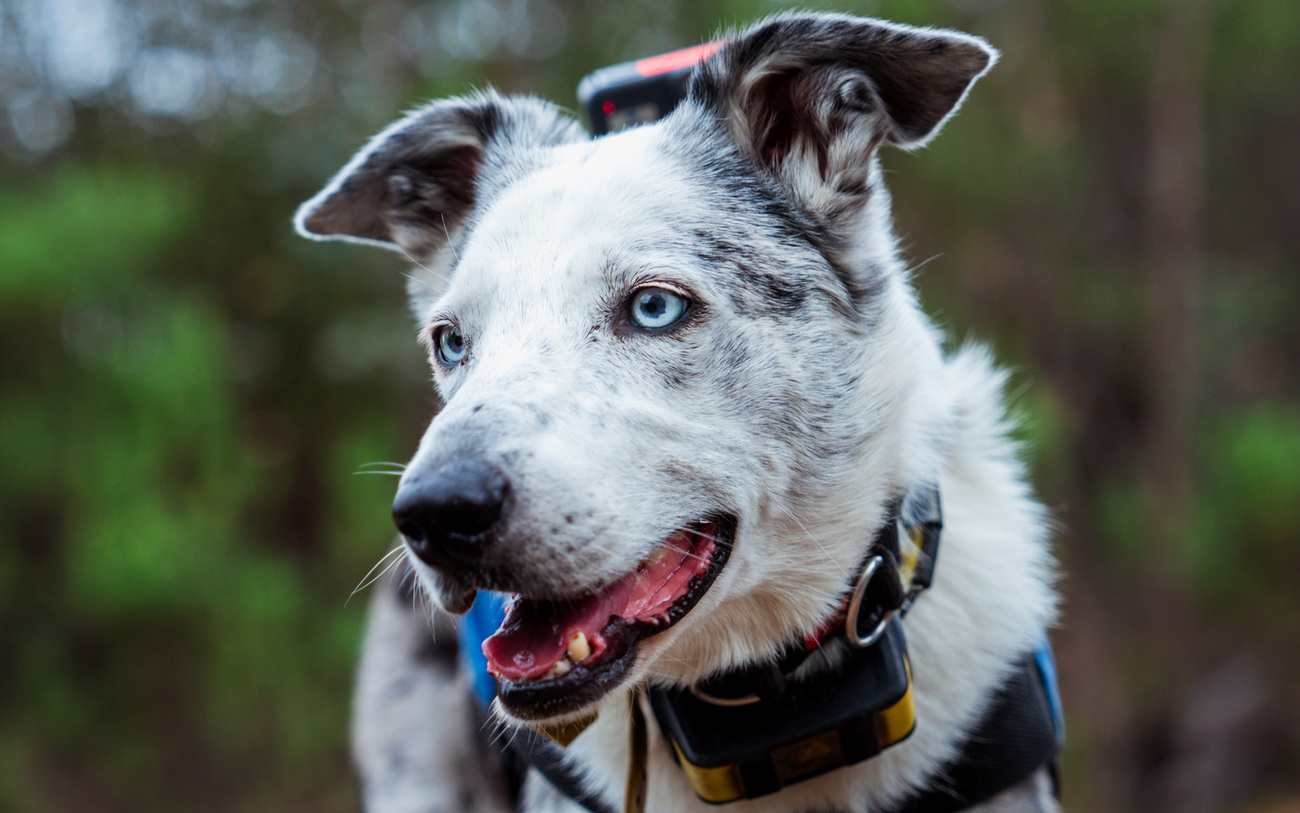
Specialized koala detection dog Bear at Two Thumbs Wildlife Sanctuary. Photo: © IFAW
Then they saw our callout for a koala detection dog, one that could sniff out live koalas. What if all those traits that made Bear a challenging pet—his boundless energy and obsessive love of balls—could be put to good use? What was there to lose?
Training a dog to detect live koalas was a dream of our good friend Romane Cristescu from Detection Dogs for Conservation at the University of the Sunshine Coast. It was novel. It was bold. And no one knew if it could be done.
Most koala detection dogs are trained to sniff out koala scats, which is relatively straightforward. Koala poo is found on the ground at the base of trees, and there’s often plenty of it—koalas can produce up to 300 pellets a day!
Sniffing out live koalas is a whole different ball game. They live high up in the trees, highly camouflaged little grey balls of fur the size of a football and incredibly tricky to spot with the human eye. They also move around more than people realise.
Could a dog be trained on the scent of koala fur rather than poo, to sniff out what we couldn’t see? It would be a game-changer, especially in emergencies when rescuers need to locate orphaned or injured koalas quickly. It could help save lives.
So IFAW made a bold move and partnered with Romane to find out.
And it turned out there was nothing to lose—and everything to gain.
When Bear walked through the door and stared at us with those now-famous intense blue-eyes, we knew we had found the one. He passed his initial tests with flying colours and was soon out in the field sniffing out live koalas. He had zero interest in the koalas themselves—he only had eyes for his reward, a ball, and what he had to do to get it.
From that moment, he was unstoppable. He had found his true purpose.
Then came the Black Summer of 2019-20—the fires that tore through the country and devastated koala populations.
We had a thought. It was crazy, but maybe just crazy enough that if it worked, it would be remarkable. Could Bear help search for koala survivors? Would he be able to detect koalas through the overwhelming scent of ash and fire? It had never been done before.
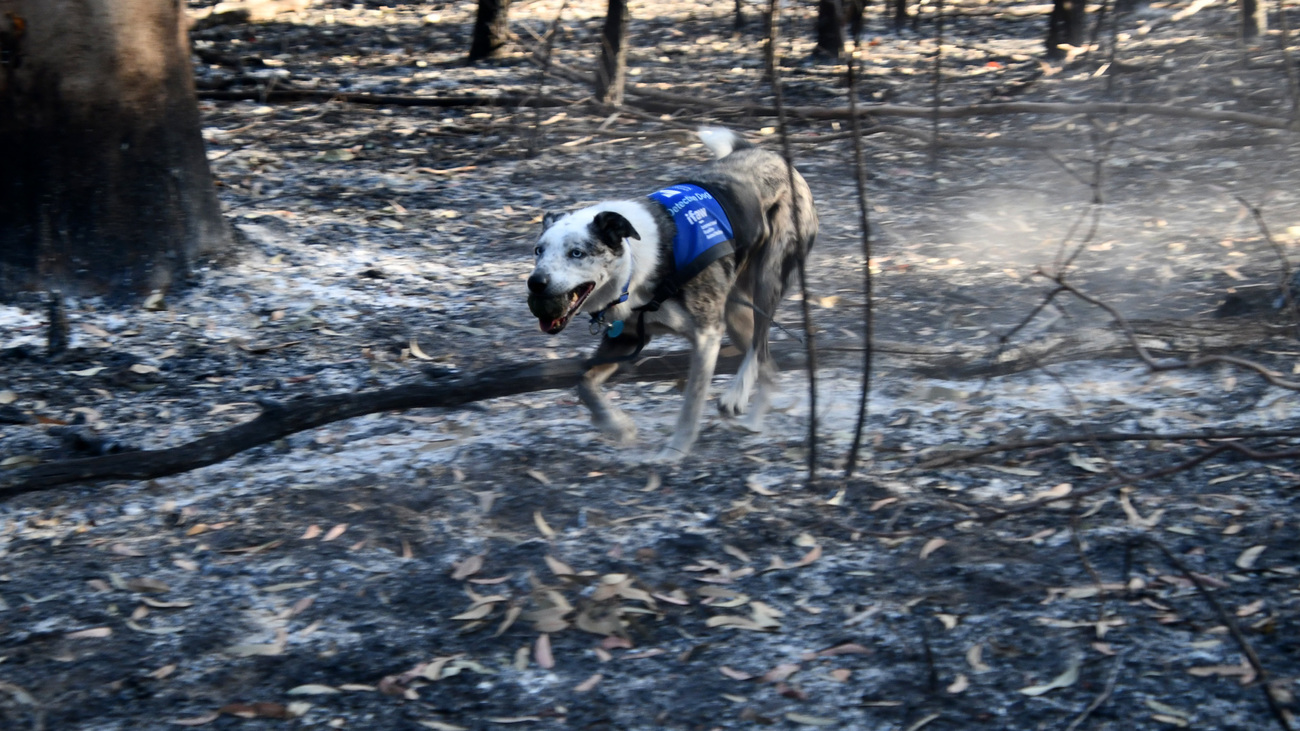
Bear running with his prized ball in his mouth, his reward for doing his job. Photo: © Meghan Halverson / IFAW
When the fire-grounds were declared safe, Bear joined us on search and rescue missions, wearing protective booties to shield his paws from the hot ground.
I don’t know why we ever doubted him. He became our secret weapon during those dark days, locating more than 100 koalas—animals we simply would not have found without him. He was a much-needed glimmer of hope amid the tragedy, not only saving koalas but helping people heal too.
Images of Bear working on the firegrounds in his now-iconic red booties quickly went viral—capturing hearts all the way to Hollywood and catching the attention of Tom Hanks and Leonardo DiCaprio.
He went on to star in his very own ‘dogumentary’, Bear Koala Hero, gather thousands of followers on Instagram, and inspire a new book by Romane about his incredible story.
But Bear is completely oblivious to his fame. For him, work was play and he was living his best life when traipsing through the Aussie bush in search of koalas.
Finding his true purpose transformed him. He is a completely different dog from the one I met ten years ago. He has become self-assured, sociable, and deeply affectionate. He has mellowed with age and has even become a super-snuggler.
Now the time has come for him to hang up his booties and enjoy a well-earned retirement. It’s a bittersweet moment.
He will spend his days running on the beach, relaxing on the couch, and playing with his best friend Luna. But I suspect he may still dream of searching for koalas.
His contributions to koala conservation are extraordinary, and they will never be forgotten.
Thank you, Bear, for everything.
Related content
Our work can’t get done without you. Please give what you can to help animals thrive.