Southern Rangelands, Kenya
Strengthening community voices for wildlife conservation in KenyaConservation works better when communities help write the rules
Conservation works better when communities help write the rules
September 1, 2026
By Edward Indakwa, contributing writer
For decades, conservation policy has been written about rural communities rather than with them.
Across Kenya's Southern Rangelands, the people who live alongside elephants and other wildlife have long borne the costs of conservation. They lose crops, livestock, and, sometimes, lives. Yet when governments draft the laws that determine how these landscapes are managed, those communities have frequently had little influence over the outcome.
IFAW understands how that disconnect weakens conservation
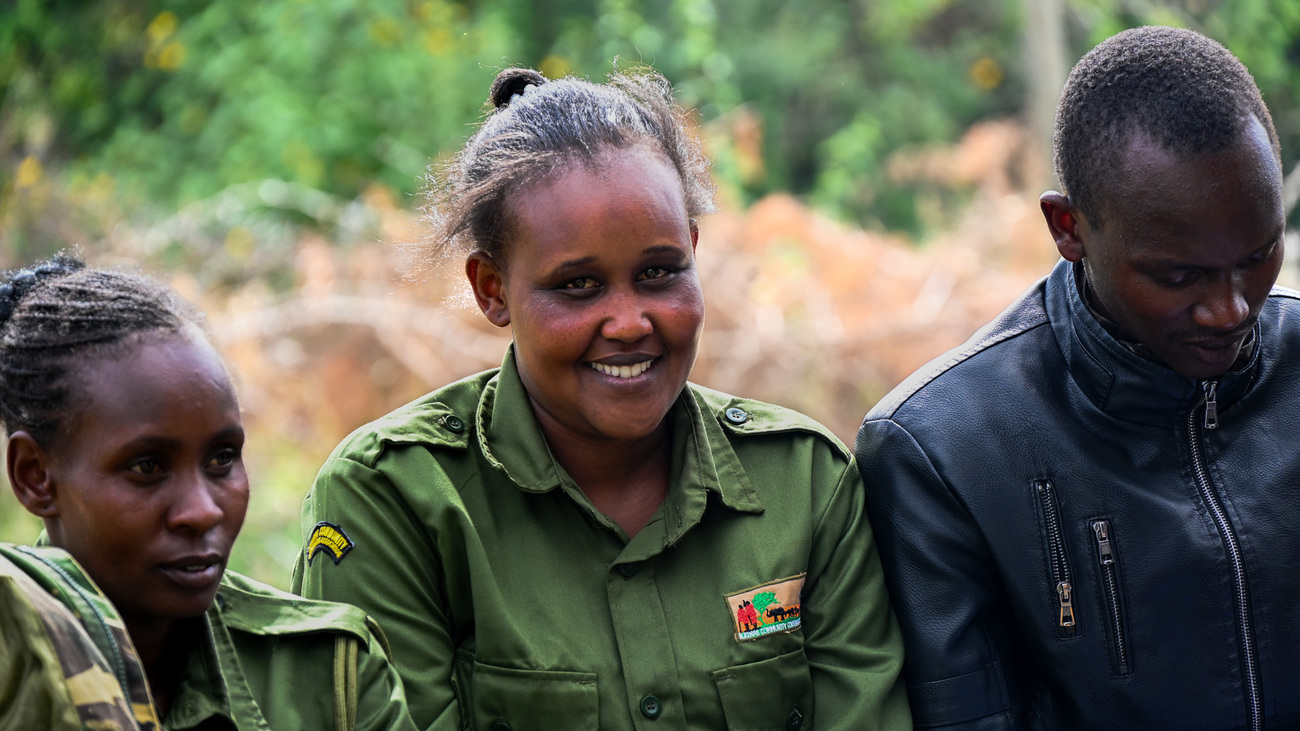
Public participation exercise in Narok County, Kenya to sensitize the general public on the wildlife conservancies bill 2026. Photo: Jacqueline Nyagah / © IFAW
Ensuring voices are heard
We are working with county governments across southern Kenya to ensure that communities traditionally excluded from policymaking are able to help shape the laws governing the landscapes they know best.
‘Our target is the “forgotten people” who are rarely included in the policy-making process, but who possess rich indigenous knowledge that can strengthen wildlife conservation,’ says Amy Sironka, IFAW Kenya Outreach Officer. ‘We deliberately ensure that women, young people, and persons with disabilities are heard, because they are often most affected by wildlife but least likely to benefit from conservation.’
The challenge is not a lack of public participation in law, but a lack of accessibility.
Kenya's Constitution requires public involvement in government decision-making, yet many consultation processes remain inaccessible to the people living in remote conservation landscapes. Public notices are often published in English-language newspapers, submissions require written responses, and consultations are concentrated in urban centers.
Research examining the Wildlife Conservation and Management Act 2013 found that these processes risk ‘elite capture’, where participation is dominated by those with the resources, education and access to engage, leaving rural voices underrepresented.
For landscapes as vast and complex as southern Kenya, that has real consequences.
A critical conservation ecosystem
Covering more than 76,000 square kilometers, the Mara, Amboseli, and Tsavo ecosystems extend across protected areas, community conservancies, farms, and pastoral lands. Wildlife moves freely across these boundaries, making conservation dependent on the people who share space with elephants every day.
These connected landscapes are central to IFAW's Room to Roam initiative, which works to secure and reconnect the places wildlife need to move while supporting the communities living alongside them. Ensuring that local voices shape conservation policy is an important part of creating landscapes where both people and wildlife have space to move and live.
Rather than asking communities to travel to government, IFAW is helping bring government to communities.
Taking discussions directly to the people
Working alongside county authorities, traditional leaders and the Kenya Wildlife Conservancies Association, the organization supports public participation forums in remote areas where conservation policy has often been discussed without those most affected being present. Policy documents are translated into Kiswahili, technical language is made more accessible, and residents are given the opportunity to debate proposed legislation before it becomes law.
‘Policy development is expensive and often shaped by competing political interests,’ says Ben Wandago, IFAW’s Kenya Country Director. ‘We provide technical and financial support to county governments while ensuring public participation is meaningful by translating policy documents and taking the discussions directly to the people.’
The approach is already influencing conservation governance.
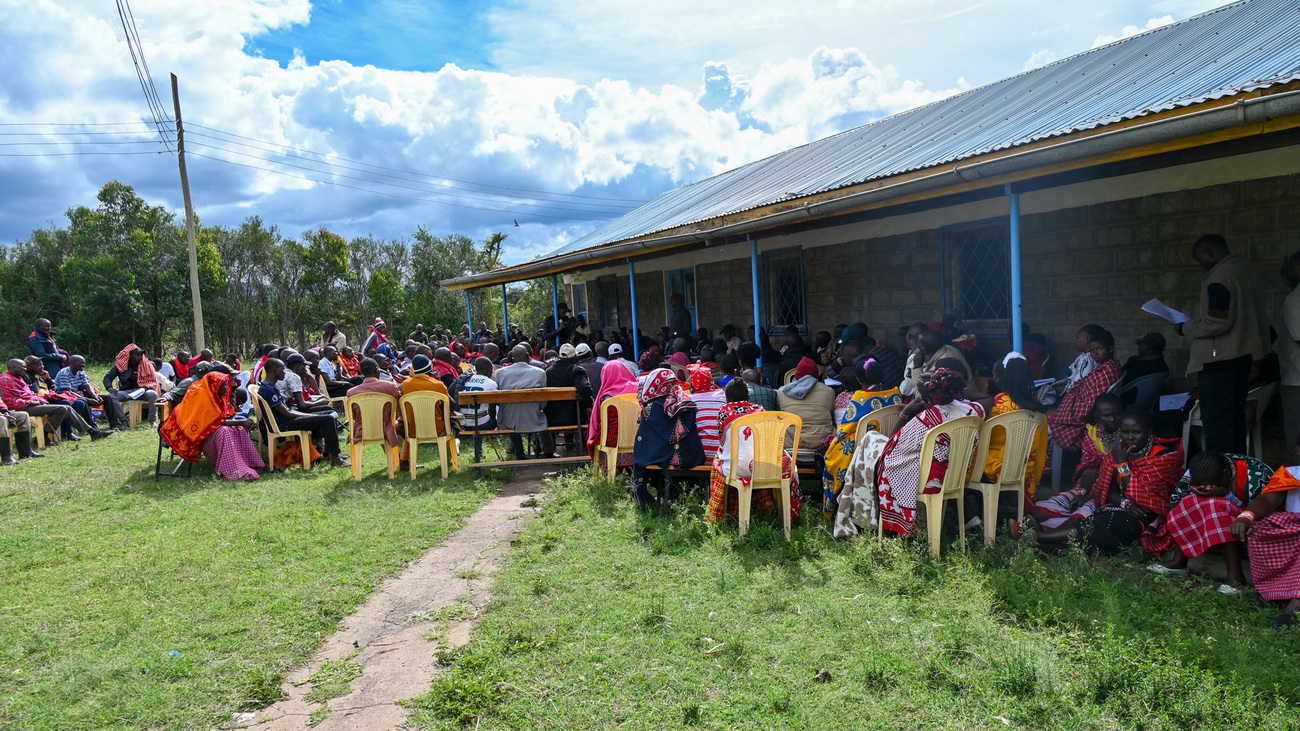
Public participation exercise in Narok County, Kenya to sensitize the general public on the wildlife conservancies bill 2026. Photo: Jacqueline Nyagah / © IFAW
Shaping policy outcomes
IFAW has supported the drafting and public review of legislation governing tourism management in the Tsavo ecosystem, wildlife conservancy funding in Amboseli and the Maasai Mara, and the establishment of the Amboseli Ecosystem Conservation Authority following the transfer of management responsibility for Amboseli National Park.
In Kajiado County, community participation has informed a spatial development plan that integrates wildlife into future land-use decisions. In neighboring Taita Taveta County, three wildlife migration corridors have been identified for legal protection.
Protecting these corridors is essential to keeping landscapes connected and giving wildlife the room to roam between protected areas and other important habitats.
The changes are administrative on paper, but significant on the ground. They influence where development can occur, how migration corridors are protected, how communities share in tourism revenues and how governments respond to human-wildlife conflict.
Samburu County has already committed Ksh150 million annually to conservation. Similar commitments elsewhere could provide stable funding for community conservation, tourism infrastructure and habitat protection beyond national parks.
Embedding conservation in communities
For Ben, the long-term value lies in embedding conservation within local governance rather than treating it as an external agenda.
‘Through robust public participation, county governments are integrating wildlife policy into land-use planning and budget processes,’ he says. ‘That strengthens protection for both communities and wildlife, safeguards migration corridors, and helps reconnect fragmented habitats.’
The future of Kenya’s wildlife will depend not only on protected areas or conservation science, but on whether the people who live alongside wildlife are recognized as partners in shaping its future. Giving communities a meaningful voice is not simply good governance; it is increasingly central to conservation itself and to creating the connected landscapes wildlife need to roam.
Related content
every problem has a solution, every solution needs support.
The problems we face are urgent, complicated, and resistant to change. Real solutions demand creativity, hard work, and involvement from people like you.