Marine Conservation
Governments commit to protecting wildlife as part of climate action at COP31
Governments commit to protecting wildlife as part of climate action at COP31
November 17, 2026
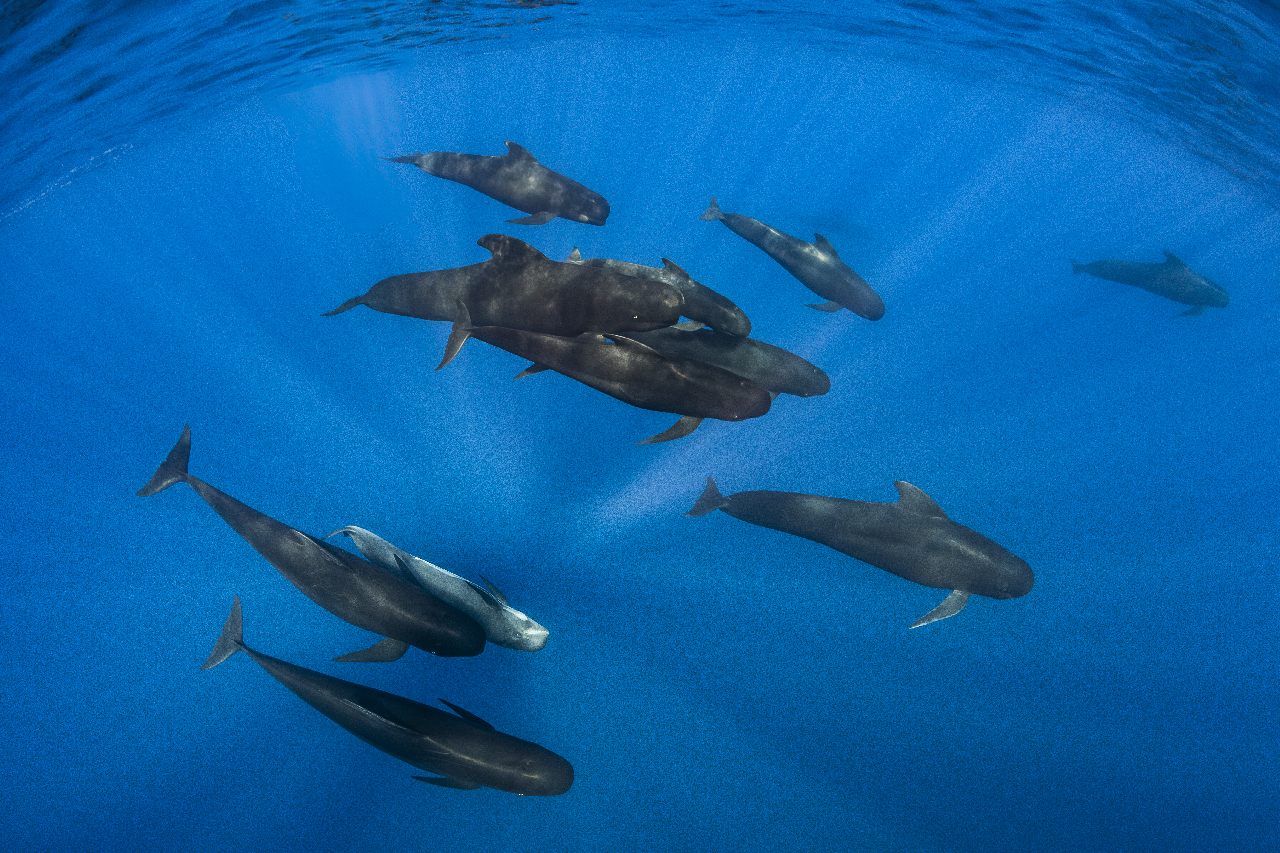
Long-finned pilot whales in the Mediterranean Sea and North Atlantic help sustain healthy marine ecosystems and support the ocean’s natural carbon cycle. © Greg Lecoeur
25 countries from Africa, Europe, Latin America, the Caribbean, and the Pacific launch the Wildlife for Climate Declaration
(Antalya, Türkiye – 17 November 2026) – At COP31, 25 countries have launched the Wildlife for Climate Declaration, committing to protect, conserve, and restore wild animal populations and their habitats “as a cornerstone of science-based climate action”. It is the first time a group of governments has jointly promoted, at a UN Climate Conference, the protection of wild animals as part of climate action.
Endorsing governments encourage UNFCCC Parties to recognise the role of wild animals in maintaining natural carbon sinks; to address overexploitation of animals, protect and connect habitats, and advance sustainable food systems that reduce pressures on ecosystems; and to build these measures into national climate and biodiversity plans.
The Declaration has been endorsed across varied and biodiversity-rich regions including the countries of Brazil, Belize, the Democratic Republic of the Congo, Fiji, Guatemala, Kenya, and Zimbabwe. At the launch, representatives from some of the endorsing governments shared the linkages between wildlife protection and climate mitigation and resilience.
Honourable Evelyn Ndlovu, the Minister of the Environment, Climate and Wildlife, Government of Zimbabwe commented at a side event at COP31 on the significance of this Declaration, saying, “When we lose wildlife, it is not only a loss of species. It is a loss of the living processes that keep natural systems working as they should. That is why protecting and restoring wildlife is climate action. It must be recognised and prioritised as such.
“This Declaration is the beginning of a shared commitment to see climate action more clearly. To understand that healthy wildlife and healthy ecosystems belong together, and that both are essential to a resilient future. Zimbabwe is ready to work with all countries in a spirit of partnership, openness and common purpose.”
Wild animals influence ecosystem function in ways that affect carbon storage, resilience, and climate adaptation. Through processes such as grazing, predation, seed dispersal, nutrient cycling, and modifying soils and sediments, they shape the capacity of forests, grasslands, wetlands, coastal ecosystems, and oceans to absorb, retain, and lock away carbon. When overexploitation and habitat loss from agriculture, deforestation, and urbanisation threaten the survival of wildlife, their contribution to climate mitigation and resilience weakens too.
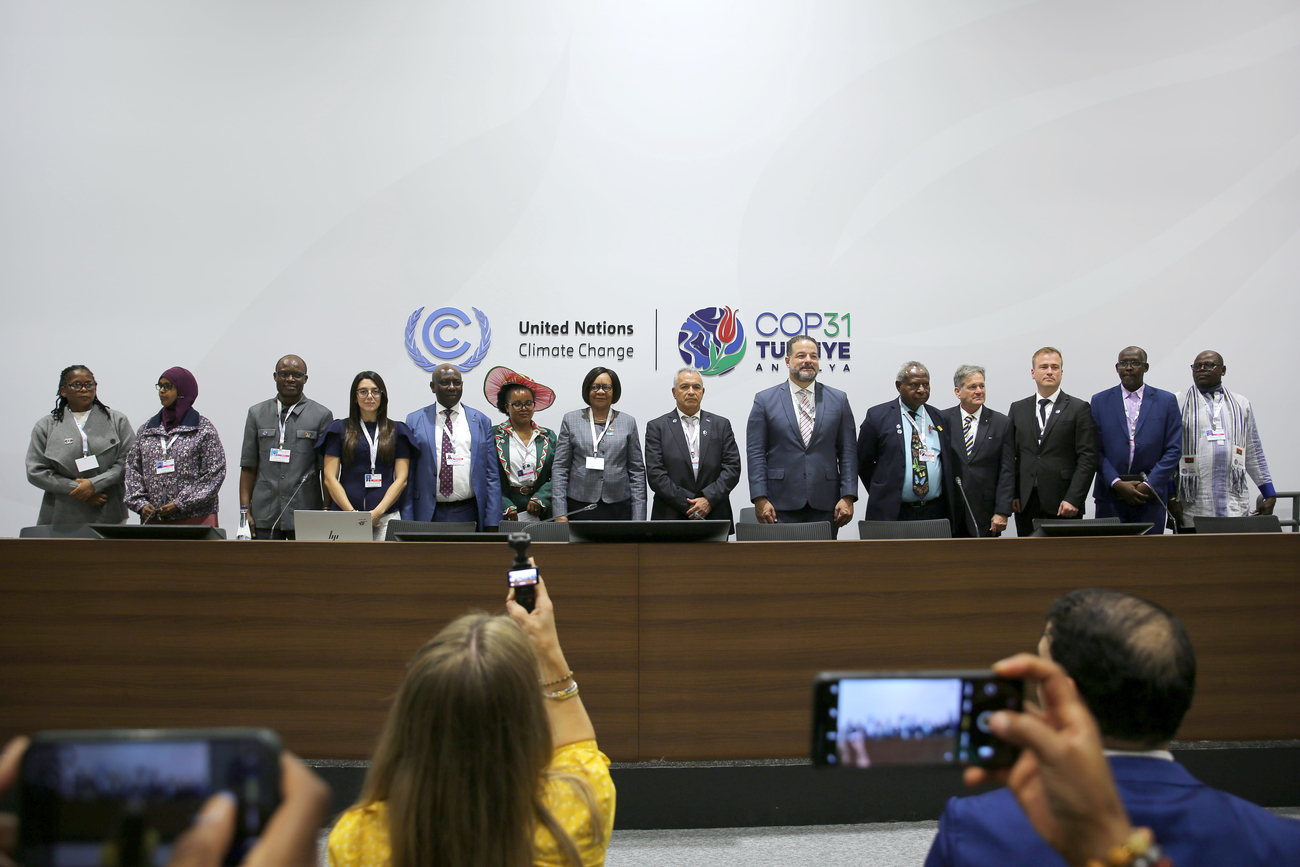
In the room at COP31, government representatives from Belize, Brazil, the Democratic Republic of the Congo, the Dominican Republic, Lesotho, Panama, Papua New Guinea, Somalia, and Zimbabwe came together to champion wildlife protection as an essential part of global climate action. © IFAW / WFA
There are myriad examples of animal species contributing to climate change mitigation across land and sea, and across every region on Earth. Take the African forest elephant, which shapes tropical forests by trampling on small trees, allowing the larger, slower-growing and more carbon-rich trees to thrive. Forests with elephants in the Congo Basin store around 7% more carbon than those without these giants.
Sea otters perform a similar function by preying on the sea urchin, a spiky, globular echinoderm that can consume entire forests of kelp. By keeping their numbers in check, sea otters allow kelp forests to flourish and lock up more carbon. One study found that kelp forests guarded by sea otters can absorb 12 times more CO₂ than those without.
Scientific research quantifies this contribution. A 2023 Nature Climate Change paper led by Yale University found that protecting and restoring functional populations of just nine terrestrial and marine wildlife groups could help capture an additional 6.4 gigatonnes of CO2 a year (Schmitz et al., 2023). This is roughly one-sixth of the CO₂ emitted globally from fossil fuels in all of 2024.
Building on this and other emerging evidence, the Scientific Consensus on Wildlife and Climate, supported by more than 350 scientists from 47 countries, calls on governments to “explicitly account for wild animals and their functional roles into climate policies and frameworks”. These academics argue that it is scientifically incomplete, in many contexts, to assess nature-based climate mitigation and adaptation without considering the role of wild animals in ecosystem functioning.
At a time when countries are starting to put their natural ecosystems in their climate plans, leaving out measures to protect, conserve, and restore the animals that make those ecosystems work poses a significant risk to natural climate solutions delivery.
The Wildlife for Climate Declaration offers a timely and politically practical response to this and addresses the absence of its acknowledgement in climate policy to date. While wildlife’s role in climate action has been recognised in other multilateral environment agreements, including the Convention on Biological Diversity and the Convention on Migratory Species, it is yet to be recognised within the UNFCCC. The Declaration indicates that the tide is turning, establishes a shared direction, encourages cooperation, and brings greater coherence across existing commitments.
Matt Collis, Senior Director of Policy at International Fund for Animal Welfare (IFAW) said: “For too long, wildlife has been the missing piece in global climate policy. This declaration marks an important shift, recognising that protecting wild animals is not separate from climate action, but can help strengthen it. The real test now is whether this recognition translates into national climate plans, meaningful investment, and action on the ground. Governments have an opportunity to turn a scientific breakthrough into lasting change for wildlife, people, and the planet.”
Ed Goodall, Climate Policy Specialist, World Federation for Animals adds: “The science has proved that animals are playing active roles in ecosystems that help forests, oceans, and mangroves to help fix and store more carbon, which is a missing part in the quest to tackle climate change. This Declaration is a game-changer, showing that governments acknowledge this and are ready to act on it to make lasting change to protect wild animals’ and their habitats so they can continue to act as ecosystem engineers through their natural behaviour”.
Notes to editors
- The Declaration is found at https://www.wildlifeforclimatedeclaration.org/
- Visual editors may download and share photo/video at https://spaces.hightail.com/space/l8VXR0fNTO
- Full video of Monday evening panel event from COP31 here: https://www.youtube.com/watch?app=desktop&v=cpvW3KURSX0&ra=m
- The press conference ‘Wildlife for Climate Declaration’ is taking place on Tuesday 17 November at 15:00-15:30 in Press Conference Room - Yunus Emre at COP31 and live online.
- Countries endorsing the Wildlife for Climate Declaration are (in alphabetical order): Andorra, Armenia, Belize, Brazil, Burkina Faso, Burundi, Democratic Republic of the Congo, Dominican Republic, Fiji, The Gambia, Guatemala, Guinea-Bissau, Honduras, Kenya, Lesotho, Madagascar, Monaco, Panama, Papua New Guinea, Somalia, Suriname, Togo, Uzbekistan, Zambia, Zimbabwe.
Media contacts
For further information or interview requests, please contact
- Stacey Hedman: shedman@ifaw.org | +1 508 737 2559
- Victoria Evans: victoria.evans@wfa.org | +44 (0) 7766 244 322
Related content
Every problem has a solution, every solution needs support.
The problems we face are urgent, complicated, and resistant to change. Real solutions demand creativity, hard work, and involvement from people like you.
DonateIFAW affiliates are registered as tax-exempt nonprofit organizations in several countries. Depending on where you reside, your donation may qualify for a tax deduction or benefit. See the pull-down menu at the bottom right of this page to see how IFAW operates in your country.