Wildlife Crime
Overwhelming public support for wildlife conservation in Zambia, survey finds
Overwhelming public support for wildlife conservation in Zambia, survey finds
April 20, 2026
Survey of 800 Zambians finds overwhelming recognition of wildlife's economic and national heritage value.
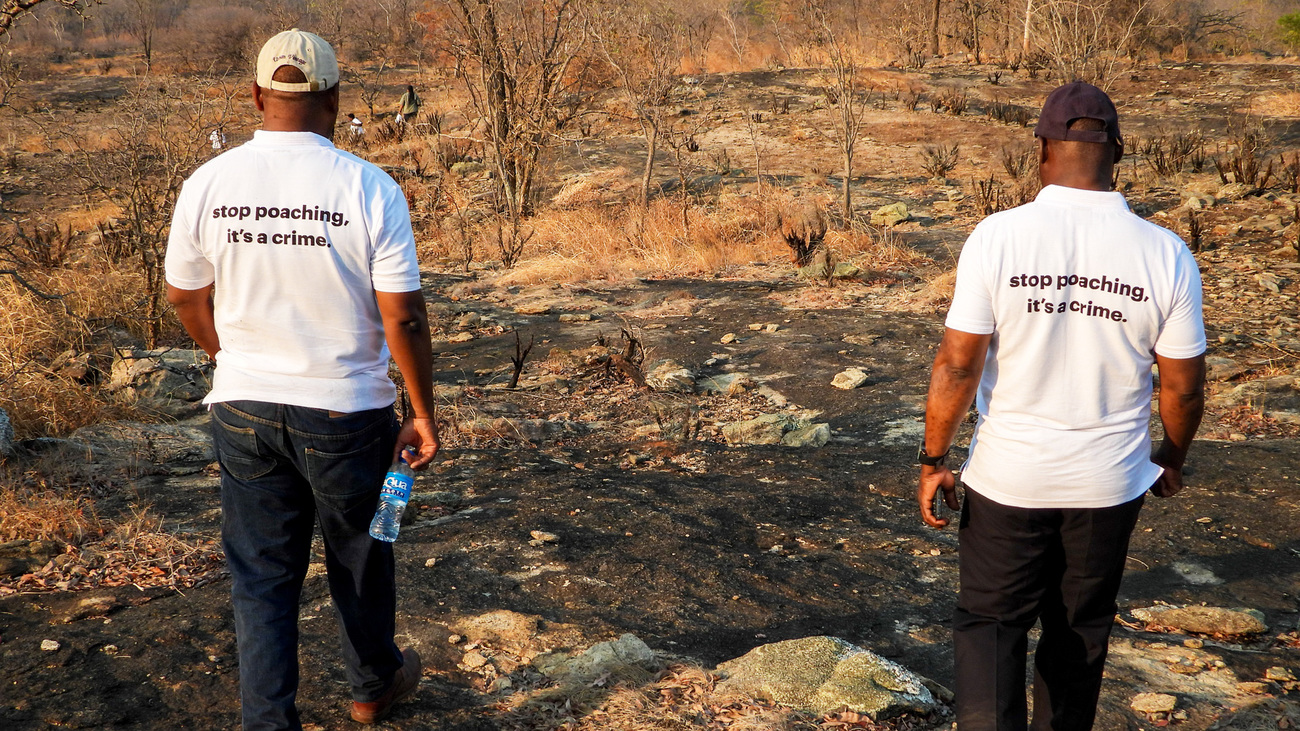
Chief of Party for IFAW’s Malawi-Zambia Transboundary Landscape Project, Patricio Ndadzela, walks with the Director of National Parks and Wildlife, Dr. Chuma Simukonda, in Lukusuzi National Park. Photo: Theresa Chapulapula / © IFAW
LUSAKA, ZAMBIA [20 April 2026] - A recent national survey commissioned by Wild Africa and the International Fund for Animal Welfare (IFAW) has found that Zambians strongly support wildlife conservation, with 79% viewing the country's wildlife as national heritage worth protecting and 92% recognising its economic importance to the country.
The study found that:
- An overwhelming majority (92%) of respondents believe wildlife is good for the economy, with respondents citing tourism, employment, and national revenue as the primary reasons they value wildlife protection – alongside a strong sense of obligation to future generations. The result suggests it is widely understood as a strategic national asset rather than an abstract environmental concern.
- 90% of those surveyed expressed willingness to receive information on living peacefully with wildlife, with rural demand highest at 97%. Affected communities are not withdrawing from conservation, they are actively seeking guidance.
- Despite 85% of rural respondents reporting personal experience of human-wildlife conflict, 80% say they would still report poaching or wildlife smuggling, suggesting that living alongside wildlife deepens a sense of conservation responsibility rather than eroding it.
- 83% of respondents, rising to 94% in rural areas, identified polywire fencing as their preferred response to human-elephant conflict, signalling a clear community preference for long-term preventive solutions over short-term deterrents.
- 90% of those surveyed expressed interest in pursuing a career in conservation, rising to 95% in rural areas. This could be a significant and largely untapped pipeline for community-based conservation employment.
- 85% of respondents hold positive or neutral views toward elephants, with only 15% expressing negative sentiment. Even in rural areas, where communities are most directly exposed to human-elephant conflict, outright negativity remains a minority position at 22%, with the majority either supportive or neutral.
“These findings show that Zambians don’t just value wildlife, they are ready to play an active role in protecting them,” said Peter Knights, OBE, CEO of Wild Africa. “Even in areas most affected by conflict, communities are calling for practical solutions, not turning away from conservation.”
"Human-wildlife conflict is one of the most pressing challenges in conservation,” said Azzedine Downes, President and CEO of IFAW. “The message of this research is clear. Those who live alongside wildlife want solutions that prioritize long-term coexistence. They want and deserve to be part of the answer, which is exactly the foundation upon which IFAW looks to build."
The findings come as human-wildlife conflict rises globally, driven by expanding settlements and shrinking habitats. The data suggests that Zambia’s affected communities are not adversaries of conservation, but potential stewards seeking practical support.
The study was conducted by Consumer Feedback Consultancy between 29 January and 14 February 2026, comprising 800 face-to-face interviews across urban and rural districts in Lusaka and the Eastern Province.
- ENDS –
Note to editors: Images available HERE
PRESS CONTACTS:
Leozette Roode
Head of PR and Digital for Wild Africa
e: leo@wildafrica.org
m: +27 (0)713601104
Rodger Correa
Director, Executive Office and Communications, IFAW
e: rcorrea@ifaw.org
m: +1 202 834 6637
ABOUT WILD AFRICA
Wild Africa aims to be Africa’s most effective conservation communicator, inspiring the public support and political will to protect Africa’s wildlife and wild spaces forever. We believe people and wildlife can only survive and thrive together, so we are popularising conservation with a much broader audience than has previously been engaged. By amplifying the voices of African opinion leaders from every field through a powerful network of media partners and diverse programming, we seek to promote domestic wildlife tourism, local conservation projects and the passage and effective enforcement of conservation laws. Through our communications and direct support, we also aim to deliver permanent reductions in wildlife crime, the demand for illegal bushmeat, human-wildlife conflict and habitat loss. Our network includes more than 25 national and international broadcasters, as well as radio, newspaper, billboard, PR and social media companies, who work with us pro bono to add their voices and promote conservation and environmental issues. We partner with 199+ ambassadors from music, sports, film, TV, business, religion and government from Nigeria, Zimbabwe, South Africa, Rwanda, Ghana, Namibia, and Somaliland.
About The International Fund for Animal Welfare (IFAW):
The International Fund for Animal Welfare (IFAW) is a global network of affiliated non-profits, helping animals and people thrive together. We have offices in 16 countries and projects in more than 40, always rooted in local realities and connected through collaboration. Our team of 300+ people creates a global expertise of disciplines, including biology, conservation, policy, law enforcement, and emergency response. We hire from the communities where we work, ensuring our efforts reflect local knowledge, priorities, and leadership. We also recognise that we cannot do it alone. Across regions, we work hand-in-hand with local organisations, governments, and community partners to advance rescue, conservation, and long-term solutions. See how at IFAW.org.
Related content
Our work can’t get done without you. Please give what you can to help animals thrive.