Policy Conventions & Agreements - Global
Protection for wildlife & habitats is preserved in global agreementsNumerous birds given new international protections
Numerous birds given new international protections
December 3, 2025
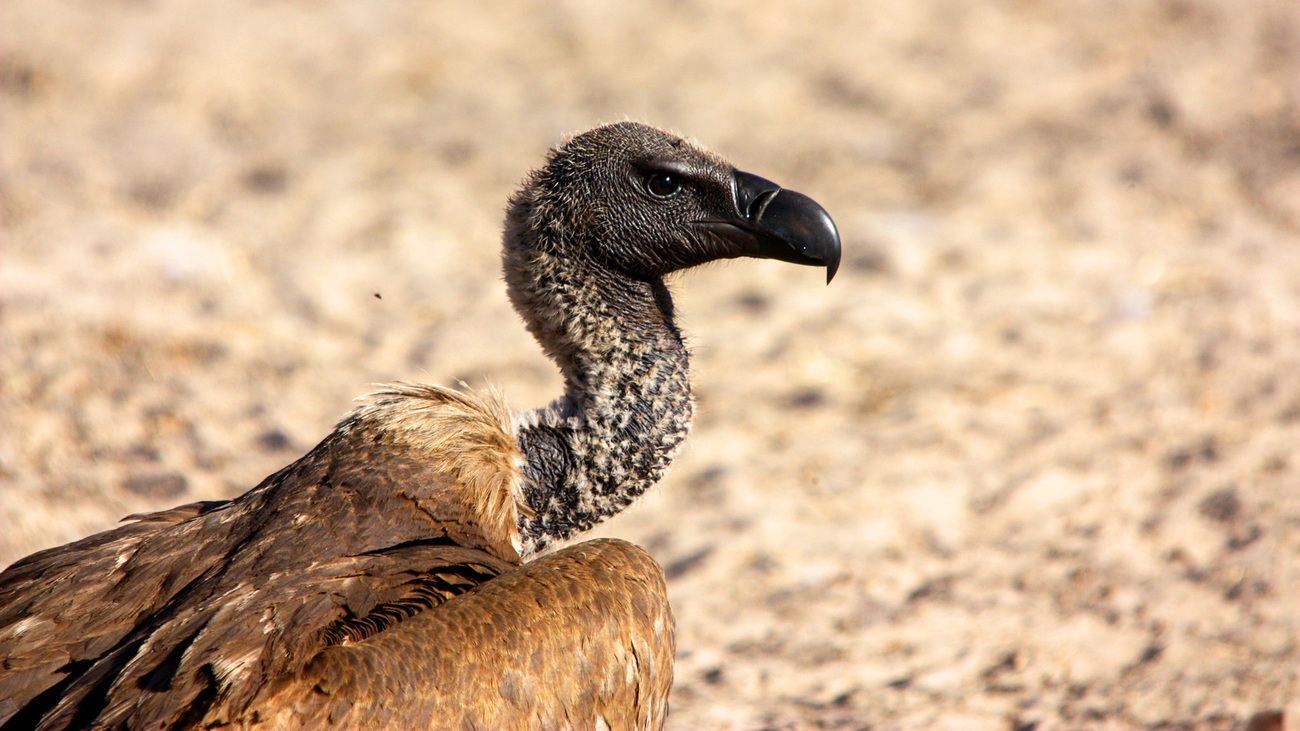
White-backed vulture, a critically endangered species vital to ecosystem health, in southern Africa. Photo: © Neil Greenwood
3 December 2025 — Today, government members decided to place several birds under the wing of new protections at a UN wildlife summit.
The Convention on International Trade in Endangered Species of Wild Fauna and Flora (CITES) received four proposals to amend the protection status of various species, including hornbills, vultures, falcons, and songbirds.
All but one of the proposals tabled was for increased protections, bar the peregrine falcon where a proposal to downlist them to Appendix II was rejected.
African hornbills: Uplisted to Appendix II. African hornbills are important in their natural habitats as seed dispensers, although due to their casques, they are being targeted and traded across borders. Data collected by the US Fish & Wildlife Service on 573 shipments, found over 2,700 hornbills from 1999 to 2024 with over 94% being from African species.
“Hornbills might be one of the most striking looking birds in the world, but like many animals with unique and distinctive features – this can make them a target. Half of the global population of hornbills is found in African forests, woodlands and savannahs,” Moses Olinga, programs manager - Uganda & Horn Of Africa, IFAW said.
“Their casqued beaks are increasingly appearing in markets across the continent and online, sold as pets, for decorative purposes or traditional medicines.
“African hornbills play a vital role in Africa’s jungles—dispersing seeds that regenerate forests. Yet they reproduce slowly making their populations vulnerable to poaching.
“Hornbills belong in the canopy - not in medicines, display cabinets or speciality shops.”
White-backed vulture and ruppell’s vulture: Uplisted from Appendix II to Appendix I. Although they are widespread throughout Africa, they are undergoing rapid declines. It is estimated white-backed vulture populations have declined up to 81% over the past 40 years, while populations of ruppell’s vulture have declined up to 92.5% in the same time. They are targeted in the national and international trade for their body parts which are believed by some cultures to bring good fortune and are also used in medicine.
“Vultures are on the brink of extinction; they have faced catastrophic declines due to poisoning, habitat loss and illegal trade”, IFAW executive vice president Jason Bell said.
“Today’s decision to grant them Appendix I protections is a monumental victory for wildlife conservation and a lifeline for these critically endangered birds.
By elevating their status to the highest level of international protection, trade in these species is now strictly prohibited, except under exceptional circumstances.
Vultures are synonymous with Africa’s landscape and are nature’s cleanup crew, preventing the spread of disease and maintaining balance in ecosystems.
They belong in the wild – free to fly – not in homes, markets, or in medicines.”
Great-billed seed-finch and seed-finches: Great-billed seed-finch moved from Appendix II to Appendix I and seed-finches are included on Appendix II. These birds are celebrated for their beautiful songs and traded for traditional singing competitions, but the growing popularity of such practices has led to rapid decline in populations.
“The song of these species has become their own sentence”, Ilaria Di Silvestre, Director of Policy and Advocacy, Europe, IFAW, said.
“The illegal and unsustainable trade in songbirds represents one of the most significant yet under-addressed challenges in global biodiversity conservation, impacting also animal welfare and public health.
“Many seed-finches—especially the great-billed seed-finch—are now among the most heavily trafficked birds in Brazil due to their singing abilities. The Cerrado savanna was once alive with the sounds of their song, but those melodies are fading into silence.
“Some species have already disappeared from parts of their former range, a stark warning that their populations are in free-fall. For Brazilian populations of great-billed seed finches, recent estimates indicate that only 100 to 250 mature individuals remain in the wild.
Peregrine Falcon: Remained on Appendix I, despite a bid to have them downlisted due to their bounce back in the wild. Thanks to its wide distribution and adaptability, the peregrine falcon is classed as least concern on the IUCN Red List. Although the population shows an increasing trend, the demand for this species remains high, which justifies the maintaining of a prohibition of trading in wild-caught birds.
CITES CoP20 opened in Samarkand, Uzbekistan on November 24th and runs until December 5th. All decisions taken during the Conference need to be endorsed by the final plenary session at the end of the Conference and will take effect 90 days after the Conference ends.
ENDS
Notes to editors
- Seizure by Dutch authorities underscores urgent need for stronger EU legislation and digital enforcement
- Stolen Wildlife V report
- Demand for wild pets driving surge in wildlife crime across Hispanic America
- Loopholes in EU legislation fuel a free-for-all to trade Latin America’s wildlife
African hornbills (Bycanistes spp. and Ceratogymna spp). Proposed by Cameroon, Congo, Gabon, Niger, Nigeria, Senegal, Sierra Leone and Togo.
White-backed vulture and Ruppell’s vulture (Gyps africanus, and Gyps rueppelli). Proposed by Benin, Burkina Faso, Burundi, Cameroon, Chad, Congo, Gambia, Guinea, Niger, Nigeria, Senegal, Sierra Leone and Togo,
Great-billed seed-finch and seed-finches (Sporophila maxmiliani, Sporophila angolensis, Sporophila atrirostris, Sporophila crassirostris, Sporophila funereal, Sporophila nuttingi. Proposed by Brazil.
Peregrine Falcon (Falco peregrinus). Proposed by Canada and USA
Press contacts:
Dominica Mack dmack@ifaw.org / +61 460 432 901
Kirsty Warren kwarren@ifaw.org / +44 (0) 7809269747
Related content
Our work can’t get done without you. Please give what you can to help animals thrive.