Policy Conventions & Agreements - Global
Protection for wildlife & habitats is preserved in global agreementsVictory as hundreds of species given new protections at UN summit
Victory as hundreds of species given new protections at UN summit
December 4, 2025
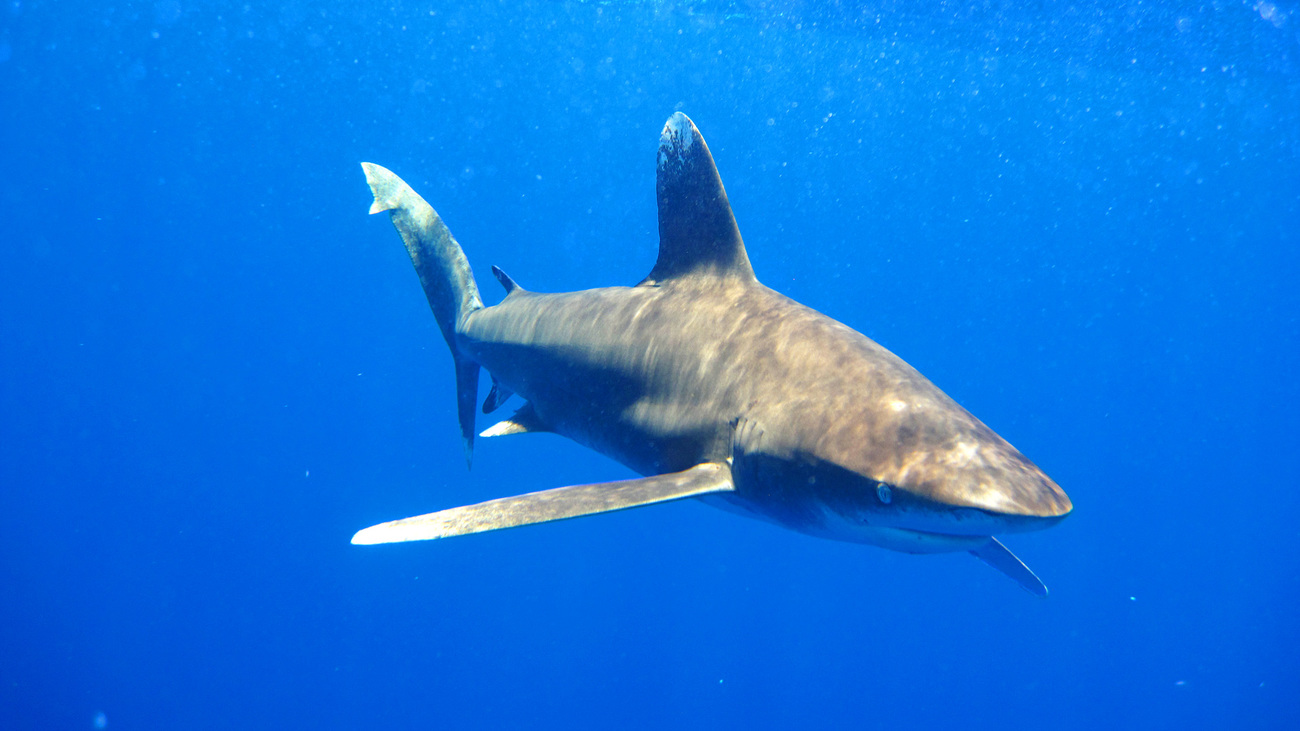
Oceanic whitetip shark, one of the most threatened sharks and listed on App2 of CITES. Photo: Ralf Sonntag / © IFAW
Numerous wild animals at risk from over-exploitation due to international trade, have been given a lifeline as world leaders voted overwhelmingly for better protections.
The Convention on International Trade in Endangered Species of Wild Fauna and Flora (CITES) held in Samarkand, Uzbekistan, was widely celebrated as a sweeping success by conservationists from the International Fund for Animal Welfare (IFAW).
Over 70 species of shark and rays were granted higher protections, along with numerous wild animals in demand for the pet trade. Bids to weaken protections for some of Africa’s iconic wildlife were also rejected.
“Wildlife is in crisis, and world leaders overwhelmingly recognised the pressing need to take decisive action,” Matt Collis, Senior Director of International Policy, IFAW said. “But while we celebrate the successes for wildlife at this conference, it highlights the plight of so many species that are up against exploitation, needing urgent protection. This may be a win for wildlife but comes bearing urgent warnings”.
IFAW advocated for a number of key species to receive stronger protections, those being:
Sharks and rays
- Oceanic whitetip shark—uplisted to Appendix I
- Whale sharks—uplisted to Appendix I
- Manta and devil rays (mobulids)—uplisted to Appendix I
- Guitarfishes and wedgefishes received a zero-export quota, effectively halting legal international trade.
- Tope and smooth-hound sharks added to Appendix II, meaning trade can only go ahead if demonstrated to be sustainable
- Gulper sharks added to Appendix II
Wild animals traded as pets
- Two species of sloth—Linneaus’ and Hoffman’s sloths added to Appendix II
- Songbirds—great-billed seed-finch is moved from Appendix II to Appendix I and seed-finches added on Appendix II
- Australian Mount Elliot leaf-tailed gecko and the ringed thin-tailed gecko are included on Appendix II
- Galapagos marine iguana moved from Appendix II to Appendix I
- Galapagos land iguana moved from Appendix II to Appendix I
African megafauna – bids to weaken protections
- African elephants remain on Appendix I, with no ivory stockpiles trade reopened
- Black rhinoceros remains on Appendix I, with no horn stockpiles trade reopened
- Southern white rhinoceros remains on Appendix I with no horn stockpiles trade reopened
- All giraffes populations remain on Appendix II
“Every listing, every regulation, and every loophole closed has real-world consequences for wildlife traded internationally. From the smallest gecko to the largest shark—species pushed toward extinction by human demand are finally gaining the protections they need”, Collis added.
CITES CoP20 opened in Samarkand, Uzbekistan on November 24th and concluded on December 5th. All decisions taken during the conference were endorsed by the final plenary session on December 4 and will take effect 90 days after the conference ends (unless otherwise agreed).
ENDS
Notes to editors:
- Appendix I: Species threatened with extinction. Trade is allowed only in exceptional circumstances.
- Appendix II: Species not necessarily threatened with extinction, but trade must be controlled to avoid utilisation incompatible with their survival.
Press contacts:
Dominica Mack dmack@ifaw.org / +61 460 432 901
Kirsty Warren kwarren@ifaw.org / +44 (0) 7809269747
Related content
Our work can’t get done without you. Please give what you can to help animals thrive.