Landscape Conservation
Administration weakens endangered species protections despite overwhelming public support
Administration weakens endangered species protections despite overwhelming public support
July 13, 2026
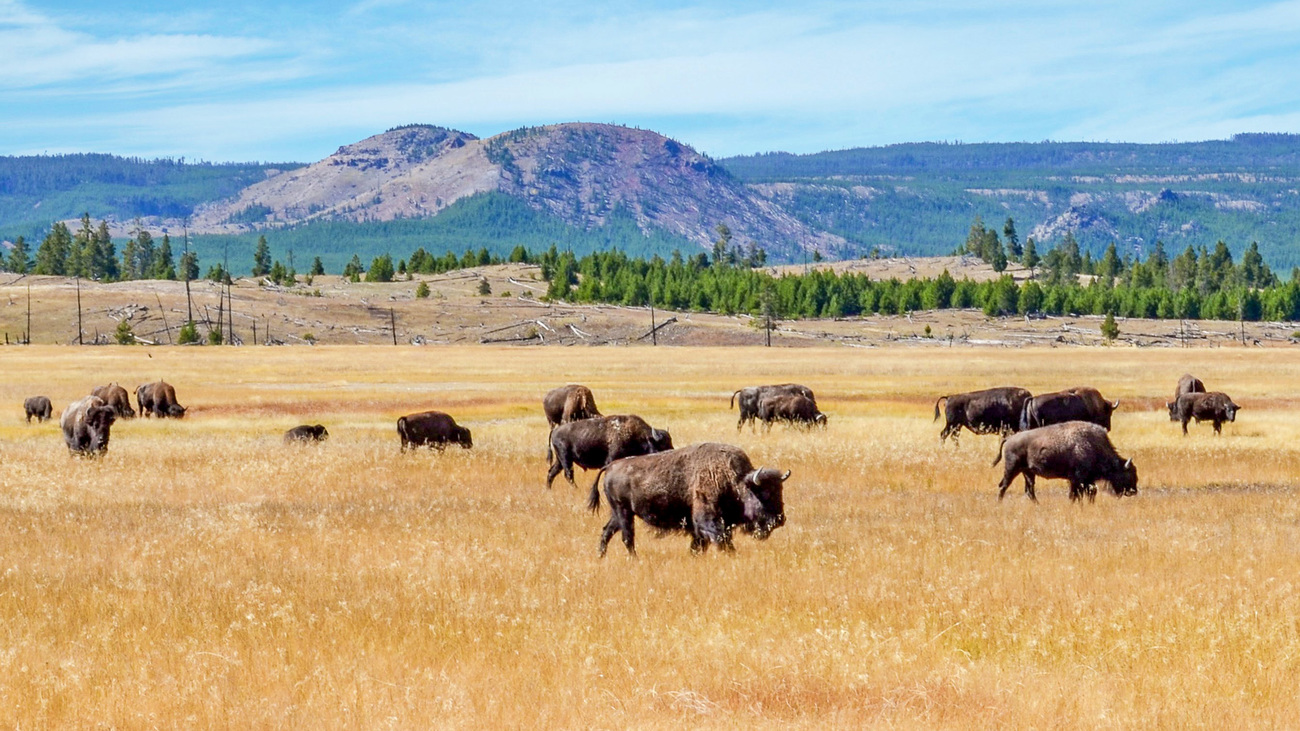
A herd of bison grazing in Yellowstone National Park.
IFAW polling shows 84% of Americans want the US to prioritize preventing extinction.
(Washington, D.C. – July 13, 2026)—The current US administration has finalized a rule rescinding the longstanding regulatory definition of “harm” under the Endangered Species Act (ESA), weakening how the law can protect threatened and endangered animals when habitat destruction or degradation kills or injures them. The change reverses a decades-old interpretation that recognized significant habitat modification or degradation as a form of harm when it results in the death or injury of protected wildlife.
IFAW warned that the rollback puts more than five decades of conservation progress at risk and runs counter to the views of the American public. National polling commissioned by IFAW found that 78% of Americans support the goals of the ESA, 69% support protecting habitat where endangered species live, and 84% believe the US should focus on preventing endangered species from becoming extinct.
IFAW President and CEO, Azzedine Downes, issued the following statement:
“Weakening fundamental protections that prevent extinction puts critical decades of conservation progress at risk. The current administration has unfortunately done exactly that--rolled back a longstanding interpretation of the Endangered Species Act that protected threatened and endangered animals when the destruction of their habitat kills or injures them. Animals need safe environments in which to live, breed, raise their young, and migrate. Protecting those essential places is crucial to preventing extinction and giving wildlife populations a genuine chance to recover and ultimately flourish.
The data is clear. Recent polling conducted by IFAW found that 84% of Americans believe the US should focus on preventing endangered species from becoming extinct. For more than 50 years, the Endangered Species Act has helped protect wildlife at risk and given species a chance to recover, reflecting a widespread commitment to conservation that continues to command overwhelming public support.
We should be building on the progress achieved, not endangering it. Americans are not asking their government to facilitate extinction. They are asking their leaders to protect wildlife, defend the places animals need to survive, and ensure future generations inherit a country rich in nature and wildlife.”
The ESA has provided a critical framework for preventing extinction and helping threatened and endangered wildlife recover, while serving as an important example of effective conservation action globally. Its protections have contributed to the recovery of species including the bald eagle, humpback whale, and American alligator, showing what strong laws and sustained commitment can achieve for wildlife.
//ENDS
Notes to editors:
- The Endangered Species Act was signed into law in 1973 and is the United States’ bedrock law for protecting threatened and endangered wildlife and plants and supporting their recovery.
- National polling commissioned by IFAW found that nearly 8 out of 10 (78%) Americans support the goals of the Endangered Species Act.
- 84% of Americans believe the US should focus on protecting endangered species from becoming extinct.
- 69% of Americans support using the ESA to protect habitat where endangered species live.
- 77% of Americans believe decisions about protecting wildlife should be based on the best available scientific evidence rather than political or economic considerations. The polling was conducted by Beekeeper Group on behalf of IFAW among a nationally representative sample of US adults.
Press contact:
Stacey Hedman
Senior Communications Director, IFAW
m: +1 508 737 2558
e: shedman@ifaw.org
Related content
Our work can’t get done without you. Please give what you can to help animals thrive.