Landscape Conservation
IFAW teams go the distance in the 2026 Wildlife Ranger Challenge
IFAW teams go the distance in the 2026 Wildlife Ranger Challenge
October 6, 2026
After months of preparation, IFAW-supported rangers in Kenya completed the 2026 Wildlife Ranger Challenge, culminating in a 21-kilometre race on 19 September. In the intense Kenyan heat, Team Lioness and Guardians of the Wild, both part of the Olgulului Community Wildlife Rangers, tested their endurance alongside fellow rangers, celebrating the teamwork, determination, and shared purpose at the heart of their profession.
There was plenty to celebrate at the finish line. Team Lioness finished first among the women’s ranger teams competing at the Kenya hub for the second consecutive year and went on to place fifth among 22 women’s teams across Africa. The team completed the 21-kilometre course in 2 hours, 56 minutes, and 49 seconds, placing 60th on the overall continental leaderboard. Guardians of the Wild completed the course in 3 hours, 9 minutes, and 53 seconds, finishing 79th overall.
Across both teams, however, the day was about more than race results. It was a chance for rangers to spend time with peers, represent the landscapes and communities they protect, and take pride in work that is demanding, essential, and too often carried out far from public view.
They were not taking on the challenge alone. Through IFAW’s 2026 Move for Wildlife Challenge, supporters joined virtually, setting movement goals and raising funds to support IFAW’s work for wildlife and the people who protect it.
More than 21 kilometres
The final race at Lewa Conservancy marked the culmination of months of preparation for the Wildlife Ranger Challenge, which brings ranger teams from across Africa together through physical and mental challenges designed to test their fitness, conservation knowledge, teamwork, and resilience.
The 21-kilometre course put that preparation to the test. Rangers competed in teams of four and were required to finish together, making teamwork as important as individual endurance. The women carried 10-kilogramme packs, while the men carried 22 kilogrammes, adding another physical challenge on an already hot day.
For both teams, that emphasis on teamwork became very real during the race. When one Team Lioness member fell on the hard, slippery surface, her teammates pulled her back to her feet and encouraged her to keep going. Guardians of the Wild faced their own difficulties, with three of the four men sustaining injuries during the race. They continued to support one another and, true to the spirit of the challenge, made sure they crossed the finish line together.
The weighted packs also carried symbolic meaning. Team Lioness ranger Eunice Peneti described the load as representing the challenges rangers encounter in the wild, where difficult conditions, long hours, and significant responsibility come with the profession.
Moments like these help explain why the Wildlife Ranger Challenge is about more than physical endurance. For rangers whose everyday work depends on trusting and supporting their colleagues, the race offered another test of that bond, as well as an opportunity to spend time with peers who understand the demands and responsibilities of protecting wildlife.
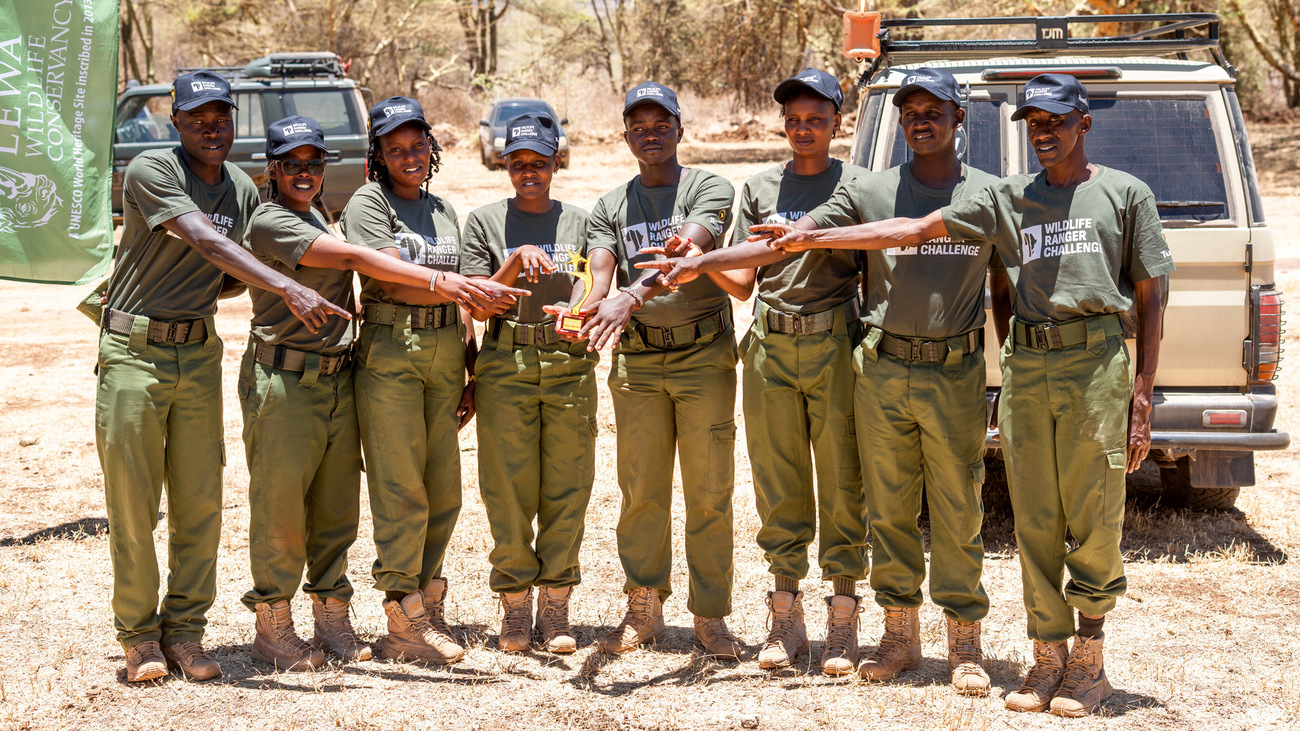
Olgulului Community Wildlife Rangers after completing this year's Tusk Wildlife Ranger Challenge 21K run, Lewa Conservancy, Kenya. Photo: ©️ OCWR-IFAW
A result worth celebrating
Team Lioness’s fifth-place finish among women’s teams across Africa adds another achievement to their Wildlife Ranger Challenge story. The result is an impressive achievement for a team whose physical fitness and teamwork have a purpose far beyond competition. Guardians of the Wild also completed the demanding course, giving the full Olgulului ranger team a moment to be proud of.
The determination and teamwork demonstrated during the race are just as important in the rangers’ work throughout the year. Physical endurance matters, but so do trust, communication, judgement, and the ability to keep working as a team when conditions become difficult. These are qualities the Olgulului Community Wildlife Rangers rely on throughout the year as they patrol community lands surrounding Amboseli National Park and help protect a landscape shared by people, livestock, and wildlife.
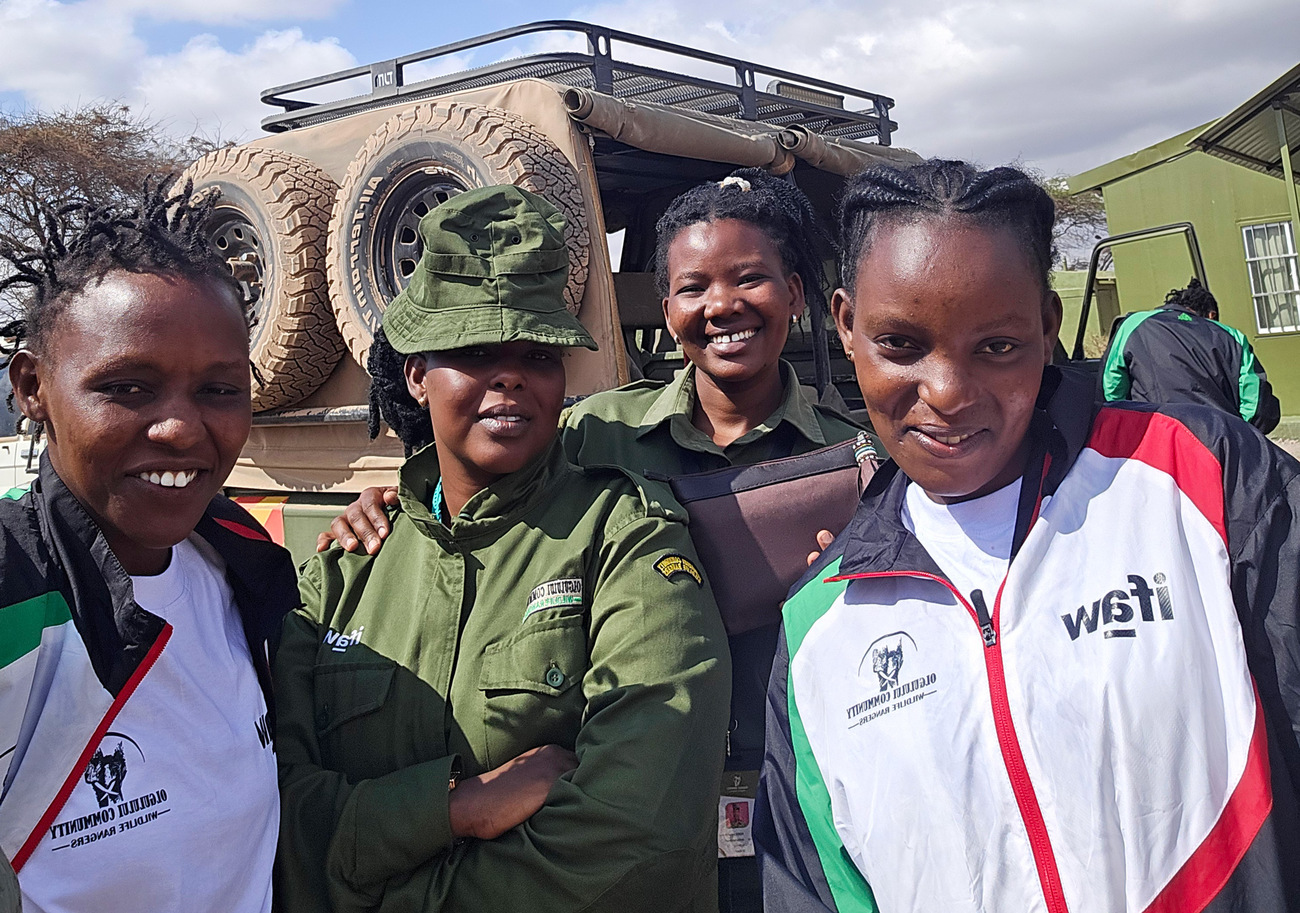
Team Lioness showing support as two members trained for the 2026 Wildlife Ranger Challenge. Photo: © OCWR-IFAW
Supporting the people who protect wildlife
The Wildlife Ranger Challenge puts physical endurance in the spotlight, but ranger wellbeing encompasses much more than fitness. Rangers can spend long periods away from their families, cover significant distances on patrol, encounter dangerous wildlife, respond to wildlife crime and human-wildlife conflict, and make difficult decisions under pressure.
Supporting them means considering the whole person behind the uniform. Rangers need safe and decent working and living conditions, appropriate equipment and training, healthcare, reliable compensation, and support for their families. Opportunities to spend time with peers, strengthen teamwork, and be recognised for their contribution also matter.
In Kenya, IFAW supports more than 87 Olgulului Community Wildlife Rangers across the Greater Amboseli ecosystem, as well as 24 Ilkimpa Community Conservation Area rangers in the Loita region. That support includes salaries, food rations, medical insurance, uniforms, equipment, vehicles, digital radios, vehicle maintenance, and tools for data collection. We’ve also invested in ranger accommodation, including the David Rio Community Ranger Base, providing a safer and more comfortable place to live for rangers who can spend significant periods away from home.
Community rangers are particularly important in landscapes where wildlife moves between protected areas and community lands. Because they live alongside wildlife and know both the landscape and the people who call it home, they can serve as an important link between conservation and local communities. As IFAW programme manager Evan Mkala explained during the Wildlife Ranger Challenge, protecting these connected landscapes requires security, functioning wildlife corridors, and efforts to reduce human-wildlife conflict, with community rangers playing an important role in all three.
The Wildlife Ranger Challenge is one moment within that much longer commitment. Strong conservation depends on skilled, equipped, and supported people who can sustain demanding work over time. Investing in ranger wellbeing strengthens their ability to protect individual animals, wildlife populations, and the landscapes that both people and animals depend on.
Supporters moved for wildlife too
While rangers were training and competing in Kenya, IFAW supporters around the world were taking on challenges of their own through the 2026 Move for Wildlife Challenge.
Participants chose ways to get moving that worked for them, setting personal goals and raising funds for IFAW. Whether walking, running, hiking, cycling, or choosing another activity, supporters could turn their own effort into a way of standing behind the people who protect wildlife every day.
The aim was not to recreate the physical demands or risks rangers experience in their work. Instead, Move for Wildlife offered supporters a way to make a commitment of their own, bring friends and family into the effort, and translate individual action into support for wildlife conservation.
Every person who moved, fundraised, donated, or shared their challenge helped extend the spirit of the Wildlife Ranger Challenge well beyond Kenya. While the activities and distances may have been different, participants shared a commitment to show up for wildlife and the people protecting it.
Beyond the finish line
Crossing the finish line gave the Olgulului rangers plenty to celebrate, from Team Lioness’s second consecutive win to the accomplishment of every ranger who trained, competed, encouraged a teammate, and completed the challenge.
The Wildlife Ranger Challenge also reminds us that there is no finish line to supporting the people who protect wildlife. The race may be over, but the rangers are back to the work they do throughout the year, patrolling landscapes, monitoring wildlife, responding to threats, and working alongside communities to make coexistence possible.
To the rangers who took on the challenge and the supporters who moved, fundraised, donated, and cheered them on from afar, thank you for showing up. IFAW’s commitment to ranger safety, wellbeing, and professional development continues long after the final kilometre, because supporting the people who protect wildlife is essential to creating a future where animals and people can thrive together.
Related content
Every problem has a solution, every solution needs support.
The problems we face are urgent, complicated, and resistant to change. Real solutions demand creativity, hard work, and involvement from people like you.
DonateIFAW affiliates are registered as tax-exempt nonprofit organizations in several countries. Depending on where you reside, your donation may qualify for a tax deduction or benefit. See the pull-down menu at the bottom right of this page to see how IFAW operates in your country.