Landscape Conservation
Powering Africa while protecting wildlife
Powering Africa while protecting wildlife
March 30, 2026
With contribution by Peter Borchert, writer, and conservationist
As Africa accelerates its shift to renewable energy, wind power is an essential part of the solution. But poorly planned wind farms can pose serious risks to wildlife, particularly birds and bats. The encouraging reality is that most of this harm is avoidable, through smarter siting, better design, and practical mitigation, as outlined by the IUCN’s guidance on renewable energy and biodiversity.
Climate and conservation must move together
Climate resilience sits at the heart of IFAW’s Room to Roam initiative, which aims to protect African landscapes for the benefit of people and wildlife. Africa is already on the frontlines of climate change, making the transition to clean energy urgent and necessary.
Wind energy is expanding rapidly across Africa offering a reliable and low-carbon source of electricity. Countries including South Africa, Egypt, Morocco, Kenya, and Namibia are leading the way. The continent has a technical wind potential of over 59,000 GW, enough to supply its electricity demand 250 times over, according to the International Finance Corporation.
Wind will play a defining role in Africa’s energy future. But how it is developed matters just as much as how quickly.
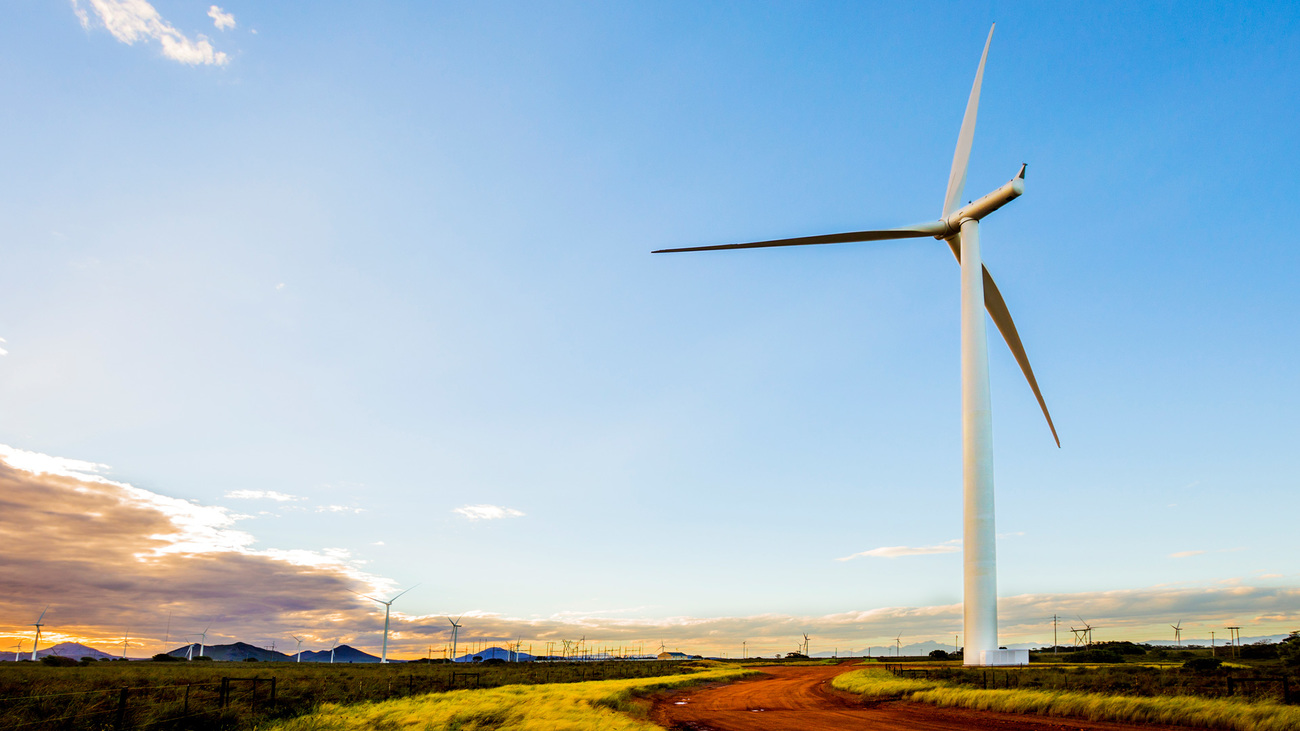
A wind farm in Jeffreys Bay, Kouga Municipality, South Africa.
The hidden risks of wind power
No form of energy is without impact, as noted by the IPCC’s latest climate mitigation report. While wind energy avoids the emissions associated with fossil fuels, it can affect wildlife if developments are poorly planned.
Birds and bats are most at risk. Collisions with turbine blades, habitat disruption, and poorly designed power lines all contribute to mortality, as documented in BirdLife International’s wind energy guidelines.
Large soaring birds, including vultures and eagles, are particularly vulnerable. They travel along ridgelines and thermal currents, often passing through turbine zones. Because these species reproduce slowly, even small increases in adult mortality can have serious population-level consequences.
Migratory species face additional challenges when wind farms intersect with key flyways. Meanwhile, bats are susceptible not only to collisions but also to barotrauma, caused by rapid air pressure changes near moving blades.
The risks extend beyond turbines. Transmission lines can lead to collisions and electrocution, especially for large birds such as vultures.
Solutions that work in practice
The key message is clear: wind energy and wildlife conservation are not mutually exclusive. With the right approach, both can thrive.
The most effective strategy is layered, combining careful siting, strong design, operational measures, and ongoing monitoring.
Start with location. Avoiding high-risk areas is the single most important step. Migration bottlenecks, soaring corridors, wetlands, and key habitats should be excluded from development at the earliest planning stage.
Use targeted mitigation. Evidence shows that wildlife impacts are often concentrated at specific turbines. This makes targeted solutions highly effective.
One of the most promising approaches is “shutdown on demand”, where turbines are temporarily stopped when high-risk species approach. This can significantly reduce bird mortality with minimal impact on energy generation.
Invest in practical innovation. Simple, cost-effective measures can deliver meaningful results. Painting one turbine blade black has been shown to reduce bird collisions. In some regions, trained local observers monitor wildlife and trigger shutdowns when needed, creating jobs while protecting species.
Make infrastructure safer. Bird-safe power line design and retrofitting can dramatically reduce electrocution and collision risks, particularly for vultures.
Considering the wider ecosystem
While flying species face the greatest direct risk, wind farms also affect ground-dwelling wildlife through habitat loss, fragmentation, and disturbance.
Careful planning can minimise these impacts. Avoiding sensitive habitats and maintaining ecological connectivity helps ensure that wildlife can continue to move and thrive alongside energy infrastructure.
A smarter path forward
Wind energy will be central to Africa’s low-carbon future. But clean energy must not come at the cost of biodiversity.
The evidence is clear: the most harmful impacts of wind farms are largely preventable. With smart planning and proven solutions, renewable energy can be developed in ways that protect wildlife and support communities.
The question is not whether Africa should expand wind energy. It is whether we can do it in a way that safeguards the species and ecosystems that sustain us all.
Related content
Our work can’t get done without you. Please give what you can to help animals thrive.