Reteti Elephant Sanctuary
Supporting community-led elephant rescue in KenyaLong’uro: one elephant’s story of immense resilience
Long’uro: one elephant’s story of immense resilience
February 17, 2026
By Guyo Adhi, contributing writer
Tucked away in Kenya’s remote and rugged Northern Frontier, Samburu is an open, sprawling savanna dotted with acacia trees, dry winding riverbeds fringed with palms, free-roaming elephants, dramatic rock outcrops, and majestic turrets of deep red soil. At the heart of Samburu lies Namunyak Community Conservancy—home to almost 6,000 elephants, Kenya’s second-largest herd of elephants outside state-protected areas.
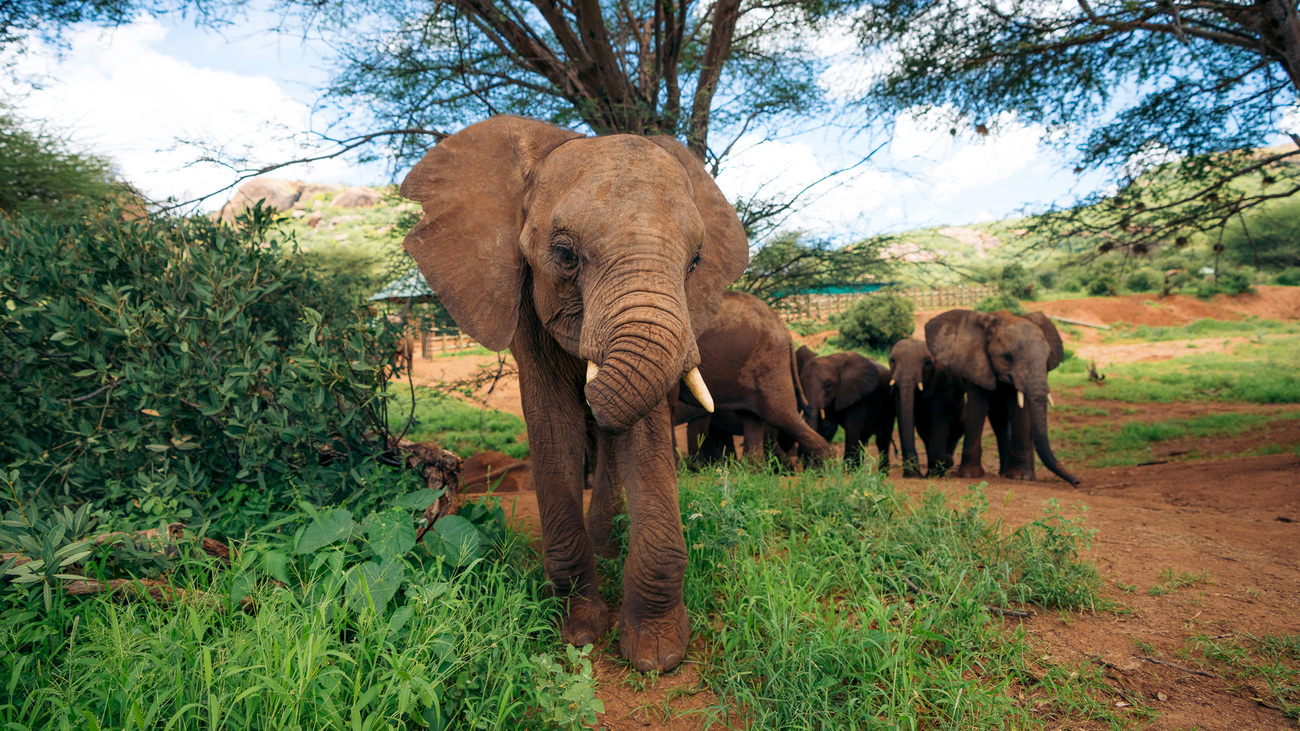
Long’uro, an orphaned elephant calf who lost most of his trunk in a hyena attack, receiving care at Reteti Elephant Sanctuary in Kenya. Photo: © Reteti Elephant Sanctuary
Elephants need vast open spaces to move freely in search of pasture and water. Namunyak Conservancy’s 850,000 acres of pristine wilderness provide this vital space. The Samburu people are nomadic pastoralists who rely on their livestock for milk and meat for survival. Their livestock, like wildlife, depends on healthy rangelands to thrive. In recent years, unpredictable weather patterns and relentless droughts have decimated wildlife populations, degraded grasslands, and shattered community livelihoods.
The future of elephants and people here is inseparable—both depend on a healthy, functioning ecosystem.
A community chooses conservation
Samburu Elders came together to brainstorm ideas and chart a path forward to protect both biodiversity and livelihoods. There was a clear realisation that the future of the Samburu people is intertwined with healthy natural systems, and that protecting the environment is a prerequisite for safeguarding their cultural heritage.
The community took a bold step: establishing an elephant sanctuary to rescue and rehabilitate calves orphaned by poaching, drought, and human–wildlife conflict—and ultimately rewild them. Rescue became the catalyst for a grassroots conservation movement that placed people at its heart.
This is how Reteti, the world’s first indigenous community-owned and community-led African elephant sanctuary, was born.
Reteti: redefining wildlife rescue
Reteti’s story is one of connection and belonging. Since 2016, the sanctuary has rescued over 150 calves and 23 calves have been released back into the wild. Feeding times are the busiest moments of the day, filled with rumbling, shuffling, trunk-raising, milk-guzzling, ear-flapping, and play.
Each calf has a unique story and personality. There is Kimani, a playful character in the nursery herd, who has formed an unlikely friendship with Siilai, a young buffalo calf. There is Lomunyak, always up to mischief. And then there is Long’uro—an unusual-looking elephant with a very short trunk—a brave calf with a remarkable story of strength and resilience. Loosely translated, Long’uro means “he who has been cut.”
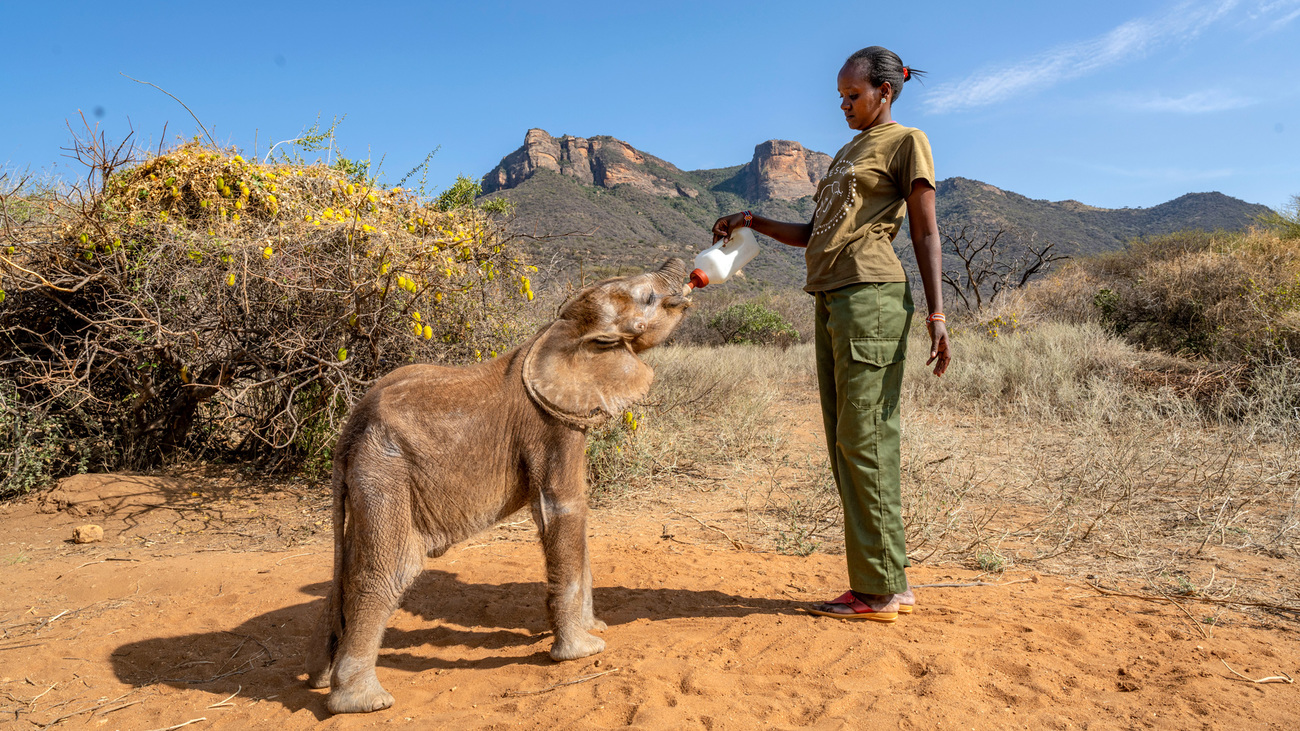
Samburu keeper Mary Lengees bottle-feeds Long’uro at Reteti Elephant Sanctuary in Kenya. Photo: Ami Vitale / © Reteti Elephant Sanctuary
Long’uro’s second chance
In early 2020, as the COVID-19 pandemic brought the world to a halt, an extraordinary rescue unfolded in northern Kenya. Loud screams rang through the night in Loisaba Conservancy—an animal in agony. A distressed one-month-old elephant calf had fallen into a shallow well. He was bleeding profusely, with two-thirds of his trunk missing, believed to have been torn off in a hyena attack. Rangers alerted the Reteti team and the Kenya Wildlife Service, who immediately arranged an airlift with Tropic Air Safaris.
There were discussions about euthanizing Long’uro to spare him further suffering. However, the Reteti team believed he had a chance. KWS veterinarians performed surgery on the remaining portion of his trunk, carefully cleaning the wounds and removing torn tissue. Keepers monitored him closely as the wounds slowly healed.
“I remember when Long’uro arrived,” recalls Mary Lengees, the keeper in charge of the nursery herd. “It was around 4.00 pm. We could see he was in a lot of pain. We tried to give him milk, but he refused until the following day at 6.00 pm.”
Mary and her fellow keepers remained steadfast, providing the care and compassion these orphaned elephants need. Without their mothers, calves struggle to find milk and companionship. Mary spent the first nights beside Long’uro, singing softly so he could become familiar with her voice, scent, and touch. In time, he formed strong bonds with her and the other calves, which helped him recover from his trauma.
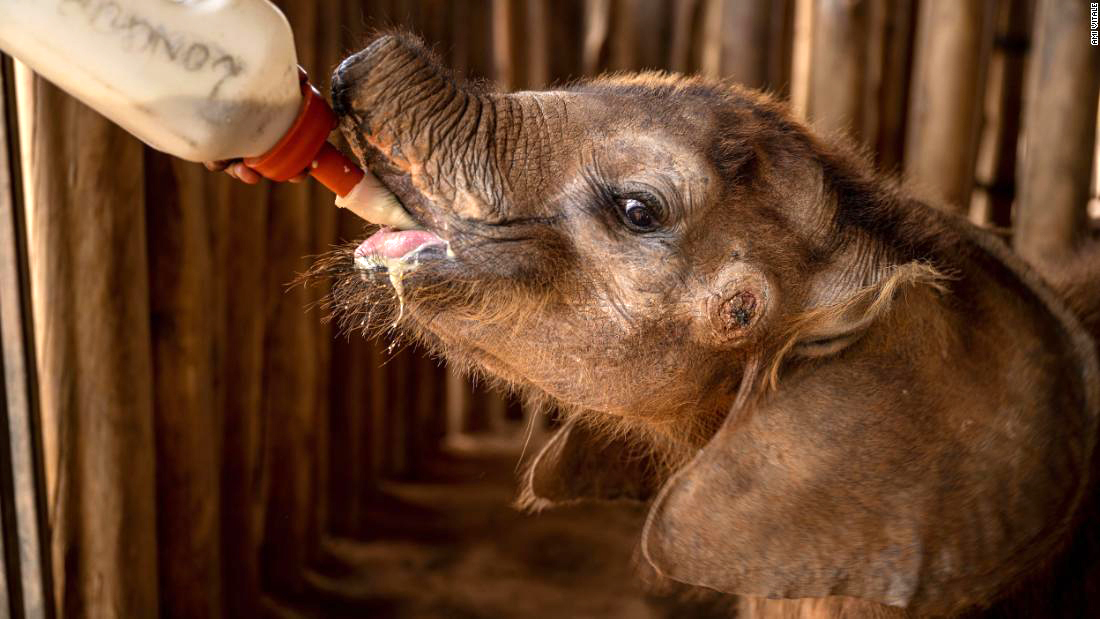
Long’uro enjoys his bottle at Reteti Elephant Sanctuary in Kenya. Photo: Ami Vitale / © Reteti Elephant Sanctuary
“When he started playing like the others, Long’uro would forget he didn’t have a trunk and bump his head against objects,” Mary recalls. “It felt like my own baby walking into a wall.” Over time, Long’uro learned to compensate, stopping before hitting obstacles—a testament to his resilience. Today, his short trunk has fully healed, and he has mastered using it to grasp leaves and even splash water on himself.
“Long’uro has taught me patience and acceptance,” says Mary. “Challenges are part of life, but they can be overcome. Long’uro is an inspiration.”
Long’uro’s survival is thanks to the dedication of keepers like Mary and her colleagues. As one of the first woman elephant keepers among the Samburu, Mary showers him with love and constant care. “Long’uro is like my son,” she says, smiling. “I rub his head and sing to him.”
For elephants, a trunk functions like a human hand and nose combined. Without it, elephants cannot browse properly or splash water and mud over their bodies. Despite his limitations, Long’uro has shown extraordinary courage and adaptability. He refuses to let his circumstances define him. Today, he thrives as a unique elephant—browsing, playing, and bonding with his peers in his own way.
Rescue as a catalyst for coexistence
In 2026, IFAW is proud to partner with Reteti Elephant Sanctuary to give orphaned elephants in northern Kenya a second chance at life in the wild. Rescue is a critical part of the IFAW Room to Roam initiative—providing care for elephants while supporting coexistence between people and nature across priority elephant landscapes.
Related content
Every problem has a solution, every solution needs support.
The problems we face are urgent, complicated, and resistant to change. Real solutions demand creativity, hard work, and involvement from people like you.
DonateIFAW affiliates are registered as tax-exempt nonprofit organizations in several countries. Depending on where you reside, your donation may qualify for a tax deduction or benefit. See the pull-down menu at the bottom right of this page to see how IFAW operates in your country.