Landscape Conservation
Elephant numbers spark debate: science tells a simpler story
Elephant numbers spark debate: science tells a simpler story
February 13, 2026
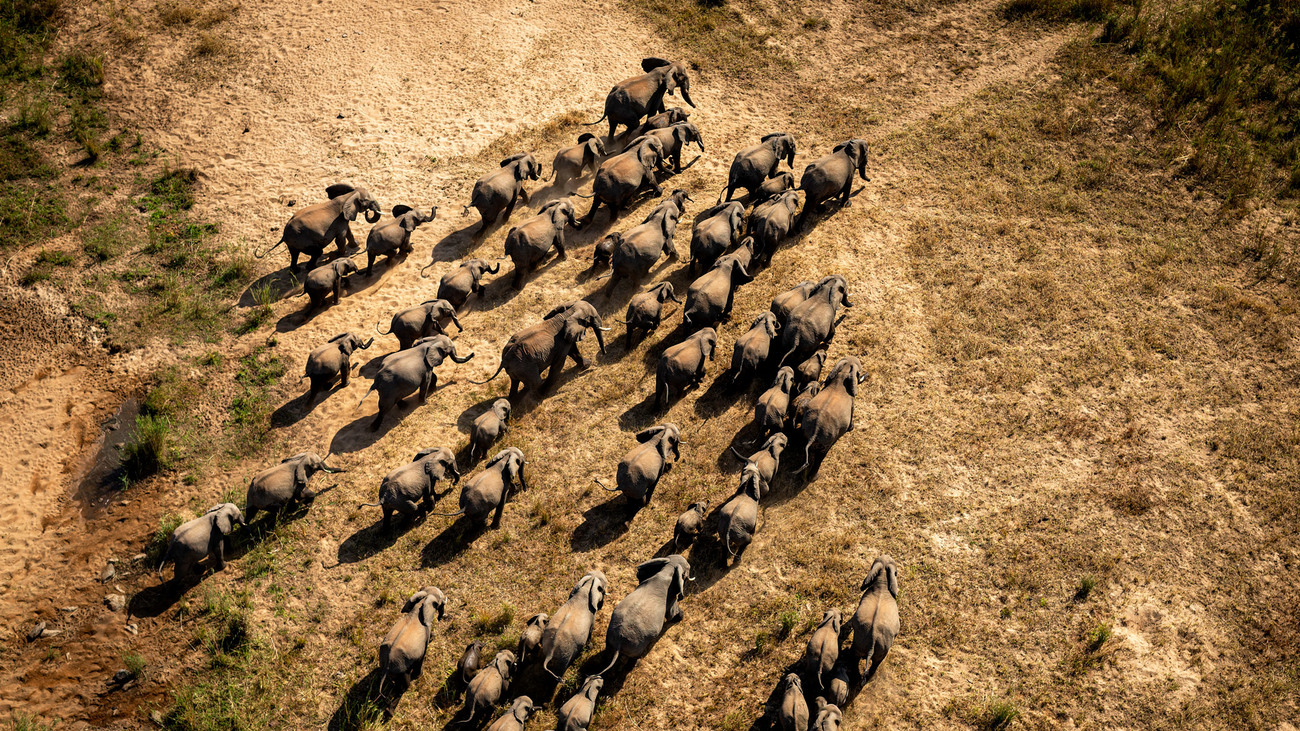
Aerial view of a herd of elephants. Photo: © Rudi van Aarde
[13 February 2026 - Yarmouth Port, Massachusetts] As debates continue over elephant numbers, specifically whether Africa's elephants are overpopulated in some regions or nearing collapse in others, IFAW (International Fund for Animal Welfare) is reinforcing a science-based approach and calling for calm, urging those immersed in the debate to 'cut through the clutter' by looking beyond headline numbers, and focusing on how elephant populations change over time, their movement across landscapes, and their response to human pressures. These are the main drivers that are essential to the long-term protection of elephants.
Broadly speaking, we know elephant numbers have crashed—from estimated millions in pre-colonial times to fewer than 500,000 today. The Pan-African Great Elephant Census—the most comprehensive survey to date—recorded 352,271 savannah elephants across 18 countries and revealed a 30% decline between 2007 and 2014, with continued annual losses largely driven by poaching.
Yet long-term ecological research conducted by the Conservation Ecology Research Unit (CERU) at the University of Pretoria presents a far more nuanced picture. Over 25 years, CERU tracked 50 elephant populations, which ultimately showed that most were stable and some even growing. Broader analysis of more than 100 populations concluded that management decisions should focus less on raw total numbers and more on ecological impact and habitat connectivity
"Elephant dynamics cannot be reduced to a single population figure," said Azzedine Downes, President & CEO of IFAW. "What matters most is the availability of habitat connectivity, if whether protections are put in place from risks such as poaching, and whether the communities living alongside wildlife are actively being supported."
Though some conservation managers worry that fast-growing elephant populations could actually damage ecosystems, data show that the risk is mainly in fenced or isolated reserves. The best long-term solution continues to be connectivity—linking protected areas with safe corridors, so elephants can move freely.
Elephants are fundamentally slow breeders. Females begin reproducing at around 12 or 13 years of age and give birth approximately once every four years. Even in ideal conditions, populations rarely grow faster than 5% annually. When adult elephants are lost to poaching, age structures collapse, and recovery can take decades, with research indicating that it may take 24 years or more for a disrupted population to stabilize. Research also shows that many protected areas could support significantly more elephants than they currently hold. However, risks from poaching, habitat fragmentation, and human wildlife conflict often prevent populations from reaching their ecological potential. Larger, connected populations prove more stable and resilient over the long-term, while isolated herds are more vulnerable to decline. Elephants are by no means immune to crisis, but they are remarkably resilient—if given the chance.
The scientific findings of the late Professor Rudi van Aarde and his team at CERU form the foundation of IFAW's Room to Roam initiative. Backed by 20 years of research and community engagement, Room to Roam works across East and southern Africa to secure and reconnect habitats within elephants' home ranges—helping create the space and safety they need to recover naturally.
IFAW reiterates its call for conservation strategies to be grounded in science and to oppose the over-simplified narratives that too often dominate the conversation.
Protecting the elephants that remain, reconnecting fragmented landscapes, and strengthening coexistence with communities living alongside wildlife, are the foundation to ensuring that future generations will continue to see elephants roaming Africa's savannahs.
ENDS
Related content
Every problem has a solution, every solution needs support.
The problems we face are urgent, complicated, and resistant to change. Real solutions demand creativity, hard work, and involvement from people like you.
DonateIFAW affiliates are registered as tax-exempt nonprofit organizations in several countries. Depending on where you reside, your donation may qualify for a tax deduction or benefit. See the pull-down menu at the bottom right of this page to see how IFAW operates in your country.