Asian elephant protection – China
Conserving Asian elephant populations through coexistence initiativesFrom conflict to coexistence: the path forward for people and elephants
From conflict to coexistence: the path forward for people and elephants
March 2, 2026
Blog series: Part 3 of 3
By Dafan Cao, Program Officer with IFAW’s Asian Elephant Protection project in China
Part 1: From the ground up: launching a network for people and elephants
Part 2: From fear to trust: a community ranger’s path to protection
Across the forested borderlands of Yunnan Province, a quiet transformation is underway. What once felt like unavoidable conflict between people and elephants is slowly giving way to something else: preparedness, resilience, and, increasingly, mutual respect. That shift is due in large part to the work of a growing network of community rangers—local individuals who walk the line between danger and safety every day.
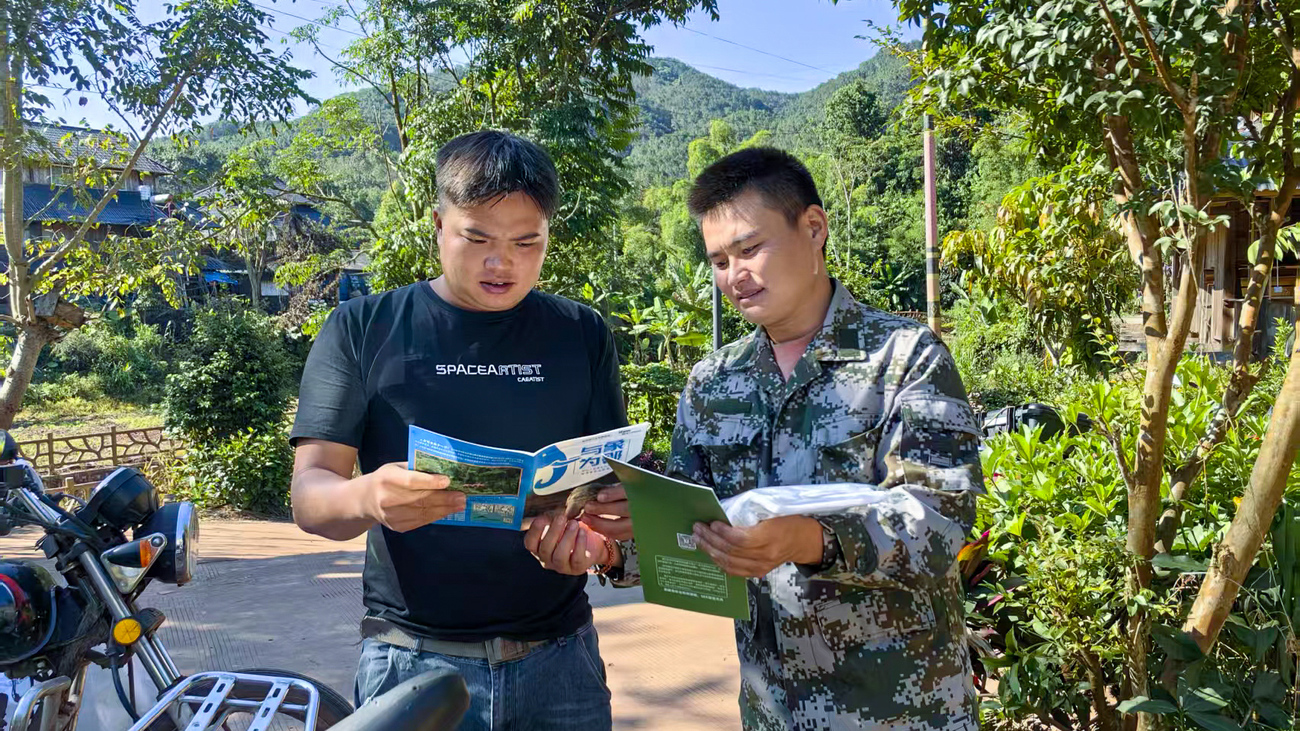
rangers Li Shengqian and Li Jie visit the village to educate residents heading to work on safety precautions and reinforce key messages to help prevent human–elephant conflict. Photo: © IFAW
The Community Ranger Network Initiative, launched in 2021 IFAW and the Jinghong Forestry and Grassland Administration, was designed to address the escalating risk of human–elephant conflict. But it has grown into something far greater: a living system of local knowledge, early warning, and shared responsibility.
In just a few years, the results have been striking. As of September 2025, community rangers have conducted near 1,000 community outreach sessions, reached over 28,000 villagers with safety awareness activities, and supported conflict mitigation across more than 280 villages, farms, and communities. In one township, participation in elephant safety education increased by 29%. In another, trust in early warning systems rose by 16.7%. And most importantly, elephant-related injuries have steadily declined.
These gains are not the result of large-scale infrastructure or high-tech intervention. They are the outcome of local presence, personal relationships, and daily acts of care. They are the work of people like Jie Li and Sanshuai Ai—rangers who once feared elephants and now walk beside them.
But for these efforts to be sustainable, they must also be supported. Community rangers face long hours, physical hardship, and emotional strain. Many patrol alone or in pairs, responding to sightings or assisting villagers at all hours. IFAW and its partners have responded by providing training, uniforms, equipment, and a growing network of peer support. Still, more is needed—particularly to support the mental wellbeing of those on the front lines of conservation.
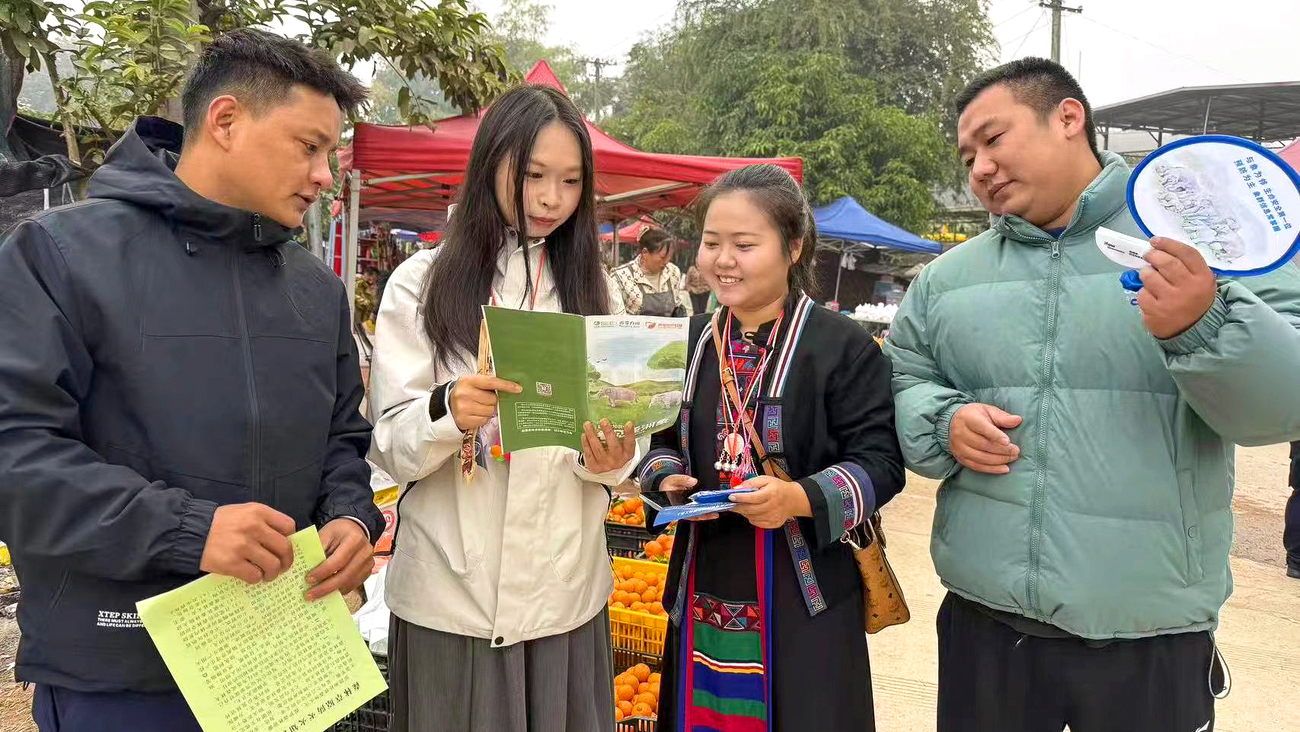
At the local town market, rangers Yan Wen and Cha Zhe are engaging with passersby—sharing key safety tips and distributing informational leaflets. Photo: © IFAW
This work does not only protect people—it protects elephants, too. As communities become more confident in their ability to coexist, the risk of retaliation or panic-driven responses diminishes. Fields are better protected. Villagers are more likely to report sightings early. And elephants, in turn, are more likely to pass through without incident.
As the Community Ranger Network expands into new townships and deeper partnerships, the vision is clear: a landscape where elephants and people can share space with less conflict and more care. A system where knowledge is passed down, not just through trainings, but through the lived experiences of rangers who understand the rhythms of their land.
Coexistence isn’t a slogan—it’s a commitment. It’s built on consistency, compassion, and collaboration. And it depends on the people who wake before dawn to check the fields, who stand calmly in the face of fear, and who return each day to do it again.
These are not just rangers. They are stewards of their communities and of the species that have shaped Yunnan’s forests for centuries. With the right support, their work can scale, inspire, and endure. Together—with Jie Li and Sanshuai Ai—we are building a future where elephants and people can thrive.
Related content
Every problem has a solution, every solution needs support.
The problems we face are urgent, complicated, and resistant to change. Real solutions demand creativity, hard work, and involvement from people like you.
DonateIFAW affiliates are registered as tax-exempt nonprofit organizations in several countries. Depending on where you reside, your donation may qualify for a tax deduction or benefit. See the pull-down menu at the bottom right of this page to see how IFAW operates in your country.