Southern Rangelands - Resources
Southern Rangelands - Resources
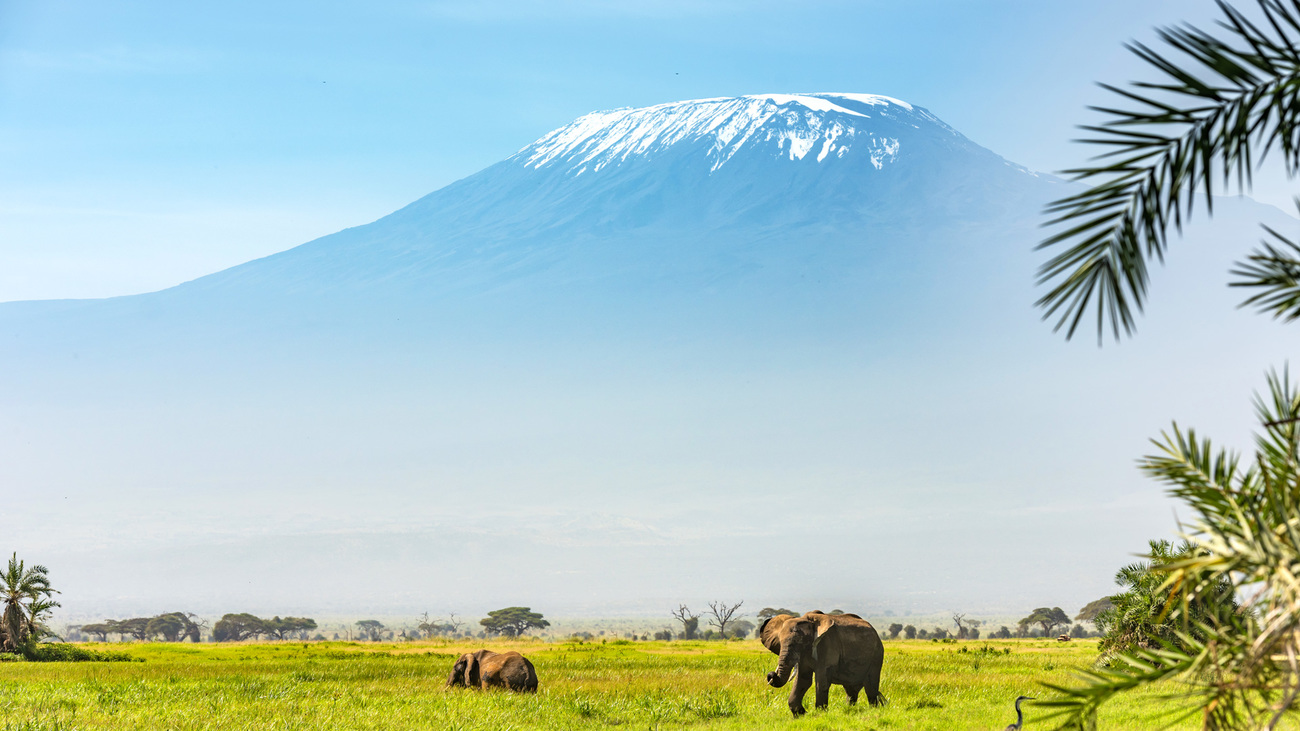
IFAW is making wildlife and tourism laws and policies more accessible to communities living alongside wildlife in Kenya’s Southern Rangelands. Through simplified legal information and public submissions, communities can better understand their rights, participate in decisions, and shape policies that affect their lives and livelihoods.
This supports inclusive, equitable conservation in which communities have a voice and a share in the benefits of protecting wildlife and nature.
Public participation notices and simplified law summaries
These documents aim to strengthen community-led conservation and sustainable tourism by providing clear legal, institutional, and financing frameworks. They place communities at the center of decision-making, promote fair and lasting benefits from wildlife and tourism, and support responsible management of natural resources, environmental protection, inclusive economic opportunities, and accountable governance.
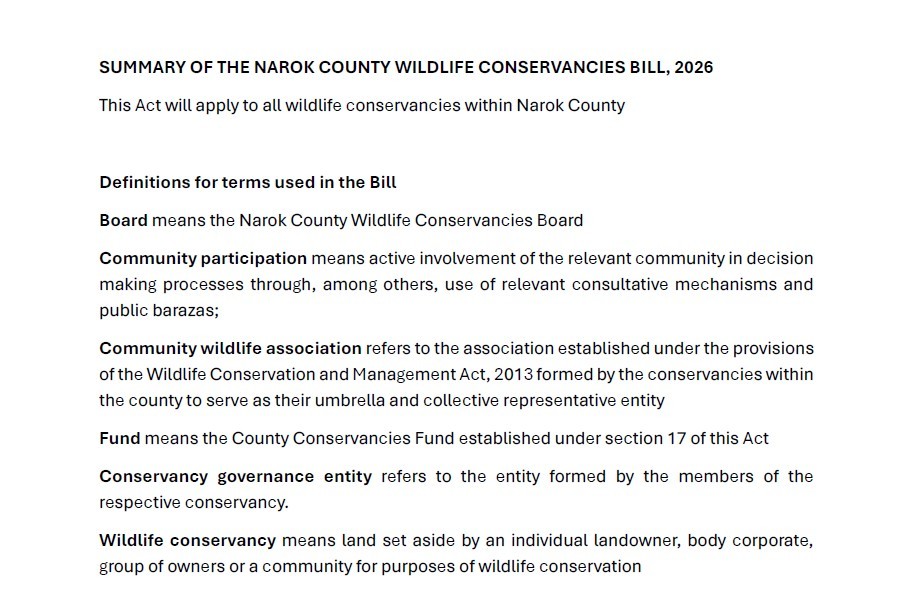
Summary of the Narok County Wildlife Conservancies Bill (2026)
The Narok County Wildlife Conservancies Bill (2026) aims to strengthen community-led conservation by improving conservancy governance, funding, capacity building, and support for families affected by human-wildlife conflict.
It establishes a Wildlife Conservancies Board and County Wildlife Conservancies Fund, with community representation and stronger accountability at the center of decision-making—supporting conservation that benefits both people and wildlife.
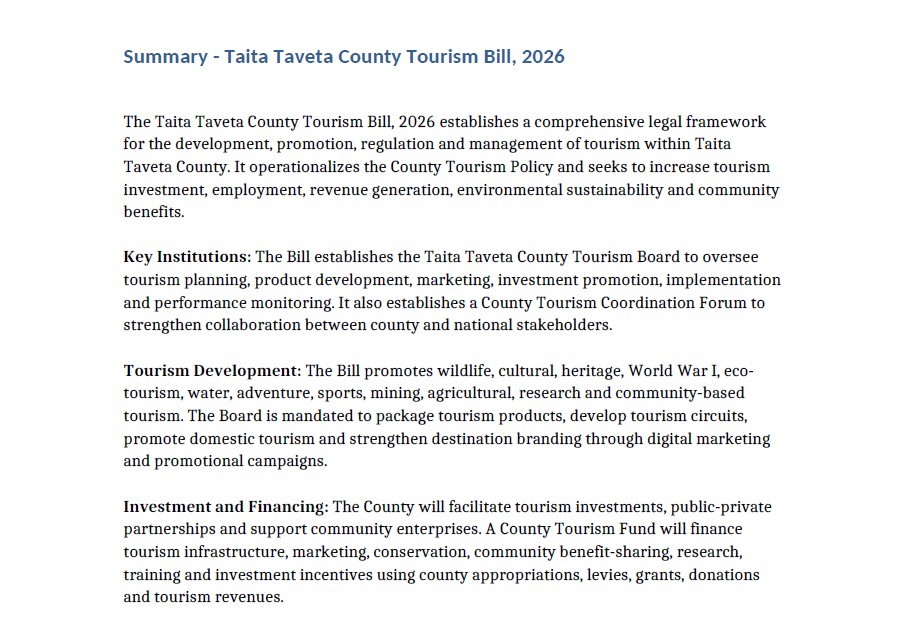
Summary of the Taita Taveta County Tourism Bill (2026)
The Taita Taveta County Tourism Bill (2026) establishes a comprehensive legal and institutional framework to regulate, promote, develop, and manage tourism within the county. It aims to enhance tourism investment, create employment, generate revenue, promote sustainability, and increase benefits to local communities.
The Bill establishes the Taita Taveta County Tourism Board and a County Tourism Coordination Forum to oversee tourism planning, marketing, product development, investment promotion, implementation, and stakeholder coordination. It promotes a diverse range of tourism products, including wildlife, cultural, heritage, ecotourism, adventure, sports, agricultural, mining, and community-based tourism.
To support sector growth, the Bill creates a County Tourism Fund to finance tourism infrastructure, destination marketing, conservation initiatives, community benefit-sharing, research, training, and investment incentives. The Bill also provides for tourism levies, requires that at least 20% of levies collected near community areas be shared with community organisations, and establishes mechanisms for enforcement, compliance, environmental protection, and financial accountability.
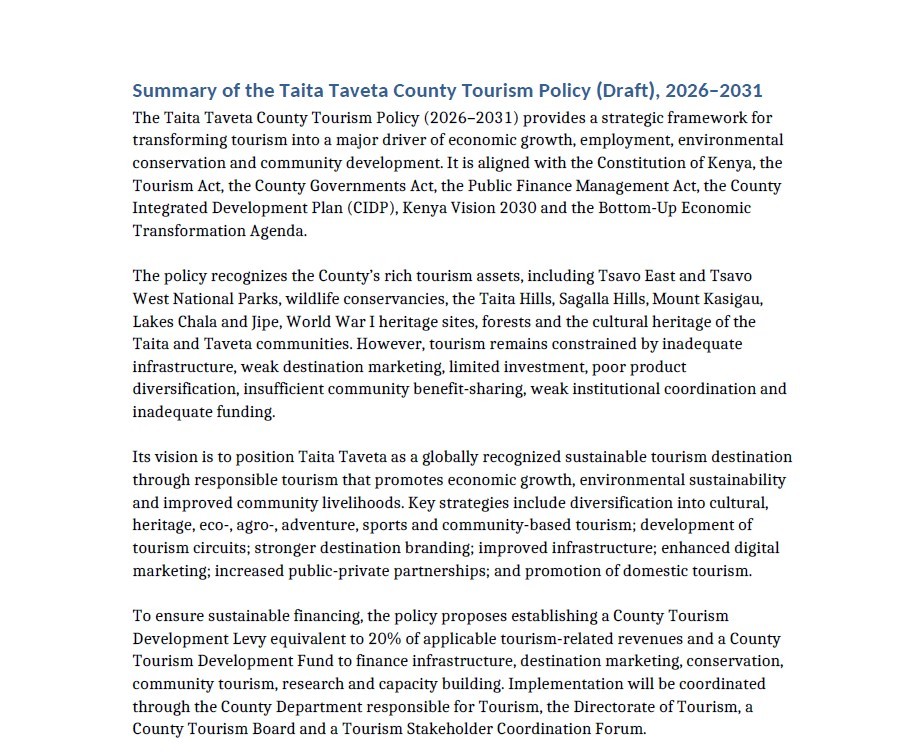
Summary of the Taita Taveta County Tourism Policy (2026–2031)
The Taita Taveta County Tourism Policy (2026–2031) provides a strategic roadmap for transforming tourism into a key driver of economic growth, employment, conservation, and community development. The policy aligns with national and county development frameworks and recognises the county’s unique tourism assets, including national parks, wildlife conservancies, mountains, lakes, forests, heritage sites, and cultural resources.
The policy identifies challenges affecting the sector, including inadequate infrastructure, limited investment, weak marketing, insufficient product diversification, inadequate funding, and limited community benefits. To address these constraints, it proposes strategies such as diversifying tourism products, developing tourism circuits, strengthening destination branding, improving infrastructure, expanding digital marketing, increasing public-private partnerships, and promoting domestic tourism.
The policy proposes establishing a County Tourism Development Levy and a County Tourism Development Fund to provide sustainable financing for tourism infrastructure, conservation, destination marketing, community tourism initiatives, research, and capacity building. Implementation will be undertaken through county tourism institutions and monitored using indicators such as tourist arrivals, tourism revenue, investment levels, employment creation, community enterprises, and visitor satisfaction.
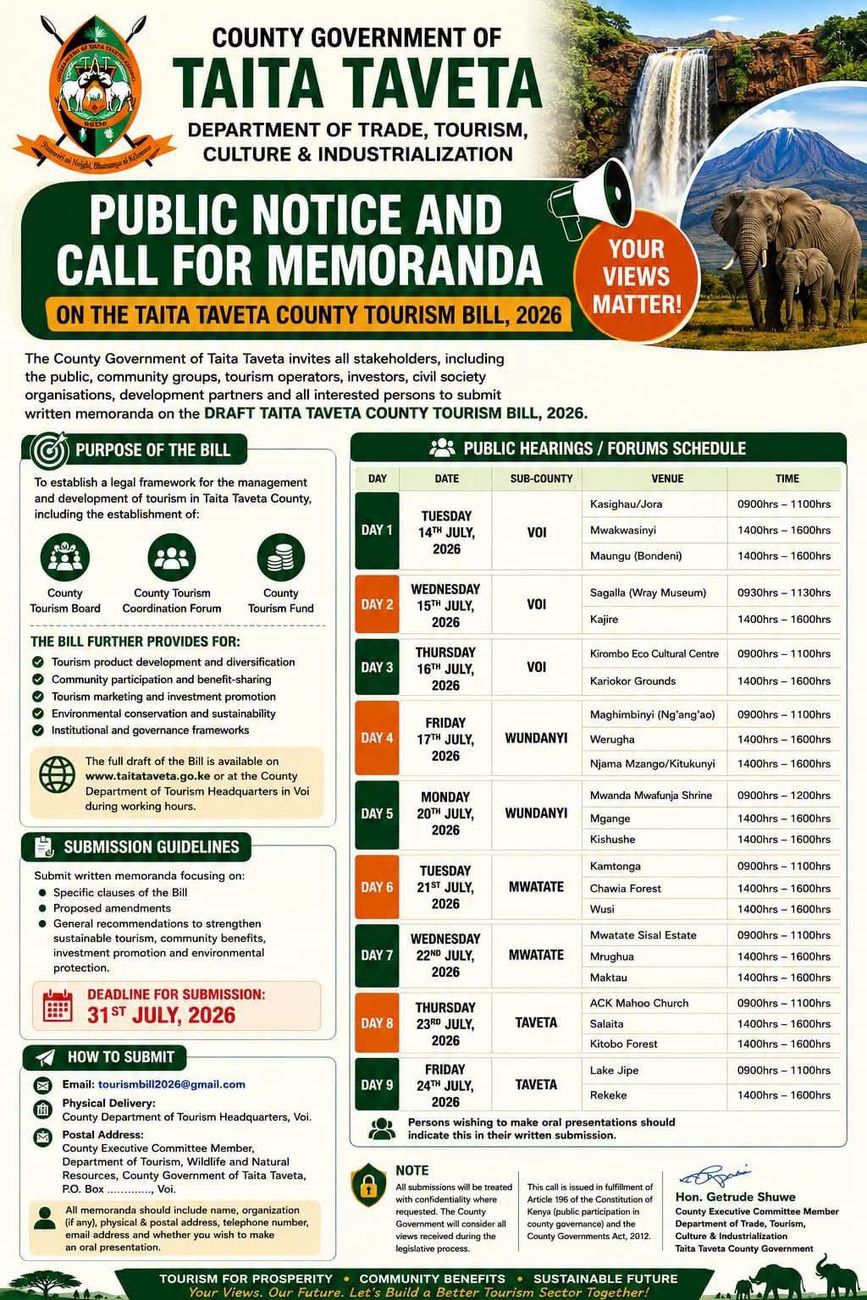
Public participation: Taita Taveta County Tourism Bill (2026)
The County Government of Taita Taveta invited communities, tourism stakeholders, civil society, investors, and other members of the public to share their views on the proposed Tourism Bill through written submissions and public hearings held across the county.
The process provided an opportunity for communities to shape legislation that affects their livelihoods, natural resources, and tourism opportunities, with submissions focusing on sustainable tourism, community benefits, investment, and environmental protection.
Public participation strengthens inclusive and accountable tourism governance, helping ensure tourism works for both people and nature.
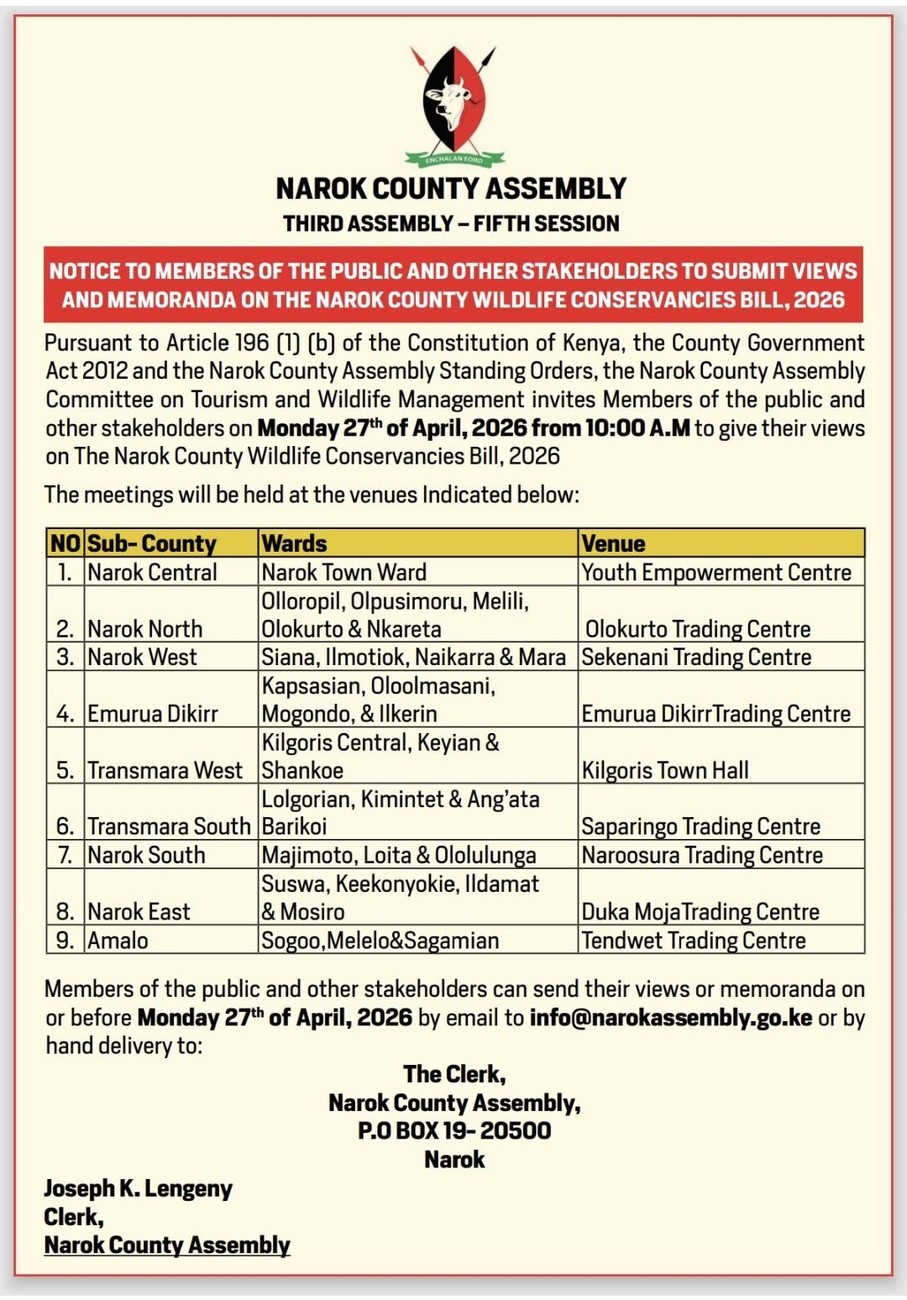
Public participation: Narok County Wildlife Conservancies Bill (2026)
The Narok County Assembly invited communities, conservancies, civil society, and other stakeholders to share their views on the proposed Wildlife Conservancies Bill through public forums and written submissions across the county.
The process gave communities an opportunity to shape legislation affecting wildlife, natural resources, and their livelihoods, with a focus on stronger conservation governance, community participation, and equitable benefits.
Meaningful public participation helps build inclusive, accountable conservation that works for both people and wildlife.
Public submissions and proposed bills
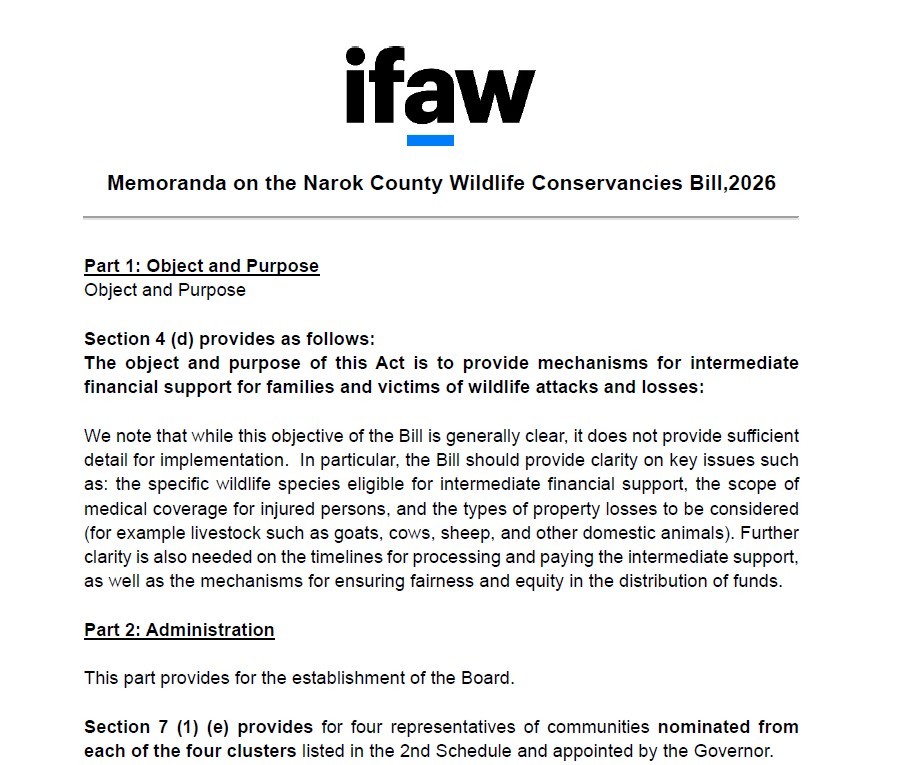
Memoranda on the Narok County Wildlife Conservancies Bill (2026)
The memorandum supports the Narok County Wildlife Conservancies Bill (2026), while calling for stronger provisions to ensure communities living with wildlife are meaningfully represented and benefit from conservation. It recommends clearer support for human-wildlife conflict, elected community representation, increased funding for conservancies, and a more inclusive cluster structure. These changes would help strengthen community voices, improve conservation outcomes, and ensure greater benefits for people living alongside wildlife.
Final laws
Narok County Wildlife Conservancies Bill (2026)
The Bill establishes a county-wide framework for the creation, support, regulation, and management of wildlife conservancies in Narok County. It proposes establishing the Narok County Wildlife Conservancies Board to oversee conservancy development, governance, funding, and coordination with stakeholders. The Bill also creates a Wildlife Conservancies Fund to provide financial support for conservancies and assist families affected by human-wildlife conflict. Key priorities include conservation education, capacity building, collaboration with development partners, sustainable conservancy management, and community involvement in decision-making. Funding would come from county budget allocations, grants, gifts, and donations, while annual reporting requirements promote transparency and accountability.
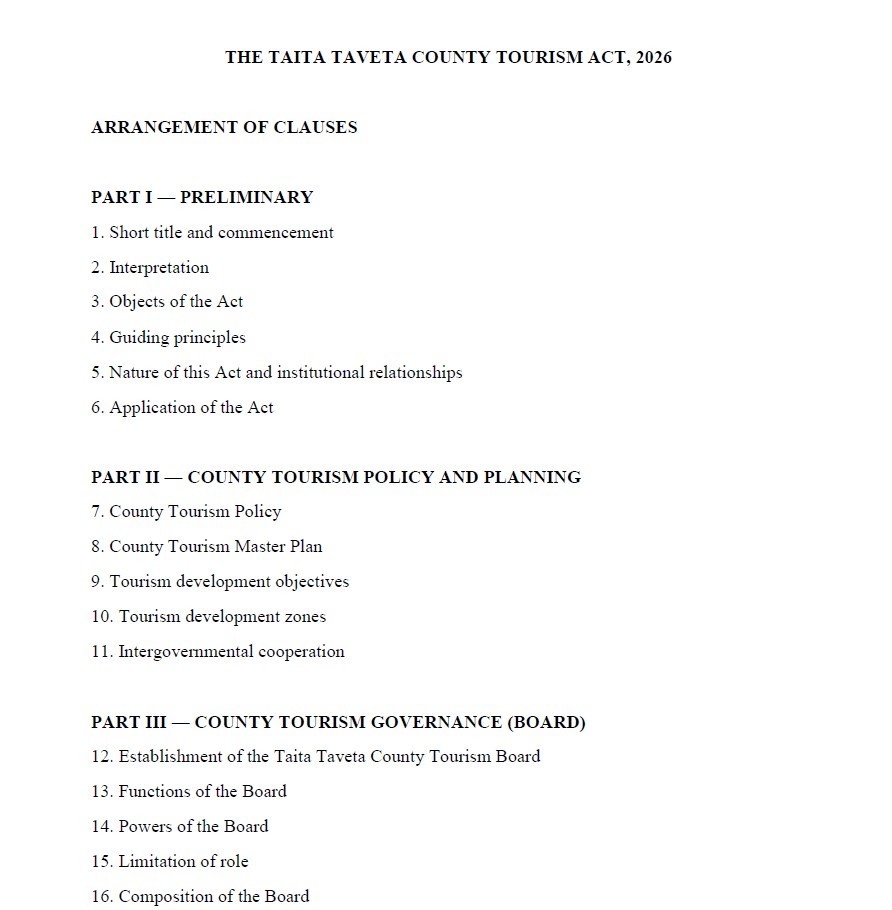
Taita Taveta County Tourism Bill (2026)
The Tourism Bill provides the legal and institutional framework for regulating, promoting, developing, and managing tourism within Taita Taveta County. It establishes a County Tourism Board and a Tourism Coordination Forum to guide tourism planning, investment promotion, marketing, product development, and performance monitoring.
The Bill supports a broad range of tourism products, including wildlife, cultural, heritage, eco-tourism, adventure, sports, agricultural, mining, and community-based tourism. It also establishes a County Tourism Fund to finance tourism infrastructure, marketing, conservation initiatives, research, training, and community benefit-sharing. The Bill places strong emphasis on environmental sustainability, climate resilience, community participation, compliance with standards, and transparent management of tourism revenues and resources.
Taita Taveta County Tourism Policy (2026–2031)
The Policy serves as the county’s strategic blueprint for transforming tourism into a key pillar of economic growth and sustainable development from 2026 to 2031. It identifies the county’s unique tourism assets, including national parks, wildlife conservancies, mountains, lakes, heritage sites, forests, and cultural resources, while acknowledging challenges such as inadequate infrastructure, weak marketing, limited investment, insufficient funding, and inadequate community benefits.
The Policy proposes strategies including tourism product diversification, tourism circuit development, destination branding, digital marketing, improved infrastructure, public-private partnerships, and promotion of domestic tourism. It further recommends the establishment of financing mechanisms, including a tourism development levy and a tourism development fund, while providing an implementation and monitoring framework based on measurable tourism outcomes.